

Tech
Republicans Are All In on Boosting Fraud Allegations in California

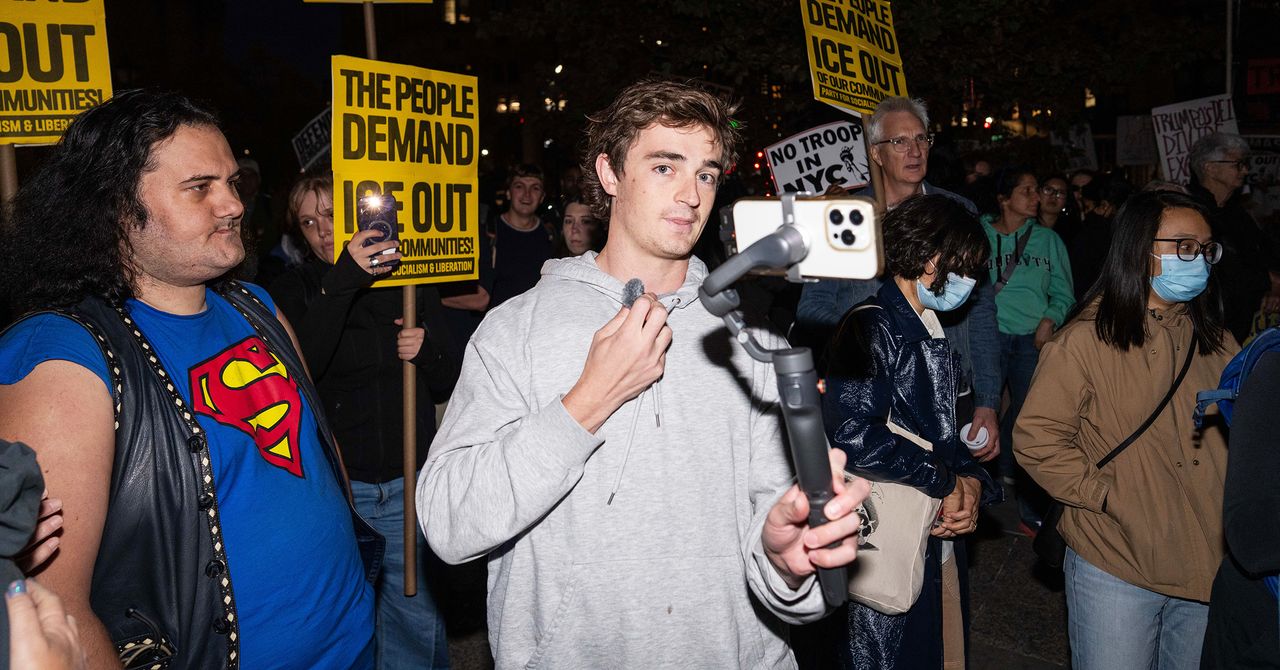
A month after the Trump administration began its immigration enforcement operation in Minneapolis, right-wing creators are turning their attention to a new target in search of fraud: California.
Over the last few weeks, right-wing creators who were instrumental in boosting the Minnesota fraud allegations that predated the administration’s surge of federal immigration agents have been going after a number of California’s social welfare programs, making unsubstantiated accusations of fraud—and potentially laying the groundwork for a similar federal crackdown in the nation’s largest Democrat-run state. They’re already getting support from some of President Donald Trump’s key allies too.
Nick Shirley, the right-wing influencer whose viral YouTube video claimed to uncover a purported $100 million fraud scheme involving Somali childcare centers in Minnesota, posted to Instagram over the weekend announcing his arrival in California. “Secrets out,” Shirley wrote in an Instagram story set to Katy Perry’s “California Gurls.” It’s unclear what exactly Shirley plans to do, but he claims to be “investigating” Somali-run childcare centers in California as well, according to posts that circulated on X over the weekend.
Shirley is working with Amy Reichert, a private investigator and failed politician who claims to be investigating “ghost daycares” in California. In his Minnesota video, Shirley “investigated” the fraud by showing up to daycares asking to see children. He appears to be applying the same method in San Diego. Reichert posted a picture with Shirley to X on Saturday, writing “California, here we come! When @nickshirlye drops the video, it’s going to be 🔥.” (Local Minnesota outlets published multiple stories covering childcare fraud years before Shirley’s video came out.)
On Sunday, Benny Johnson, a pro-Trump creator and Turning Point USA contributor, published his own “documentary,” in a similar vein to what Shirley filmed in Minnesota. In it, he claimed to reveal a multimillion-dollar “homeless industrial complex” in California. Johnson teamed up with two Republican gubernatorial candidates, Riverside County Sheriff Chad Bianco and Steve Hilton, a former adviser to UK prime minister David Cameron, in the video, which they claimed was an attempt to uncover fraudulent uses of federal funding to support California’s unhoused. Johnson also claimed that the state was “using these federal dollars to rig national elections.”
California governor Gavin Newsom’s office rejected the claims Johnson made in an X post on Sunday, calling the video “literally the conspiracy theory meme in real life.”
Johnson’s most recent video attempts to claim that California’s homeless shelters are primarily filled with undocumented immigrants. His main piece of evidence is a phone call with a purported “whistleblower” whose identity was concealed. (Newsom’s office responded to this claim, calling it “as real as our Free Unicorn for all undocumented people program.”)
The same week Johnson announced that he would be traveling to California to uncover “fraud,” Trump called California “more corrupt” than Minnesota in a post on Truth Social. “Fraud Investigation of California has begun,” Trump wrote. Last week, Trump named a new assistant attorney general, Colin McDonald, to focus on fraud investigations at the Justice Department.
Other large pro-Trump accounts and news outlets, like Real America’s Voice, are boosting Johnson’s recent video. Larry Elder, talk radio host and former presidential candidate, reposted the video on X on Tuesday, writing “Fraud in California makes that of Minnesota look like a starter kit.”
Elon Musk, who Shirley thanked for initially boosting his December Minnesota video, has also been elevating news coverage related to California fraud. “Truly insane levels of fraud!” Musk said, reposting a story from Fox News earlier this week.









Conspiracy theorists, wellness influencers, and grifters have already started promoting wild claims about the hantavirus outbreak that began aboard the MV Hondius, a cruise ship on the Atlantic.
Some conspiracy theorists compared the outbreak to the Covid-19 pandemic, claiming it was another effort to control the global population, while others pushed a false narrative that the Covid-19 vaccine caused hantavirus. Many others promoted ivermectin as a treatment, using the incident as a way to sell emergency medical kits featuring the antiparasitic drug typically used as a horse dewormer.
In more recent days, many of these same people spreading conspiracy theories have promoted the baseless and antisemitic claims that the entire incident is a false flag orchestrated by Israel.
Conspiracy theories flooding social media in response to breaking news are nothing new, but what is notable about those being pushed around the hantavirus outbreak is just how closely they echo the conspiracy theories promoted during the Covid-19 pandemic.
“One of the most striking shifts since the Covid pandemic is how rapidly misinformation narratives now organize themselves around emerging outbreaks,” Katrine Wallace, an epidemiologist at University of Illinois Chicago School of Public Health, tells WIRED.
“Within hours of the first hantavirus headlines, social media accounts were already promoting ivermectin, attributing the outbreak to Covid vaccines, and warning about a hantavirus vaccine that does not exist. The claims themselves were often contradictory, but that contradiction no longer appears to limit their spread.”
Once the hantavirus outbreak started making headlines around the world, conspiracy theorists and grifters jumped into action, spreading dangerously ill-informed claims and, of course, trying to sell people ivermectin.
“Ivermectin should work against it,” Mary Talley Bowden wrote on X. Bowden, a doctor, is a prominent promoter of medical misinformation who has promoted ivermectin as a treatment for Covid-19 and prescribed ivermectin to a Covid-19 patient. Hours after her first post on Hantavirus went viral, she followed up to say that she is selling ivermectin to Texans. Bowden did not respond to a request for comment.
Her post, which has been viewed 4 million times, was shared by former Congresswoman Marjorie Taylor Greene, who added that vitamin D and zinc would help fight the infection. Greene even claimed that not getting the Covid-19 vaccine had somehow allowed her to “develop natural immunity” against hantavirus.
Greene separately claimed, without evidence, that the pharmaceutical company Moderna had purposely manipulated the virus in order to allow them to cash in by developing a hantavirus vaccine. Greene did not respond to a request for comment.
Other prolific health disinformation promoters boosted the ivermectin claims, including Simone Gold, the founder of Covid denial group America’s Frontline Doctors, and Peter McCullough, a disinformation peddler who promoted the “sudden death” conspiracy theory about the Covid-19 vaccine, which falsely claimed that those who received the shot were at risk of dropping dead without any warning.
McCullough is also the chief scientific officer for The Wellness Company, which has been described as “Goop for the GOP.” The company has used the hantavirus outbreak to promote a $325 “Contagion Emergency Kit” which includes both ivermectin and hydroxychloroquine.
All the false claims and posts about ivermectin gained enough traction online that the World Health Organization responded to say that there is no research to suggest ivermectin is an effective treatment for hantavirus.
Conspiracy theorists have, meanwhile, been pushing the baseless idea that a side effect of Covid vaccines includes a hantavirus infection.

Hot on the heels of announcing its parent company has entered into a deal worth £4.3bn to buy CK Hutchison’s stake in the recently merged VodafoneThree in the UK, Vodafone has launched 5G Broadband, bringing high-speed connectivity via its 5G network to an additional 3.7 million homes and premises currently unable to access full-fibre networks.
By combining 5G Broadband and its existing full-fibre footprint, Vodafone says it can now bring full-fibre-like speeds to over 26 million homes, more than any other UK provider. The offer is targeted at households who cannot currently access full-fibre – renters, students and anyone who, says Vodafone, “wants powerful connectivity with flexibility”.
The launch reinforces the commitment made by VodafoneThree to connect every community as part of its £11bn investment programme to build out a network that can compete with the likes of BT/Openreach and Virgin Media O2. By bringing together the Vodafone and Three networks, the company said the combined 5G footprint will expand rapidly nationwide.
The offer is also a result of bringing the Vodafone and Three networks together and deploying its Multi Operator Core Network (MOCN) technology in more than 10,000 sites nationwide. This is designed to provide users with improved coverage with higher speeds in areas where it wasn’t previously available.
The enhanced coverage will also enable Vodafone 5G Broadband to reach 3.7 million more homes where there is currently no full-fibre. This complements Vodafone’s existing full-fibre footprint of 23.2 million homes – the largest of any UK provider.
With the service, customers can enjoy speeds from 50Mpbs to up to 150Mbps – 3x faster than a typical part-fibre connection – and unlimited data on every plan. For homes where the outdoor 5G signal is stronger than indoors, Vodafone assured that it would soon launch an outdoor hub to provide an extra boost.
The outdoor hub will require self-installation outside the property, where it will lock on to the strongest 5G signal available in the area and connect directly to the indoor Power Hub router. The result is claimed to be a consistent connection and “fast, seamless experience” throughout the home, even in rural areas.
Rob Winterschladen, consumer director at VodafoneThree, said: “Millions of households are still paying over the odds for unreliable and slow broadband that often only reaches 74Mbps. With Vodafone 5G Broadband, we’re giving those homes a genuinely fast alternative, at great value, with no installation, no waiting and no hassle … By adding 5G Broadband, we can now reach millions more [homes]. This launch is about giving customers real choice: full-fibre where it’s available, and powerful 5G broadband where it’s not – plus, better options for anyone wanting speed with ease and flexibility.”
Launching alongside Vodafone 5G Broadband is an integrated availability checker on Vodafone.co.uk, designed to make choosing the right connection effortless. Customers simply enter their postcode and are shown whether full-fibre or 5G broadband will give them the fastest speeds in their area.
Users can choose from a rolling 30-day or 24-month plan starting at £21 a month, with a £2-a-month discount for Vodafone Together customers. However, the operator cautioned that while the service operates on 5G where available, it may use 4G networks in limited circumstances.

Farrah was fed up with her vagina.
For the past two years, the 29-year-old dancer from Ohio had been dealing with severe pelvic pain and vaginal odor. “It was like 8/10, horrible core pain,” she says. “I couldn’t lie down. I couldn’t even work an office job. It was bad.”
When she visited doctors, she told them what she thought the culprit was: an allergic reaction to soy oil in a vat of water she’d swam in during a pirate-themed dinner theater performance. But they didn’t believe her. “They attempted to fix it with antibiotics,” she says. “And they just did nothing.”
So Farrah (who requested we withhold her full name to speak freely about health matters) started Googling her symptoms. That’s how she stumbled on Neueve, a vaginal health company that provides supplements, suppositories, and at-home vaginal microbiome testing kits.
She ordered a test from the company for $150, and it came back with a diagnosis: aerobic vaginitis (AV), a bacterial infection caused by an overgrowth of E. coli or streptococcus. She ordered supplements the company recommended, and she says the pain abated almost immediately. “I was just so glad to actually know what was wrong,” she says.
Farrah is one of a growing number of women who have used at-home tests to self-diagnose issues with the vaginal microbiome—an ecosystem of bacteria growing inside the vagina; the presence of “good” bacteria correlates with lower risk of STIs and other types of infections, according to numerous studies. The industry got a shoutout when the Silicon Valley entrepreneur Bryan Johnson recently posted on X that he had just given oral sex to his girlfriend, Kate Tolo, then followed up with a screengrab of her TinyHealth vaginal microbiome report. He proclaimed that she scored “100/100” and that hers was in the “top 1% of all vaginas” due to the dominance of Lactobacillus crispatus, a type of “good” bacteria found in the vagina.
Johnson’s thread garnered widespread mockery, with many questioning why Johnson would publicly quantify his partner’s vaginal health in such a fashion. But it also received replies from women online who are tracking their own vaginal microbiomes to treat their bacterial infections, to boost fertility, or just out of interest. Some even posted their results.
The market for at-home vaginal microbiome tests is growing—TinyHealth, the startup Tolo used, claims vaginal health testing sales spiked 2,000 percent within the first 48 hours of Johnson’s post—and similar companies include Juno Bio, which partners with Neueve; the UK-based Daye, and Evvy. But some experts believe there’s not yet enough research to support the long-term validity of such tests. None of the at-home kits on the market are approved by the FDA. There are also questions as to whether they empower women to take their health care into their own hands or simply create more anxiety for them.
Twenty-eight-year-old Samantha (she also requested a pseudonym given the sensitive nature of this topic) developed an interest in vaginal microbiome testing after experiencing a bout of bacterial vaginosis, or BV. She ordered a testing kit from Evvy upon the recommendation of the Facebook group Beyond BV, which offers support for women with recurring vaginal infections, and where they often post their own results.
Samantha found her test results useful, but she also noticed a distinct strain of paranoia within the group. For instance, when many women receive their results, they tend to focus on whether they have enough Lactobacillus crispatus, or “good” bacteria, in the vagina. “I’ll read posts where women are freaking out if they have like 97 percent crispatus and then they’ll retest and they’ll have like 60 percent and be really disappointed and scared,” she says. The opposite also holds true. “Women will post about having 100 percent crispatus and other women in the comments will just be like, ‘Oh, I’m so jealous, I’m having so many issues, I hope to be you one day.’”


OpenAI chief Altman says Elon Musk wanted control of ChatGPT maker, denies betrayal

United Airlines flight attendants ratify new contract with 31% raises this summer

Jacob Fatu chooses to acknowledge violence, AAA Mega Championship makes WWE history and more from Raw

-

 Politics1 week ago
Iran weighs US reply delivered via Pakistan as Trump signals opposition to deal terms
-

 Tech1 week ago
DHS Demanded Google Surrender Data on Canadian’s Activity, Location Over Anti-ICE Posts
-
 Business1 week ago
Heineken to invest £44.5m in hundreds of pubs creating 850 jobs
-

 Entertainment1 week ago
Jelly Roll reacts to daughter Bailee Ann’s major life milestone
-
 Business1 week ago
Heineken plans huge investment in hundreds of UK pubs ahead of World Cup
-

 Tech4 days ago
A new frontier: Identity stack evolves for agentic systems | Computer Weekly
-

 Tech4 days ago
‘Orbs,’ ‘Saucers,’ and ‘Flashes’ on the Moon: Pentagon Drops New UFO Files
-
 Business1 week ago
India among most resilient large EMs, better placed for future global shocks; policy reforms & strong buffers help: Moody’s – The Times of India