

Fashion
Chanel taps Aegon’s top HR executive for luxury company role


By
Bloomberg
Published
December 16, 2025
Chanel has tapped the human resources chief from Dutch insurer Aegon as the fashion and beauty company continues to reshuffle its top executive roles.
Elisabetta Caldera, 55, has been named global chief people and organization officer for Chanel Ltd., succeeding Claire Isnard, 64, starting next month, the company told Bloomberg News in a statement.
Isnard is retiring after more than 17 years at the group, which had a workforce of around 38,400 employees last year. Caldera will join Chanel’s leadership team, reporting to Chief Executive Officer Leena Nair, and be based in London.
Caldera spent more than four years as global chief human resources officer at Aegon Ltd. where she was also part of the insurer’s executive committee. The Italian executive previously spent 17 years at Vodafone Group Plc in various HR roles until 2021 when she joined Aegon.
Under CEO Nair, the former head of HR at Unilever Plc, Chanel has been rebuilding the roster of top managers at the company as an older guard retires.
Chanel, known for its No. 5 fragrance, is privately owned by the billionaire brothers Alain and Gerard Wertheimer whose fortunes are estimated at about $43 billion each, according to the Bloomberg Billionaires Index.
The company, founded in Paris but headquartered in London, reports its financial performance once a year, generally around late May. Revenue fell 4.3% to $18.7 billion in 2024 on a comparative basis with operating profit sliding by almost a third partly due to heavy advertising spending and a rise in hiring.



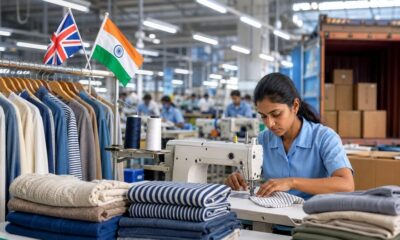







The US apparel sector just got a court victory that feels less like relief and more like a warning. On May *, the Court of International Trade ruled President Trump’s ** per cent Section *** global import surcharge unlawful, but the block was narrow: relief applies to two importers and Washington state, not every apparel entry moving through US ports. The duty may be wounded; sourcing risk is not.
The larger signal is what comes next. After the Supreme Court struck down the administration’s IEEPA tariff authority in February, the White House moved to Section *** as a ***-day bridge ending July **, unless Congress extends it. Now The Office of the United States Trade Representative (USTR) is building a more targeted Section *** record on ‘structural excess capacity’ across ** economies. For apparel, this is not a side issue. It is the sourcing map.

He was addressing the Vietnam-Sri Lanka Trade, Investment and Tourism Cooperation Forum in Colombo.
Vietnam and Sri Lanka should prioritise logistics connectivity and cargo trans-shipment cooperation, an area that matches Sri Lanka’s advantages and Vietnam’s demand to expand its reach into the Indian Ocean, Vietnamese President To Lam has said.
He also called for stronger cooperation in highly complementary sectors like textiles and garments which could be implemented quickly and produce clear results.
He also called for stronger cooperation in highly complementary sectors like agriculture, food processing, textiles and garments, intermediary trade and services, which could be implemented quickly and produce clear results, according to a Vietnamese media outlet.
The forum was jointly organised by the Vietnam Chamber of Commerce and Industry (VCCI) and the Sri Lanka Export Development Board.
At the forum, Vietnam Airlines announced the launch of a direct air route between Ho Chi Minh City and Colombo. Vietjet also announced a direct route linking Ho Chi Minh City and Colombo, marking the first direct air connection between Vietnam and Sri Lanka. The Ho Chi Minh City-Colombo route is expected to launch in August 2026 with four round-trip flights per week.
Sri Lankan Prime Minister Harini Amarasuriya stressed the forum demonstrated the two countries’ shared ambition to raise bilateral trade to $1 billion by 2030, with a focus on diversifying products.
Fibre2Fashion News Desk (DS)
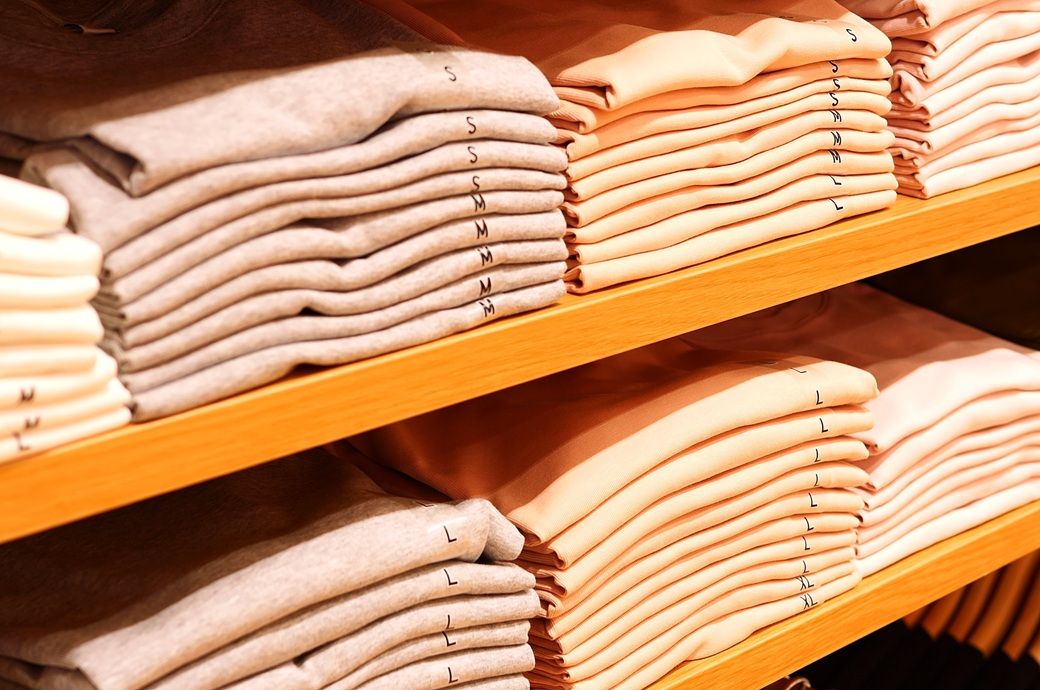
Shipments to major markets, including Mexico, Honduras, the Dominican Republic, Canada, the Netherlands, the United Kingdom and China, contracted, with declines of up to **.** per cent. Exports to Mexico fell *.** per cent to $*,***.*** million, pointing towards slower manufacturing activity in its export-oriented apparel sector, which relies heavily on US yarns and fabrics. Weakness in Honduras and the Dominican Republic similarly mirrors subdued orders. Among the top ten markets, US exports to China fell **.** per cent. No market recorded an increase in shipments.
During the period, the US shipped textiles worth $*,***.*** million to Canada, $***.*** million to Honduras, $***.*** million to the Netherlands, $***.*** million to China, $**.*** million to Guatemala, and $***.*** million to the Dominican Republic, underscoring North America’s continued dominance as the primary export market. However, the decline in shipments to China highlights ongoing structural shifts, as China increasingly produces upstream textile inputs domestically and prioritises self-sufficiency amid trade and policy considerations.


South Korea reviews phased support for Strait of Hormuz security efforts

Kim Kardashian faces legal trouble by ‘innocent’ man

President to undergo medical examination amid serious concerns

-

 Tech1 week ago
DHS Demanded Google Surrender Data on Canadian’s Activity, Location Over Anti-ICE Posts
-
 Business1 week ago
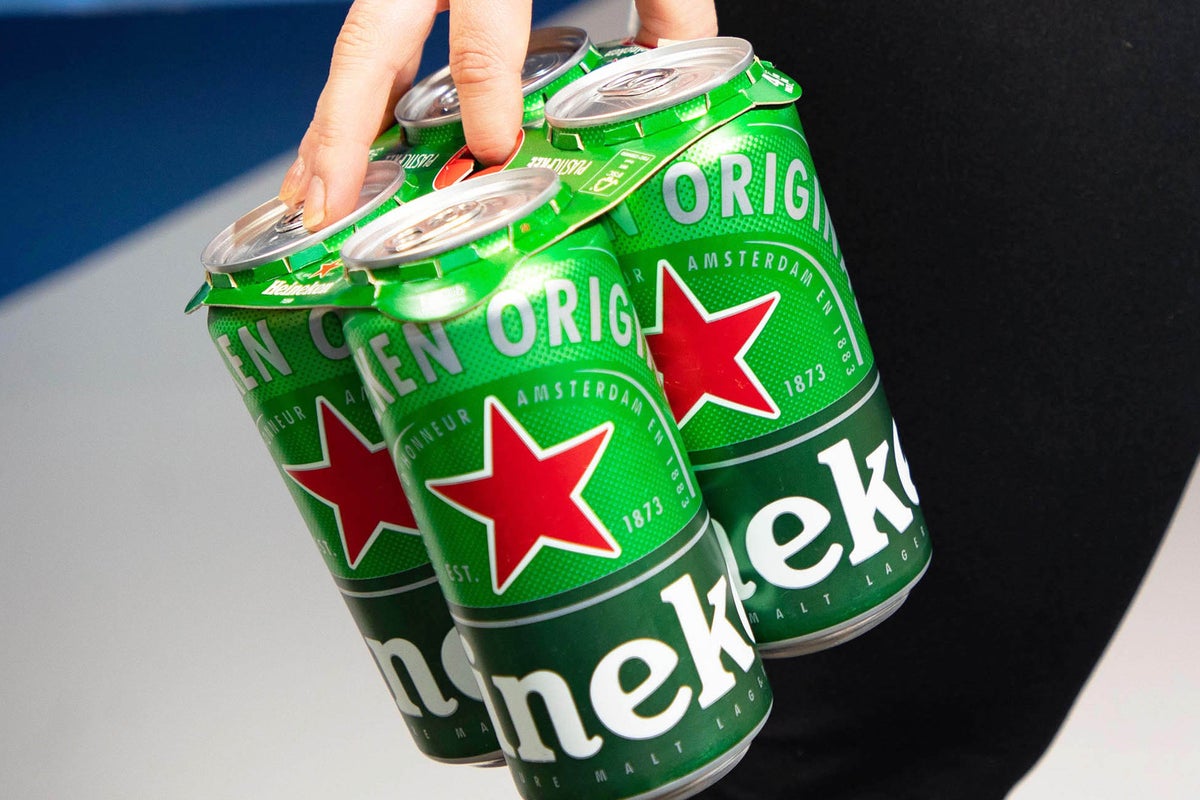
Heineken plans huge investment in hundreds of UK pubs ahead of World Cup
-

 Tech5 days ago
A new frontier: Identity stack evolves for agentic systems | Computer Weekly
-

 Tech4 days ago
‘Orbs,’ ‘Saucers,’ and ‘Flashes’ on the Moon: Pentagon Drops New UFO Files
-
 Business1 week ago
India among most resilient large EMs, better placed for future global shocks; policy reforms & strong buffers help: Moody’s – The Times of India
-
 Fashion5 days ago
New orders in German manufacturing up 5% MoM in Mar 2026: Destatis
-

 Tech5 days ago
What Microsoft Executives Really Thought About OpenAI in 2018
-

 Sports4 days ago
Shaheen Afridi achieves landmark feat during opening Test against Bangladesh