

Politics
Mexico City lawmakers pull hair, trade blows during debate



MEXICO CITY: A group of women legislators in the Congress of Mexico City got into a physical fight Monday, with cameras broadcasting the brawl live as they pulled each other’s hair and traded blows.
The fight broke out after a group of women from the right-wing National Action Party (PAN) approached the legislature’s main podium in protest of a rule allegedly broken by the leftist Morena party, which has a majority in the legislature.
The debate involved reforming the city government’s transparency oversight agency, according to local media reports.
Video from the incident shows at least five lawmakers from both parties arguing intensely, with members elbowing, slapping, and pulling each other’s hair in an attempt by Morena lawmakers to physically remove the PAN members from the podium, despite their refusal to move.
“We took the podium peacefully, without touching anyone, and the decision made by the majority legislative group and its allies was to try and regain control of the board through violence,” Andres Atayde, an aide for the PAN representatives, told a press conference after the incident.
Daniela Alvarez, one of the PAN lawmakers who approached the podium, told reporters: “Not only is it vulgar, not only is it aggressive, but it is lamentable that this is the majority governing party for this city.”
After the fight, the PAN lawmakers left the chamber and the Morena majority resumed the debate without the opposition party present, according to reports posted to the Congress of Mexico City’s social media.
“What worries us a lot is how the opposition is systematically resorting to violence instead of arguments, in the absence of being able to debate,” Morena spokesman Paulo Garcia later told broadcaster Milenio.
- Plan aims at “Israel’s air superiority”: defence minister.
- Netanyahu vows to increase defence budget to $118bn.
- Israel to make “blue-and-white” groundbreaking aircraft: PM.
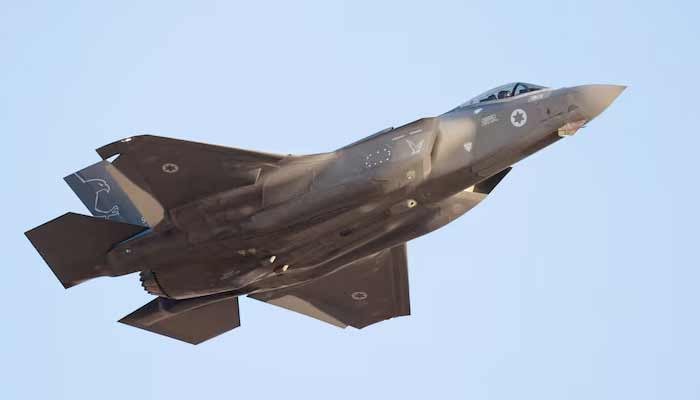
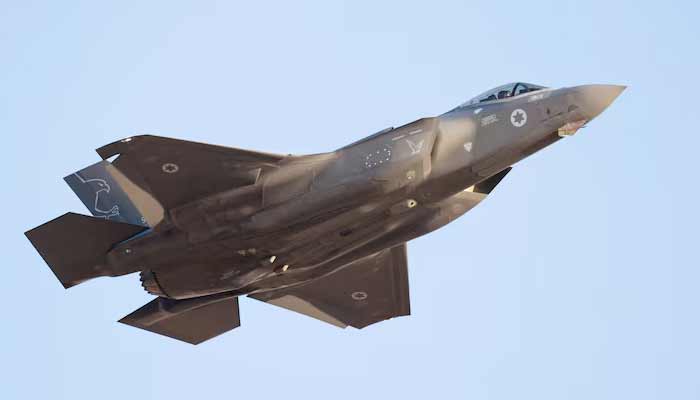
Israel on Sunday approved a multi-billion-dollar deal to acquire two combat squadrons of fighter jets from the United States, with Prime Minister Benjamin Netanyahu saying it would “reinforce” its air superiority.
The purchase includes a squadron of F-35 multi-role stealth fighters from Lockheed Martin and another of F-15IA warplanes from Boeing, Israel’s defence ministry said.
The plan aims to “ensure Israel’s air superiority for decades to come,” Defence Minister Israel Katz said in a statement.
“The F-35 and F-15IA acquisitions are central to the ‘Shield of Israel’ plan, which is designed to give the IDF (Israeli military) a lasting qualitative edge,” he said.
The F-35, a joint project between the United States and a number of allies, is one of the world’s most advanced military aircraft. Israel already operates several dozen of the jets.
Netanyahu said it would bolster Israel’s “overwhelming air superiority” but pledged to start building its own weapons and fighter planes.
“Our pilots can reach anywhere in the skies of Iran and are ready to do so, if needed,” he said.
“Over the next decade, we will add 350 billion shekels ($118 billion) to the defence budget in order to manufacture such weaponry in Israel and not be dependent on foreign suppliers,” he said.
“At the same time, we will develop ‘blue-and-white’ groundbreaking aircraft. This will change the entire picture,” he said, using a term for products developed in Israel.
Israel’s air force played a central role in the war in Gaza, carrying out one of the most intense aerial bombardment campaigns in recent history.
Thousands of strikes targeted what Israel said were Hamas positions, including tunnels, command centres and rocket launch sites, but vast areas of the densely populated territory were devastated, including homes, hospitals and schools.
Israel has also fought two wars against Iran in less than a year, during which its air power has been used for long-range strikes deep inside Iranian territory.
Israel recently approved its 2026 budget, which includes an increase in defence spending of billions of dollars.
Israel’s military spending has steadily increased since the war in Gaza began.
- Iranian envoy describes Islamabad’s efforts as “valuable”.
- Tehran transparent in its demands: Ambassador Moghadam.
- Says Washington must abandon its “aggressive posture”.
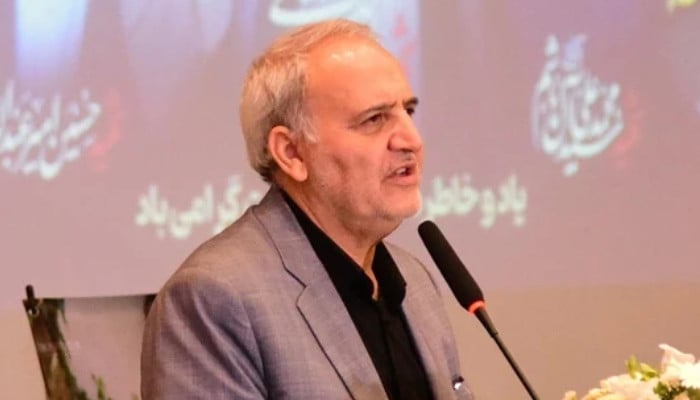
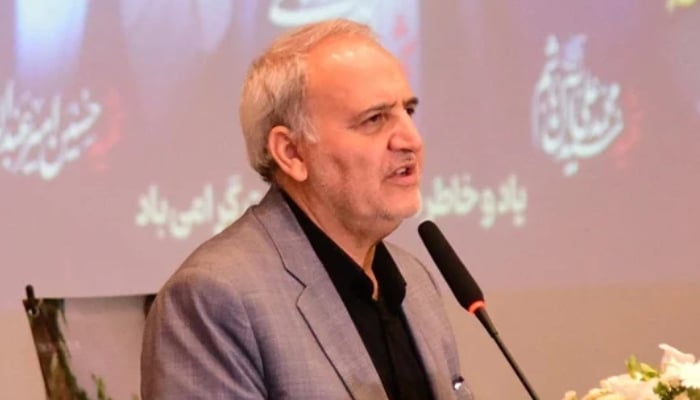
Iranian Ambassador to Pakistan Reza Amiri Moghadam on Sunday said Islamabad continues to serve as a central mediator in Iran’s negotiations with the United States.
“Pakistan remains a mediator, and no decision has been made to alter this,” the envoy said in an interview with an Iranian news agency, adding that progress in talks depends on a shift in Washington’s approach.
His comments came a day after US President Donald Trump cast doubt over the prospects of a new Iranian peace proposal.
Iran’s Tasnim and Fars news agencies reported on Saturday that Tehran submitted a 14-point proposal to mediator Islamabad.
Details included ending the conflict on all fronts and enacting a new framework for the crucial Strait of Hormuz, Tasnim said.
Ambassador Moghadam confirmed the same in today’s interview, saying Iran had conveyed a new negotiation plan to Washington via Pakistan.
He described Islamabad’s efforts in the negotiations process as “valuable” and central to the current diplomatic outreach.
Ambassador Moghadam maintained that Tehran was “transparent in its position and demands”, saying any meaningful progress was conditional on a change in US behaviour.
He stressed that Tehran would not compromise on its national interests or defence.
Talks between Iran and the US have remained stalled since the April 8 ceasefire, after a round of peace negotiations, held in Islamabad, failed to resolve the conflict.
The Pakistani government helped broker the ceasefire in the six-week conflict, which erupted after US and Israeli forces launched joint attacks on Iran on February 28.
The Middle East war has had a severe impact on the global economy after Iran effectively shut the Strait of Hormuz, a vital energy shipping route.
Tehran briefly reopened the strait for commercial traffic but closed it again, citing US ceasefire violations and the continued naval blockade of Iranian ports.
Meanwhile, the Iranian ambassador said that the international community was observing Tehran’s “clear and logical stance”, while criticising what he described as inconsistency in US policy.
Reaffirming Iran’s commitment to diplomacy, he said that Washington must abandon its “aggressive posture” and respect Iran’s rights for negotiations to move forward.
Ambassador Moghadam also highlighted growing political, economic and trade ties between Pakistan and Iran, noting that border crossings between the two nations played a crucial role in bilateral trade and regional connectivity.
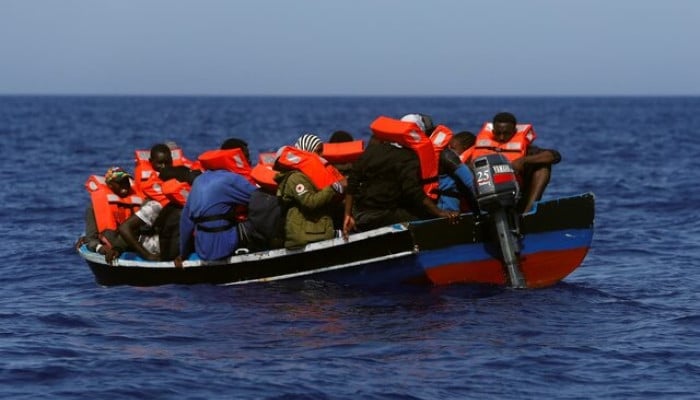
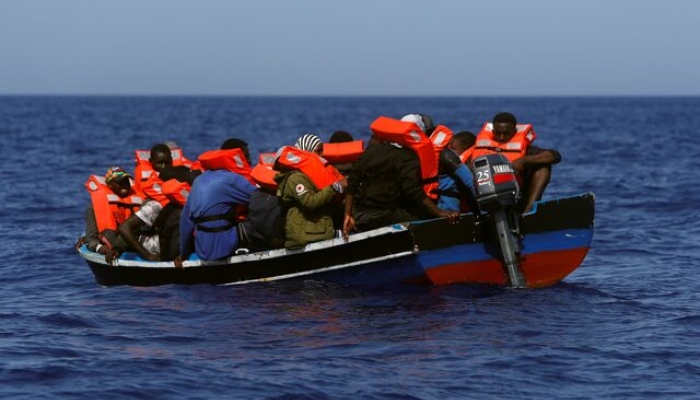
Two young women believed to be of Sudanese origin died Sunday while trying to reach Britain from northern France in a small boat, officials said.
The women, aged about 20, were aboard a small boat carrying 82 people, Christophe Marx, a regional government official, told reporters.
The boat set out to sea during the night from Saturday to Sunday, but “the engine wouldn’t start” and the boat began to drift, Marx said.
Seventeen people were rescued at sea and taken to the port of Boulogne-sur-Mer.
The boat with the remaining 65 people on board eventually ran aground on a beach near Neufchatel-Hardelot, about 12 kilometres (seven miles) south of Boulogne-sur-Mer, he said, adding that the victims had been found “dead inside the boat”.
Thirteen people with moderate injuries and three others with serious wounds, including burn victims, were taken to the hospital.
They were “being treated and will be interviewed by border police to determine who is responsible for this crossing”, Marx said.
He said an investigation would confirm the nationality of the victims. This is the third such tragedy in just over a month at the French-British border.
On April 1, two migrants died off the coast of Gravelines in northern France while attempting to reach the United Kingdom.
On April 9, two men and two women died, swept away by the currents.
In 2025, at least 29 migrants died at sea in the region, according to an AFP tally based on official French and British sources.
Britain and France last month signed a new three-year deal on security operations to stop the crossings.
France will increase the number of police and gendarmes patrolling the coast while the British government will increase its contribution to the cost.
According to French officials, the number of arrivals in Britain so far this year has been drastically cut from 2025.


Israel approves deal to buy fighter jets from US

Karachi’s Shahrah-e-Bhutto to open before Eid ul Adha, announces CM Murad

Sting embarks on “The Last Ship”

-

 Tech6 days ago
A Brain Implant for Depression Is About to Be Tested in Humans
-
 Business6 days ago
‘I had £20,000 stolen and had to fight a 13-month fraud reporting rule to get it back’
-

 Tech6 days ago
Almost 90% of women leave tech industry within 10 years | Computer Weekly
-
 Business1 week ago
Pakistan’s oil market is fuelling the crisis | The Express Tribune
-

 Tech5 days ago
This Ambitious Laptop Doesn’t Leave Much Room for Your Hands
-

 Entertainment6 days ago
Melania Trump says ABC should ‘take a stand’ on late-night host Kimmel
-

 Sports5 days ago
Pro wrestling star Steph De Lander reveals how colleague’s advice helped lead her to title triumph at ACW
-
 Business6 days ago
Anta: The Chinese sports brand taking on Nike and Adidas