

Fashion
Apparel Group brings Levi’s Kids to India’s premium kidswear market


The introduction of Levi’s Kids strengthens Apparel Group’s commitment to strategic category diversification, particularly within India’s rapidly expanding premium kidswear segment. As Indian consumers increasingly seek global brands, durable quality, and value-driven fashion for their children, Levi’s Kids enters the market as a strong, differentiated offering backed by one of the most trusted names in apparel.
Apparel Group will leverage its extensive retail footprint, operational excellence, and Indian market expertise to establish and scale the brand across key metros and urban centers. With a strong omnichannel approach, Levi’s Kids has already debuted on leading e-commerce marketplaces, with standalone store openings set to follow in a phased rollout. This dual-channel strategy ensures both reach and depth — providing parents with convenient access to a globally established brand alongside curated in-store experiences tailored to Indian families.
Levi’s Kids has entered India through Apparel Group, strengthening its premium kidswear portfolio as demand for global, durable and value-focused brands grows.
The brand will expand through an omnichannel strategy across metros, offering high-quality denim, tees and everyday essentials for children aged 4-16, blending Levi’s iconic style with comfort-driven, durable design.
Abhishek Bajpai, Chief Executive Officer – Apparel Group India, comments, “The introduction of Levi’s Kids marks an exciting milestone in our journey of bringing world-class brands and value-driven retail experiences to Indian consumers. Premium kidswear is a high-potential category, and Levi’s — backed by its heritage, trust, and universal appeal — is uniquely positioned to lead it. We look forward to building a strong and enduring footprint for Levi’s Kids in India.”
Levi’s Kids brings the brand’s multigenerational legacy of craftsmanship, authenticity, and effortless American style to children aged 4 to 16. The collection blends iconic Levi’s design DNA — such as classic indigo denim, the signature red tab, and timeless silhouettes — with kid-first functionality, including stretch-infused fabrics, soft cotton tees, adjustable waistbands, reinforced stitching, and movement-friendly fits.
From everyday essentials like graphic T-shirts, hoodies, shirts, and chinos to versatile denim jackets, skirts, shorts, and jeans in multiple washes, the range is thoughtfully designed for active, expressive, and growing children. Built with high-quality materials and durability at its core, Levi’s Kids offers clothing that ages beautifully, withstands repeat wear, and can be passed down — making it a smart and stylish choice for modern families.
Note: The headline, insights, and image of this press release may have been refined by the Fibre2Fashion staff; the rest of the content remains unchanged.
Fibre2Fashion News Desk (RM)








According to the informal agreement, there will be a new handling fee for each item entering the EU from non-EU countries and sent directly to EU consumers, to cover the extra cost of handling an ever-increasing number of individual parcels.
This will be paid by the same entity responsible for paying other customs charges for the same parcel, to avoid shifting the cost to consumers.
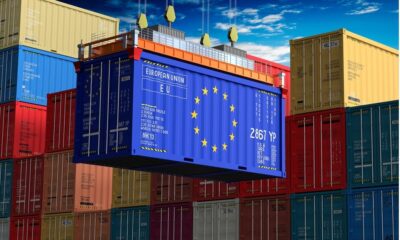
The European Parliament and European Council have reached a deal on a major reform of the EU Customs Code to address problems relating to e-commerce, safety of goods and efficiency.
A new handling fee will be charged for each item entering the EU from non-EU nations and sent directly to EU consumers.
The European Commission will establish the level of the fee and reassess it every two years.
The European Commission will establish the level of the fee and reassess it every two years. Member states will start collecting it as soon as the necessary information technology (IT) system becomes operational, and in any case no later than November 1, this year.
Under the new rules, sellers and platforms that facilitate distance sales of goods from non-EU countries directly to EU customers will be treated as importers. This will oblige them to provide customs authorities with all the necessary data, pay or guarantee any charges, and make sure that the goods comply with EU laws, an official release said.
These companies must be established in the EU or be represented by an EU-based entity having either authorised economic operator (AEO) or trusted trader status. This should prevent the use of shell companies.
To incentivise bulk shipments that are easier for customs authorities to check, non-EU country sellers and platforms are encouraged to operate warehouses in the EU. Their intra-EU client shipments would benefit from a lower handling fee, provided their goods were imported in collective packaging and large enough quantities to make customs checks more efficient.
Companies that repeatedly ignore EU rules could be punished with a fine of at least 1 per cent (and up to 6 per cent) of the total value of goods imported into the EU in the previous 12 months.
Additionally, customs authorities may suspend, revoke, or annul their trusted trader or AEO status and flag them as high-risk operators.
Import-export companies that follow the rules and agree to cooperate transparently with the customs authorities may benefit from a simplified ‘trust and check’ regime. This would initially require them to go through thorough vetting and grant customs authorities access to their electronic systems.
In exchange, their shipments would be checked less frequently and they would have more flexibility regarding the payment of duties and fees.
The current AEO qualification will remain in place to keep customs status accessible to smaller economic operators.
The reform also establishes a new customs data hub to be managed by the new EU Customs Authority (EUCA). It will be available for optional use by 2031 and mandatory by 2034.
The data hub will replace at least 111 software systems currently used by customs.
The provisional agreement needs to be officially approved by Parliament in plenary as well as by the EU Council, before it will become law.
Fibre2Fashion News Desk (DS)
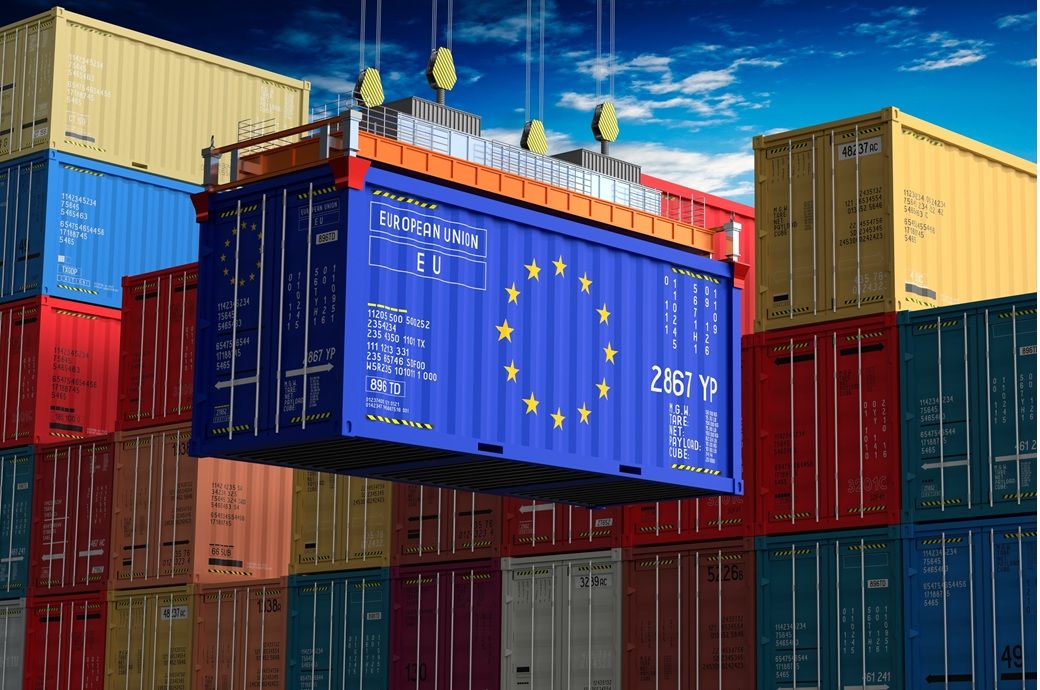
This was driven by an 8.36-per cent YoY decline in import volume and a 7.76-per cent YoY decrease in average unit prices.
The EU’s apparel imports fell by 15.48 per cent YoY in January to €7.03 billion, according to Eurostat.
Bangladesh’s apparel exports to the EU fell to €1.43 billion in January—a 25.25-per cent drop in value.
China remained the top exporter of apparel to the EU (€2.22 billion), but still saw a 6.9-per cent decline YoY in value.
India, Pakistan, Vietnam and Cambodia also remained in negative territory.
Bangladesh’s apparel exports to the bloc fell to €1.43 billion in January—a sharp 25.25-per cent drop in value. It saw a 17.49-per cent YoY decrease in the quantity of goods shipped, coupled with a 9.41 per cent drop in the unit price per kilogram.
China remained the top exporter of apparel to the EU (€2.22 billion), but still saw a 6.9-per cent decline YoY in value. Its unit prices dropped by 8.01 per cent YoY, while its export volume grew a bit by 1.21 per cent YoY.
Turkey faced a severe hit with a 29.12-per cent YoY decrease in apparel export value to the EU in the month, totaling €619.98 million.
Other countries like India, Pakistan, Vietnam and Cambodia remained in negative territory, reflecting a broad-based slowdown in the European fashion retail market.
Fibre2Fashion News Desk (DS)
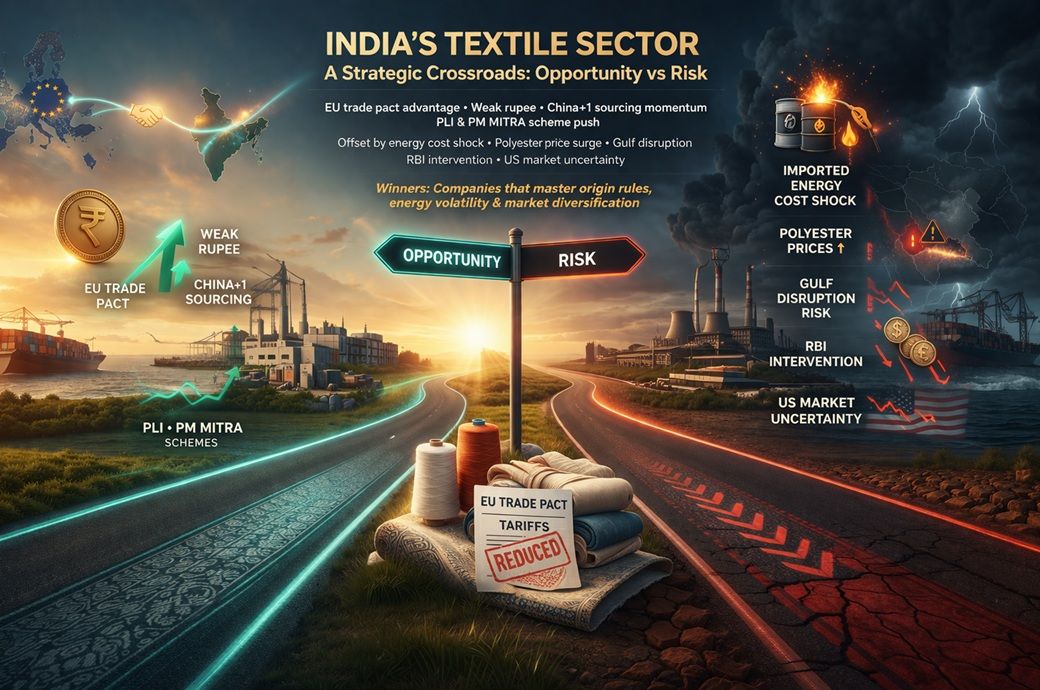
India’s textile outlook is turning structurally complex.
The EU pact targets ~99.5 per cent trade coverage with phased duty relief, while rupee weakness supports exports.
However, crude volatility, >80 per cent import energy dependence, polyester cost inflation and US market softness (≈28 per cent share) are fragmenting performance, reinforcing a shift towards cotton-led, EU-focused exporters.
Source link


Zayn Malik shares personal video message on ‘Mind of Mine’ 10th anniversary

EU Parliament, Council reach deal on major reform of Customs Code

Tiger Woods released from jail after DUI arrest; eyes appear bloodshot in booking photo

-
 Business1 week ago
Flipkart group CFO to leave co amid IPO plans – The Times of India
-
 Business1 week ago
Video: The Effects of High Oil Prices
-

 Fashion1 week ago
China’s textile & apparel exports surge 17% to $50 bn in Jan-Feb 2026
-

 Sports1 week ago
Rating Adidas’ 2026 World Cup away shirts: Argentina, Spain, Mexico and more
-
 Fashion1 week ago
The hidden $1.62 war tax now embedded in every garment you source
-

 Sports1 week ago
American Conference Commissioner Tim Pernetti thanks Trump for Army-Navy game executive order
-
Tech1 week ago
The Corsair 4000D RS PC Case Keeps Your System Cool
-

 Tech1 week ago
‘Uncanny Valley’: Nvidia’s ‘Super Bowl of AI,’ Tesla Disappoints, and Meta’s VR Metaverse ‘Shutdown’