

Business
Air travel now runs on code: Inside the tech backbone reshaping airports – The Times of India


MUMBAI: As the global air travel industry becomes larger and more complex with each passing decade, airlines and airports are increasingly moving towards digitisation. From printed paper tickets that came in airline jackets, to home-printed e-tickets, to today’s digital boarding passes on mobile phones; from conventional check-in and immigration counters to biometric gates; and from local storage of information to cloud-hosted passenger systems, digitisation has transformed every stage of the passenger journey.One of the most closely watched developments is unfolding at Paris Charles de Gaulle Airport (CDG), where a trial is under way to use computer vision and biometrics to identify and track checked baggage. The system captures a bag’s “biometrics” or digital signature through high-resolution imaging and AI-driven pattern recognition, reducing reliance on printed tags. The AI-driven system makes it easier to track bags that go errant, especially at mega transfer hubs. If successful, this could cut sharply into the US$5 billion in annual losses the aviation industry suffers from mishandled baggage, losses borne largely by airlines, Sumesh Patel, SITA President for Asia Pacific said in an interview with TOI. The trial also marks a turning point: “For any such technology to be effective, every stakeholder has to step up—airlines, airports, and ground handlers,” Patel said. “Airlines must integrate new baggage platforms, airports must install advanced imaging cameras across conveyor systems, and backend applications must be synchronised to handle massive real-time data,” he said, adding that he expects the adoption timeline to be under a decade, which is much faster than the past tech cycles.Auto-reflight: Lost bags now rebook themselvesA companion technology already in commercial use is auto-reflight, currently being used by Lufthansa. Lost bags are automatically matched to the next logical flight using AI, without waiting for human intervention, Patel said, adding that Lufthansa now processes around 70% of its missed bags through auto-reflight. The feature could be especially impactful in large global hubs such as London Heathrow, Frankfurt, Dubai, Doha, where tight connections and high transfer loads drive most baggage mishandling, he said. Whether Indian carriers adopt it may depend less on domestic volumes and more on their exposure to such transit hubs. “If a carrier’s major hub adopts the solution, the airline would be keen to participate,” Patel noted. Some airlines are also experimenting with auto-notification, where passengers are alerted the moment a bag is confirmed missing. For Qantas, the first rollout sent notifications during flight, unintentionally overwhelming cabin crew with questions. The system now alerts passengers only when they step off the aircraft.India’s aviation growth is forcing a digital leapIndia, meanwhile, is undertaking one of the world’s largest aviation digitisation programmes. The country has the world’s largest airport cloud-enabled platform that handles passenger processing across its 61 private and govt-owned airports, a digital backbone that handles tasks like conventional check-in and biometrics enabled DigiYatra check-in along with other jobs like baggage processing, passenger identity documentation etc. The 61 airports include 50 govt-run Airports Authority of India (AAI) airports. The programme is part of AAI’s shift to a unified, cloud-based platform that will modernise passenger and baggage processing at its airports. More than 3,500 touchpoints are planned, giving smaller airports the same scalable, technology-driven capabilities as larger ones, said Patel.Unlike other markets where individual airports drive adoption, making for a fragmented adoption, India’s change is being led system-wide as AAI is govt-owned while DigiYatra is a govt-backed initiative. Even conventional check-in counters across dozens of airports now run fully on cloud, enabling uniform upgrades, faster deployment, and real-time data access.India has the third largest domestic aviation market in the world, the country handled 411 million passengers last year (including international passengers) and contributes USD 53 billion to GDP through aviation. With new airports like Navi Mumbai and Jewar designed as digital-first terminals, cloud-enabled operations, biometrics, automated baggage systems, and integrated resource management are becoming foundational. At Navi Mumbai International Airport, for instance, 22 automated self-bag-drop units will enable touch-free processing from Day One.Learning from global IT outagesThe industry’s dependence on digital infrastructure also means outages hurt more than ever. From the global CrowdStrike-triggered disruption to local fibre cuts, the causes vary widely making prediction difficult. Patel emphasises the need for redundant systems like ‘Local DCS’, which act as on-site fallbacks if main airline systems disconnect. Singapore mandates such backups under its Critical Information Infrastructure (CII) framework. Patel said more governments may eventually follow.Airlines, too, are adapting. After IndiGo’s extensive early-December disruptions, the carrier announced more proactive passenger notifications last week and revised processes to prevent passengers from arriving at airports without clarity on delayed or cancelled flights. “The data is always there; it’s about how quickly processes evolve in response,” Patel said.The passenger is changing — fastSITA’s Passenger IT Insights reveal a striking trend: the world’s travellers are no longer dominated by frequent flyers. The fastest-growing cohorts are first-time or occasional flyers and older travellers, a shift visible across Europe, Asia, and North America. These passengers place a premium on clarity, trust, and convenience driving demand for biometrics, simpler check-ins, and real-time baggage visibility, according to the survey.Sanjeev K, SITA, VP Asia Pacific said the shift in passenger profiles globally has made digital adoption a critical focus. India and South Asia are witnessing rapid uptake of mobile and digital services, comparable in some ways to China’s advanced digital payment and app-driven ecosystem, he said, adding that passengers who may not be highly literate or familiar with airport processes are still adapting quickly when technology is made simple, visual and intuitive, often through formats similar to short social-media videos. “Older travellers gain confidence and a sense of accomplishment when they adopt the new technology,” he said. “older passengers are now comfortable with digital tools in their daily lives whether banking, messaging or other services. The initial difficulty lies mainly in understanding airport processes during a first trip. To bridge that gap SITA works closely with airports to ensure support systems are available to guide travellers through steps like using Digi Yatra, kiosks or self-bag drops,” he said. He added that any new technology involves a learning curve, and the aim is to make that first experience stress-free by providing timely assistance so that, after one or two uses, the process becomes second nature to passengers. Patel said that airlines and airports plan to invest USD 8.9 billion and USD 37 billion, respectively, in digital and biometric systems globally. The goal is a frictionless, self-service journey from curb to boarding. The long-term roadmap envisions a world where passengers check in once, digitally, and use that identity throughout their journey: at border control, retail, boarding, and baggage retrieval.












Motorists are facing higher fuel prices ahead of Easter break due to the conflict in the Middle East, the RAC says.
Source link
Business
E-cheques coming soon? RBI unveils Payments Vision 2028, plans wider oversight of digital players – The Times of India
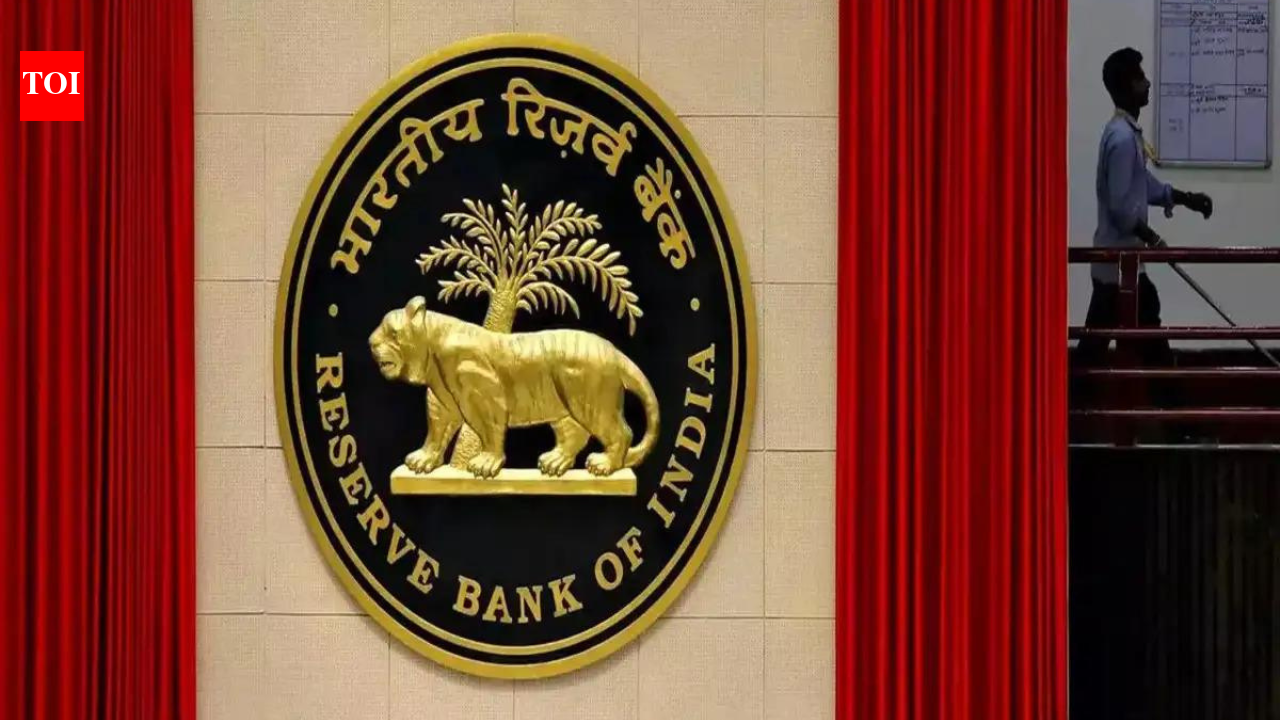
The Reserve Bank of India (RBI) on Friday unveiled its ‘Payments Vision 2028’ document, outlining a roadmap that includes exploring electronic cheques, expanding regulatory oversight to digital platforms, and strengthening safeguards in the fast-growing payments ecosystem, PTI reported.The central bank said it will examine the introduction of e-cheques to combine the advantages of paper instruments with the speed and reliability of digital payments. “To leverage the unique benefits of paper-based instruments and the speed and reliability of electronic payments, and cater to new business use cases, the introduction of electronic cheques in India shall be explored,” the RBI said.Alongside, the RBI is considering widening the regulatory ambit to include entities such as e-commerce marketplaces and centralised platforms that play a growing role in facilitating digital transactions.“In addition, e-commerce marketplaces and centralized platforms have been assuming significant responsibilities that could have implications on the orderly functioning of the payments ecosystem. These aspects shall be examined in detail and, if required, the scope of direct regulations shall be extended to cover such entities,” the document said.The vision document also proposes allowing users to enable or disable transactions across digital payment modes, similar to controls available for card transactions.To address fraud risks, the RBI is exploring a “shared responsibility framework” under which both the issuing bank and the beneficiary bank would share liability in cases of unauthorised digital transactions.The central bank also plans to review cheque design and security features, introduce a Domestic Legal Entity Identifier (DLEI) framework for better transaction traceability, and bring in a Cyber Key Risk Indicators (KRI) framework for non-bank payment system operators.Other initiatives include exploring white-label solutions in the Aadhaar Enabled Payment System (AePS), developing interoperability in the Trade Receivables e-Discounting System (TReDS), and introducing a ‘Payments Switching Service’ to ease customer migration across platforms.The RBI said it will also review the cross-border payments ecosystem to improve efficiency and streamline authorisation processes, alongside publishing periodic reports on global and domestic payment trends.Additionally, the central bank aims to enhance access to payment data and reimagine the card payments ecosystem by promoting secure tokenisation, improved transparency in pricing, and greater choice for users and merchants.

Hyderabad: Pharma player Hetero on Friday said it has rolled out exports of its generic semaglutide injection portfolio as part of a multi-year plan to widen access to treatments for type 2 diabetes and obesity in more than 75 countries.The Hyderabad-based pharmaceutical company said initial rollouts are under way in Africa, Asia and the Middle East, with additional launches planned in other markets subject to regulatory approvals.The injectable therapies will be sold under the brand names Truglyx, Rolmodl and Moto G. Semaglutide belongs to the GLP-1 class of medicines, which are used in diabetes care and weight management.Hetero said the export launch is part of its broader strategy to improve access to advanced cardio-metabolic therapies, particularly in emerging markets.The company said the products will be offered in multi-dose disposable pen devices designed in line with innovator formats and will be available in several strengths, including 0.25 mg, 0.5 mg, 1 mg, 2 mg, 1.7 mg and 2.4 mg, allowing dosing flexibility for both diabetes and obesity treatment.Hetero said it is also awaiting approval from India’s Central Drugs Standard Control Organisation (CDSCO) after completing clinical trials in type 2 diabetes and obesity and plans an India launch after regulatory clearance.Hetero managing director Dr Vamsi Krishna Bandi said the company aims to provide high-quality, affordable generic semaglutide through a single global product platform backed by its manufacturing and development capabilities.He said Hetero would use its commercial networks across Asia, the Middle East, Africa and Latin America to support supply and access. The Hyderabad-headquartered Hetero operates in more than 145 countries and employs over 30,000 people.


FIFA clears Fulham’s Diop, Ajax’s Bounida to play for Morocco

Iranian Hackers Breached Kash Patel’s Email—but Not the FBI’s

Tiger Woods involved in rollover crash in Florida less than 2 weeks before Masters: reports

-
 Business7 days ago
Flipkart group CFO to leave co amid IPO plans – The Times of India
-

 Fashion7 days ago
China’s textile & apparel exports surge 17% to $50 bn in Jan-Feb 2026
-

 Sports1 week ago
Rating Adidas’ 2026 World Cup away shirts: Argentina, Spain, Mexico and more
-
 Business1 week ago
Video: The Effects of High Oil Prices
-

 Sports7 days ago
American Conference Commissioner Tim Pernetti thanks Trump for Army-Navy game executive order
-

 Fashion1 week ago
The hidden $1.62 war tax now embedded in every garment you source
-
Tech1 week ago
The Corsair 4000D RS PC Case Keeps Your System Cool
-

 Tech1 week ago
‘Uncanny Valley’: Nvidia’s ‘Super Bowl of AI,’ Tesla Disappoints, and Meta’s VR Metaverse ‘Shutdown’