

Politics
Tens of thousands attend funeral of killed Bangladesh student leader



- Interim leader says Hadi will remain in heart as long as country exist.
- Amnesty International urges impartial inquiry of Hadi’s killing.
- Hadi’s death triggers widespread protest, unrest across country.
Tens of thousands of mourners gathered in the Bangladeshi capital Dhaka on Saturday for the funeral of a student leader, after two days of violent protests over his killing.
Huge crowds accompanied the funeral procession of Sharif Osman Hadi, a key figure in last year’s pro-democracy uprising who died in a hospital in Singapore on Thursday after being shot by masked gunmen while leaving a Dhaka Mosque.
Police wearing body cameras were deployed in front of the parliament building where the funeral prayers were held.
Hadi’s body, which was brought to the capital on Friday, was buried at the central mosque of Dhaka University.
“We have not come here to say goodbye,” interim leader Muhammad Yunus said in an emotional speech.
“You are in our hearts and you will remain in the heart of all Bangladeshis as long as the country exists.”
Hadi, 32, was an outspoken critic of India and was set to contest the general elections in February.
Iqbal Hossain Saikot, a government employee who travelled from afar to attend the prayers, said Hadi was killed because he staunchly opposed India.
He will continue to live “among the millions of Bangladeshi people who love the land and its sovereign territory”, Saikot, 34, told AFP.
Hadi’s death has triggered widespread unrest, with protesters across the South Asian nation demanding the arrest of those responsible.
Late Thursday, people set fire to several buildings in Dhaka including the offices of leading newspapers Prothom Alo and the Daily Star.
Critics accuse the publications of favouring neighbouring India, where Bangladesh’s ousted prime minister Sheikh Hasina has taken refuge since fleeing Dhaka in the wake of the 2024 uprising.
Rights group Amnesty International on Saturday urged Bangladesh’s interim government to carry out “prompt, thorough, independent and impartial” investigations into Hadi’s killing and the violence that followed.
It also expressed alarm over the lynching of Hindu garment worker Dipu Chandra Das following allegations of blasphemy.
Yunus said seven suspects had been arrested in connection with Das’s killing in the central district of Mymensingh on Thursday.
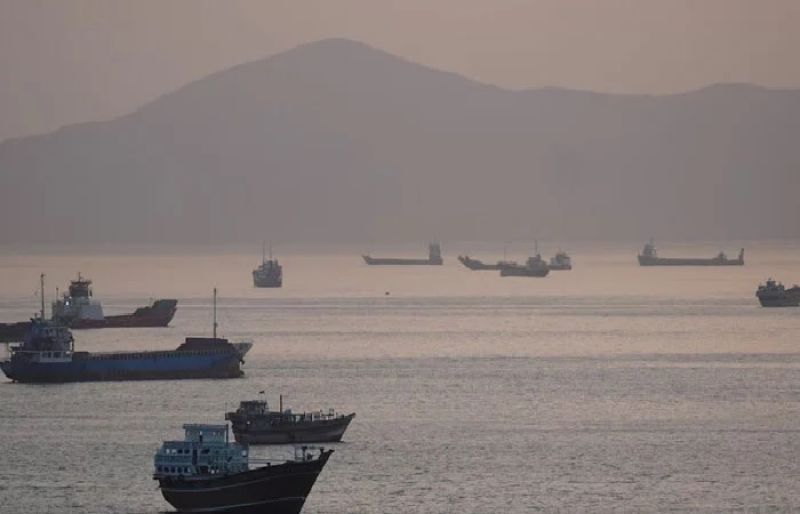
Iran said it had forced a US warship to turn back from entering the Strait of Hormuz on Monday, although US Central Command quickly denied a report of a missile strike.
A senior Iranian official told Reuters Iran had fired a warning shot and that it was unclear whether the warship had been damaged.
Oil prices jumped 5% on renewed concerns that the vital oil route, already shut for over two months at huge cost to the global economy, would remain blocked for considerably longer, with little sign of progress towards a negotiated resolution of Washington’s conflict with Iran.
Iran’s navy said it had prevented “American-Zionist” warships from entering the Strait area by issuing a “swift and decisive warning”.
Iran’s semi-official Fars news agency said two missiles had hit the warship near the port of Jask at the southern entrance to the strait, but Centcom denied that any warship had been struck.
It said its forces were supporting President Donald Trump’s “Project Freedom”, which aims to “guide out” commercial ships stranded in the Gulf by the US-Israeli war on Iran, and were enforcing a blockade of Iranian ports.
Trump gave few details of his plan to aid ships and their crews who have been confined to the vital waterway and are running low on food and other supplies. Shipping companies gave no sign of being ready to resume sailings.
“We have told these Countries that we will guide their Ships safely out of these restricted Waterways, so that they can freely and ably get on with their business,” Trump said in a post on his Truth Social site on Sunday.
Iranian military’s warning
In response to Trump’s announcement, Iran’s unified command told commercial ships and oil tankers to refrain from any movement that was not coordinated with Iran’s military.
“We have repeatedly said the security of the Strait of Hormuz is in our hands and that the safe passage of vessels needs to be coordinated with the armed forces,” Ali Abdollahi, head of the forces’ unified command, said in the statement.
“We warn that any foreign armed forces, especially the aggressive US Army, will be attacked if they intend to approach and enter the Strait of Hormuz.”
Iran has blocked nearly all shipping into and out of the Gulf apart from its own since the start of the war, cutting off around a fifth of the world’s oil and gas shipments and sending oil prices soaring by 50% or more.
Centcom said it would support Trump’s “Project Freedom” with 15,000 military personnel and more than 100 land- and sea-based aircraft, plus warships and drones.
“Our support for this defensive mission is essential to regional security and the global economy as we also maintain the naval blockade,” Admiral Brad Cooper, the Centcom commander, said in a statement.
‘Convoys not a solution’
Hundreds of commercial vessels and as many as 20,000 seafarers have been unable to transit the strait during the conflict, the International Maritime Organisation says.
Container shipping group Hapag-Lloyd said on Monday its risk assessment was unchanged and that transit through the strait was still not possible.
Numerous executives from the shipping and oil industries have said they need an end to hostilities and some form of peace deal because military convoys alone are not enough to allow normal traffic to resume safely.
The United Arab Emirates accused Iran of attacking an empty crude oil tanker belonging to the Abu Dhabi state oil firm ADNOC with drones as it attempted to pass through the strait.
In a rare piece of good news, Pakistan said the US had handed over 22 crew from an Iranian container vessel that American forces had seized last month.
Islamabad, which has been trying to broker a peace deal, described the US move as a “confidence-building measure”.
The Trump administration has been seeking help from other countries to secure shipping in the Strait. Centcom said the latest effort announced by Trump would combine “diplomatic action with military coordination”.
It was not immediately clear which countries the US operation would aid or how the operation would work. It will not necessarily include US Navy ships escorting commercial ships, Axios reporter Barak Ravid said in a post on X.
The White House did not immediately respond to a request for comment. Trump said any interference with the US operation would have to be “dealt with forcefully”.
Iran reviews US response to peace proposal
The United States and Israel suspended their bombing campaign against Iran four weeks ago, and US and Iranian officials held one round of face-to-face talks. But attempts to set up further meetings have failed.
Iranian state media said on Sunday Washington had conveyed its response to a 14-point Iranian proposal via Pakistan, and that Tehran was now reviewing it. Neither side gave details.
A senior Iranian official has confirmed that Tehran envisages ending the war on all fronts — including Israel’s attacks on Lebanon — and resolving the shipping standoff first, while leaving talks on Iran’s nuclear programme for later.
Washington wants Tehran to give up its stockpile of more than 400kg (900 pounds) of highly enriched uranium, which the United States says could power a bomb.
Iran says its nuclear programme is peaceful, although it is willing to discuss some curbs in return for the lifting of sanctions. It had accepted such curbs in a 2015 deal that Trump abandoned.
Trump is under pressure to break Iran’s hold on the Strait of Hormuz to try to prevent soaring gasoline prices, causing a voter backlash against his Republican Party in midterm congressional elections in November.
- Votes still being counted under tight security.
- Modi’s BJP has never won before in West Bengal.
- BJP wages aggressive campaign to dislodge regional party.
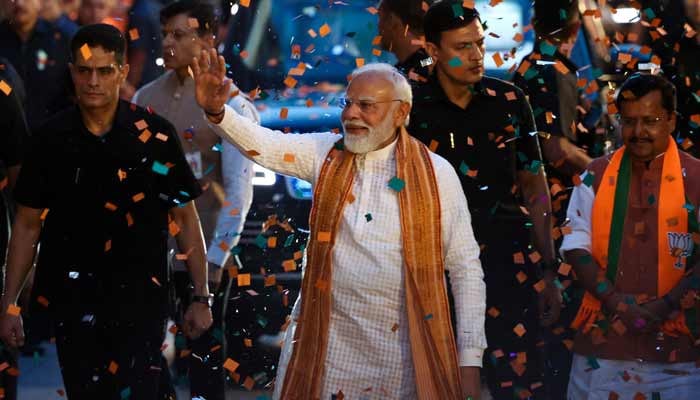
Indian Prime Minister Narendra Modi claimed a “record” victory on Monday in key elections in opposition-held West Bengal state after official trends and partial results showed a thumping majority for his Hindu nationalist party.
Votes were still being counted under tight security in the state of more than 100 million people, one of five states and territories that held elections in April and May where results were also being announced on Monday.
The results should put Modi on a stronger footing while he battles a series of economic and foreign policy challenges, including high unemployment rates and a pending US trade deal, ahead of a general election in 2029.
In keenly fought West Bengal, where Modi’s Bharatiya Janata Party (BJP) has never won before, the party was leading in 156 of the 293 seats and had won 48 others, according to the Election Commission of India.
“The 2026 West Bengal Assembly Elections will be remembered forever,” Modi said on social media. “People’s power has prevailed and BJP’s politics of good governance has triumphed.”
“BJP’s record win in West Bengal would not be possible without the efforts and struggles of countless Karyakartas (workers) over generations,” Modi said.
Senior party leaders and thousands of supporters celebrated on the streets of the state capital Kolkata, joyously swaying to victory tunes.
The BJP, the ruling party in the national parliament, waged an aggressive campaign to dislodge the powerful regional party of firebrand leader Mamata Banerjee, in power in West Bengal since 2011.
Scuffles broke out outside several counting centres in the state, and police used batons to control the crowd. Past elections have resulted in violence.
This campaign was marked by protests over the removal of millions of names from voter rolls, billed as removing ineligible voters but which critics said was skewed against marginalised and minority communities.
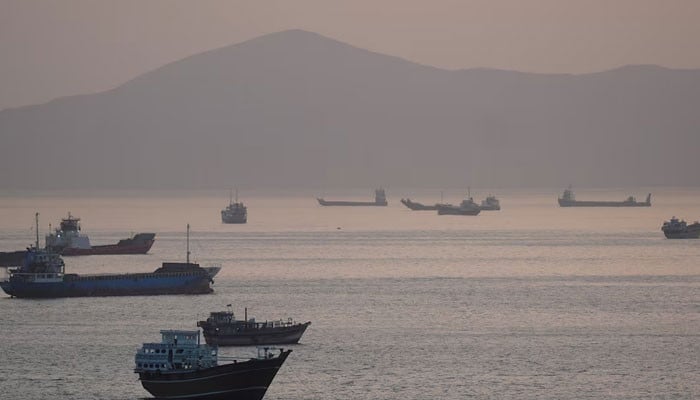
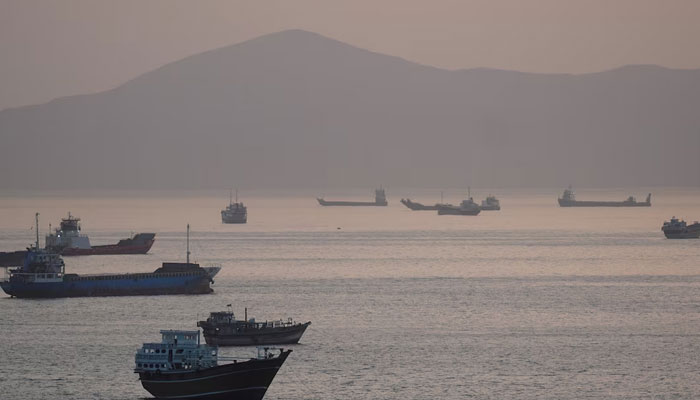
- Iran says it stopped ‘American-Zionist’ ships entering Hormuz.
- US military denies Iranian Fars report of missile strikes.
- Trump says US starting operation to aid stranded ships.
DUBAI/DORAL: Iran said it had forced a US warship to turn back from entering the Strait of Hormuz on Monday, although US Central Command quickly denied a report of a missile strike.
A senior Iranian official told Reuters Iran had fired a warning shot and that it was unclear whether the warship had been damaged.
Oil prices jumped 5% on renewed concerns that the vital oil route, already shut for over two months at huge cost to the global economy, would remain blocked for considerably longer, with little sign of progress towards a negotiated resolution of Washington’s conflict with Iran.
Iran’s navy said it had prevented “American-Zionist” warships from entering the Strait area by issuing a “swift and decisive warning”.
Iran’s semi-official Fars news agency said two missiles had hit the warship near the port of Jask at the southern entrance to the strait, but Centcom denied that any warship had been struck.
It said its forces were supporting President Donald Trump’s “Project Freedom”, which aims to “guide out” commercial ships stranded in the Gulf by the US-Israeli war on Iran, and were enforcing a blockade of Iranian ports.
Trump gave few details of his plan to aid ships and their crews who have been confined to the vital waterway and are running low on food and other supplies. Shipping companies gave no sign of being ready to resume sailings.
“We have told these Countries that we will guide their Ships safely out of these restricted Waterways, so that they can freely and ably get on with their business,” Trump said in a post on his Truth Social site on Sunday.
Iranian military’s warning
In response to Trump’s announcement, Iran’s unified command told commercial ships and oil tankers to refrain from any movement that was not coordinated with Iran’s military.
“We have repeatedly said the security of the Strait of Hormuz is in our hands and that the safe passage of vessels needs to be coordinated with the armed forces,” Ali Abdollahi, head of the forces’ unified command, said in the statement.
“We warn that any foreign armed forces, especially the aggressive US Army, will be attacked if they intend to approach and enter the Strait of Hormuz.”
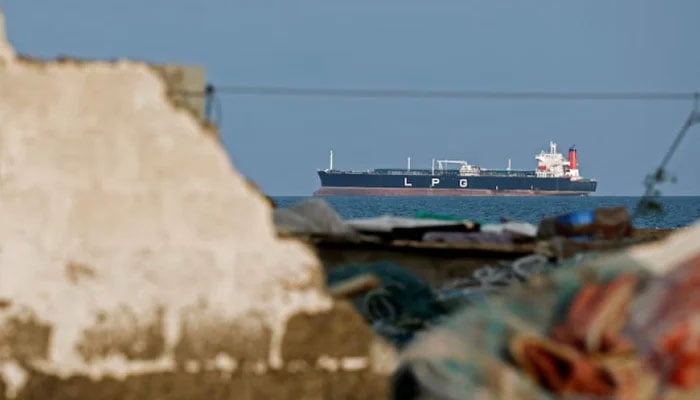
Iran has blocked nearly all shipping into and out of the Gulf apart from its own since the start of the war, cutting off around a fifth of the world’s oil and gas shipments and sending oil prices soaring by 50% or more.
Centcom said it would support Trump’s “Project Freedom” with 15,000 military personnel and more than 100 land- and sea-based aircraft, plus warships and drones.
“Our support for this defensive mission is essential to regional security and the global economy as we also maintain the naval blockade,” Admiral Brad Cooper, the Centcom commander, said in a statement.
‘Convoys not a solution’
Hundreds of commercial vessels and as many as 20,000 seafarers have been unable to transit the strait during the conflict, the International Maritime Organisation says.
Container shipping group Hapag-Lloyd said on Monday its risk assessment was unchanged and that transit through the strait was still not possible.
Numerous executives from the shipping and oil industries have said they need an end to hostilities and some form of peace deal because military convoys alone are not enough to allow normal traffic to resume safely.
The United Arab Emirates accused Iran of attacking an empty crude oil tanker belonging to the Abu Dhabi state oil firm ADNOC with drones as it attempted to pass through the strait.
In a rare piece of good news, Pakistan said the US had handed over 22 crew from an Iranian container vessel that American forces had seized last month.
Islamabad, which has been trying to broker a peace deal, described the US move as a “confidence-building measure”.
The Trump administration has been seeking help from other countries to secure shipping in the Strait. Centcom said the latest effort announced by Trump would combine “diplomatic action with military coordination”.
It was not immediately clear which countries the US operation would aid or how the operation would work. It will not necessarily include US Navy ships escorting commercial ships, Axios reporter Barak Ravid said in a post on X.
The White House did not immediately respond to a request for comment. Trump said any interference with the US operation would have to be “dealt with forcefully”.
Iran reviews US response to peace proposal
The United States and Israel suspended their bombing campaign against Iran four weeks ago, and US and Iranian officials held one round of face-to-face talks. But attempts to set up further meetings have failed.
Iranian state media said on Sunday Washington had conveyed its response to a 14-point Iranian proposal via Pakistan, and that Tehran was now reviewing it. Neither side gave details.
A senior Iranian official has confirmed that Tehran envisages ending the war on all fronts — including Israel’s attacks on Lebanon — and resolving the shipping standoff first, while leaving talks on Iran’s nuclear programme for later.
Washington wants Tehran to give up its stockpile of more than 400kg (900 pounds) of highly enriched uranium, which the United States says could power a bomb.
Iran says its nuclear programme is peaceful, although it is willing to discuss some curbs in return for the lifting of sanctions. It had accepted such curbs in a 2015 deal that Trump abandoned.
Trump is under pressure to break Iran’s hold on the Strait of Hormuz to try to prevent soaring gasoline prices, causing a voter backlash against his Republican Party in midterm congressional elections in November.


Iran says it forced US warship back from Strait of Hormuz

It took 40 years for technology to catch up to this zipper design

Britney Spears case ends with guilty plea in reckless driving matter

-

 Tech1 week ago
A Brain Implant for Depression Is About to Be Tested in Humans
-

 Tech1 week ago
Almost 90% of women leave tech industry within 10 years | Computer Weekly
-
 Business7 days ago
‘I had £20,000 stolen and had to fight a 13-month fraud reporting rule to get it back’
-
 Business1 week ago
Pakistan’s oil market is fuelling the crisis | The Express Tribune
-

 Sports6 days ago
Pro wrestling star Steph De Lander reveals how colleague’s advice helped lead her to title triumph at ACW
-

 Entertainment1 week ago
Melania Trump says ABC should ‘take a stand’ on late-night host Kimmel
-

 Tech6 days ago
This Ambitious Laptop Doesn’t Leave Much Room for Your Hands
-

 Entertainment1 week ago
Norway joins Type 26 Frigate Programme to boost NATO naval power