

Sports
Ranking the FBS coaching hires: How all 30 moves grade out

After compiling a perfect coaching pedigree — he played for Bill Walsh, Tom Osborne and Bill Belichick and coached for Frank Solich and Chip Kelly — and going unbeaten at UCF in 2017, former Nebraska quarterback Scott Frost returned to Lincoln to save a flailing Cornhuskers program. It was perfect timing, and it seemed as if there were approximately a 100% chance of things working out beautifully.
Frost went 16-31 and was fired early in his fifth season.
After leading Cincinnati to extended success (53-10 from 2018 to 2022, including making the 2021 College Football Playoff), former Ohio State player and longtime Buckeyes assistant Luke Fickell took the Wisconsin head coaching job. He had a great résumé, had proved his player development chops and had modern ideas but was grounded in Big Ten physicality. It was a perfect hire.
Three years in, Fickell is 17-21. During the season, speculation swirled about his job status, and when the school announced he was returning for 2026, the Badgers actually perked up and played well down the stretch. But they still went 4-8, their worst record in 35 years.
The two most perfectly logical college football hires of the past decade either didn’t work out or haven’t to date, proving that the process of grading coaching hires immediately after they’re made is almost completely pointless. We never know how coaches will handle their new surroundings, and so much is determined by the school doing the hiring (or, in some cases, plain old luck).
Grading hires is also fun, however. And in this moment in college football’s transition to becoming a player-compensation sport, it’s a particularly interesting thought exercise. So we’re going to do it anyway.
Though a few vacancies are still on the board, we’ve seen 30 FBS head coaches hired thus far in the 2025-26 coaching carousel. Some schools sought a proven winner and committed the type of big-money (and guaranteed) contracts for which the sport has become increasingly known. Others opted for up-and-coming assistants, potentially choosing to invest some of those savings into player talent.
We don’t yet know who will be rewarded for their moves, and we know we’re going to be wrong with about half of our opinions. But let’s grade this year’s hires based purely on the logic at hand. I’m honestly a pretty easy grader — I just need to understand (and, preferably, agree with) the thought process. Therefore, a hire ranking into the 20s might still land a pretty good grade. But in theory, the higher the grade, the more likely the hire will succeed.

Grade: A+ (probably the best job available, filled by the best available coach)
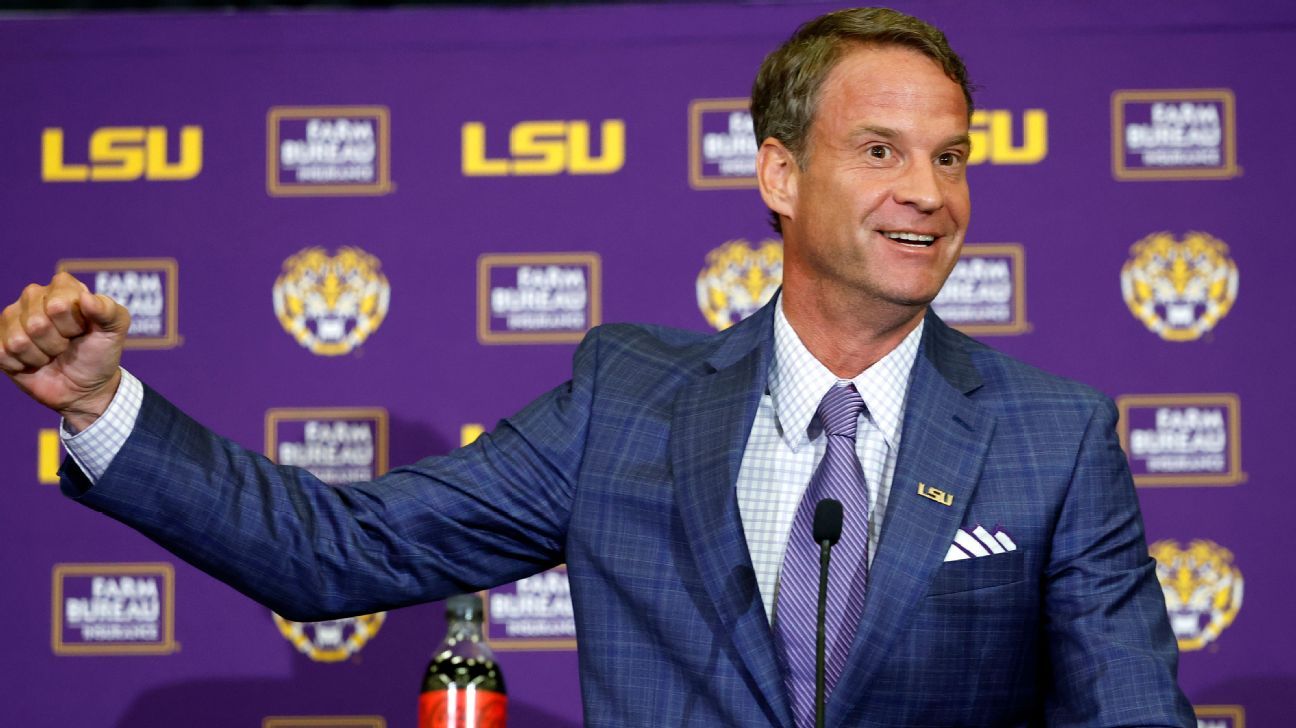
 1. Lane Kiffin, LSU. We won’t overthink this one. Everything about the run-up to Kiffin’s departure from Ole Miss was dramatic and strung out, and it will forever be part of his coaching biography that he left an active playoff team for a school he had beaten weeks earlier. But in his past nine years as a head coach, he has won double-digit games six times (at schools without much, or any, recent history of doing that), and he engineered the Rebels’ best three-year run in 60-plus years. He checks almost every box for a school that can afford to hire a guy who checks lots of boxes.
Grade: A (this just makes all the sense in the world)
 2. James Franklin, Virginia Tech. Last summer, I used stats to look at which coaches have done the best job of overachieving against their school’s recent history. Granted, Franklin’s average will go down once I’ve added this year’s Penn State team to the mix, but heading into 2025 he was No. 8 among all long-term coaches of the past 20 years.
Vanderbilt had averaged 3.1 wins per season over a 35-year period, and he won 24 games in three seasons there. Penn State had enjoyed four top-10 finishes in 19 years and was still dealing with sanctions when he arrived in 2014, and he oversaw five top-10 finishes in a nine-year run. No matter how the run at PSU ended, for Tech to land someone with that type of résumé was an absolute coup.
 3. Eric Morris, Oklahoma State. OSU was at its best under Mike Gundy when it was lighting up the scoreboard with an innovative offense. Morris teams do that. He was Texas Tech’s offensive coordinator as Patrick Mahomes transitioned from high-three-star recruit into Patrick Mahomes. Morris took on an unrecruited option quarterback named Cam Ward at Incarnate Word in 2020, and five years later Ward became the No. 1 pick in the draft. At North Texas, Morris took a walk-on (and high school backup) named Drew Mestemaker and turned him into a 4,000-yard passer. Morris might have the best quarterback-development track record in the sport at the moment, and in both of his head coaching stops he led historically unsuccessful programs to new heights. It’s hard to ask for much more.
 4. Jon Sumrall, Florida. The dirty little secret about Tulane this season is, the Green Wave weren’t actually great at anything. Sumrall had to rebuild a healthy portion of his depth chart after last season’s nine-win campaign, and he ended up starting a quarterback (Jake Retzlaff) who arrived in July. But through sheer will and adaptability, his team won 11 games and an American Conference title. That’s three conference titles for Sumrall in four years as a head coach. He can put together teams and units with outstanding talent, but even when he doesn’t, he finds a way to win.
 5. Jim Mora, Colorado State. CSU sure seemed to make a logical hire in Jay Norvell four years ago, but the former Nevada coach could never generate traction, and now the Rams are on an extended run of dreadful play: one winning season and an average SP+ ranking of 105.5 in the past eight years. But they aren’t in as much of a funk as UConn was in when it hired Jim Mora, and after a couple of iffy seasons he produced something brilliant: The Huskies won 18 games in 2024 and 2025 after winning just 19 in the previous seven seasons.
 6. Mark Carney, Kent State. The best Kent State could have hoped for when firing Kenni Burns in mid-April — maybe the single most awkward time on the calendar, at least when there was a spring portal window — was that Carney, the offensive coordinator and new interim head coach, would do enough to earn the job permanently. Man, did he do so. The Golden Flashes were 1-23 under Burns but perked up to 5-7 this fall. Were they actually good? Not really. Do we have any idea how Carney will navigate an ever-tricky offseason? Nope. The challenges are just beginning, but Carney earned the right to take them on.
 7. Matt Campbell, Penn State. When Campbell took over at Iowa State in 2016, the Cyclones had enjoyed two ranked finishes ever, none higher than 19th. He engineered a No. 9 finish in 2020 and a No. 15 showing in 2024, succeeding enough that going 8-4 in 2025 almost seemed disappointing. He had eight winning seasons in nine years after ISU had just seven between 1981 and 2016. The problem for almost anyone Penn State hired was going to be that he wouldn’t have a résumé that stacked up with that of the guy it just fired (Franklin). Campbell comes about as close as one can get.
 8. Charles Huff, Memphis. Huff was an assistant for Nick Saban and James Franklin, he went to four bowls and won a Sun Belt title in four years at Marshall, and he inspired enough loyalty with his players that, when the Thundering Herd let him leave for Southern Miss a year ago, more than 20 followed him to Hattiesburg and helped the Golden Eagles surge from 1-11 to 7-5. He has built teams around potent offenses and strong defenses. Another hire who checks lots of boxes.
Grade: A- or B+ (perfectly sensible)
 9. Bob Chesney, UCLA. Chesney took Assumption University to the Division II quarterfinals. He took Holy Cross to the FCS quarterfinals. He took James Madison to the College Football Playoff. Chesney is 132-51 as a head coach, and while he took over a great situation at JMU, he handled the jump in competition with as much ease as one could have hoped for. The reason this isn’t an outright A grade is that he has coached only in the East and Northeast, and UCLA is about as far away from there as possible. But in a world with such transient rosters, I’m not sure that actually matters.
 10. Will Stein, Kentucky. Of the teams in the current AP top 10, six are led by first-time head coaches. Hiring a known entity is great, but I was curious which schools would attempt to land the next Dan Lanning instead of a known (and expensive) winner. What better candidate for that title might there be than Stein, the guy who has operated a ruthlessly efficient offense for Lanning for three years and has ties to the state of Kentucky as well (albeit, mostly at Louisville)?
 11. Collin Klein, Kansas State. When Chris Klieman suddenly announced his retirement in early December, K-State clearly had a succession plan ready to go. Not that it was hard to piece together. Klein quarterbacked the Wildcats to a Big 12 title under Bill Snyder in 2012 and produced the No. 7 offense in the country (per SP+) as Klieman’s coordinator in 2023 before moving on to Texas A&M. It’s as if he were produced in a lab to be K-State’s head coach one day. (Granted, you could have said the same about Frost and Nebraska.)
 12. Alex Golesh, Auburn. Golesh inherited a program that had gone just 8-37 over the previous four seasons, and he immediately went 7-6 twice, then finished his run with a 9-3 team that was just six points away from 11-1. We’ll see if he can craft advantages from heavy tempo in a conference that has already seen plenty of it from Josh Heupel’s Tennessee and Lane Kiffin’s Ole Miss, but if you can win nine games at USF, you can win nine games at Auburn.
 13. Jimmy Rogers, Iowa State. Rogers went 27-3 with an FCS national title in two seasons at South Dakota State, and although he had inherited a brilliantly crafted culture in Brookings, he went to Washington State last season and immediately put together an exciting team there too. Built around defense, the Cougars nearly beat Ole Miss, Virginia and James Madison on the road down the stretch. Now he inherits a pretty good culture from Matt Campbell. This seems like a “Chris Klieman to Kansas State” type of hire — only Rogers is just 38 — and, well, that was a great hire.
Grade: B (don’t absolutely love it but won’t be surprised if it works out)
 14. Mike Jacobs, Toledo. Jacobs is basically Bob Chesney from two years ago. He brought the now-closed Notre Dame College to the Division II semifinals, then did the same for Lenoir-Rhyne. He went to Mercer and immediately built on what Drew Cronic had started, going 20-6 and reaching the playoffs twice. Jacobs is 94-23 as a head coach at two levels and three diverse schools. It’s a big jump to the FBS, but we’ve seen plenty of guys do it well.
He’s also an Ohio guy. Bonus points for that.
 15. Pete Golding, Ole Miss. Put in the ridiculously tough spot of trying to ensure continuity when Lane Kiffin left before the school’s first playoff run, Golding’s promotion makes plenty of sense. And I enjoyed his selection of East Carolina coordinator John David Baker to run the offense next year, so that’s one hurdle cleared. It seems that continuity hires have lower ceilings in general, so I’m at least a smidgen skeptical, but he obviously cleared his first hurdle with aplomb thanks to Ole Miss’ CFP blowout of Tulane.
 16. Morgan Scalley, Utah. Scalley worked for the departing Kyle Whittingham for 19 seasons, and he was named Utah’s head coach in waiting 18 months ago, so he has had plenty of time to prepare for the job. His history isn’t pristine, and succession plans often fail, but the logic here is pretty easy to understand.
 17. Tosh Lupoi, California. With obvious exceptions, most of the best active and recent coaches have come from the offensive side of the ball, so right or wrong, I tend to look at defensive coordinator-to-head coach hires with a bit more scrutiny. Or at least, I wait to see if said former DC makes an offensive coordinator hire that doesn’t seem either hostile to recent offensive trends (the Will Muschamp special) or focused too heavily on a “pro-style” approach that often lacks identity.
Long known as an elite recruiter, Lupoi has spent the past four seasons slowly building Oregon’s defense into a wrecking ball. It was beyond time for him to get a head coaching opportunity, and he aced his first test in making sure quarterback Jaron-Keawe Sagapolutele stays in Berkeley. But his first offensive coordinator is a young former Oregon staffer who spent the past three seasons as assistant QBs coach in the very pro-style pros.
Join us in welcoming Offensive Coordinator @JordanSom_TBB to Bear Territory 👏🐻#GoBears pic.twitter.com/MP1tvbLT7z
— Cal Football (@CalFootball) December 19, 2025
Maybe Jordan Somerville will turn out to be a genius hire, but I don’t love the logic there. It produces a slight point deduction, at least.
 18. Kirby Moore, Washington State. The former Mizzou offensive coordinator was worshipped by Tigers fans in his first year on the job and jeered in his third year when the points tapered off after a quarterback change and quarterback injury. That tends to be the way it goes. But he has the pedigree — he played for Boise State’s Chris Petersen, and he’s Kellen Moore’s brother — and honestly, when your track record of hires is as strong as Washington State’s of late, you get the benefit of the doubt.
 19. Billy Napier, James Madison. Napier was able to build major talent advantages at Louisiana and went 33-5 in his last three seasons there. That seems like extremely relevant experience now that he’s returning to the Sun Belt at a school that is building a strong infrastructure.
I don’t absolutely love this hire, but the reasons are mostly aesthetic. First, we saw him run a sloppy and mistake-prone program at Florida for 3½ seasons, and even if Florida isn’t anything like JMU, that’s still a data point. Plus, I don’t like when schools stray from a model that works. JMU had done the “Hire an FCS overachiever” thing for three straight hires and was rewarded beautifully for it. I just assumed the school would go after someone like Lehigh’s Kevin Cahill.
 20. Neal Brown, North Texas. Last we saw Brown at the mid-major level, he was leading Troy to 32 wins and a Sun Belt title (plus a win over LSU) in his final three seasons there. As with Napier, that might be all the experience that matters. He went just 37-35 in six seasons at West Virginia after that, though, which muddies the waters at least a bit. His offensive identity has muddied, too, through the years, which is at least a slight concern considering UNT just enjoyed its best season ever with a specific identity.
 21. JaMarcus Shephard, Oregon State. I’d love to have seen some solo coordinator experience on the résumé, as jumping straight from position coach (or even co-coordinator) can be tricky. But if you’re looking for a potential overachiever for a school that desperately needs a shot in the arm, hiring someone who has coached for Bobby Petrino, Jeff Brohm, Mike Leach and Kalen DeBoer — and has a bit of experience in the Pacific Northwest (plus a reputation as a strong recruiter) — seems like a great place to start. And getting a guy who can answer a question like this at his introductory news conference is even better.
 22. Brian Hartline, South Florida. Like Lupoi, Hartline is regarded as a masterful recruiter, and at USF he might be able to build at least some of the talent advantages that he was used to at Ohio State. He hasn’t yet hired a defensive coordinator — that could impact my thoughts quite a bit — and he went with a trusted old friend, former Ohio State co-coordinator Tim Beck, as his OC. None of this screams “tactical advantages,” but if Hartline recruits well enough, maybe it won’t matter.
 23. Jason Candle, UConn. A Mount Union product like Campbell, Candle won 81 games, two MAC titles and three division crowns (plus two MAC Coach of the Year awards) in 10 seasons at Toledo. He’s the school’s winningest coach — he’s clearly good. But with the talent advantages he was able to compile at UT, it always seemed that his Rockets should have won more than they did. That waft of disappointment makes it hard to evaluate him.
 24. Ryan Silverfield, Arkansas. Like Candle, Silverfield was able to build an excellent base of talent and score some big wins over teams such as Arkansas, Florida State, West Virginia, Iowa State and Mississippi State. But that made the letdown losses that followed — like a ghastly defeat against UAB this season — even more disappointing. Silverfield is clearly solid, but he won’t have many athleticism advantages in the SEC.
 25. Ryan Beard, Coastal Carolina. Bobby Petrino’s defensive coordinator at Missouri State for three seasons (and also his son-in-law), Beard has been regarded as a solid up-and-comer for a while. He took over the Bears in 2023 and went 19-16, and while that’s more impressive than it sounds — it includes a solid 7-5 debut and No. 99 SP+ ranking in MSU’s 2025 FBS debut — it’s still a pretty light résumé.
Grade: B- or C+ (I understand, but I’m not totally sure I agree)
 26. Tavita Pritchard, Stanford. There’s a certain poetry to general manager Andrew Luck hiring Pritchard, the quarterback before him at Stanford and the player who led the upset of USC that put Stanford’s late-2000s rise into motion. Pritchard has plenty of coaching experience too, including 13 seasons at Stanford. But the Cardinal averaged an offensive SP+ ranking of 84.0 in his five years as OC. He did oversee Jayden Daniels‘ excellent rookie season in the pros, and he has witnessed what it takes to build Stanford up. But that run as OC is hard for me to look past.
 27. Alex Mortensen, UAB. Mortensen was the fired Trent Dilfer’s offensive coordinator, and offense was definitely the Blazers’ stronger unit. UAB pulled a huge upset of Memphis after Mortensen took over as the interim coach, so you can probably see the hiring logic here. But the Blazers otherwise played to projections under Mortensen, and this seems a bit like settling to me.
 28. Will Hall, Tulane. Hall led West Georgia to the Division II semifinals in 2014 and 2015, he knows Tulane well (three years as an assistant), and he enjoyed brief success as Southern Miss’ head coach, going 7-6 in 2022. But while Southern Miss has become an awfully hard job, his Golden Eagles collapsed to 4-20 in 2023 and 2024. I’d love to have seen him take on a longer coaching rehab stint before getting the keys to such a high-profile Group of 5 job.
Grade: C (are you sure about this?)
 29. Blake Anderson, Southern Miss. Southern Miss caught a bad break of sorts, making such a good hire (Charles Huff) that he left for a higher-rung job after just one season. But hiring Anderson, who had one winning season in his past four head coaching seasons (one at Arkansas State, three at Utah State) and was fired by USU for failing to adhere to reporting requirements regarding “investigating issues of sexual misconduct, including domestic violence” and failing to “manage the team in a manner that reflects USU’s academic values” is questionable for any number of reasons.
 30. Pat Fitzgerald, Michigan State. At first glance, this seems right. Fitzgerald, still only 51, won 110 games at Northwestern with a pair of division titles and three seasons of double-digit wins. Who better than a known Big Ten overachiever to take over a program that has fallen into quite an underachieving rut?
That logic falls apart pretty quickly, however. Even including his success during the 2020 Covid season, a year in which lots of teams and coaches saw success they couldn’t maintain under normal circumstances, Fitzgerald went 14-31 in his last four seasons at Northwestern. Its average offensive SP+ ranking over these four years was a ghastly 108.5, and perhaps more worrisome is that, following the retirement of longtime defensive coordinator Mike Hankwitz after 2020, his last two teams sank to 49th and then 62nd in defensive SP+. The Wildcats fell to 3-9 in 2021 and 1-11 in 2022.
Simply put: If Michigan State had employed Fitzgerald from 2019 to 2022, the school would have fired him. Jonathan Smith was just fired for going 4-15 in part of two seasons, and instead of embarking on a thorough replacement search, the school replaced him the very next day with a guy who went 4-20 in his past two years. Fitzgerald has no track record of success in the NIL-and-transfers era either, and while it might turn out that he has all the right answers, why would you pay $6 million a year to find out?
(Plus, while Fitzgerald was found to have not known about or encouraged the hazing and sexual abuse that was allegedly occurring during his time at NU, that’s only so much of an exoneration for a the-buck-stops-here type of coach.)
This is the one power-conference hire I just don’t like. Again: Maybe things will work out great. Our guts are wrong about hires all the time. Fitzgerald is still pretty young, and no one simply forgets how to coach. But with so little recent success and with so much recent change in the sport, I assumed he would need to prove himself at the G5 level before being handed the keys to a big-time program again. State is taking a massive risk.
Sports
Jacob Fatu chooses to acknowledge violence, AAA Mega Championship makes WWE history and more from Raw
NEWYou can now listen to Fox News articles!
Roman Reigns wanted Jacob Fatu in the ring for an “acknowledgement ceremony” on “Monday Night Raw,” despite concerns from general manager Adam Pearce and Jimmy Uso.
Reigns learned the hard way of the old saying, “Be careful what you wish for.”
Despite the contract signing that Fatu would have to “acknowledge” Reigns after he lost the World Heavyweight Championship, Fatu wouldn’t have any of that.
Instead, he chose violence. He ignored Jey Uso’s pleas to think about what he was doing. Fatu, instead, headbutted Uso multiple times.
ZERO BS. JUST DAKICH. TAKE THE DON’T @ ME PODCAST ON THE ROAD. DOWNLOAD NOW!
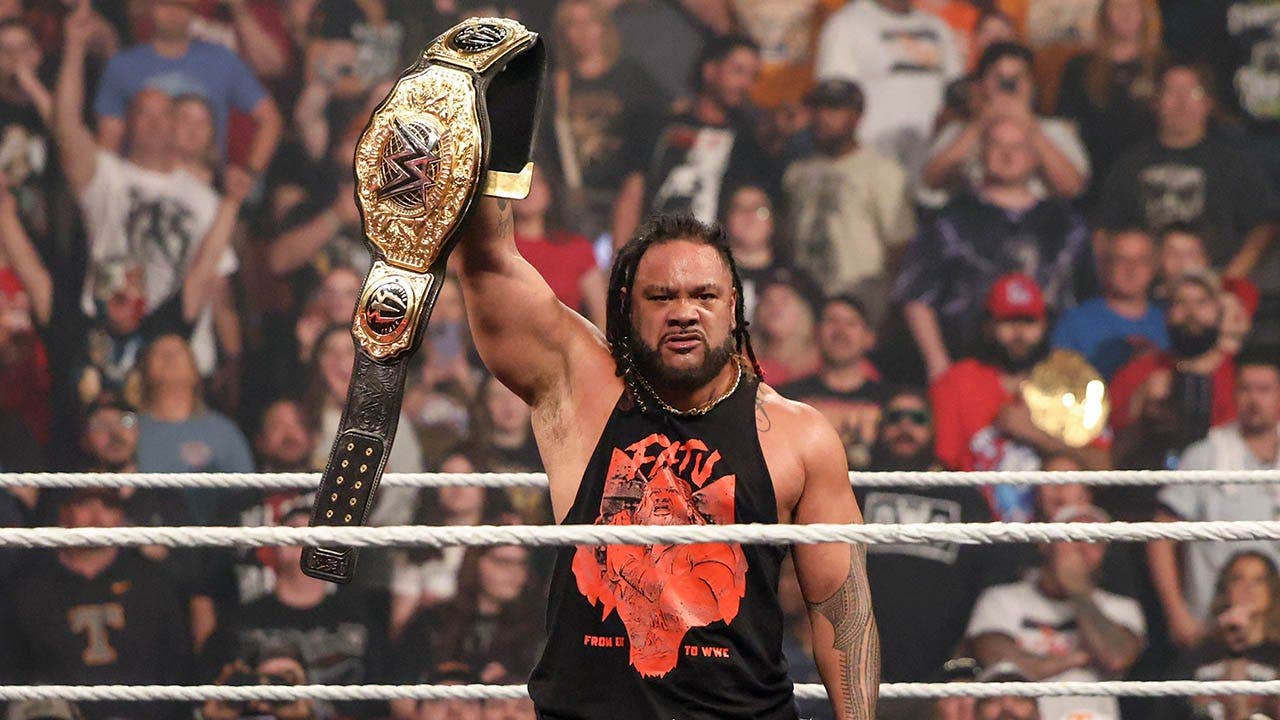
Jacob Fatu holds up the World Heavyweight Champion belt during RAW at Thompson-Boling Arena in Knoxville, Tenn., on May 11, 2026. (Sydney Yonker/WWE)
“What you think? You want me to come and acknowledge you, Roman?” Fatu said. “Hell no! You’re going to beat that acknowledgement out of me.”
Fatu had no time for anyone trying to talk him off the ledge. He was truly all gas and no brakes. He got to the ring, stared down Reigns and the two went to work. The two exchanged blows in the ring and it looked like Reigns was going to gain the advantage. He hit Fatu with a chair multiple times, trying to make Fatu acknowledge him.
But the “Samoan Werewolf” was undeterred. Reigns went for a spear but was met by a superkick and the Tongan death grip. It was all downhill for the “Tribal Chief.” He taunted Reigns as he continued his beating.
He then powerbombed Reigns through the announce table. The assault didn’t stop there. He hit Reigns with another Tongan death grip as officials from the back tried to keep him at bay.
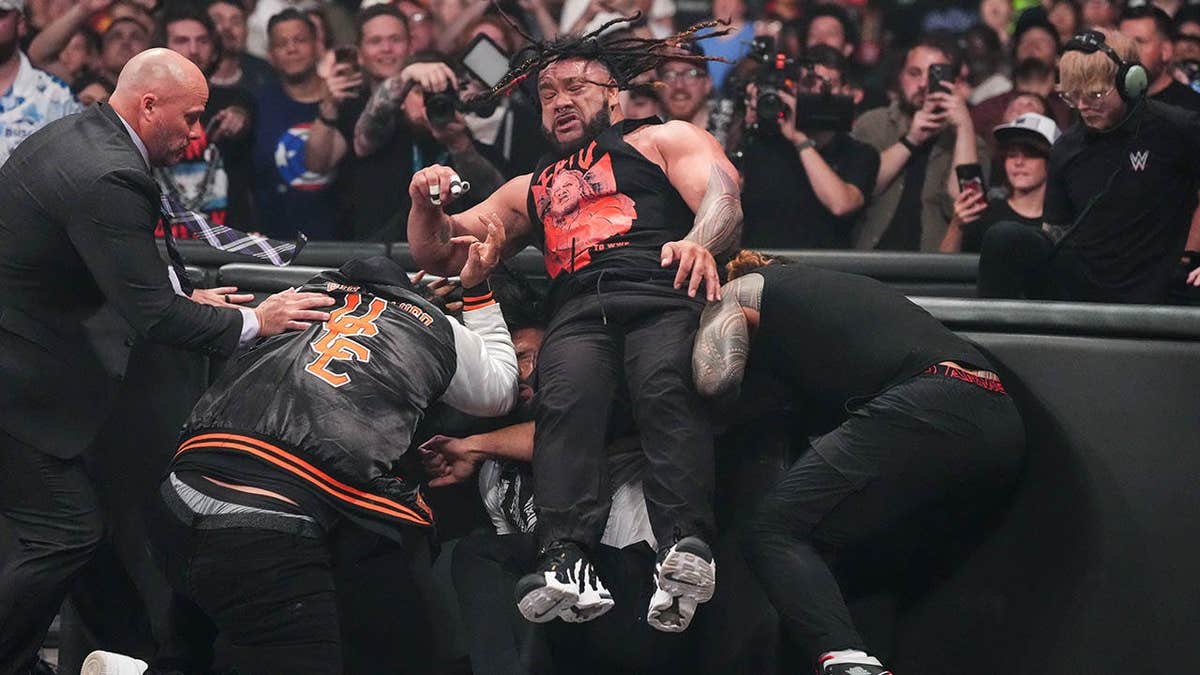
Jacob Fatu takes out Jimmy Uso, Roman Reigns and Jey Uso all at once during WWE RAW at Thompson-Boling Arena in Knoxville, Tenn., on May 11, 2026. (Michael Owens/WWE)
Before he walked to the back, he saw the Usos tending to Reigns. He ran back at full speed and sent all three men through the barricade.
Seth Rollins tries to thaw icy relationship with Street Profits
Seth Rollins helped Street Profits win in six-man tag match against The Vision as he took out Bron Breakker from the outside. Angelo Dawkins rolled up Austin Theory to get the win.
Rollins came into the ring to help Dawkins up. But as Breakker got back into the ring and lined up for a spear, Rollins stepped aside making Dawkins take the damage. Montez Ford came back into the ring and wondered what Rollins was going out there in the first place.
Rollins, Ford and Dawkins talked in the back.
“If you boys are serious about getting the tag titles off The Vision, then it’s time we talked,” Rollins said, addressing Dawkins and Ford backstage.
Ford said there was no “we” in the conversation, while Dawkins wanted to hear out Rollins.
Rollins said he was “wrong” to tell the Street Profits that all parties should keep their business to themselves.
“You know, Seth, you’re every single thing they say about you,” Ford said. “Everybody. The greatest in our generation. A revolutionary. But you know what they also say? You’re not to be trusted. We don’t need your a– to win the tag team championship. Bet on that.”
The Street Profits will be aiming for tag team gold in two weeks when they take on Logan Paul and Theory.
CLICK HERE FOR MORE SPORTS COVERAGE ON FOXNEWS.COM
AAA Mega Championship defended on Raw
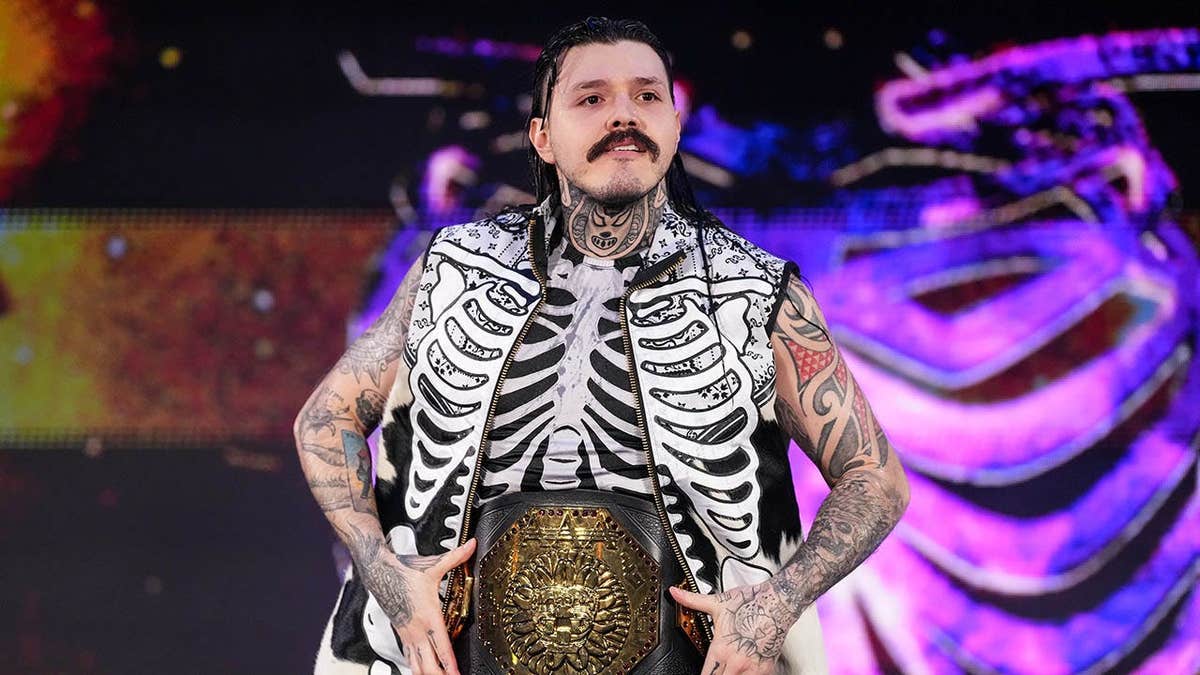
Dominik Mysterio makes his entrance during RAW at Thompson-Boling Arena in Knoxville, Tenn., on May 11, 2026. (Michael Owens/WWE)
The AAA Mega Championship is the most prestigious title in Lucha Libre Worldwide (AAA) and possibly across all of Lucha Libre depending on who you ask. The title was defended for the first time on WWE programming on Monday night.
Dominik Mysterio put the belt on the line against Original El Grande Americano. Mysterio took advantage of Original El Grande Americano getting distracted by El Grande Americano. He hit the 619 and a frog splash to pick up the win.
The title defense came on the heels of WWE announcing a two-night Triplemania event for September. It will be the first time AAA’s premiere event will be ran over the course of two nights.
Passing of the torch
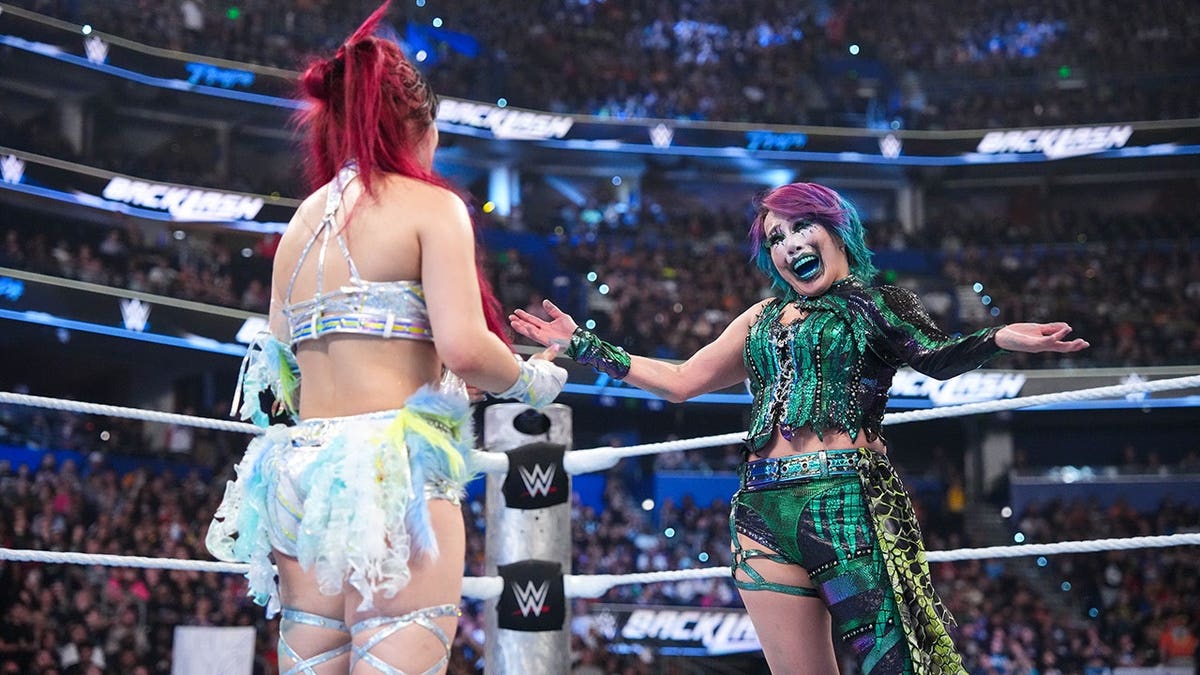
IYO SKY and Asuka embrace during WWE Backlash at Benchmark International Arena in Tampa, Fla., on May 9, 2026. (Michael Owens/WWE via Getty Images)
Iyo Sky defeated her mentor Asuka in an emotional match at Backlash over the weekend, and on Monday night, Asuka said “goodbye.”
Asuka met with Sky backstage before the “Genius of the Sky’s” match against Sol Ruca. She said she was looking for someone to take over as leader and found it in Sky.
“I was looking for someone to take over my passion. Finally, you’ve become the person. I’m so glad it was you,” Asuka said. “I’m proud of you.”
Sky responded, “Even if we fight, we’ll always be family. Goodbye, Asuka-san.”
Sky later defeated Ruca in an exhilarating singles match.
CLICK HERE TO DOWNLOAD THE FOX NEWS APP
Raw match results
- Angelo Dawkins, Montez Ford and Joe Hendry def. Austin Theory, Logan Paul and Bron Breakker.
- Je’Von Evans def. Rusev.
- Iyo Sky def. Sol Ruca.
- Oba Femi def. Angel and Berto as part of Oba’s Open Challenge.
- Dominik Mysterio def. Original El Grande Americano to retain AAA Mega Championship.
Sports
Florida judge rules prosecutors can access Tiger Woods’ prescription drug history after DUI arrest: report
NEWYou can now listen to Fox News articles!
A Florida judge reportedly ruled that prosecutors will have access to Tiger Woods‘ recent prescription drug history.
An April court filing showed that a subpoena was to be issued for Woods’ prescription drug records following his DUI arrest in March, but his attorneys fought it. But according to the TC Palm, the records will be released to prosecutors only and not made available to the public.
CLICK HERE FOR MORE SPORTS COVERAGE ON FOXNEWS.COM
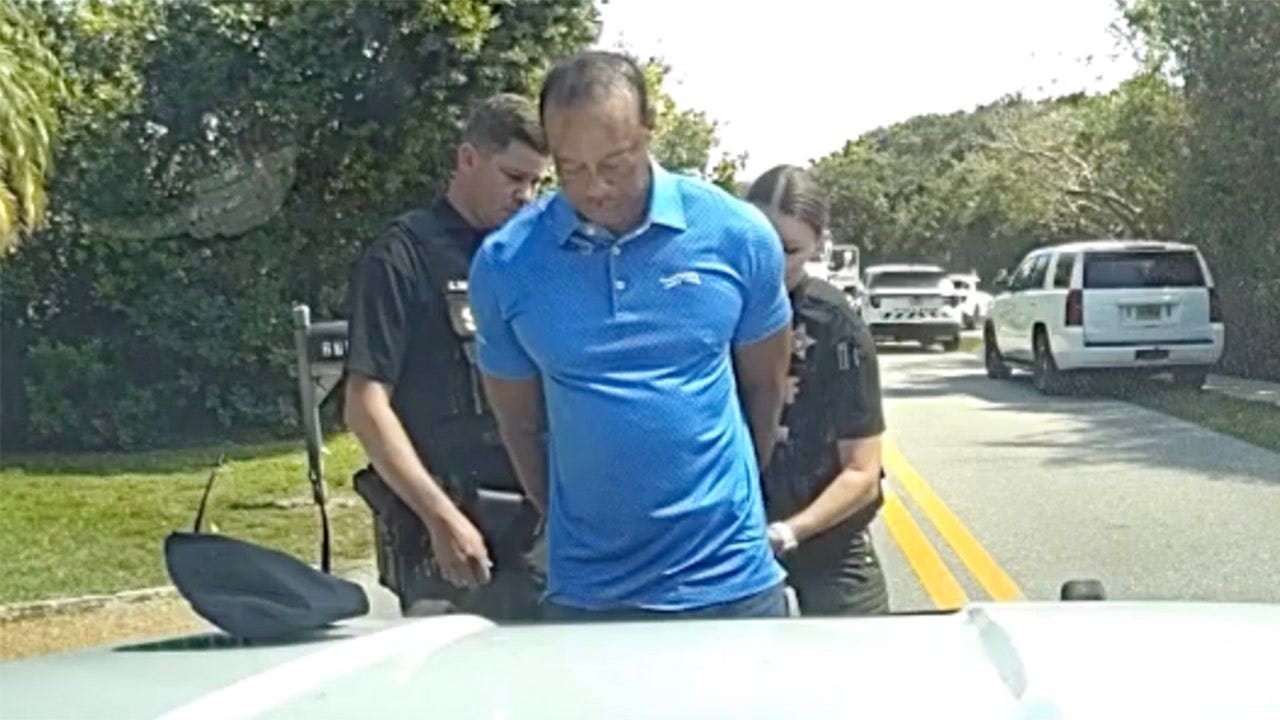
Tiger Woods was handcuffed after a sobriety test. (Martin County Sheriff’s Office)
Woods was arrested for driving under the influence after taking field sobriety tests following a two-vehicle crash in which his Range Rover turned onto its driver’s side.
The aforementioned court filing showed that a subpoena will be issued to “seek copies of any and all prescription medication on file” for Woods from Jan. 1 through March 27, the date of his car crash and arrest.
Woods’ attorney, Douglas Duncan, wrote in a motion that the subpoena goes against Woods’ constitutional rights to privacy, requesting Tuesday’s hearing to determine whether prosecutors should be allowed to obtain the records.
Woods told law enforcement that “I take a few” prescription medications amid seven back surgeries and “over 20 operations” on his leg. In 2021, he got into a wreck that resulted in serious leg injuries that kept him off the golf course for the entire year.
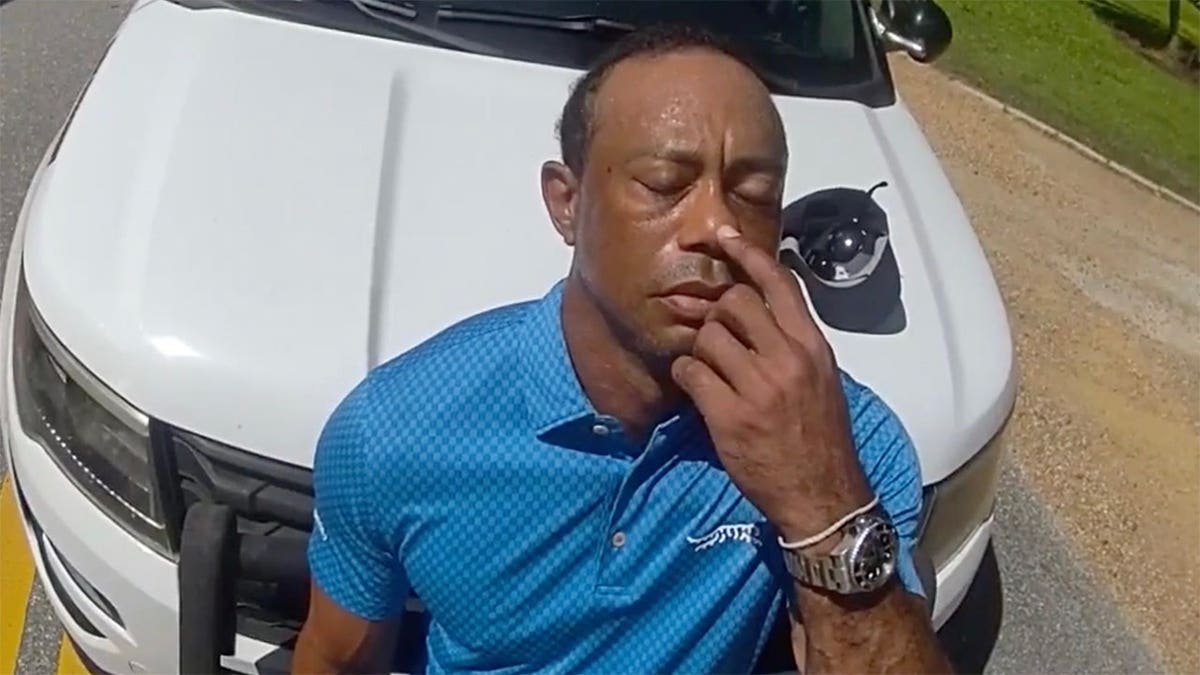
Tiger Woods went through several exercises before getting handcuffed. (Martin County Sheriff’s Office)
USGA SHARES TIGER WOODS STATUS UPDATE WITH US OPEN FAST APPROACHING
He also mentioned that his ankle was fused, and he walks with a limp due to the injuries. Due to the nature of his injuries, authorities made him do a field sobriety test while sitting down. He blew “triple-zeroes,” authorities said, but “lethargic” movements warranted exercises anyway.
Woods participated in four exercises before a deputy placed him in handcuffs. The deputy stated she believed Woods was under an “unknown substance.”
Deputies found two white pills on Woods, which were later identified as hydrocodone, an opioid used to treat pain.
Woods has pleaded not guilty to the DUI charge but announced several days after the wreck he would “seek treatment.” At the scene of the crash, he said he was “hoping to” play in the Masters, but his treatment put his eventual return to the course on hold.
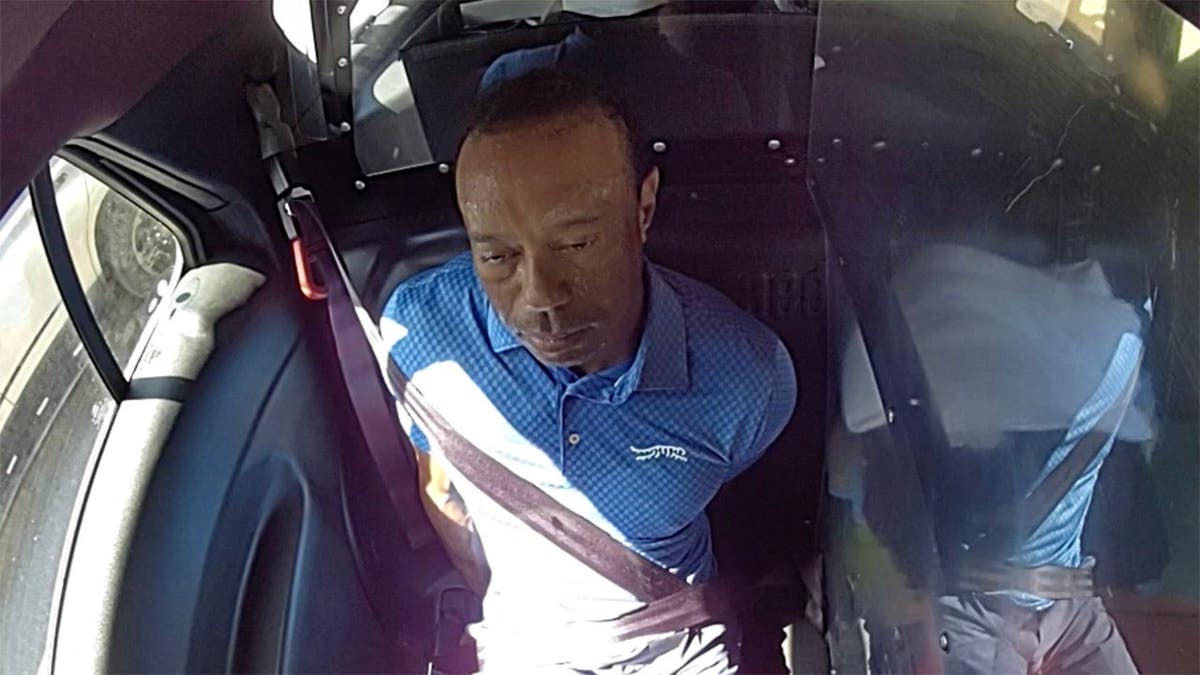
Tiger Woods sits in the back of a cop car after getting arrested on March 27, 2026. (Martin County Sheriff’s Office)
CLICK HERE TO DOWNLOAD THE FOX NEWS APP
Woods was granted permission on April 1 to travel out of the country “to enter into comprehensive inpatient treatment.”
Woods was charged with driving under the influence, property damage, refusal to submit to testing and careless driving. He pleaded not guilty and waived his arraignment, demanding a trial with a jury.
Follow Fox News Digital’s sports coverage on X, and subscribe to the Fox News Sports Huddle newsletter.
NEWYou can now listen to Fox News articles!
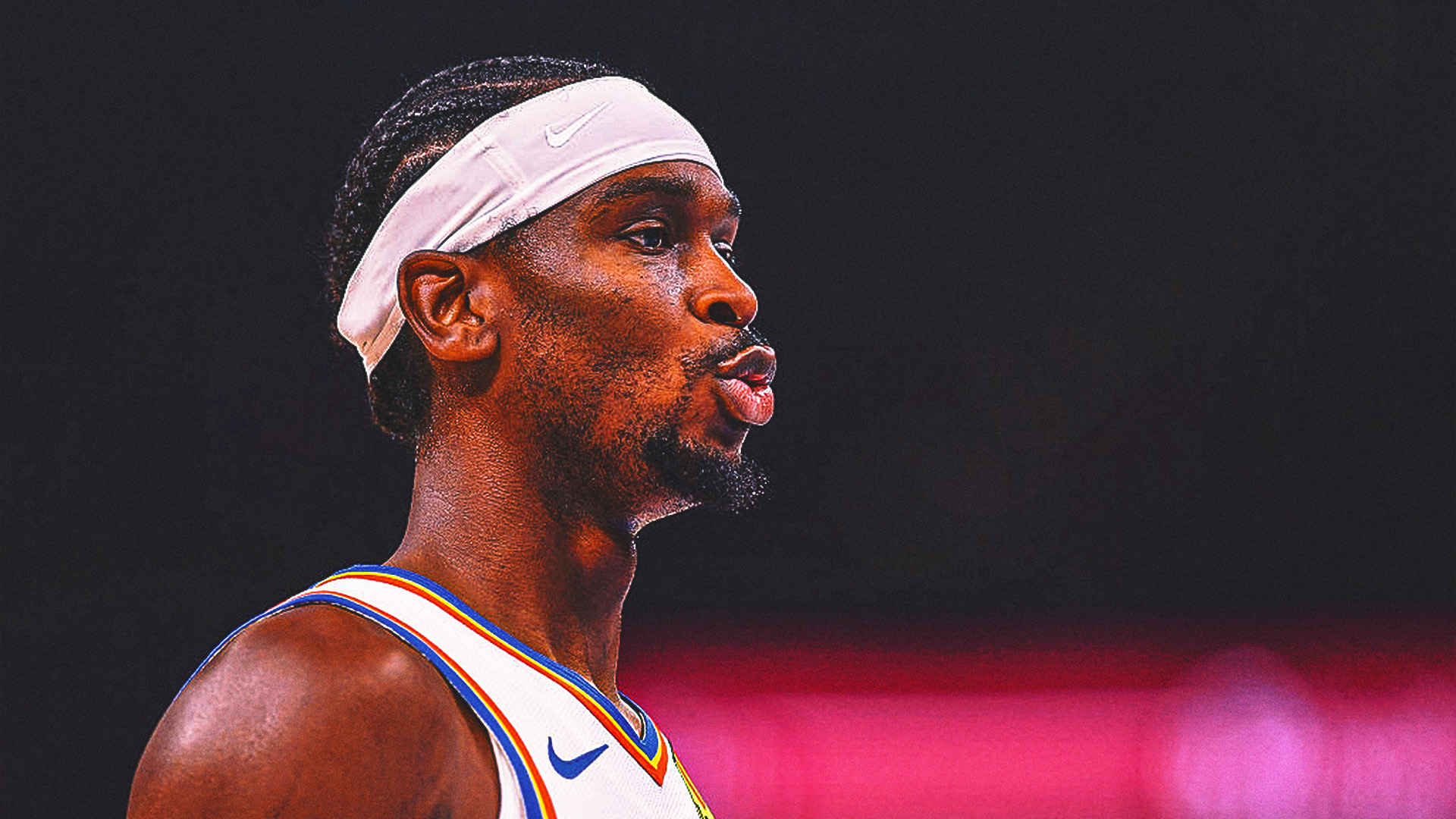
It’s NBA playoff time.
Let’s take a look at the latest NBA title futures at DraftKings Sportsbook as of May 12.
This page may contain affiliate links to legal sports betting partners. If you sign up or place a wager, FOX Sports may be compensated. Read more about Sports Betting on FOX Sports.
NBA Finals winner 2025-26 season
Oklahoma City Thunder: -175 (bet $10 to win $15.71 total)
San Antonio Spurs: +390 (bet $10 to win $49 total)
New York Knicks: +600 (bet $10 to win $70 total)
Detroit Pistons: +2500 (bet $10 to win $260 total)
Cleveland Cavaliers: +3500 (bet $10 to win $360 total)
Minnesota Timberwolves: +7000 (bet $10 to win $710 total)
Here is what to know about the NBA title oddsboard:
West Update: The two teams favored to win the title both reside in the Western Conference: OKC and San Antonio. The Thunder swept the Suns in Round 1 and swept the Lakers in Round 2, while the Spurs gave up just a single game to Portland in the first round and are tied 2-2 with Minnesota in the second round. While the Thunder pulled off a second straight sweep, the Spurs are in a dogfight.
East Update: The Knicks have become the class of the conference, having won seven consecutive playoff games. They finished off a sweep of Philly in the second round, and apparently can’t be stopped. As for the East’s top seed, the Pistons, they are tied with the Cavs 2-2. Neither team has been able to get a win in the others’ home arena in that series.


President to undergo medical examination amid serious concerns

Taylor Swift spends quality time with family in New York City

US-Iran deal: Trump reaffirms Iran must not have nuclear weapons, praises Shehbaz, Munir for diplomacy

-
 Tech1 week ago
DHS Demanded Google Surrender Data on Canadian’s Activity, Location Over Anti-ICE Posts
-
 Business1 week ago
Heineken plans huge investment in hundreds of UK pubs ahead of World Cup
-

 Tech5 days ago
A new frontier: Identity stack evolves for agentic systems | Computer Weekly
-

 Tech4 days ago
‘Orbs,’ ‘Saucers,’ and ‘Flashes’ on the Moon: Pentagon Drops New UFO Files
-
 Business1 week ago
India among most resilient large EMs, better placed for future global shocks; policy reforms & strong buffers help: Moody’s – The Times of India
-

 Fashion5 days ago
New orders in German manufacturing up 5% MoM in Mar 2026: Destatis
-
 Tech5 days ago
What Microsoft Executives Really Thought About OpenAI in 2018
-
 Business1 week ago
US denies Iranian report warship was struck by missiles