

Politics
Police say Bondi Beach mass shooting suspects ‘acted alone’

- Attackers Sajid and Naveed Akram travelled to Philippines.
- No evidence of directions to carry out attacks, say police.
- Shooters not part of any wider terrorist cell: Krissy Barrett
SYDNEY: A father and son accused of a mass shooting at Australia’s Bondi Beach “acted alone” and were not part of a wider terrorist cell, police said on Tuesday.
Sajid Akram and his son Naveed allegedly killed 15 people in a Daesh-inspired attack targeting a Jewish festival on December 14.
The pair travelled to the southern Philippines in the weeks before shooting, fuelling suspicions they may be linked to extremists in a region with a history of extremist insurgencies.
Australian Federal Police commissioner Krissy Barrett said so far, this did not appear to be the case.
“These individuals are alleged to have acted alone,” she told reporters.
“There is no evidence to suggest these alleged offenders were part of a broader terrorist cell, or were directed by others to carry out the attack.”
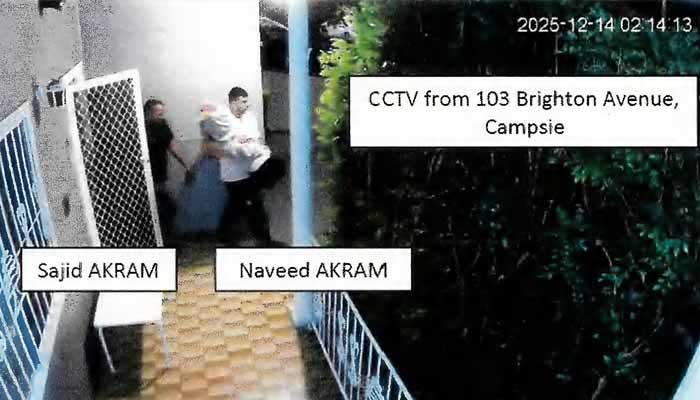
Barrett said police would continue to probe why the pair travelled to the city of Davao, where CCTV showed they barely left their budget hotel.
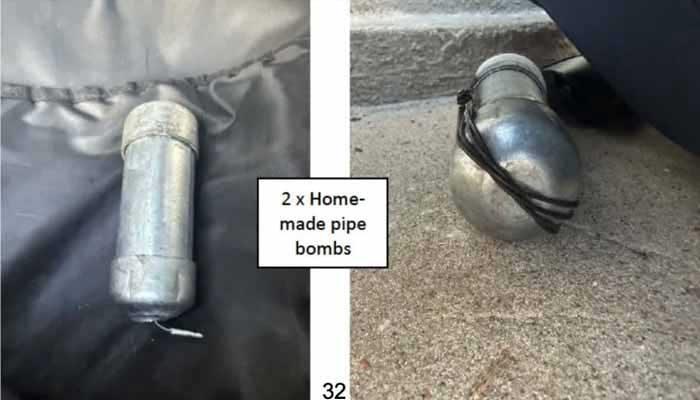
“I want to be clear. I am not suggesting they were there for tourism,” she said.
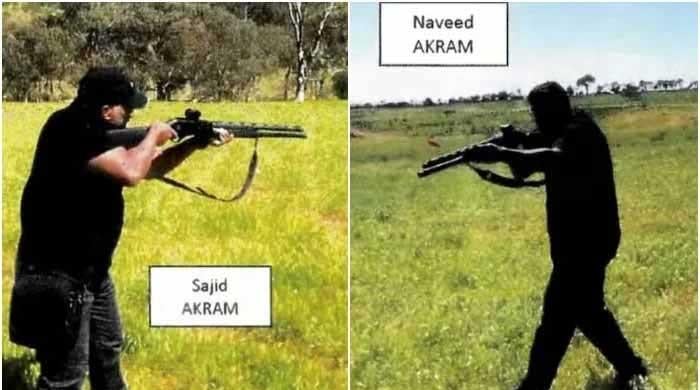
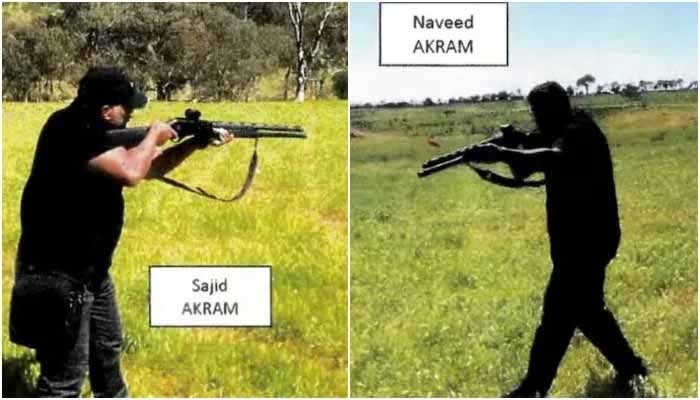
Police believe the duo “meticulously planned” the attack for months, and have released pictures showing them training with shotguns in the Australian countryside.
They also recorded a video in October railing against “Zionists” while sitting in front of a flag of Daesh, police have said.
Sajid Akram, 50, was shot and killed by police during the attack. An Indian national, he entered Australia on a visa in 1998.
Crackdown on guns
His 24-year-old son, Naveed, an Australian-born citizen, remains in custody charged with 15 murders and a litany of other serious offences.
New Year’s Eve parties across Sydney will pause at 11pm on Wednesday for a minute of silence in memory of the victims.
Crowds will be watched over by squads of police carrying high-powered firearms, New South Wales state premier Chris Minns said on Tuesday.
“That is a clear and deliberate message from the police that safety is the number one priority,” he told reporters.
Australian Prime Minister Anthony Albanese has announced a nationwide crackdown on gun ownership and hate speech in the wake of the attack, promising stricter laws and harsher penalties.
He has announced a sweeping buyback scheme to “get guns off our streets”.
It is the largest gun buyback since 1996, when Australia tightened firearms laws in the wake of a mass shooting that killed 35 people at Port Arthur.
Albanese has also ordered a review of police and intelligence services.
- Tehran shopkeepers keep stores shut amid currency plunge.
- Protesters demand intervention on exchange-rate volatility.
- Central bank governor replaced as crisis deepens.
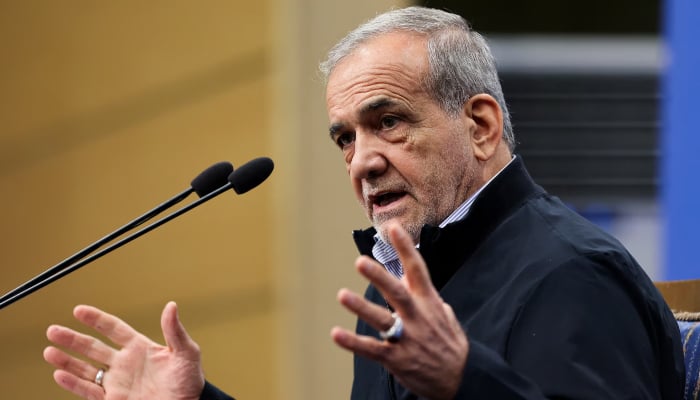
TEHRAN: Iran’s president urged his government to listen to the “legitimate demands” of protesters, state media reported on Tuesday, after several days of demonstrations by shopkeepers in Tehran over economic hardships.
Shopkeepers in the capital had shut their stores for the second day in a row on Monday, after Iran’s embattled currency hit new lows on the unofficial market.
The US dollar was trading at around 1.42 million rials on Sunday — compared to 820,000 rials a year ago — and the euro nearing 1.7 million rials, according to price monitoring websites.
“I have asked the interior minister to listen to the legitimate demands of the protesters by engaging in dialogue with their representatives so that the government can do everything in its power to resolve the problems and act responsibly,” President Masoud Pezeshkian said, according to the state-run IRNA news agency.
Protesters “are demanding immediate government intervention to rein in exchange-rate fluctuations and set out a clear economic strategy”, the pro-labour news agency ILNA reported Monday.
Price fluctuations are paralysing the sales of some imported goods, with both sellers and buyers preferring to postpone transactions until the outlook becomes clearer, AFP correspondents noted.
“Continuing to do business under these conditions has become impossible,” ILNA quoted protesters as saying.
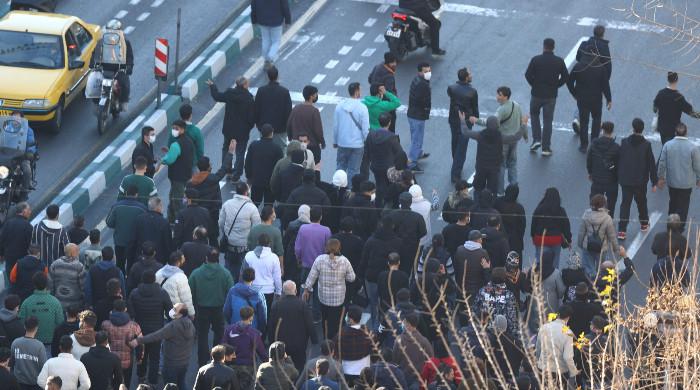
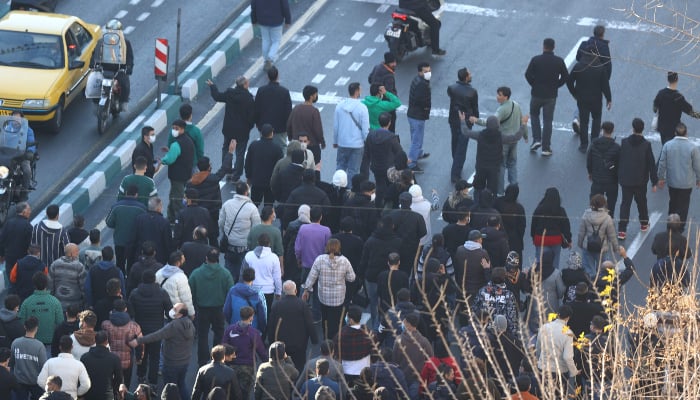
The conservative-aligned Fars news agency released images showing a crowd of demonstrators occupying a major thoroughfare in central Tehran, known for its many shops.
Another photograph appeared to show tear gas being used to disperse protesters.
“Minor physical clashes were reported… between some protesters and the security forces,” Fars said, warning that such gatherings could lead to instability.
Battered economy
Iranian Chief Justice Gholamhossein Mohseni Ejei called for “the swift punishment of those responsible for currency fluctuations”, the justice ministry’s Mizan agency reported Monday.
The government has also announced the replacement of the central bank governor.
“By decision of the president, Abdolnasser Hemmati will be appointed governor of the Central Bank,” presidency communications official Mehdi Tabatabaei posted on X.
Hemmati is a former economy and finance minister who was dismissed by parliament in March because of the sharp depreciation of the rial.
Pezeshkian delivered on Sunday the budget for the next Persian year to parliament, vowing to fight inflation and the high cost of living.
In December, inflation stood at 52% year-on-year, according to official statistics. But this figure still falls far short of many price increases, especially for basic necessities.
The country’s economy, already battered by decades of Western sanctions, was further strained after the United Nations in late September reinstated international sanctions linked to the country’s nuclear programme that were lifted 10 years ago.
Western powers and Israel accuse Iran of seeking to acquire nuclear weapons, a charge Tehran denies.
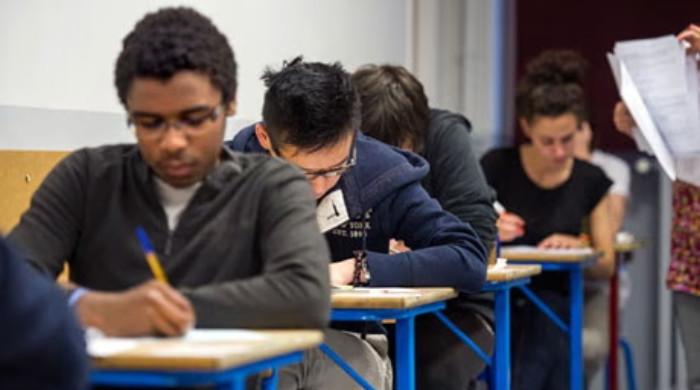
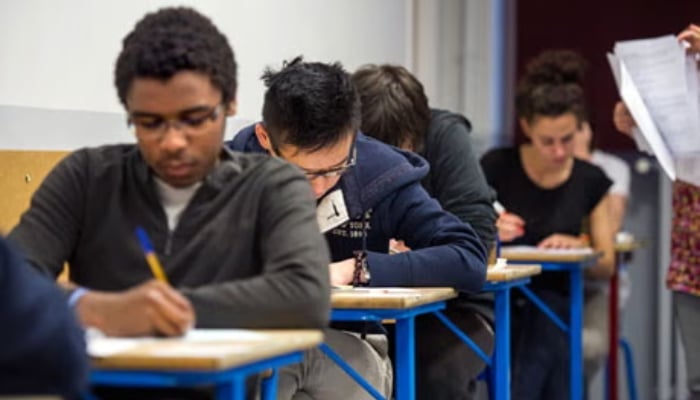
The world’s largest accounting body is pulling back from online examinations, citing growing concerns that advances in artificial intelligence have made remote assessments too easy to exploit, The Guardian reported.
The Association of Chartered Certified Accountants (ACCA) said students will largely be required to sit exams in person from March, bringing to an end a practice introduced during the Covid pandemic. Remote exams will only be permitted in limited and exceptional cases.
The decision follows what the ACCA describes as an escalating challenge in maintaining exam integrity. According to its chief executive, Helen Brand, the methods used to cheat have become increasingly sophisticated, overtaking the effectiveness of existing monitoring systems.
Online testing was originally adopted to ensure continuity during lockdowns, allowing students to progress towards qualification when exam centres were closed. Since then, however, regulators and professional bodies have raised repeated warnings about misconduct in high-stakes professional exams.
In 2022, the Financial Reporting Council, the UK’s audit and accounting watchdog, described cheating as an active concern across major firms, including top-tier auditors such as the Big Four. That year also saw EY fined $100m (£74m) by US regulators after employees were found to have cheated on ethics exams and the firm was accused of misleading investigators.
The ACCA, which has nearly 260,000 members globally, said it has invested significant effort in tackling dishonest behaviour but acknowledged that those intent on cheating are adapting rapidly, driven in part by easy access to AI tools.
Other professional bodies have reported similar pressures. The Institute of Chartered Accountants in England and Wales said last year that reports of cheating continued to rise, although it still allows some exams to be taken online.
Brand said the wider trend across professional qualifications is clear, with fewer high-stakes exams relying on remote invigilation as concerns about credibility and trust grow.
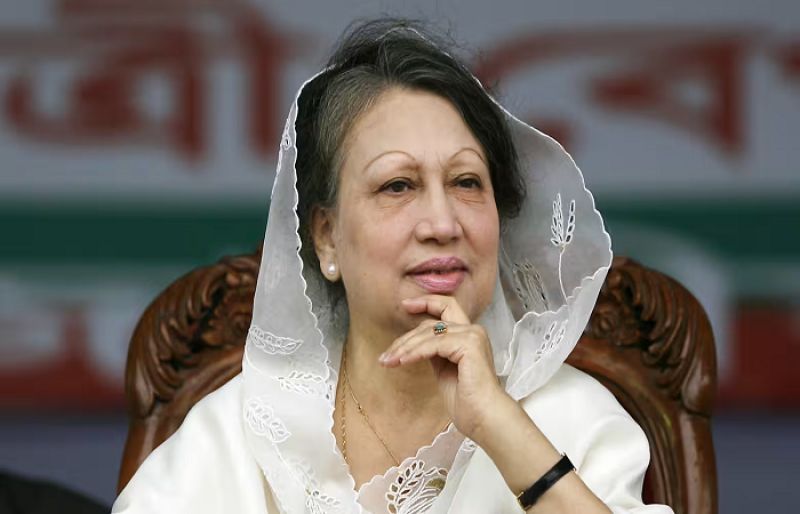

Her opposition Bangladesh Nationalist Party (BNP) said that she died after a prolonged illness. She had advanced cirrhosis of the liver, arthritis, diabetes, and chest and heart problems, her doctors said.
She went to London for medical treatment in early 2025, staying for four months before returning home.
Though Khaleda had been out of power since 2006 and had spent several years in jail or under house arrest, she and her centre-right BNP continued to command much support.
The BNP is seen as the frontrunner to win the parliamentary election slated to take place in February.
Her son and acting chairman of the party, Tarique Rahman, 60, returned to the country last week from nearly 17 years in self-exile and is widely seen as a strong candidate to become prime minister.
Since August 2024, after a student-led uprising led to the ouster of Hasina, Bangladesh has been run by an interim government headed by Muhammad Yunus, the Nobel peace laureate and microfinance pioneer.
In November, Hasina was sentenced to death in absentia for her deadly crackdown on the student protests.
Known by her first name, Khaleda was described as shy and devoted to raising her two sons until her husband, military leader and then-President Ziaur Rahman, was assassinated in an attempted army coup in 1981.
Three years later, she became the head of the BNP, which her husband had founded, and vowed to deliver on his aim of “liberating Bangladesh from poverty and economic backwardness”.
She joined hands with Hasina, daughter of Bangladesh’s founding father and head of the Awami League party, to lead a popular uprising for democracy that toppled military ruler Hossain Mohammad Ershad in 1990.
Battling begums
But their cooperation did not last long. Their bitter rivalry would lead to the two being dubbed “the battling Begums” — a phrase that uses an Urdu honorific for prominent women.
Supporters saw her as polite and traditional yet quietly stylish, someone who chose her words carefully.
But they also viewed her as a bold, uncompromising leader when it came to defending her party and confronting her rivals.
Hasina, by contrast, was far more outspoken and assertive. Their opposite personalities helped fuel the rivalry that dominated Bangladesh’s politics for decades.
In 1991, Bangladesh held what was hailed as its first free election. Khaleda won a surprise victory over Hasina, having gained the support of Jamaat-e-Islami.
In doing so, Khaleda became Bangladesh’s first female prime minister and only the second woman to lead a democratic government of a mainly Muslim nation after Benazir Bhutto, elected to lead Pakistan three years earlier.
Khaleda replaced the presidential system with a parliamentary one, so that power rested with the prime minister. She also lifted restrictions on foreign investment and made primary education compulsory and free.
She lost to Hasina in the 1996 general election but came back five years later with a surprise landslide win.
Her second term was marred by the rise of militants and allegations of corruption.
In 2004, a rally that Hasina was addressing was hit by grenades. Hasina survived but over 20 people were killed and more than 500 wounded. Khaleda’s government and its allies were widely blamed.
In 2018, after Hasina had reclaimed Bangladesh’s highest office, Rahman was tried in absentia and sentenced to life for the attack. The BNP denounced the trial as politically motivated.
Detention and freedom
Although Khaleda later clamped down on radical groups, her second stint as prime minister ended in 2006 when an army-backed interim government took power amid political instability and street violence.
The interim government jailed both Khaleda and Hasina on charges of corruption and abuse of power for about a year before they were both released ahead of a general election in 2008.
Khaleda never regained power. With the BNP boycotting the 2014 and 2024 elections, her vitriolic feud with Hasina continued to dominate Bangladeshi politics.
Tension between their two parties often led to strikes, violence and deaths, impeding the economic development of Bangladesh, a poverty-stricken country of about 175 million that is low-lying and prone to devastating floods.
In 2018, Khaleda, Rahman and aides were convicted of stealing some $250,000 in foreign donations received by an orphanage trust set up when she was last prime minister — charges that she said were part of a plot to keep her and her family out of politics.
She was jailed but moved to house arrest in March 2020 on humanitarian grounds as her health deteriorated.
Khaleda was freed from house arrest in August 2024 after Hasina’s ouster.
In early 2025, Khaleda and Rahman were acquitted by Bangladesh’s Supreme Court in the corruption case that resulted in the 2018 jail sentences. Rahman had been acquitted of the 2004 grenade attack on Hasina a month earlier.
Condolences
Prime Minister Shehbaz Sharif and Deputy Prime Minister Ishaq Dar have expressed deep sorrow over the passing of Begum Khaleda Zia, paying tribute to her political legacy.
In a message shared on X, the prime minister said he was deeply saddened by Khaleda Zia’s death, describing her as a leader whose lifelong service to Bangladesh and contributions to the country’s growth and development would be remembered as a lasting legacy.
“Begum Zia was a committed friend of Pakistan. My Government and the people of Pakistan stand with the people of Bangladesh in this moment of sorrow.
Our thoughts and prayers are with her family, friends and the people of Bangladesh during this difficult time. May Allah SWT bless her soul. Ameen!” said PM Shehbaz.
DPM Dar said: “Heartfelt condolences on the sad demise of Begum Khaleda Zia, former Prime Minister of Bangladesh and Chairperson, Bangladesh Nationalist Party (BNP).”


North India cotton yarn rises as mills pass on cost pressure

Prince Harry, Meghan Markle latest staff exit takes major U-turn

Iran president tells govt listen to protesters ‘legitimate demands’

-
 Sports3 days ago
Brooks Koepka should face penalty if he rejoins PGA Tour, golf pundit says
-

 Sports1 week ago
Patriots vs. Ravens (Dec 21, 2025) Live Score – ESPN
-

 Sports1 week ago
WATCH: Pakistan’s winning moment as Green Shirts clinch U19 Asia Cup title
-
 Business1 week ago
Neptune Logitek Shares List At 26% Discount, IPO Investors Suffer Nearly Rs 30,000 Losses
-

 Politics1 week ago
Moscow car blast kills Russian general hours after US talks
-
 Business4 days ago
Govt registers 144olive startups | The Express Tribune
-

 Entertainment1 week ago
Pentatonix sings “Christmas Time Is Here”
-
 Business1 week ago
Postcode glitch freezes pensioners out of winter heating benefit