

Fashion
French ready-to-wear ends 2025 caught between collapse and hope


By
AFP
Published
December 29, 2025
Under pressure from fast fashion and the second-hand market, the French ready-to-wear sector is faltering, with bankruptcies, receiverships, and liquidations punctuating 2025. Even so, experts believe a rebound is possible, driven by a refocus on brand DNA, innovation, and an upmarket shift.
As the year draws to a close, the IKKS brand has just changed hands but will lose half its staff; JOTT (Just Over The Top) has been placed in receivership; and Anne Fontaine has had its safeguard plan approved. With Camaïeu, Kookaï, Jennyfer, André, San Marina, Minelli, Comptoir des Cotonniers, Princesse Tam Tam, and Kaporal, there are countless French companies in difficulty in this sector, or that have simply disappeared.
Brutal “impoverishment” and “downfall”
Nearly 1,500 clothing boutiques closed in France in 2024, according to a parliamentary report. The Union des Industries Textiles reports that the workforce has shrunk from 400,000 in the 1970s to 60,000 today. This figure does not, however, include in-store employees- 70,000 at the end of 2023, according to the Fédération nationale de l’habillement.
Having weathered the difficult shift to online sales, as well as Covid-19 and inflation, traditional players are now facing competition from second-hand and ultra-fast fashion- a “profound upheaval”, according to Gildas Minvielle, Director of the Economic Observatory at the French Fashion Institute (IFM). According to the IFM, these two channels now account for 13% of sales by value and nearly 30% of volumes purchased.
Historic players shaken up
Gildas Minvielle tells AFP: “The market share taken by these new entrants is very significant, and very damaging for the more established players. If the market had been buoyant, we could have hoped there would be room for everyone, but that’s not the case.” With an average price per item on Shein or Temu of €9- around one third of traditional mid-range prices- these Asian groups are causing a brutal “impoverishment,” “in a context where purchasing power is weak,” he says.

To get to the root of the “downfall,” we need to travel back to the 1990s with the “arrival of first-generation fast-fashion brands” such as Zara and H&M, offering “collections that change every week to force people to buy,” says Benoît Heilbrunn, a philosopher and marketing professor at ESCP Business School.
Clear positioning and an industrial model for survival
“French chains haven’t been able to keep up, because they didn’t have and still don’t have an industrial model,” points out the brand specialist, while 97% of textiles consumed in France are imported. The other problem is that “French textile brands have had nothing to say for years,” he laments. “No one talks about innovation, no one talks about product.”
Françoise Clément, a fashion and retail expert, agrees and points to brands that have remained in their “comfort zone,” seeking to “buy the consumer with promotions” but that ultimately “have not created value.” According to this consultant, a former textile director at Carrefour, brands must reconnect with their “core DNA” and offer “clear positioning” to survive.
A “death spiral” of prices at the low end
The ready-to-wear sector is like “an hourglass,” she says, using a metaphor: the top of the hourglass (luxury and “heritage” brands) remains solid thanks to prestige. At the lower end, it’s a race to the bottom on price, with a “death spiral” that nonetheless finds its audience. In between, the mid-range is the segment “most in difficulty.”
Mid-range brands must “diversify and premiumise” and above all avoid imitating fast fashion, says Françoise Clément. The future requires a balance between “quality, attractiveness, innovation, and desirability,” as seen at “Lacoste or Aigle,” or Le Slip Français, for made-in-France production, or at Decathlon, which combines “accessibility and innovation.” The clothing crisis is “not inevitable,” she insists. Far from the prevailing “gloom,” “opportunities” exist for “brands that get moving.”
The annual State of Fashion BoF-McKinsey report lists several strategic areas for development: the “necessary” use of artificial intelligence, diversification of production sites in the face of the “turbulence” of international tariffs, moving upmarket, and the integration of a second-hand offer. A vast programme.
This article is an automatic translation.
Click here to read the original article.
Copyright © 2025 AFP. All rights reserved. All information displayed in this section (dispatches, photographs, logos) are protected by intellectual property rights owned by Agence France-Presse. As a consequence you may not copy, reproduce, modify, transmit, publish, display or in any way commercially exploit any of the contents of this section without the prior written consent of Agence France-Presses.









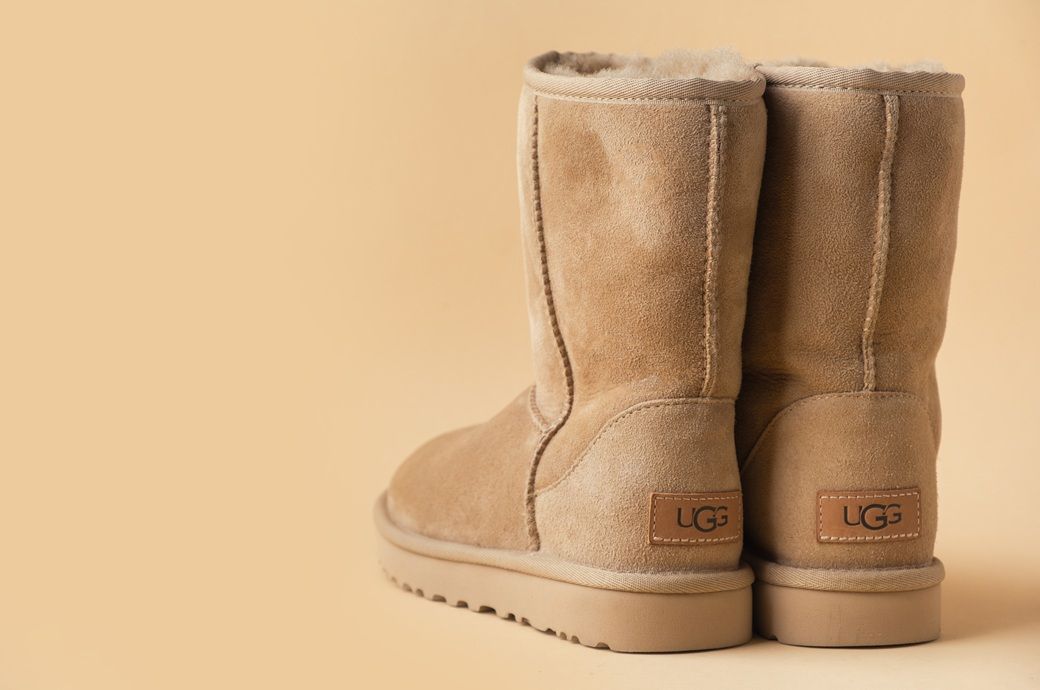
Kenneth Straka, Senior Product Development Manager at Deckers Outdoor Corporation, said that Deckers places strong emphasis on sustainability, noting that founder John Luke often reminded the team that the French word for sustainability is durability. This idea aligned with discussions at the Global Fashion Summit, where the theme centred on “Building Resilient Futures” in the sustainable and circular economy.
Durability has helped UGG become one of the most sought-after boot brands and a key sales driver for Deckers, alongside its sportswear brand Hoka. “One of the things we think about in terms of circularity is making products that last a long time and remain with consumers throughout their lives. We want products that consumers can wear for ** or ** years,” Straka said in an interview with Fibre*Fashion on the sidelines of the Global Fashion Summit in Copenhagen.
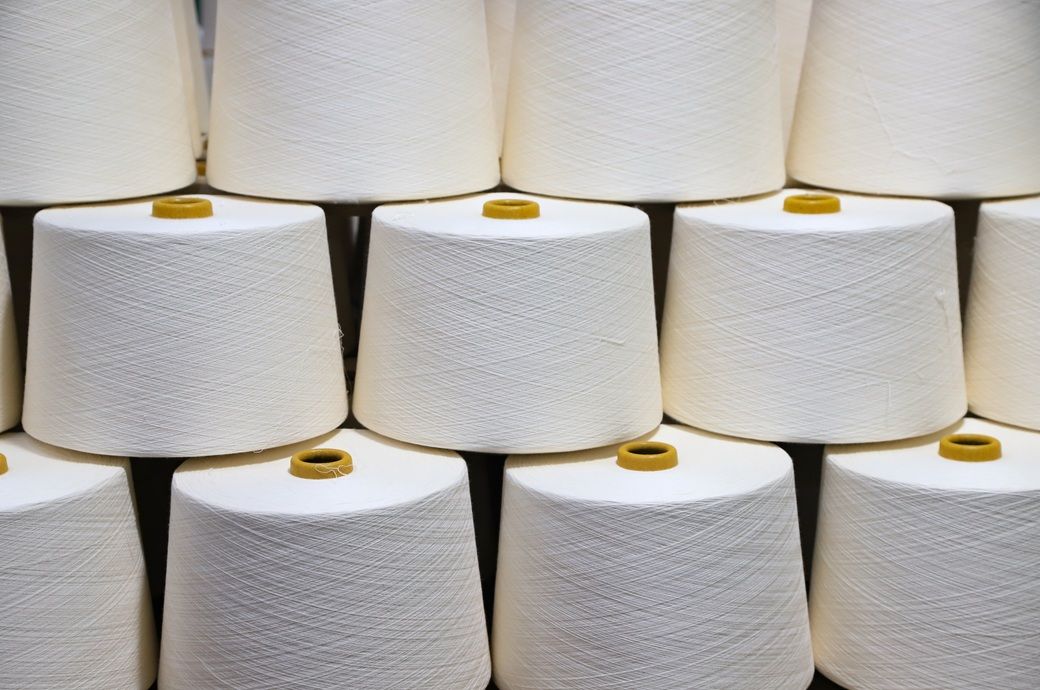
In the Tiruppur market, cotton yarn prices increased by ****;*–* per kg in this week despite sluggish local demand. Prices were quoted higher because of limited supply from spinning mills. A trader from the Tiruppur market told Fibre*Fashion, “Domestic demand remained limited, but spinning mills are not relying solely on the domestic market for cotton yarn sales. They are focusing more on exports, where demand and prices remain attractive. Mills have raised yarn prices following higher ICE cotton prices and the CCI’s increase in auction base prices, although ICE cotton has witnessed a sharp decline over the past two days.”
In Tiruppur, knitting cotton yarn prices were noted as: ** count combed cotton yarn at ****;***–*** (~$*.**–*.**) per kg (excluding GST), ** count combed cotton yarn at ****;***–*** (~$*.**–*.**) per kg, ** count combed cotton yarn at ****;***–*** (~$*.**–*.**) per kg, ** count carded cotton yarn at ****;***–*** (~$*.**–*.**) per kg, ** count carded cotton yarn at ****;***–*** (~$*.**–*.**) per kg, and ** count carded cotton yarn at ****;***–*** (~$*.**–*.**) per kg.
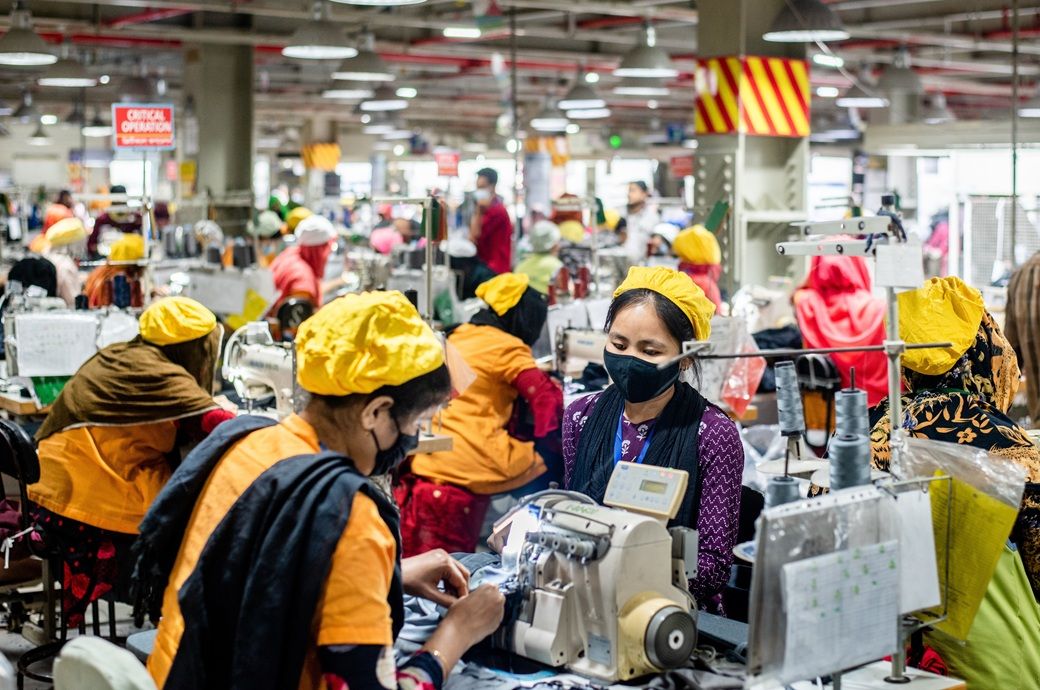
BGMEA president Mahmud Hasan Khan said they discussed export diversification within the garment sector, reopening of closed factories and many factories’ struggle for survival.
Representatives of two top Bangladesh garment trade bodies recently met PM Tarique Rahman and urged him to ensure uninterrupted power and energy supply, quick release of export receipts from banks, reopening of closed factories and easing of customs regulations.
BKMEA raised concerns about misuse of the bond facility and urged action against violators of bond licences.
104 factories have informed the BGMEA about their closure till now, Khan said. BGMEA will scrutinise these cases to identify the genuine reasons for the closures.
Following the scrutiny, the association will send recommendations for reopening these factories, as the government is working to open a Tk 200-billion fund to assist their revival.
BKMEA president Mohammad Hatem said some 400 factories closed in the last three years—nearly 300 of them due to non-cooperation from banks. He said banks release export receipts to exporters’ lien accounts, but delays in payment often force loans into default, leaving exporters unable to pay suppliers on time.
He also demanded uninterrupted supply of power and gas to industrial units as recent shortages of fuel oil have severely affected productivity, according to domestic media ooutlets.
Hatem raised concerns about misuse of the bond facility and urged action against violators of bond licences.
He also called for easing the rules of the National Board of Revenue, particularly customs procedures, to smoothen export and import processes and reduce lead times.
Fibre2Fashion News Desk (DS)


Indy 500: Counting Down The 10 Best Finishes In Race History

“Call Her Daddy” podcast host Alex Cooper announces pregnancy with 1st child

Shania Twain wants to sing at Harry Styles, Zoe Kravitz wedding

-

 Entertainment5 days ago
Conan O’Brien hat tricks as Oscar host
-

 Tech1 week ago
I Tried the Best Captioning Smart Glasses, and Only One Leads the Pack
-

 Tech1 week ago
Could Contact-Tracing Apps Help With the Hantavirus? Not Really
-

 Fashion5 days ago
Italy’s Zegna Group’s Q1 growth boosted by strong organic performance
-

 Sports1 week ago
Bobby Cox, legendary Atlanta Braves manager who led 1995 World Series champions, dead at 84
-

 Entertainment1 week ago
Martin Short: Facing tragedy with joy
-

 Entertainment7 days ago
Tom Brady gets back at Kevin Hart during Netflix roast
-

 Entertainment1 week ago
Martha Stewart: How to make an omelet