

Politics
Trump says US will intervene if Iran ‘violently suppresses peaceful cost-of-living protests’

- Protesters and police clashes mark significant escalation in unrest.
- Economic hardship turns violent across multiple provinces.
- Iran’s economy struggles since US reimposed sanctions in 2018.
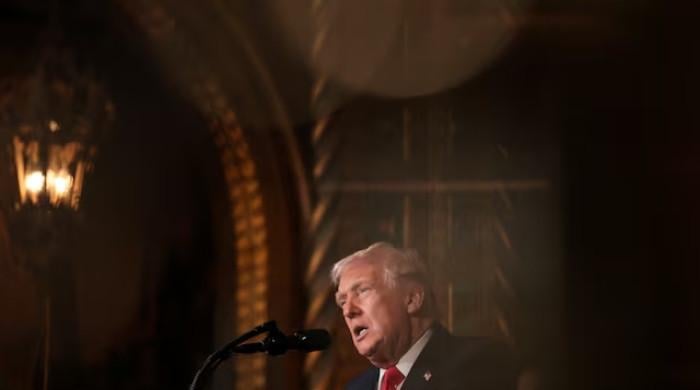
US President Donald Trump on Friday said that if Iran shoots and violently kills “peaceful protesters,” the United States of America will come to their rescue.
“We are locked and loaded and ready to go,” he said in a Truth Social post.
This follows the deaths of several people as Iran’s biggest protests in three years over economic hardship turned violent across multiple provinces.
The clashes between protesters and security forces mark a significant escalation in the unrest that has spread across the country since shopkeepers began protesting on Sunday over the government’s handling of a sharp currency slide and rapidly rising prices.
Iran’s economy has struggled for years since the US reimposed sanctions in 2018, after Trump withdrew from an international nuclear agreement during his first term.
On Thursday, Iran’s Fars news agency reported two people killed in clashes between security forces and protesters in the city of Lordegan, in the province of Chaharmahal and Bakhtiari, and three in Azna, in neighbouring Lorestan province.
“Some protesters began throwing stones at the city’s administrative buildings, including the provincial governor’s office, the mosque, the Martyrs’ Foundation, the town hall and banks,” Fars said of Lordegan, adding police responded with tear gas.
Fars reported that the buildings were “severely damaged” and that police arrested several people described as “ringleaders”.
In Azna, Fars said “rioters took advantage of a protest gathering… to attack a police commissariat”.
During previous protest movements, state media has labelled demonstrators “rioters”.
Earlier Thursday, state television reported that a member of Iran’s security forces was killed overnight during protests in the western city of Kouhdasht.
“A 21-year-old member of the Basij from the city of Kouhdasht was killed last night by rioters while defending public order,” the channel said, citing Said Pourali, the deputy governor of Lorestan Province.
The Basij are a volunteer paramilitary force linked to Iran’s Revolutionary Guards, the ideological arm of the Islamic republic.
Pourali said that “during the demonstrations in Kouhdasht, 13 police officers and Basij members were injured by stone throwing”.
‘End up in hell’
The demonstrations are smaller than the last major outbreak of unrest in 2022, triggered by the death in custody of Mahsa Amini, who was arrested for allegedly violating Iran’s strict dress code for women.
Her death sparked a nationwide wave of anger that left several hundred people dead, including dozens of members of the security forces.
The latest protests began peacefully in the capital and spread after students from at least 10 universities joined in on Tuesday.
Iranian President Masoud Pezeshkian has sought to calm tensions, acknowledging protesters’ “legitimate demands”, and called on the government Thursday to take action to improve the economic situation.
“From an Islamic perspective… if we do not resolve the issue of people’s livelihoods, we will end up in hell,” Pezeshkian said at an event broadcast on state television.
Authorities, however, have also promised to take a “firm” stance, and have warned against exploiting the situation to sow chaos.
Local media coverage of the demonstrations has varied, with some outlets focusing on economic difficulties, and others on incidents caused by “troublemakers”.
Iran is in the middle of an extended weekend, with the authorities declaring Wednesday a bank holiday at the last minute, citing the need to save energy during the cold weather.
They made no official link to the protests.
The weekend in Iran begins on Thursday, and Saturday is a long-standing national holiday.
Iran’s prosecutor general said on Wednesday that peaceful economic protests were legitimate, but any attempt to create insecurity would be met with a “decisive response”.
“Any attempt to turn economic protests into a tool of insecurity, destruction of public property, or implementation of externally designed scenarios will inevitably be met with a legal, proportionate and decisive response.”
Earlier this week, a video showing a person sitting in the middle of a Tehran street facing down motorcycle police went viral on social media, with some seeing it as a “Tiananmen moment” — a reference to a famous image of a Chinese protester defying a column of tanks during 1989 anti-government protests in Beijing.
On Thursday, state television alleged the footage had been staged to “create a symbol” and aired another video purportedly shot from another angle by a police officer’s camera.
Sitting cross-legged, the protester remains impassive, head bowed, before covering his head with his jacket as behind him a crowd flees clouds of tear gas.
On Wednesday evening, the Tasnim news agency reported the arrest of seven people it described as being affiliated with “groups hostile to the Islamic Republic based in the United States and Europe”.
It said they had been “tasked with turning the demonstrations into violence”. Tasnim did not say when they were arrested.
The national currency, the rial, has lost more than a third of its value against the US dollar over the past year, while double-digit hyperinflation has been undermining Iranians´ purchasing power for years.
The inflation rate in December was 52% year-on-year, according to the Statistical Centre of Iran, an official body.
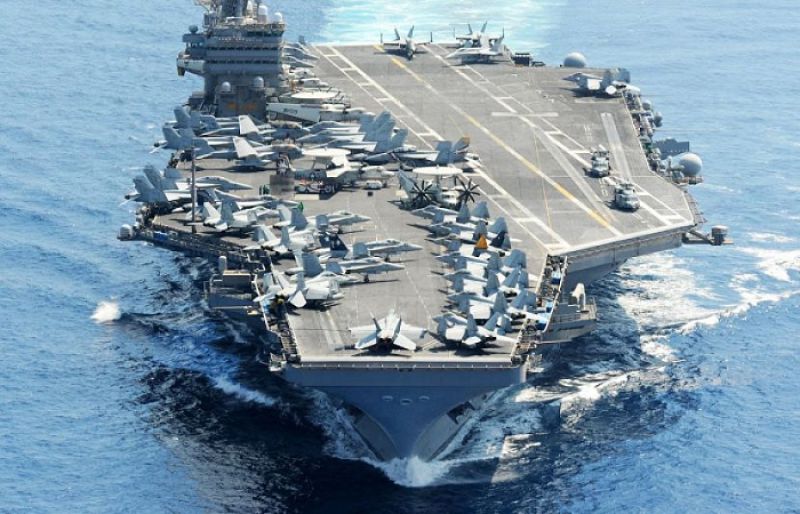
Iran’s Islamic Revolutionary Guard Corps (IRGC) on Sunday claimed it had launched ballistic missile strikes targeting a US aircraft carrier, identifying the vessel as the USS Abraham Lincoln, as part of what it called “Operation True Promise 4.”
In a statement, the IRGC’s public relations office said four ballistic missiles were fired at the carrier, adding that Iran’s military campaign had entered a “new phase.” The group warned that both land and sea would become the “burial place” for what it described as aggressors.
Multiple Waves of Strikes Announced
Earlier, the IRGC said it had launched the seventh and eighth waves of strikes under the same operation, in response to what it termed ongoing aggression by the United States and Israel.
Iran claimed it had carried out precision strikes on military targets in Israeli territory, including areas near Tel Aviv and Haifa. It also alleged that Israeli officials had taken shelter due to heightened security concerns.
Targets Across the Gulf
The IRGC further stated that it had targeted US-operated facilities in West Asia, including the US Fifth Fleet base in Bahrain, as well as installations in Qatar and the United Arab Emirates.
There has been no immediate confirmation from US or Israeli officials regarding the reported missile strikes or the extent of any damage.
Rising Regional Tensions
The developments mark a sharp escalation in regional tensions following reported military exchanges between Iran, Israel and US forces over the weekend.
Independent verification of the claims remains pending, and international observers have urged restraint amid fears of a broader conflict across the Middle East.
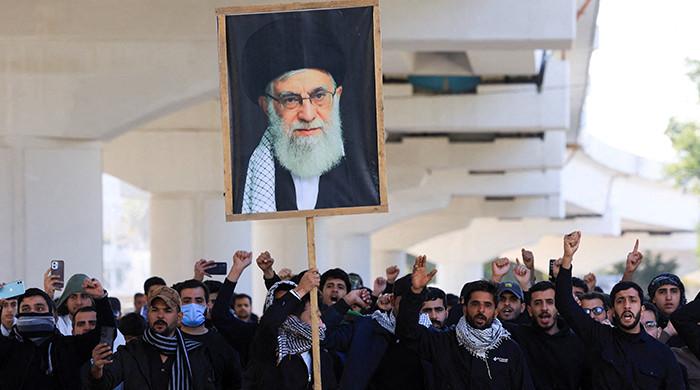
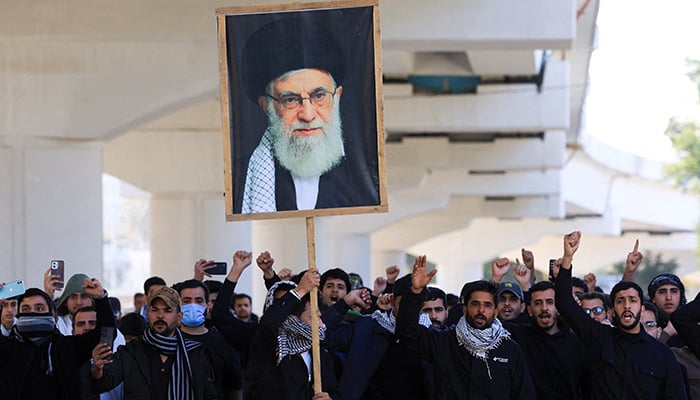
A number of Iranian senior leaders, including Supreme Leader Ayatollah Ali Khamenei, have embraced martyrdom in the “unprovoked and unwarranted” airstrikes by Israel and the United States.
As crowds gathered in Tehran, explosions rang out, and the Israeli military announced that it was again striking targets in the heart of the city — as more blasts were heard in Jerusalem, Riyadh, Dubai, Doha and Manama.
Iran’s President Masoud Pezeshkian declared Khamenei’s assassination a “declaration of war against Muslims” and warned: “Iran considers it its legitimate duty and right to avenge the perpetrators and masterminds of this historic crime.”
Iranian state media have confirmed the killing of several senior figures:
1. Ayatollah Ali Khamenei, supreme leader of Iran
2. Ali Shamkhani, representative of the Supreme Leader in the Supreme Defence Council
3. General Abdolrahim Mousavi, Iran’s Armed Forces chief of staff
4. Major General Mohammad Pakpour, commander-in-chief of the Islamic Revolution Guards Corps (IRGC)
5. Aziz Nasirzadeh, Minister of Defence
6. Gholamreza Rezaian, police intelligence chief of Iran
Separately, the daughter, son-in-law, and granddaughter of Ali Khamenei also embraced martyrdom in the US and Israeli airstrikes.
- Middle Eastern airport hubs remain closed or restricted.
- Airlines reroute or cancel flights, affecting global schedules.
- Risk of prolonged disruption due to regional conflicts.
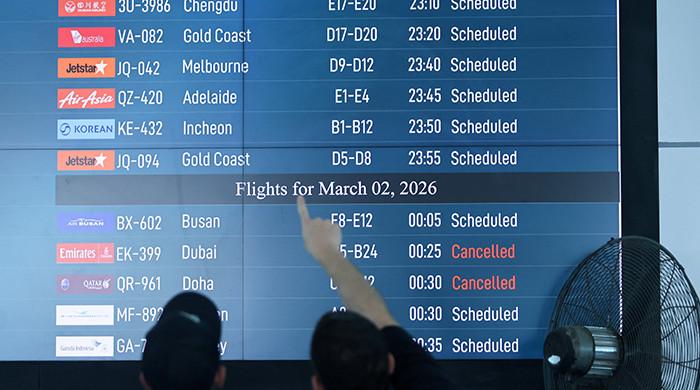
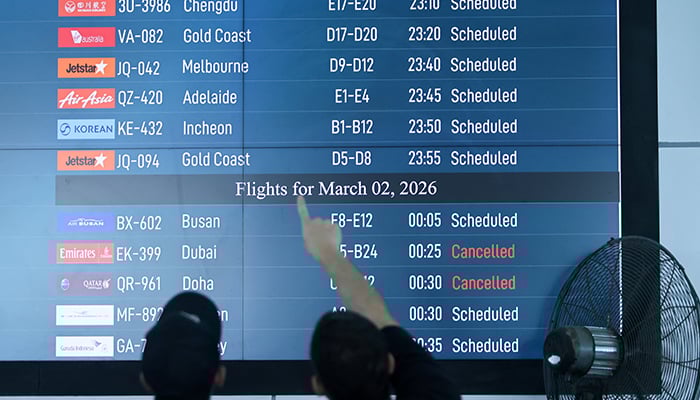
DUBAI: Global air travel remained heavily disrupted on Sunday as continued air strikes kept major Middle Eastern airports, including Dubai, the world’s busiest international hub, closed in one of the sharpest aviation shocks in recent years.
Key transit airports including Dubai and Abu Dhabi in the UAE, and Doha in Qatar, were shut or severely restricted as much of the region’s airspace remained closed, with the Gulf grappling with uncertainty after U.S. and Israeli strikes killed Iranian Supreme Leader Ayatollah Ali Khamenei on Saturday.
Israel said it launched another wave of strikes on Iran on Sunday, while loud blasts were heard for a second day near Dubai and over Doha, after Iran launched retaliatory air attacks on the neighbouring Gulf states.
Dubai International Airport sustained damage during Iran’s attacks, while airports in Abu Dhabi and Kuwait were also hit. Thousands of flights have been affected across the Middle East since the U.S. first launched attacks on Iran on Saturday, according to data on FlightAware, a flight tracking platform.
Ripple effects
The airport closures have rippled far beyond the Middle East. Dubai and neighbouring Doha sit at the crossroads of east-west air travel, funnelling long-haul traffic between Europe and Asia through tightly scheduled networks of connecting flights.
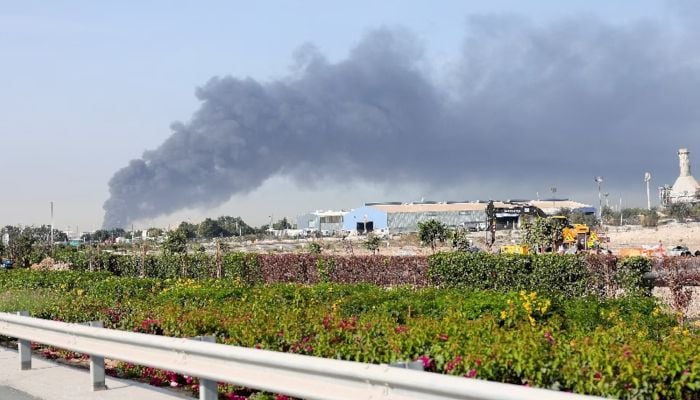
With those hubs idle, aircraft and crews remained stranded out of position, disrupting airline schedules worldwide.
“It’s the sheer volume of people and the complexity,” said UK-based aviation analyst John Strickland.
“It is not only customers, it is the crews and aircraft all over place.”
Airlines across Europe, Asia and the Middle East cancelled or rerouted flights to avoid closed or restricted airspace, lengthening journeys and driving up fuel costs. The disruption has been intensified by the loss of Iranian and Iraqi overflight routes, which had grown more important since the Russia-Ukraine war forced airlines to avoid both countries’ airspace.
The Middle East airspace closures were squeezing airlines into narrower corridors, with fighting between Pakistan and Afghanistan adding a further risk, said Ian Petchenik, communications director at Flightradar24.
“The risk of protracted disruption is the main concern from a commercial aviation perspective,” Petchenik said.
“Any escalation in the conflict between Pakistan and Afghanistan that results in the closure of airspace would have drastic consequences for travel between Europe and Asia.”
Middle East flights halted
Airspace over Iran, Iraq, Kuwait, Israel, Bahrain, the UAE and Qatar remained virtually empty, maps by flight-tracking service Flightradar24 showed, and air strikes kept major Middle Eastern airports, including Dubai, Abu Dhabi and Doha shut or severely restricted.
Below is the latest on flights listed by airline in alphabetical order:
Aegean Airlines
Greece’s largest carrier suspended flights to and from Tel Aviv in Israel, Beirut in Lebanon and Erbil in Iraq until March 2.
Air Astana
The group cancelled all flights to the Middle East through March 3.
Air Canada
The airline said it has cancelled flights from Canada to Israel until March 8 and flights to Dubai until March 3.
Air Europa
The Spanish airline cancelled its flights to Tel Aviv on Sunday and Monday and is monitoring the situation to assess operations from Tuesday.
Air France KLM
Air France cancelled flights to and from Tel Aviv in Israel and Beirut in Lebanon for Saturday.
Its Dutch arm KLM said late on Saturday that this weekend’s flights to and from Dubai, Dammam and Riyadh have been cancelled. It had already brought forward suspension of its Amsterdam–Tel Aviv service to Saturday.
Air India
The carrier cancelled flights scheduled for Sunday from Delhi, Mumbai and Amritsar to London, New York, Chicago, Toronto, Frankfurt and Paris. It added that more flights to London, Birmingham, Amsterdam, Zurich, Milan, Vienna, Copenhagen and Frankfurt had been cancelled.
Azerbaijan Airlines
The airline has suspended flights to and from Dubai, Doha, Jeddah and Tel Aviv.
British Airways
IAG-owned British Airways said it has cancelled flights to Tel Aviv and Bahrain until March 3 and its flight to Amman on Saturday.
Cathay Pacific
Hong Kong’s Cathay Group, parent of Cathay Pacific Airways, suspended operations in the region, affecting passenger flights to and from Dubai and Riyadh, as well as freighter service at Al Maktoum airport. That is Dubai’s second airport after Dubai International Airport, the primary hub that handles most passenger traffic.
Emirates
Owing to multiple regional airspace closures, Emirates has suspended all operations to and from Dubai until 3pm UAE time on March 2.
Etihad
The UAE’s Etihad said flights scheduled to depart Abu Dhabi were suspended until 2pm local time on Sunday.
Flydubai
The airline said it had temporarily suspended all flights to and from Dubai until 3pm local time on Sunday.
Iberia Express
The Spanish airline owned by Iberia Group cancelled a flight to Tel Aviv scheduled for Saturday at 5pm local time.
IndiGo
IndiGo, India’s biggest airline, said it had extended a temporary suspension of select international flights using Middle East airspace until Monday.
ITA Airways
ITA Airways suspended flights to and from Tel Aviv and said it would not use the airspace of Israel, Lebanon, Jordan, Iraq and Iran until March 7. Flights to and from Dubai were suspended until March 1.
Japan Airlines
Japan Airlines cancelled a flight on Saturday from Tokyo Haneda to Doha as well as a return flight on March 1, Nikkei said.
LOT Polish Airlines
The airline suspended flights to Tel Aviv until March 15 and cancelled flights to Dubai and Riyadh until March 2.
Lufthansa
The German airline flights to and from Tel Aviv in Israel, Beirut in Lebanon and Oman until March 7 and flights to and from Dubai on Saturday and Sunday.
It also said it would not fly through Israeli, Lebanese, Jordanian, Iraqi and Iranian airspace until March 7.
Norwegian Air
The Nordic airline suspended all flights to and from Dubai until March 4, a company spokesperson said. The carrier did not suspend flights to Tel Aviv in Israel or Beirut in Lebanon because these destinations are only active in summer, he added.
Pegasus Airlines
The airline said that flights to Iran, Iraq, Jordan and Lebanon were cancelled up to and including March 2.
Qatar Airways
The airline said flights remain temporarily suspended owing to the closure of the Qatari airspace. It will provide a further update by 9am local time on Monday.
Scandinavian Airlines
The airline told Reuters it had suspended its flight to Tel Aviv from Copenhagen on Saturday. No decision had been made regarding flights on later dates.
Turkish Airlines
The airline cancelled flights to Qatar, Kuwait, Bahrain, the United Arab Emirates and Oman on Saturday and flights to Lebanon, Syria, Iraq, Iran and Jordan until March 2.
Virgin Atlantic
Virgin Atlantic said it will temporarily avoid Iraqi airspace, resulting in some pre-planned rerouting of flights and has cancelled its VS400 service from London Heathrow to Dubai on Saturday.
Wizz Air
The Hungarian carrier halted flights to and from Israel, Dubai, Abu Dhabi and Amman with immediate effect until March 7.
It added that operational decisions would continue to be reviewed and the flight schedule could be adjusted as the situation evolves.

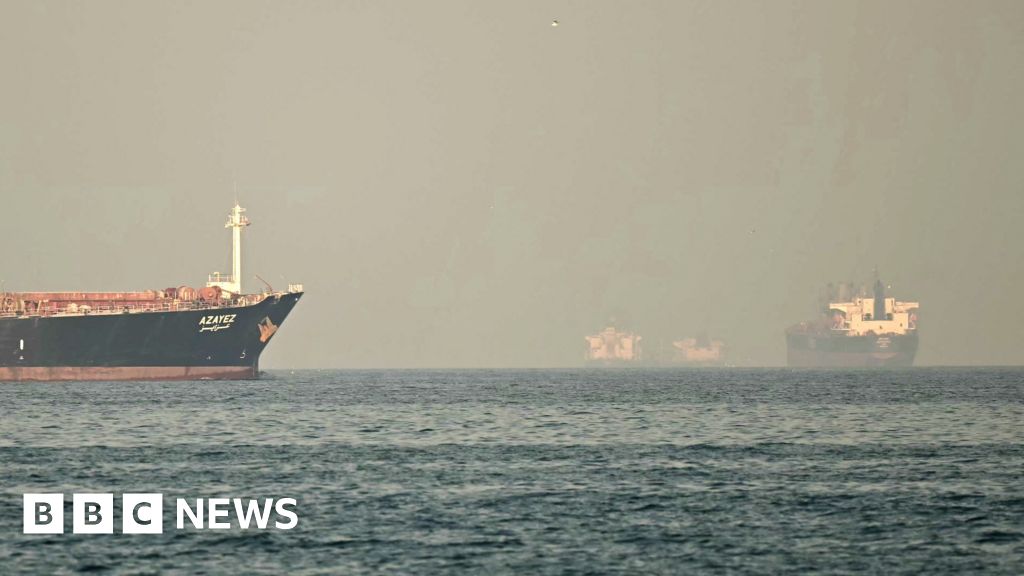
Two ships hit near Strait of Hormuz as fears grow of oil price rises

IRGC Claims Missile Strikes on US Aircraft Carrier Amid Escalation

Maggie Gyllenhaal details emotional reunion with brother Jake Gyllenhaal

ICE cotton ticks higher on crude oil rally

Eye-popping rise in one year: Betting on just gold and silver for long-term wealth creation? Think again! – The Times of India

Pakistan carries out precision strikes on seven militant hideouts in Afghanistan

-
 Fashion1 week ago
ICE cotton ticks higher on crude oil rally
-
 Politics1 week ago
Pakistan carries out precision strikes on seven militant hideouts in Afghanistan
-
Business1 week ago
Eye-popping rise in one year: Betting on just gold and silver for long-term wealth creation? Think again! – The Times of India
-

 Entertainment1 week ago
Viral monkey Punch makes IKEA toy global sensation: Here’s what it costs
-

 Sports1 week ago
Kansas’ Darryn Peterson misses most of 2nd half with cramping
-

 Entertainment1 week ago
Saturday Sessions: Say She She performs "Under the Sun"
-

 Tech1 week ago
The Supreme Court’s Tariff Ruling Won’t Bring Car Prices Back to Earth
-

 Tech1 week ago
These Cheap Noise-Cancelling Sony Headphones Are Even Cheaper Right Now