

Politics
Yemen’s southern separatists call for path to independence amid fighting over key region

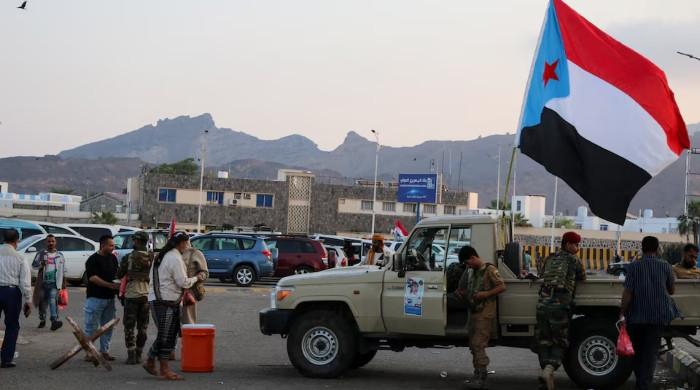
- STC says starting two-year process towards referendum.
- Saudi-backed forces took back parts of Hadramout on Friday.
- Yemen crisis triggers feud in Gulf region.
Yemen’s southern separatist movement said on Friday it aimed to hold a referendum on independence from the north in two years, as Saudi-backed forces fought to recapture areas the separatists seized last month in a move that triggered a major feud between Gulf powers.
The statement by the UAE-backed Southern Transitional Council was the clearest indication yet of its intention to secede, but may be seen by Yemen’s internationally recognised government and its Saudi backers as an escalation of the crisis.
It came hours after the government said it had launched an operation to recapture the crucial Hadramout province, one of the main areas seized by the STC last month, with Saudi military support.
Major power shift
The surprise advance by the separatists in early December shifted power in Yemen, which has been at war for more than a decade, fracturing the coalition against the Houthis and laying bare divisions between Gulf allies Saudi Arabia and the UAE.
Yemen has been split for years between the northern highlands, held by the Iran-backed Houthi group, and forces including the southern separatists that are supported by Gulf states under the internationally recognised government.
Once the twin pillars of regional security, OPEC members Saudi Arabia and the United Arab Emirates have in recent years seen their interests diverge on issues ranging from oil quotas to geopolitics.
Neither the internationally backed government nor Saudi Arabian officials could immediately be reached for comment on the STC statement.
Saba news agency reported early on Saturday that Rashad al-Alimi, head of Yemen’s Saudi-backed presidential council, has submitted a request to Saudi Arabia to host a forum aimed at resolving the southern issue.
Al-Alimi said he hopes the forum would bring together all southern factions “without distinction,” including the UAE-backed southern separatist movement.
The request comes after a number of southern political factions and figures urged Al-Alimi to submit a request to Riyadh to host a forum after they condemned what they described as “unilateral measures” on the southern issue by STC leader Aidarous Al-Zubaidi.
Saudi Arabia’s foreign ministry welcomed the request, calling on southern factions to participate in the planned forum.
On Friday, the Hadramout governor under the internationally recognised government said he had launched an operation to restore control over the area, later saying his forces had taken control of a key military base.
A local Saudi-backed tribal group and the STC both said the operation had been backed by airstrikes.
A spokesperson for the STC, Mohammed al-Naqeeb, said its forces were on full alert across the region and warned that it was ready to respond forcefully.
Oil-producing Hadramout borders Saudi Arabia and many prominent Saudis trace their origins to the province, lending it cultural and historical significance for the kingdom. Its capture by the STC last month was regarded by the Saudis as a threat.
Saudi Arabia did not immediately respond to a request for comment on the airstrikes and it was unclear if there were any casualties.
The UAE, without directly addressing Friday’s developments, said the country had approached the recent escalation with restraint, coordination and a deliberate commitment to de-escalation.
Tensions remain after UAE troop pullout
The UAE Ministry of Defence on Saturday announced the completion of the return of all UAE Armed Forces personnel from the Republic of Yemen.
The ministry stated that the return of the UAE forces follows the implementation of a previously announced decision to conclude the remaining missions of counter-terrorism units. The process has been conducted in a manner that ensured the safety of all personnel and carried out in coordination with all relevant partners.
Last week, UAE said it was pulling its remaining forces out of Yemen, after Saudi Arabia backed a call for its forces to leave within 24 hours in one of the biggest disagreements between the two Gulf oil powers to play out in public.
The move briefly eased tensions, but disagreements between the various groups on the ground in Yemen have persisted.
Saudi Arabia and the UAE are both major players in the OPEC oil exporters’ group, and any disagreements between them could hamper consensus on oil output.
They and six other OPEC+ members meet online on Sunday, and OPEC+ delegates have said they will extend a policy of maintaining first-quarter production unchanged.
Meanwhile flights remain halted at Aden international airport, the main gateway for regions of the country outside Houthi control, as the STC and Saudi Arabia traded blame as to who was responsible for the air traffic shutdown.
The stoppage was linked to new restrictions by the internationally recognised government on flights between Aden and the UAE, though there were contradictory accounts of who had ordered a halt to all air traffic.

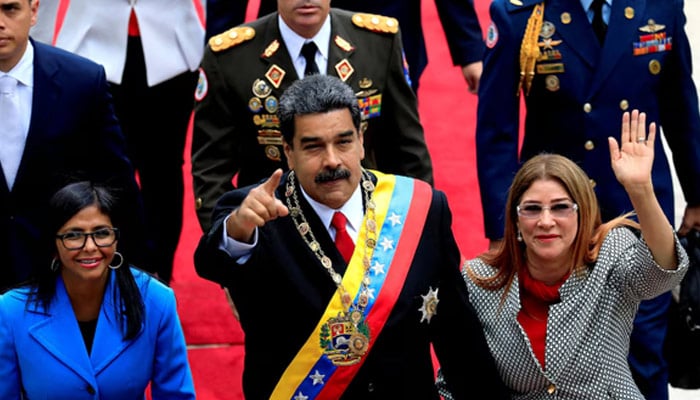
Geo News has obtained the charge sheet filed by the United States Department of Justice against Venezuelan President Nicolás Maduro and his wife, Cilia Flores, on the basis of which both are scheduled to appear on Monday before a federal court in New York.
The charge sheet has been filed in the records of the United States District Court for the Southern District of New York and is described as a superseding indictment, meaning it expands upon and strengthens previously filed charges.
According to the charge sheet received by Geo News, US prosecutors allege that Nicolas Maduro used his official position to protect and oversee a vast drug trafficking network and, over several years, facilitated the shipment of large quantities of cocaine into the United States.
The indictment states that these activities went beyond conventional drug smuggling and fall under the category of narco-terrorism as defined by US law.
The document further alleges that Maduro and his close associates cooperated with armed groups during the course of drug trafficking operations and conspired to possess and use sophisticated weapons, including machine guns and other destructive devices, to advance these activities.
According to the charge sheet, the allegations fall under serious federal statutes, including narco-terrorism conspiracy, conspiracy to import cocaine, and illegal possession of weapons.
The indictment also names Maduro’s wife, Cilia Flores, alleging that she was aware of these activities and, in certain instances, was involved in providing financial and administrative facilitation. US prosecutors contend that the network remained active for years, with the dual purpose of generating profits through narcotics trafficking and causing harm to US interests.
Legal experts say that if even one of these charges is proven in court, US federal law allows for the possibility of lengthy prison sentences for Maduro and his wife, potentially including life imprisonment. Any final sentence, however, would be determined by the court based on the evidence presented, the verdict of a jury, and the federal sentencing process.
Maduro to appear in US court
Meanwhile, Venezuelan President Maduro is set to appear on Monday in a federal court in Manhattan that operates within the same judicial district where the case of Pakistan-born neuroscientist Dr Aafia Siddiqui was tried and where she was sentenced in 2010.
Dr Siddiqui’s case was heard under the jurisdiction of the United States District Court for the Southern District of New York, a court that continues to rank among the most powerful and influential federal judicial forums in the United States.
The court’s historical pedigree is as striking as its contemporary reach. According to the Southern District of New York’s official judicial history, the first federal court session in New York convened in November 1789.
That early foundation evolved over time into what is now the Southern District of New York. Because of its age, prominence, and the gravity of the cases it handles, the court is often referred to informally within the American legal system as the “mother court.”
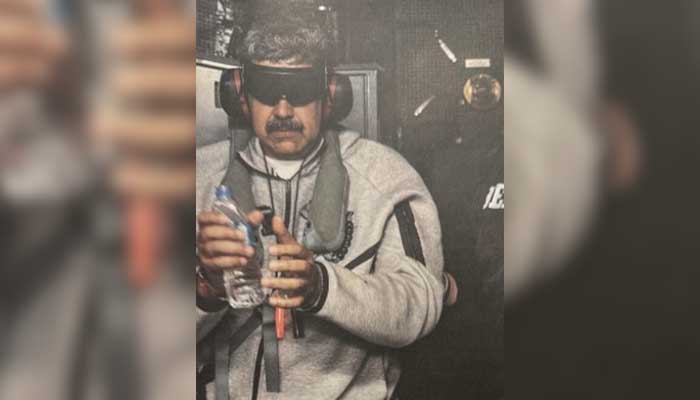
According to court records and the charge sheet available to Geo News, the central questions now facing the proceedings are the nature of the allegations against President Maduro and his wife, Cilia Flores, and the penalties they could face if those charges are proven in court.
The Southern District of New York has long been the venue for some of the world’s most consequential criminal trials. In the same Manhattan federal court, Bernard Madoff was sentenced on June 29, 2009, to 150 years in prison for orchestrating the largest Ponzi scheme in history.
Under the same judicial framework, Sam Bankman-Fried was sentenced in March 2024 to 25 years in prison in connection with major financial fraud charges. Ghislaine Maxwell received a 20-year sentence for her role in conspiring with Jeffrey Epstein in the sexual exploitation of underage girls. The court also heard the case of Martha Stewart, who was sentenced in July 2004 to five months in prison.

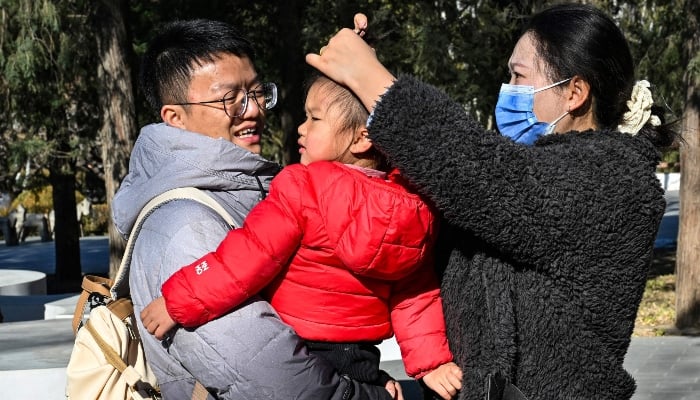
BEIJING: Twenty-five-year-old Grace and her husband are set on staying child-free, resisting pressure from their parents and society to produce offspring, even as China strives to boost its flagging birth rate.
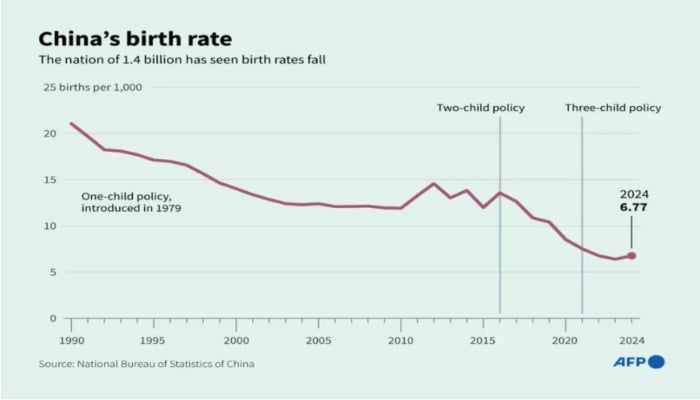
A decade since China scrapped its stringent one-child policy and implemented a two-child policy in January 2016, the nation is dealing with a looming demographic crisis.
The country’s population has shrunk for three straight years, with the United Nations predicting it could fall from 1.4 billion today to 633 million by 2100.
There were just 9.54 million births in China in 2024 — half the number than in 2016 — and concerns about the shrinking and ageing population have been growing as couples choose to buck traditional Chinese norms.
More young people like Grace, who refers to herself and her husband as DINKs — or “dual income no kids” — have either sworn against having children at all or are putting it off for the next few years.
These couples’ reasons run the gamut from high child-rearing costs to career concerns.
Grace, who asked to be identified by her English name over fears of repercussions, said she needed to have a decent income and “some savings” before starting a family.
Without these conditions, “I wouldn’t even consider having kids”, the content creator added.
The term “DINK” has gone viral on Chinese social media, including Xiaohongshu, where its hashtag has received more than 731 million views, sparking differing views on the subject.
“If I were to widely publicise the fact that I’m a DINK and talk about how comfortable my life is, there would definitely be many people who wouldn’t be happy about it,” Grace told AFP.
Changing attitudes
Chinese authorities have rolled out pronatalist incentives after ending its one-child policy — which had been in place for more than three decades to address poverty and overpopulation.
Top leaders have pledged more childcare relief, including subsidies to parents to the tune of $500 per year for every child under the age of three, state media reported in July.
But experts say China, which was overtaken by India as the world’s most populous nation in 2023, still faces significant hurdles in boosting its birth rate.
“The number of people choosing not to marry or not to have children is increasing, and fertility intentions among the younger generation are weak,” He Yafu, an independent Chinese demographer, told AFP.
Cultural constraints have limited the long-term effectiveness of China’s pronatalist measures, said Pan Wang, an associate professor at Australia’s University of New South Wales.
“The one-child policy fundamentally reshaped family norms and also people’s lifestyles, because many people, especially the one-child generation, were used to and often prefer smaller family sizes,” Wang told AFP.
The rising living costs in China and economic uncertainty also continue to deter childbearing, she added.
Beijing resident Wang Zibo, 29, said he and his wife have decided to wait for the “economy to stabilise” before they have children, even though he said he is in “quite good” financial standing.
“Looking at things in China right now, the main reason (why young couples are not having children) is still that the economy is somewhat weak,” he told AFP.
China has struggled to maintain a strong economic recovery from the pandemic, while many employees work long hours under a gruelling “996” culture — 9:00am to 9:00pm, six days a week.
“People have been excessively busy with work… for some, it’s difficult even to find the time to think about (starting a family),” Wang said.
No time, no money
China in 2021 further relaxed its strict family planning controls, allowing couples to have three children — something many couples, especially those living in cities, are reluctant to do.
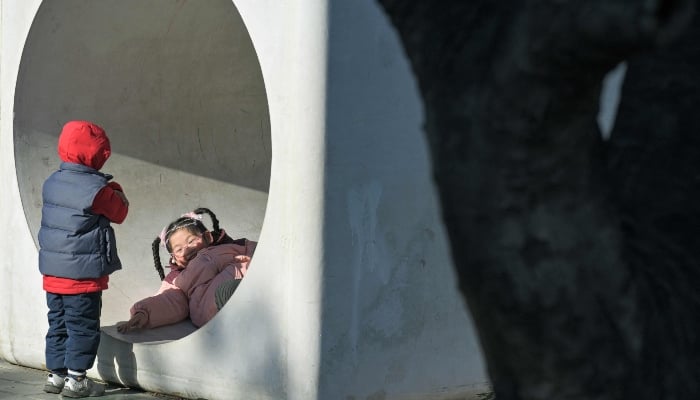
Even having one child is a huge responsibility, Wang said, citing the example of a friend who had a baby shortly after he got married.
“He would constantly tell me… not only do you have no time and you spend all your money on the child, you kind of lose yourself in the process too.”
Demographer He said if China’s fertility rate of around 1.0 persists in the long term, the most obvious consequences will be a continued decline in population size and rapid population ageing.
“This will increase the future burden of elderly care, weaken China’s overall national strength, and drag on economic development,” he added.

- US veto power prevents accountability at UN Security Council.
- US cites self-defence under UN Charter Article 51.
- Legal experts argue US operation violated international law.
UNITED NATIONS: The legality of the US capture of Venezuelan President Nicolas Maduro will be under the spotlight at the United Nations on Monday, but Washington is unlikely to face strong criticism from allies over its military operation in the Latin American state.
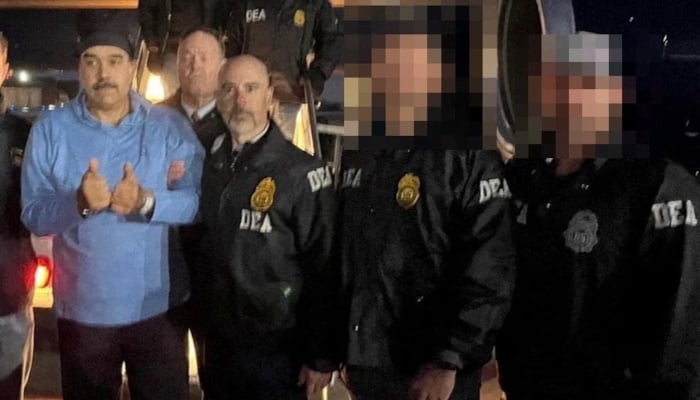
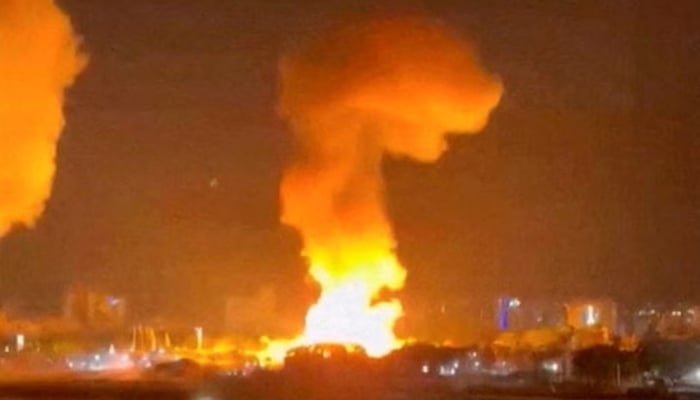
The 15-member UN Security Council will meet on Monday after US Special Forces seized Maduro in an operation on Saturday that knocked out power in parts of Caracas and struck military installations. Venezuelan authorities also said it was deadly. Maduro is now in detention in New York awaiting a court appearance on Monday on drug charges.
Russia, China and other Venezuelan allies have accused the United States of violating international law, but US allies – many of whom opposed Maduro – have been less vocal about any concerns over the use of military force.
“Judging by the reactions from European leaders to date, I suspect that US allies will equivocate exquisitely in the Security Council,” said Richard Gowan, director of global issues and institutions at the International Crisis Group, a think-tank.
UN Secretary-General Antonio Guterres views the US operation as setting “a dangerous precedent,” his spokesperson said on Saturday. Many legal experts also say the US action was illegal, although Washington will be able to block any attempts by the UN Security Council to hold it accountable.
Washington cites self-defence
In the wake of the US operation, European states have largely called for international law to be respected without specifically calling out Washington, though French Foreign Minister Jean-Noel Barrot said the US had violated “the principle of not resorting to force, that underpins international law.”
The UN Charter states that members “shall refrain in their international relations from the threat or use of force against the territorial integrity or political independence of any state.” There are currently 193 members of the United Nations.
US Ambassador to the UN Mike Waltz on Sunday cited Article 51 of the UN Charter, which says that nothing “shall impair the inherent right of individual or collective self-defence if an armed attack occurs against a member of the United Nations.”
“In this case, you have a drug kingpin, an illegitimate leader indicted in the United States, coordinating with the likes of China, Russia, Iran, terrorist groups like Hezbollah, pumping drugs, thugs, and weapons into the United States of America, threatening to invade its neighbours,” he told Fox News.
However, legal experts say the US operation was illegal because it lacked UN Security Council authorisation, did not have Venezuelan consent, and does not constitute self-defence against an armed attack.
“The action violated international law,” said Tom Dannenbaum, a professor at Stanford Law School. “Serious legal objections to Maduro’s regime do not eliminate the need for a legal basis to use military force in Venezuela.”
US veto shields Washington
But Washington cannot be held accountable for any violation by the UN Security Council, which is charged with maintaining international peace and security. The US wields a veto – along with Russia, China, Britain and France – so can block action.
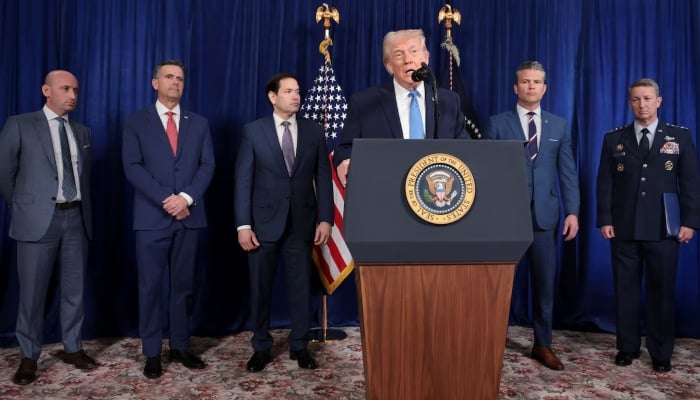
Maduro was indicted in 2020 on US charges including narco-terrorism conspiracy. He has always denied any criminal involvement.
“Even if Maduro were to be responsible for the smuggling of some drugs into the US, such smuggling of drugs does not constitute an armed attack and does not authorise the US to use force in self-defence,” said Milena Sterio, a professor at Cleveland State University College of Law.
She also said Washington “cannot exercise extra-territorial jurisdiction to arrest individuals anywhere it pleases.”
Adil Haque, a professor at Rutgers Law School, also said the US capture of Maduro “was an illegal infringement of the inviolability and immunity of a sitting Head of State, who may lack democratic legitimacy but was clearly effectively discharging his official functions on behalf of his State.”
Cuba says 32 of its citizens killed in Maduro extraction
The Cuban government said on Sunday that 32 of its citizens were killed during the US raid on Venezuela to extract Maduro for prosecution in the United States.
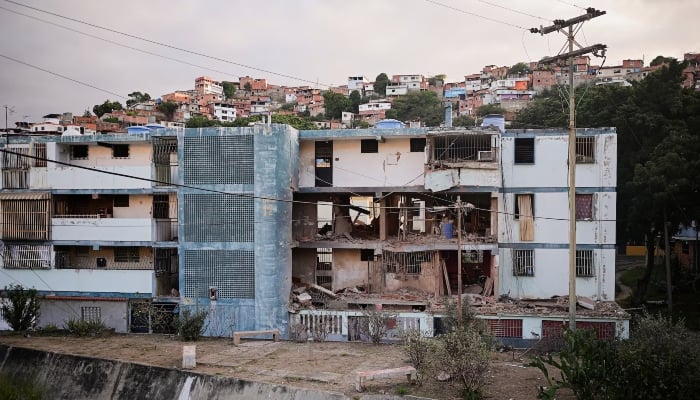
Havana said there would be two days of mourning on January 5 and 6 in honour of those killed and said funeral arrangements would be announced.
The Cuban government statement gave few details, but said all the dead were members of the Cuban armed forces and intelligence agencies.
“True to their responsibilities concerning security and defence, our compatriots fulfilled their duty with dignity and heroism and fell, after fierce resistance, in direct combat against the attackers or as a result of bombings on the facilities,” the statement said.
Cuba has provided some security for Maduro since he came to power. It was not clear how many Cubans were guarding the Venezuelan president when they died and how many may have perished elsewhere.
Maduro, 63, and his wife Cilia Flores were seized by US forces in the Venezuela capital Caracas on Saturday and flown to the United States. Maduro is being held in a New York detention center awaiting a Monday court appearance on drug charges.


Bahrain apparel imports edge up in Jan-Oct 2025, China widens lead

Ruben Amorim sacked as Manchester United head coach

Opening An NPS Account Online? PFRDA’s New OTP Rule Explained

-

 Entertainment1 week ago
Selena Gomez hits salon before ringing into the New Year
-

 Tech1 week ago
How Much Melatonin Should You Be Taking? And Should You Be Taking It at All?
-
 Sports1 week ago
Imad Wasim announces divorce after over six years of marriage
-

 Tech1 week ago
New Year, New You With the Best Plant-Based Meal Kits We’ve Tested (and Tasted)
-

 Sports1 week ago
NFL Week 17 highlights: Texans’ C.J. Stroud throws for two TDs in 1Q
-

 Fashion1 week ago
India’s PDS Limited wins AEPC Gold Award for global RMG leadership
-
 Entertainment6 days ago
George Clooney, his wife Amal and their twins granted French citizenship
-
 Entertainment1 week ago
Jack Black recalls his embarrassing job before acting