

Politics
Yemen’s southern separatists call for path to independence amid fighting over key region

- STC says starting two-year process towards referendum.
- Saudi-backed forces took back parts of Hadramout on Friday.
- Yemen crisis triggers feud in Gulf region.
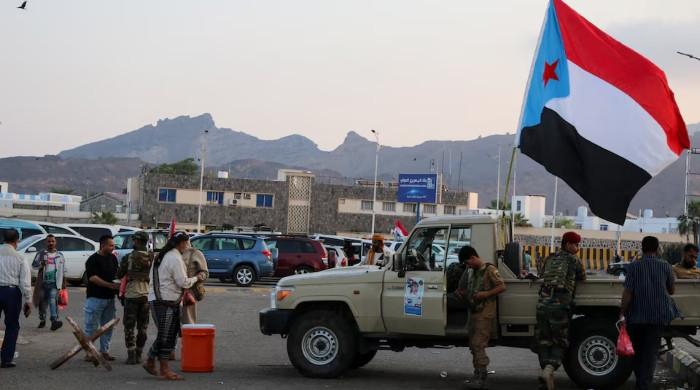
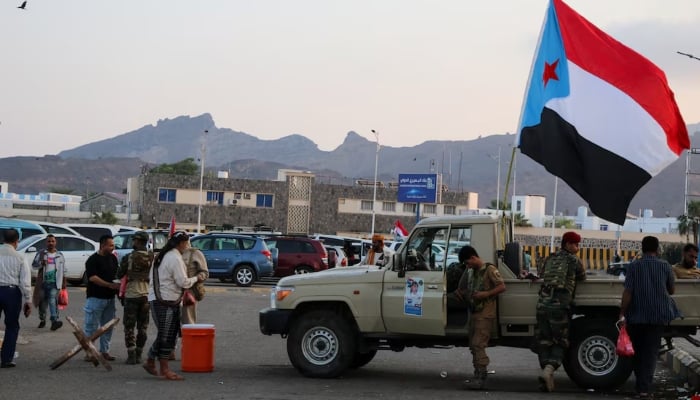
Yemen’s southern separatist movement said on Friday it aimed to hold a referendum on independence from the north in two years, as Saudi-backed forces fought to recapture areas the separatists seized last month in a move that triggered a major feud between Gulf powers.
The statement by the UAE-backed Southern Transitional Council was the clearest indication yet of its intention to secede, but may be seen by Yemen’s internationally recognised government and its Saudi backers as an escalation of the crisis.
It came hours after the government said it had launched an operation to recapture the crucial Hadramout province, one of the main areas seized by the STC last month, with Saudi military support.
Major power shift
The surprise advance by the separatists in early December shifted power in Yemen, which has been at war for more than a decade, fracturing the coalition against the Houthis and laying bare divisions between Gulf allies Saudi Arabia and the UAE.
Yemen has been split for years between the northern highlands, held by the Iran-backed Houthi group, and forces including the southern separatists that are supported by Gulf states under the internationally recognised government.
Once the twin pillars of regional security, OPEC members Saudi Arabia and the United Arab Emirates have in recent years seen their interests diverge on issues ranging from oil quotas to geopolitics.
Neither the internationally backed government nor Saudi Arabian officials could immediately be reached for comment on the STC statement.
Saba news agency reported early on Saturday that Rashad al-Alimi, head of Yemen’s Saudi-backed presidential council, has submitted a request to Saudi Arabia to host a forum aimed at resolving the southern issue.
Al-Alimi said he hopes the forum would bring together all southern factions “without distinction,” including the UAE-backed southern separatist movement.
The request comes after a number of southern political factions and figures urged Al-Alimi to submit a request to Riyadh to host a forum after they condemned what they described as “unilateral measures” on the southern issue by STC leader Aidarous Al-Zubaidi.
Saudi Arabia’s foreign ministry welcomed the request, calling on southern factions to participate in the planned forum.
On Friday, the Hadramout governor under the internationally recognised government said he had launched an operation to restore control over the area, later saying his forces had taken control of a key military base.
A local Saudi-backed tribal group and the STC both said the operation had been backed by airstrikes.
A spokesperson for the STC, Mohammed al-Naqeeb, said its forces were on full alert across the region and warned that it was ready to respond forcefully.
Oil-producing Hadramout borders Saudi Arabia and many prominent Saudis trace their origins to the province, lending it cultural and historical significance for the kingdom. Its capture by the STC last month was regarded by the Saudis as a threat.
Saudi Arabia did not immediately respond to a request for comment on the airstrikes and it was unclear if there were any casualties.
The UAE, without directly addressing Friday’s developments, said the country had approached the recent escalation with restraint, coordination and a deliberate commitment to de-escalation.
Tensions remain after UAE troop pullout
The UAE Ministry of Defence on Saturday announced the completion of the return of all UAE Armed Forces personnel from the Republic of Yemen.
The ministry stated that the return of the UAE forces follows the implementation of a previously announced decision to conclude the remaining missions of counter-terrorism units. The process has been conducted in a manner that ensured the safety of all personnel and carried out in coordination with all relevant partners.
Last week, UAE said it was pulling its remaining forces out of Yemen, after Saudi Arabia backed a call for its forces to leave within 24 hours in one of the biggest disagreements between the two Gulf oil powers to play out in public.
The move briefly eased tensions, but disagreements between the various groups on the ground in Yemen have persisted.
Saudi Arabia and the UAE are both major players in the OPEC oil exporters’ group, and any disagreements between them could hamper consensus on oil output.
They and six other OPEC+ members meet online on Sunday, and OPEC+ delegates have said they will extend a policy of maintaining first-quarter production unchanged.
Meanwhile flights remain halted at Aden international airport, the main gateway for regions of the country outside Houthi control, as the STC and Saudi Arabia traded blame as to who was responsible for the air traffic shutdown.
The stoppage was linked to new restrictions by the internationally recognised government on flights between Aden and the UAE, though there were contradictory accounts of who had ordered a halt to all air traffic.

Iran’s foreign ministry spokesman says confronting US-Israeli threats leaves the country no option but military retaliation, while stressing it has no issue with the American people.
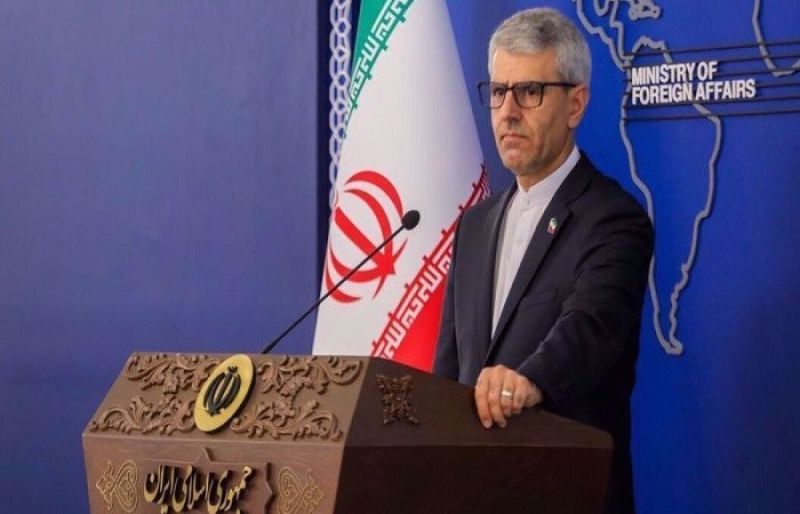
In an interview with the US public radio (NPR) published on Sunday, Esmaeil Baghaei discussed the country’s positions on the current developments following the recent US-Israeli aggression.
“This is an unjust war imposed on our nation, and we have no other choice other than fighting against this injustice,” he said.
He emphasized that these military actions are unwarranted and unprovoked, and pointed out they arrived while the US and Iran were making progress in diplomatic negotiations over nuclear issues.
Baghaei stated that the conflict is the United States administration’s preferred war.
He noted that according to the Omani mediator’s remarks on Friday, a deal was close, and Iran was slated to meet the American delegation in Vienna the previous day to discuss technical details—emphasizing that Iran did not initiate the war.
He referred to the assassination of the Leader of the Islamic Revolution Ayatollah Seyed Ali Khamenei, saying, “he was not only a political leader. He was also a high-ranking religious jurist with tens of millions of followers, even outside Iran, across the region.”
In response to a question on who is leading the country now, the Iranian diplomat explained that an interim council now governs Iran, composed of the head of the judiciary, the president, and a member of the council of experts, which will be responsible for electing a new leader.
Responding to a question about whether Iran’s leadership can withstand aggressive US sanctions, President Trump’s calls for regime change, Israeli pressure and domestic opposition, Baghaei said a foreign power cannot dictate changes to a nation’s system of governance.
He added that Iranians have historically united against foreign aggression and domination, fighting to protect their freedom, independence, dignity and sovereignty.
Reacting to the death of at least three Americans, Baghaei said “I have said many times that we have no problem with the American people. And we believe that this is not their war.”
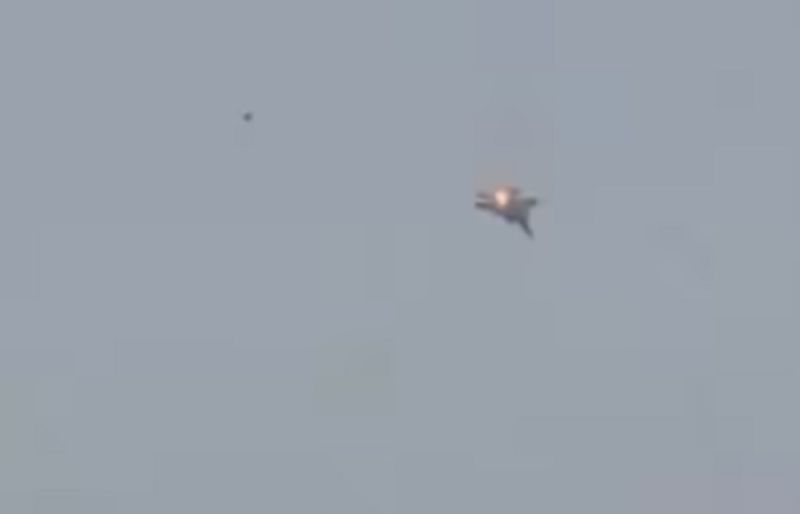

Iranian Armed Forces have shot down an advanced US F-15 fighter jet near the border with Kuwait – the first downing of an American fighter jet in the past 27 years.
“An F-15 fighter jet [belonging] to the intruding US army which intended to attack the country has been targeted by the Islamic Republic of Iran’s Air Defense and brought down,” Iran’s Khatam Al-Anbiya Air Defense Base said in a statement on Monday.
It added that the jet’s debris has been crashed in Kuwaiti soil.
Kuwait’s Defense Ministry on Monday confirmed the jet’s crash with its video footage widely being circulated in global media.
An American F-117 fighter jet was downed by former Yugoslavia during the Kosovo war some 27 years ago.
No American fighter jet has been officially destroyed since then despite significant progress made in airplane technology.
Iranian retaliatory attacks comes amid three days of aggression against the country, which has killed at least 555 people, including more than 145 children in a strike on an elementary school in Hormozgan Province in addition to Iranian officials, according to the Red Crescent Society.
The IRGC and the Army have targeted strategic sites in the Israeli-occupied territories as well as US-operated bases across West Asia, including the Fifth Fleet in Bahrain, along with key installations in Qatar and the United Arab Emirates (UAE) for their role in supporting aggression against Iran.
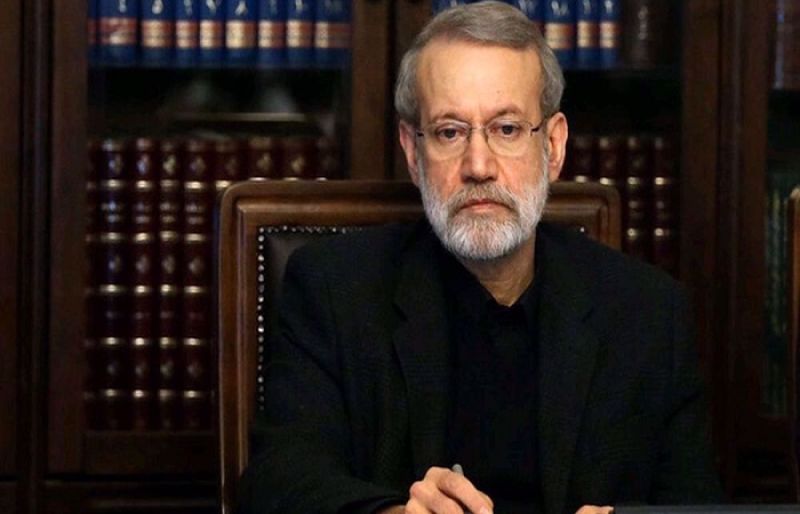
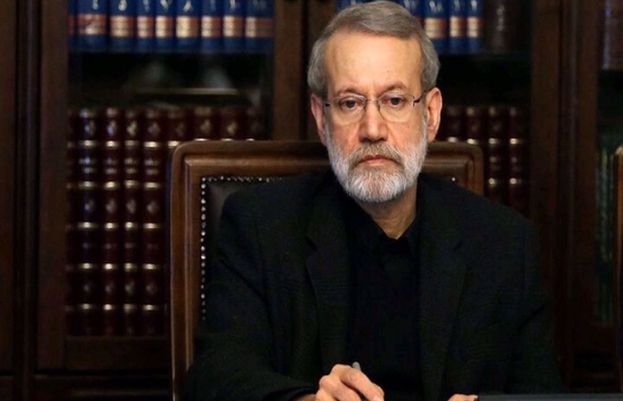
Secretary of Iran’s Supreme National Security Council (SNSC) Ali Larijani says the Islamic Republic will hold no negotiations with the United States after Washington and Tel Aviv waged war against the country.
Larijani made the remark in a post on his X account on Monday in response to a report by The Wall Street Journal claiming that he had started new efforts to resume talks with the US.
The US and Israel started a fresh round of aerial aggression on Iran on Saturday, some eight months after they carried out unprovoked attacks on the country.
The Saturday attacks led to the martyrdom of Leader of the Islamic Revolution Ayatollah Seyyed Ali Khamenei.
The Iranian administration on Sunday declared 40 days of public mourning and seven days of holidays following the Leader’s martyrdom.
The aggression was launched as Tehran and Washington had held three rounds of indirect negotiations in the Omani capital of Muscat and the Swiss city of Geneva and planned to open technical talks in Vienna, Austria, last Monday.
Iran began to swiftly retaliate against the strikes by launching barrages of missile and drone attacks on the Israeli-occupied territories as well as on US bases in regional countries.
On the second day of the joint aggression, US President Donald Trump claimed that Iranian authorities wanted to hold talks with Washington.
In another post on X, Larijani said the US president had caused turmoil in the region as a result of his “pipe dreams” and is now concerned about more losses on the American servicemen.
The top Iranian security official added that Trump changed the self-made slogan of “America First” to “Israel First” through his illusion-driven performance and sacrificed the American soldiers for the sake of Israel’s ambitions.
Larijani emphasized that the American soldiers and their families are bearing the brunt of Trump’s lie mongering and his ill nature.
“Today, the Iranian nation is defending itself. Iran’s Armed Forces have not launched any aggression,” the SNSC secretary pointed out, emphasizing it was not Iran that initiated the war.
Iran has reaffirmed its policy to promote peace in the region but pledged that it will not hesitate to defend its territorial integrity against any act of aggression.
Iranian officials have also already called on the country’s neighbors not to allow their soil to be used by the US and Israel for any attack against the Islamic Republic, warning to retaliate.


Apple’s Price-Friendly iPhone 17e Gets a MagSafe Upgrade

IIP sees 4.8% YoY growth in January; manufacturing & electricity support rise – The Times of India

Bangladesh’s BGMEA seeks policy reforms, release of pending incentives

-
 Politics1 week ago
Pakistan carries out precision strikes on seven militant hideouts in Afghanistan
-

 Tech1 week ago
These Cheap Noise-Cancelling Sony Headphones Are Even Cheaper Right Now
-

 Sports1 week ago
Kansas’ Darryn Peterson misses most of 2nd half with cramping
-

 Entertainment1 week ago
Viral monkey Punch makes IKEA toy global sensation: Here’s what it costs
-
 Entertainment1 week ago
Saturday Sessions: Say She She performs "Under the Sun"
-
Sports1 week ago
Mike Eruzione and the ‘Miracle on Ice’ team are looking for some company
-
 Business6 days ago
Households set for lower energy bills amid price cap shake-up
-
 Politics1 week ago
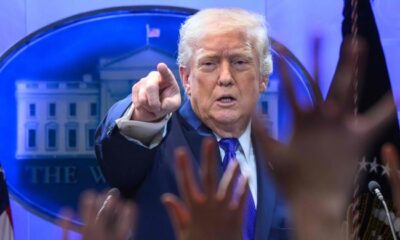
Trump says he will raise US global tariff rate from 10% to 15%, following court ruling