

Politics
Venezuela’s interim govt says it remains united behind Maduro after his US capture

- Rubio says “premature” to talk of new polls for Venezuela.
- Streets quiet amid anxiety over next developments.
- Vice president takes over country as interim leader.
A top Venezuelan official declared on Sunday that the country’s government would stay unified behind President Nicolas Maduro, whose capture by the US has sparked deep uncertainty about what is next for the oil-rich South American nation.
Maduro is in a New York detention centre awaiting a Monday court appearance on drug charges, after US President Donald Trump ordered his removal and said the US would take control of Venezuela. But in Caracas, top officials in Maduro’s government, who have called the detentions of Maduro and his wife Cilia Flores a kidnapping, were still in charge.
“Here, the unity of the revolutionary force is more than guaranteed, and here there is only one president, whose name is Nicolas Maduro Moros. Let no one fall for the enemy’s provocations,” Interior Minister Diosdado Cabello said in an audio shared by the ruling PSUV socialist party on Sunday as he urged calm.
Images of the 63-year-old Maduro blindfolded and handcuffed on Saturday stunned Venezuelans. The action is Washington’s most controversial intervention in Latin America since the invasion of Panama 37 years ago.
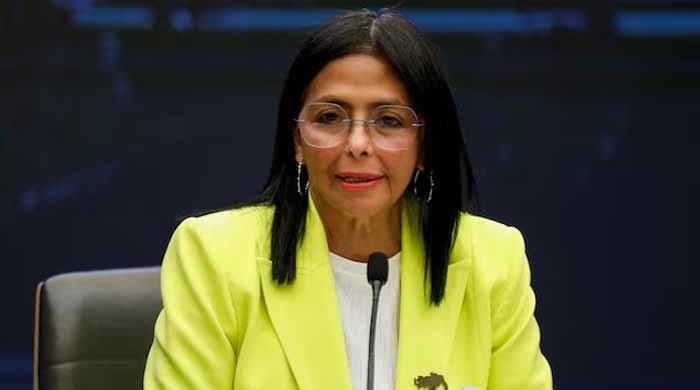
Vice President Delcy Rodriguez — who also serves as oil minister — has taken over as interim leader with the blessing of Venezuela’s top court, though she has said Maduro remains president.
Because of her connections with the private sector and her deep knowledge of oil, the country’s top source of revenue, Rodriguez has long been considered the most pragmatic member of Maduro’s inner circle, but she has publicly contradicted Trump on his claims she is willing to work with the US.
The Venezuelan government has said for months that Trump’s pressure campaign is an effort to take possession of the country’s vast natural resources, especially its oil, and officials have made much of Trump’s Saturday comments on the subject, when he said major US oil companies would move in.
“We are outraged because in the end everything was revealed — it was revealed that they only want our oil,” added Cabello, who has close ties to the military.
Venezuela’s state-run oil company PDVSA is asking some of its joint ventures to cut back crude output by shutting down oilfields or groups of wells amid an export paralysis, three sources close to the decision told Reuters.
Oil exports from the OPEC country remain at a standstill since the US last month announced a blockade on sanctioned tankers moving in and out of Venezuelan waters and the seizure of two oil cargoes.
Once one of the most prosperous nations in Latin America, Venezuela’s economy nosedived further under Maduro, sending about one in five Venezuelans abroad in one of the world’s biggest exoduses.
‘US ready to work with new authorities’
Secretary of State Marco Rubio said the Trump administration will work with the existing Venezuelan leadership.
His comments indicated that Washington is not seeking complete regime change and sought to clarify Trump’s earlier statement that the US will “run” the Latin American country of about 30 million people.
Rubio told NBC’s “Meet the Press” that the US was fighting drug traffickers, “not a war against Venezuela.”
Despite the success of the initial US operation, questions mounted over Trump’s strategy.
The US president on Saturday indicated deep, long-lasting US involvement centred on securing access to the world’s largest proven oil reserves.
“We’re going to run the country” until a transition can be made, he said, also insisting that military “boots on the ground” remained a possibility.
Rubio did multiple television interviews Sunday morning to make clear that Washington is not looking for upheaval.
He said Washington is ready to work with Rodriguez and the rest of Maduro’s cabinet — as long as they adhere to US demands.
“We’re going to make an assessment on the basis of what they do, not what they say publicly in the interim,” he told CBS News.
Underlining the lack of focus on democracy or desire to help long-backed opposition candidates to get power, Rubio told NBC it was “premature” to talk of new elections for Venezuela.
Muted streets
Maduro opponents in Venezuela have been wary of celebrating his seizure and extraction, and the presence of security forces seemed, if anything, lighter than usual on Sunday.
Despite the nervous mood, some bakeries and coffee shops were open and joggers and cyclists were out like a normal Sunday morning. Some citizens were stocking up on essentials.
“Yesterday I was very afraid to go out, but today I had to. This situation caught me without food and I need to figure things out. After all, Venezuelans are used to enduring fear,” said a single mother in oil city Maracaibo, who said she bought rice, vegetables and tuna. “If this is necessary for my son to grow up in a free country, I’ll keep enduring the fear.”
The owner of a small supermarket in the same city said the business did not open on Saturday after US Special Forces swooped in on helicopters to seize Maduro after strikes on military installations in Caracas and elsewhere.
“Today we’ll work until noon since we’re close to many neighbourhoods — people have nowhere to buy food and we need to help them,” the shop owner said.
To the disappointment of Venezuela’s opposition, Trump has given short shrift to the idea of 58-year-old opposition leader and Nobel Peace Prize winner Maria Corina Machado taking over, saying she lacked support.
Machado was banned from standing in the 2024 election but has said her ally Edmundo Gonzalez, 76, who the opposition and some international observers say overwhelmingly won that vote, has a democratic mandate to take the presidency.
It is unclear just how Trump plans to oversee Venezuela and his focus on foreign affairs runs the risk of alienating some supporters who oppose foreign interventions.
While many Western nations oppose Maduro, there were many calls for the US to respect international law and resolve the crisis diplomatically. There were also questions over the legality of seizing a foreign head of state. Democrats said they were misled at recent Congress briefings and have demanded a plan for what is to follow.
The UN Security Council planned to meet on Monday to discuss the US attack, which Secretary-General Antonio Guterres described as a dangerous precedent. Russia and China, both major backers of Venezuela, have criticised the US.
Maduro was indicted in 2020 on US charges including narco-terrorism conspiracy. He has always denied any criminal involvement.
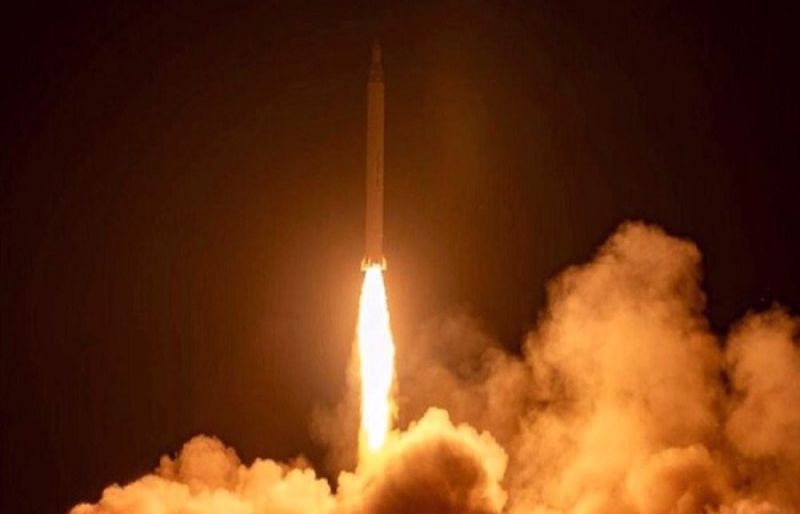

The Iranian armed forces have started a new wave of extensive drone and missile attacks on targets in the Israeli-occupied territories and US assets in regional countries.
A late Monday statement from the Islamic Revolution Guards Corps (IRGC) said that the 11th wave of offensive attacks under Operation True Promise 4 had been launched by the naval and aerospace units of the elite force.
The statement said the “extensive and high-density operation” had targeted American intelligence centers and military support warehouses in the Persian Gulf region, the Israeli communications industries complex in the occupied city of Beersheba, as well as 20 locations in the occupied regions of Tel Aviv, West al-Quds, and Galilee.
It said the “brave sons of Iran’s armed forces” had used more than 700 drones and hundreds of missiles to hit 60 strategic targets and 500 military locations linked to the United States and the Israeli regime since the start of the US-Israeli aggression on Iran on Saturday.
The statement said the number of missiles and drones and the success rate of the attacks had far outpaced records seen during the 12-day war with Israel and the US in June 2025.
The IRGC said recent “brutal and terrorist” attacks on Iran that targeted citizens in hospitals, schools, and offices of the national media service (IRIB) had further strengthened their resolve and determination to pursue an all-out war against the enemies.
The IRGC has been carrying out retaliatory attacks on US military assets across the region and on targets in the Israeli-occupied territories since Saturday, when the US and Israel started the unprovoked war of aggression against Iran and assassinated Leader of the Islamic Revolution Ayatollah Seyyed Ali Khamenei.
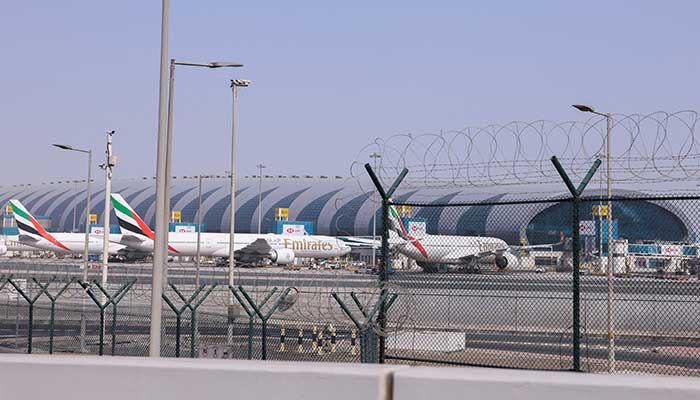
- Emirates, flydubai to restart limited flights from today.
- Etihad Airways announces resuming flights on Tuesday.
- Iran strikes targeted Gulf airports, airspace remains restricted.
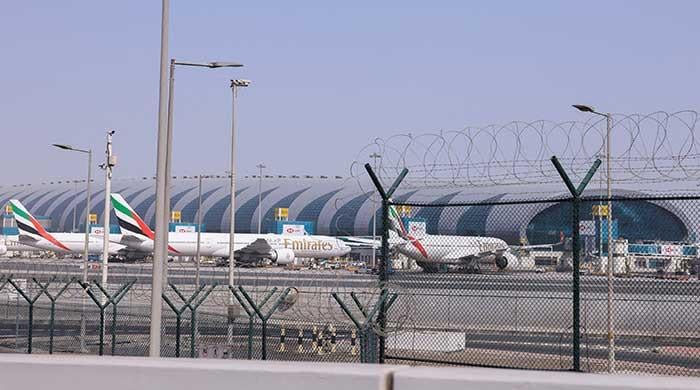
Dubai Airports said “limited” flights would resume on Monday evening, three days after they were cancelled as Iran began striking targets in the Gulf, including Dubai and Abu Dhabi airports.
Global air travel remained in severe disarray since Sunday as sustained air strikes forced the closure of major Middle Eastern airports, including Dubai — the world’s busiest international transit hub — in one of the most significant aviation disruptions in recent years.
Transit gateways such as Dubai and Abu Dhabi in the United Arab Emirates, as well as Doha in Qatar, were either shut down or operating under heavy restrictions, with large sections of regional airspace closed.
The disruption followed US and Israeli strikes that reportedly killed Iranian Supreme Leader Ayatollah Ali Khamenei on Saturday, plunging the Gulf into heightened uncertainty.
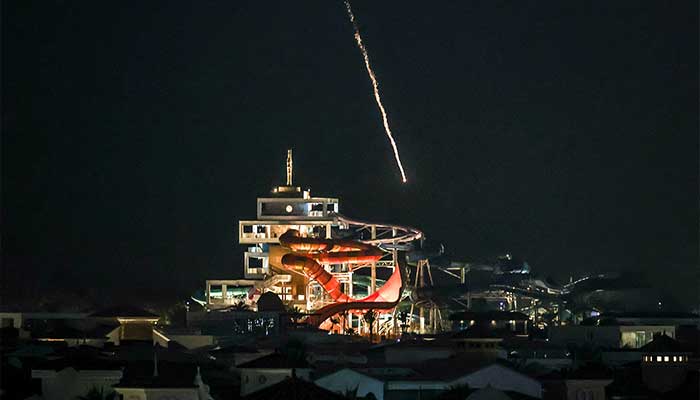
A fresh wave of attacks extended into a third consecutive day, deepening concerns over regional stability and prolonging the paralysis of air traffic.
“Dubai Airports announces a limited resumption of flights from Dubai International Airport (DXB) and Dubai World Central – Al Maktoum International Airport (DWC) starting this evening, Monday, March 2, 2026,” it said in a statement.
Emirates and low-cost carrier flydubai both said they would resume some flights on Monday evening.
In a post on X, Emirates, one of the UAE’s flag carriers, said it would prioritise passengers with existing bookings. Travellers rebooked on the limited services will be contacted directly by Emirates.
All other flights remain suspended until further notice, the airline said, urging passengers not to travel to the airport unless formally notified. It added that operations will be adjusted in line with developments on the ground.
Eihad Airways, which operates flights from Abu Dhabi, said it would resume flights on Tuesday.
Iran’s unprecedented bombardment in the Gulf states has hit military bases but also civilian infrastructure such as residential buildings, hotels, airports and sea ports, rattling a region long seen as a refuge from Middle East conflict.
Since Iran launched its campaign on Saturday, Dubai, Abu Dhabi, Kuwait and Manama airports were targeted.
Authorities reported one death in the Emirati capital Abu Dhabi in the “incident” at the facility.
On Saturday, the UAE announced it had closed its airspace “temporarily and partially” as an exceptional precautionary measure.
Dubai’s main airport (DXB) ranks as the second-busiest worldwide, behind Atlanta in the United States, according to Airports Council International.
The airspace closures hit a vital sector for the city, with Dubai’s air industry accounting for about a third of the emirate’s economy.
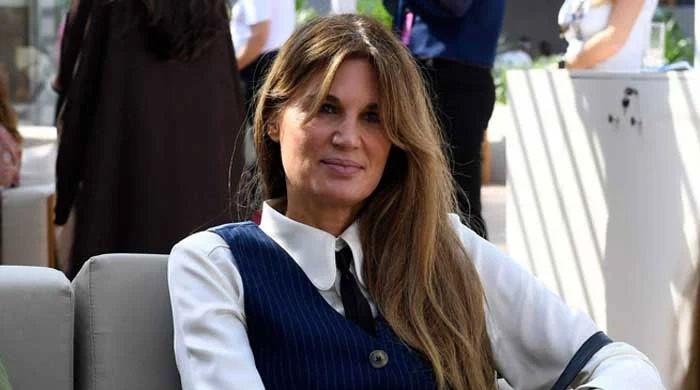
LONDON: TV producer and journalist Jemima Goldsmith blamed her builders as she was convicted and fined £1,000 over a run-in with the Metropolitan Police over a case related to breaking the speed limit.
The 52-year-old, the former wife of PTI founder and leader Imran Khan, failed to respond to police letters after a Mini Clubman vehicle registered in her name was caught breaking the speed limit in north London.
Jemima Goldsmith eventually offered up the name of the guilty driver who had been using her car, but by then she had missed the deadline to respond to avoid court proceedings.
Explaining the blunder, Goldsmith blamed major renovation work on her £10 million Kensington home.
“Due to ongoing construction works at the property where my car is registered, which made access tricky, the original letter was mislaid by builders and I was unaware of its existence until October,” she wrote, in a note to Westminster Magistrates’ Court.
“As soon as it was received, I completed and returned the form immediately.”
Court papers show Goldsmith named a man called Anthony Reilly, who lives in Switzerland, as the person who had been driving the Mini when it was caught doing 46mph on a 40mph stretch of the A1 in Hampstead on August 28 last year.
But her response was dated November 4 – six days after the final police deadline and two months after the first notification of a speeding ticket.
In a letter to the court, Goldsmith also referenced the death of her mother, Lady Annabel Goldsmith, in October last year at the age of 91.
“My PA, who collects the post, had been on annual leave in October and my mother died on the 18th that month, so I was less on top of things than I am normally. I am very sorry for the delay and inconvenience caused. I fully accept that a fine is due.”
Goldsmith was convicted by magistrate Gladys Famoriyo of failing to give information relating to the identification of the driver of a vehicle when required.
The magistrate imposed a £1,000 fine, six penalty points for her licence, and also ordered Goldsmith to pay £130 in costs and a £400 victim surcharge.
Goldsmith, who is known professionally as Jemima Khan, is the founder of a TV production company and has worked as a screenwriter and magazine editor.
She married former cricketer Imran Khan in 1995, and they have two children together.
Documents filed with Kensington and Chelsea Council show Goldsmith successfully applied last year for permission to carry out major renovations on her home, including the demolition and “grand” rebuild of one of the wings of the luxury property.
She was prosecuted over her failure to identify the speeding driver in the Single Justice Procedure, a fast-track court process which spares defendants the need to come to court and allows magistrates to make decisions on convictions and sentences in closed-door hearings.
Goldsmith was among 1,905 defendants who were convicted and sentenced last week for failing to identify the driver of a vehicle when contacted by police.
More than 330 of those defendants lost their licence as a result of the conviction.


Billie Eilish crawls into her past with Justin Bieber
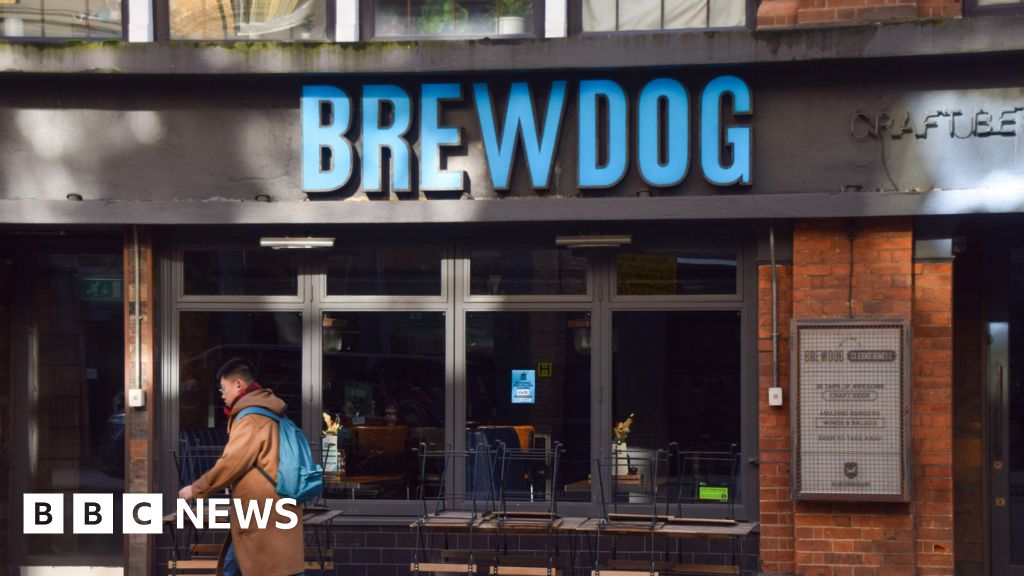
Brewdog: Bars close and hundreds lose jobs as beer firm sold in £33m deal

IRGC targets US intelligence centers, military depots in 11th wave of attacks

-
 Business6 days ago
Households set for lower energy bills amid price cap shake-up
-
 Entertainment1 week ago
Talking minerals and megawatts
-
 Business6 days ago
Lucid widely misses earnings expectations, forecasts continued EV growth in 2026
-
 Politics1 week ago
Supreme Court ruling angers Trump: Global tariffs to rise from 10% to 15%
-

 Sports1 week ago
South Africa thrash India by 76 runs in T20 World Cup Super 8 – SUCH TV
-

 Sports7 days ago
Top 50 USMNT players of 2026, ranked by club form: USMNT Player Performance Index returns
-
 Business1 week ago
Haryana Govt bars IDFC First Bank, AU Small Finance Bank over alleged Rs 590 crore fraud
-

 Sports1 week ago
Eileen Gu comments on Alysa Liu’s historic gold medal