

Business
Learner drivers may have to wait six months before taking test


Katy Austin,Transport correspondentand
Emer Moreau,Business reporter
 Getty Images
Learner drivers in England and Wales could face a minimum learning period of up to six months between sitting their theory and practical tests, the BBC can reveal.
The government will unveil the measure, which will be subject to consultation, as part of its wider road safety strategy launched on Wednesday.
The strategy will include proposals for a lower drink-driving limit in England and Wales, to bring them in line with Scotland.
The shake-up of driving laws is aimed at reducing the number of people killed or badly injured on Britain’s roads by 65% over the next decade, and by 70% for children under 16.
A fifth of all deaths or serious injuries from crashes involved a young car driver in 2024, according to official figures.
The government believes a minimum period between sitting the theory test and the practical test would help learner drivers develop their skills, including driving in different conditions.
The Department for Transport will consult on three or six months for the minimum learning period.
It would include any informal learning they may do with parents or guardians as well as formal lessons with a driving instructor.
Evidence from other countries suggests minimum learning periods could reduce collisions by up to 32%. Currently, learner drivers can take lessons from 17 and book a practical test as soon as they have passed a theory exam.
The majority of driving tests in Britain are taken by under-25s. In 2024-25, about 55% of tests were taken by drivers aged 17-24.
Learner drivers currently face a waiting time of around six months to take their practical tests anyway, due to a backlog from the Covid pandemic. The backlog is expected to last until late 2027.
The proposed changes could see an end to teenagers passing their tests days after turning 17, meaning the youngest drivers would be at least 17 and a half.
The road safety strategy is also expected to propose reducing the alcohol limit in for novice motorists and those within their two-year probation period from 80mg per 100ml of blood to around 20mg.
For all other drivers, the level would be lowered to around 50mg.
But some in the pub industry said it could hurt the sector.
The British Beer and Pub Association said the government would need to consider how to “mitigate the significant impact further restrictions would have for pubs, jobs and community hubs in rural areas, which may already suffer from little to no public transport”.
Graduated driving licences
There have been vociferous campaigns for “graduated driving licences” (GDLs) to be introduced in the UK. Different countries have varying types of GDLs, such as not allowing newly qualified drivers to carry passengers or not letting them drive at night.
Proponents of GDLs include some parents of young people who have died on the roads.
Sharron Huddleston started campaigning for GDLs to be introduced eight years ago after her daughter Caitlin was killed in a crash aged 18.


Sharron supports the proposed minimum learning period but said: “We need the post-test safety precautions as well.”
The driver, Skye Mitchell, who was also killed, had passed her test four months earlier.
Sharron believes Caitlin “would still be here” if the UK had graduated driving licences which forbade newly qualified, young drivers from carrying passengers their own age.
“All the girls [in the car] were 18,” she said.
“This is the strongest element of a graduated driving licence that would save many young lives.”
The AA has welcomed the measures announced by the government, but said not introducing GDLs was “a missed opportunity”.
Its president Edmund King told the BBC that “all the evidence, from Australia, from Canada, from other countries” shows that limiting the number of same-age passengers in a car for six months “will save lives”.
He said of the learning period: “That will help, but the question is: does it go far enough?”
The road safety strategy also contains plans to cut deaths by reducing speeding, drink and drug driving, not wearing seat belts and mobile phone use.
Technology, including built-in breathalysers that would prevent drunk drivers starting cars, will form a key plank of the strategy.
The government is also proposing new powers to suspend driving licences for people suspected of drink or drug-driving offences.
The BBC revealed in October that further research into headlight glare would be included in the strategy.
Alisa Fielder, 22 from Surrey, passed her test as a teenager but crashed a year ago as she was trying to overtake a lorry on a motorway. Nobody was injured, but her car was written off.
“I took too long checking the blind spot and all the cars in front had stopped,” she said.
“If I had maybe taken some more lessons then I would know that you can’t really take that long.”

She didn’t drive for a year after the crash. She has since done an informal assessment with charity IAM RoadSmart to boost her confidence and figure out what she needs to work on.
“I wasn’t driving to the best standard and that’s why I had a crash.”
Alisa said the process of becoming a better driver should continue after a person passes their test. “Maybe more lessons that you’re required to take with a professional.”
Local Transport Minister Lilian Greenwood said young people make up just 6% of all drivers, but are involved in nearly a quarter of fatal and serious collisions.
“Inexperience puts drivers, their passengers, and other road users at greater risk,” she said.
The proposed learning period “is all about supporting young drivers to develop the confidence they need to stay safe and giving them more time to build their skills and gain experience in different driving conditions”.

Get our flagship newsletter with all the headlines you need to start the day. Sign up here.
Business
No fuel shortage: Govt assures 100% domestic LPG, PNG, CNG supply amid Hormuz energy crunch – The Times of India
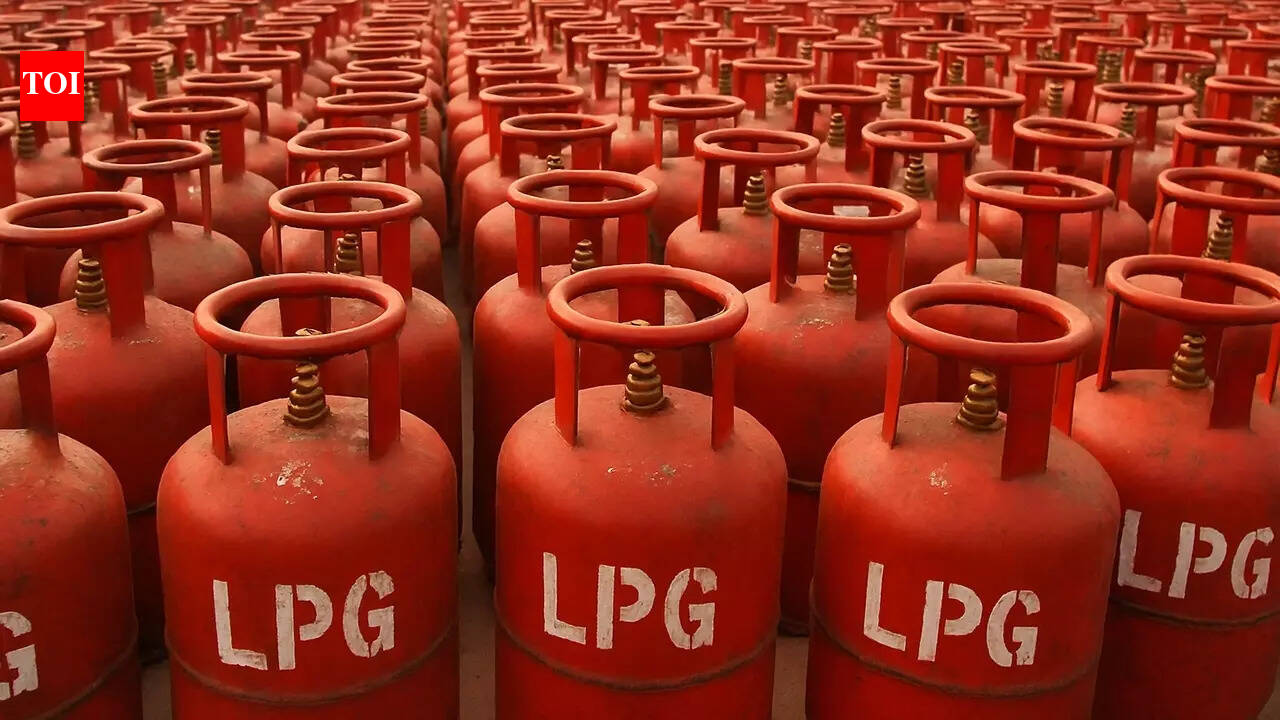
Amid ongoing geopolitical tensions straining global oil supplies, the government has said that it is ensuring uninterrupted fuel availability across the country and is closely monitoring maritime safety in the Middle East.Reassuring citizens, the ministry of petroleum and natural gas said there has been no disruption in household LPG supply. “Domestic LPG cylinder deliveries remain normal against bookings with more than 53.5 lakh domestic LPG cylinders delivered yesterday,” it said.The ministry further urged people not to rush to fuel stations or stock up on supplies. It said, “Citizens are advised to avoid panic purchase of petrol, diesel and LPG as the Govt is making all efforts to ensure availability of petrol, diesel and LPG.”It further assured that essential services remain fully supported, stating, “100% supply is being made to Domestic LPG, Domestic PNG and CNG (Transport),” while supply management measures are being taken as needed.At the same time, the government pointed to changes in consumer behaviour in the energy sector. It said, “more than 39,000 PNG consumers surrendered their LPG connections via MYPNGD.in,” suggesting a gradual shift towards piped natural gas. It also noted a rise in auto fuel demand, adding that “avg. Auto LPG sale by PSU OMCs in the month of April-26 (till 17.04.26) is around 305 MT/day against the avg. of 177 MT/day during Feb-26.“On the maritime front, authorities confirmed that Indian shipping continues to move safely through the region despite risks. The Ministry of Ports, Shipping and Waterways said, “Indian-flagged crude oil tanker Desh Garima safely crossed the Strait of Hormuz on 18 April 2026,” adding that the vessel, carrying 31 Indian seafarers, is “expected to arrive at Mumbai on 22 April 2026.”However, it also acknowledged recent security incidents, noting that “two Indian vessels… reported a firing incident while transiting the Strait of Hormuz,” though “there has been no injury to any crew reported.”The shipping ministry said the situation is being closely tracked, adding, “All Indian seafarers are safe. The situation continues to be closely monitored.”On fuel availability, the petroleum ministry said refineries are running at strong capacity and “sufficient stocks of petrol and diesel are being maintained,” with retail fuel stations operating normally across the country.To cushion consumers from global price shocks, the government highlighted recent fiscal steps, saying, “The Middle East crisis has led to an abnormal increase in crude prices; however, to protect consumers, the Government of India has reduced excise duty on petrol and diesel by Rs 10 per litre.”It also intensified action against malpractice in the supply chain, stating that “more than 2400 raids were conducted across the country” on April 18 to check hoarding and black marketing of LPG.Officials said that coordinated efforts with states, industry stakeholders and agencies are ongoing to ensure energy security and uninterrupted supplies despite global uncertainty.
Business
India-US trade deal: Three-day talks to begin from April 20; what to expect – The Times of India
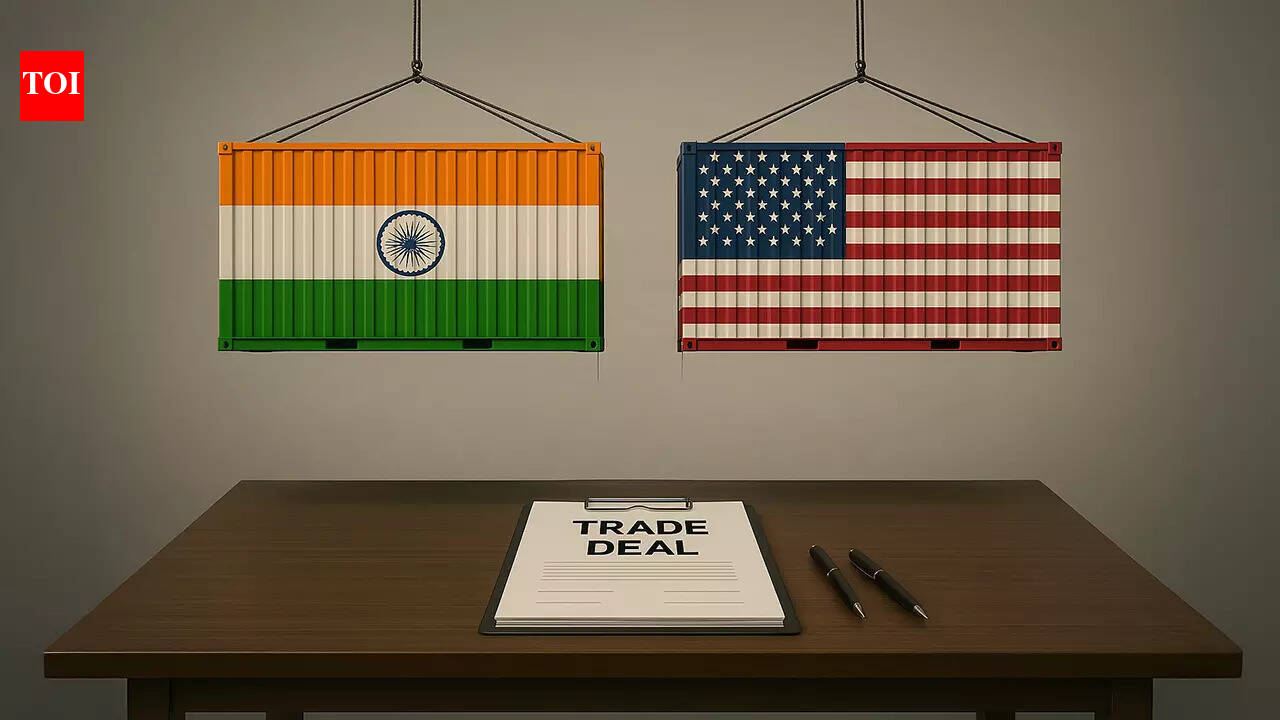
India and the United States are set to resume trade negotiations this week, with a delegation of about a dozen officials travelling from New Delhi to Washington for discussions on the first phase of the proposed bilateral trade agreement (BTA). The talks, scheduled from April 20 to 22, will be led by India’s chief negotiator Darpan Jain, additional secretary in the department of commerce, and will include officials from the customs department and the ministry of external affairs.“The meeting will happen from April 20-22 in Washington DC. India’s chief negotiator Darpan Jain (additional secretary in the department of commerce) is leading the team. Officers from customs and external affairs ministry are also part of the Indian team,” an official told PTI. This round of talks comes after major changes in the US tariff system, which have led both sides to reconsider the structure of the trade agreement finalised earlier this year and released on February 7.A key shift came after the US Supreme Court struck down reciprocal tariffs imposed under the 1977 International Emergency Economic Powers Act, prompting the US administration to introduce a temporary flat 10% tariff on all countries for 150 days from February 24. These developments resulted in postponing of a planned February meeting between the chief negotiators, with the rescheduled talks in Washington now set to take place under this updated tariff framework.With Washington now applying a uniform 10% tariff on all trading partners, the relative advantage India had under the earlier arrangement has diminished, leading to calls for revisiting the agreement. “So the agreement will have to be recalibrated, redrafted,” a government source has said, adding, “that amount of change will take place from their side”.“In our case, since the agreement has not been signed, we have got the option where we can right now change whatever needs to be changed,” the source has said.In addition to tariff issues, the discussions are expected to address two investigations initiated by the US Trade Representative under Section 301 of its trade law. India has contested the allegations in these probes and has asked for them to be withdrawn, arguing that the initiation notices do not provide adequate justification. The talks are taking place at a time when countries are reassessing their positions under the revised tariff system amid changes in global trade with the US.At the same time, trade patterns for India have also seen changes. China has become India’s largest trading partner in 2025-26, replacing the US, which had held that position for four consecutive years until 2024-25.Latest figures show India’s exports to the US rose slightly by 0.92% to $87.3 billion in the last financial year, while imports grew by 15.95% to $52.9 billion. This resulted in a narrowing of the trade surplus to $34.4 billion in 2025-26, compared with $40.89 billion in the previous year.
Business
Rs 20,000 crore gold, silver rush: What will people buy this Akshaya Tritiya? – The Times of India
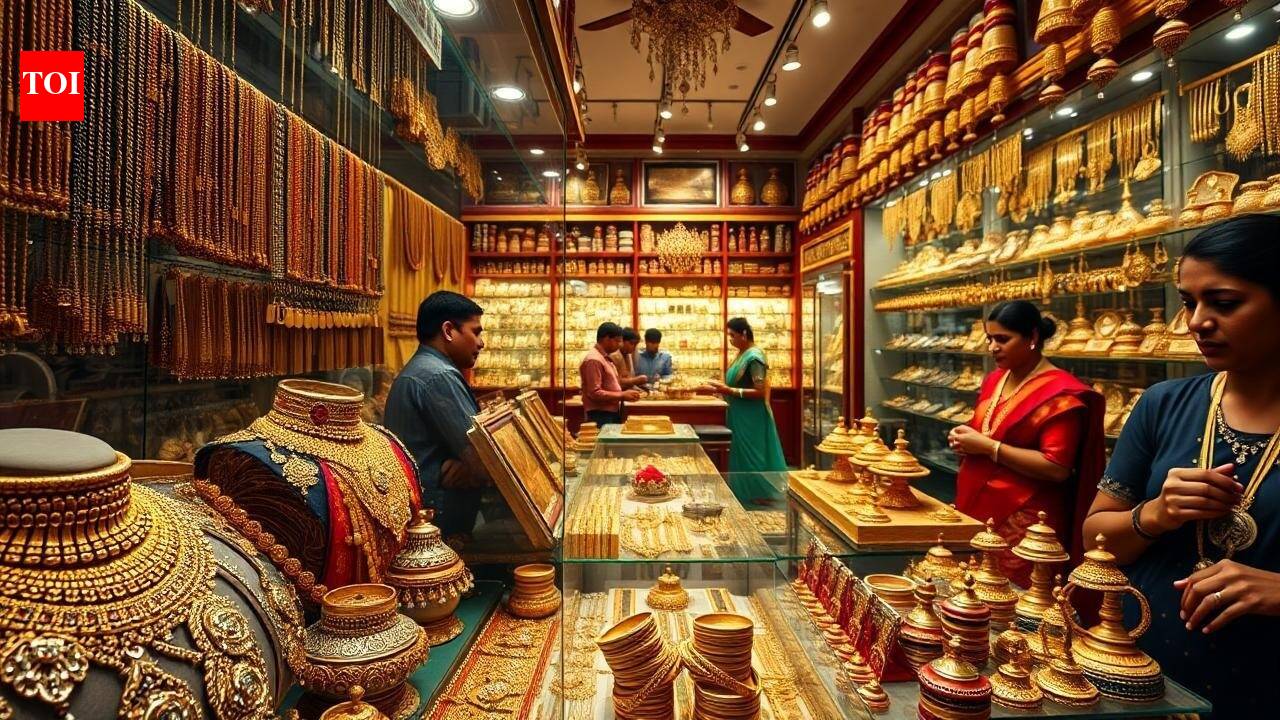
This Akshaya Tritiya, India’s gold and silver markets are heading for bumper purchases, with overall trade likely to cross Rs 20,000 crore even as record-high prices reshape buying patterns. The estimate, shared by the Confederation of All India Traders (CAIT), is higher than last year’s Rs 16,000 crore, signalling growth in value despite a sharp rise in bullion rates.Prices for the yellow metal have surged sharply over the past year, going from Rs 1,00,000 per 10 grams, to Rs 1.58 lakh. Meanwhile, silver has shown a steeper rally, jumping from Rs 85,000 per kilogram to Rs 2.55 lakh per kilogram. According to CAIT, this sharp escalation has not weakened demand, but is instead prompting consumers to make more deliberate and value-oriented purchases.Praveen Khandelwal, member of parliament from Chandni Chowk and secretary general of CAIT told ANI, “Akshaya Tritiya has traditionally been one of India’s most auspicious occasions for purchasing gold… While gold continues to dominate, the nature of purchasing is evolving significantly in response to steep price escalation.”Commenting on customer preference, CAIT national president BC Bhartia highlighted, “There is a clear shift towards lightweight, wearable jewellery, alongside a stronger focus on silver and diamond products. Attractive incentives such as reduced making charges and complimentary gold coins are also helping sustain consumer interest.”Despite the increase in overall trade value, the quantity of metals being sold tells a different story. Pankaj Arora, National President of the All India Jewellers and Goldsmith Federation (AIJGF), an associate of CAIT, explained that the projected Rs 16,000 crore gold trade amounts to nearly 10,000 kilograms (10 tonnes) at current rates. The value, spread across an estimated 2 to 4 lakh jewellers, translates to average sales of only 25 to 50 grams per jeweller, “clearly indicating a sharp decline in volume”.Meanwhile for silver, the estimated Rs 4,000 crore trade corresponds to around 1,56,800 kilograms (157 tonnes), resulting in average sales of about 400 to 800 grams per jeweller during the festival period. “These figures underline a critical shift: while the value of business is expanding due to rising prices, actual consumption is contracting,” Khandelwal said.This gap between value and volume is also reshaping consumer’s buying pattern, with smaller items and lightweight jewellery gaining popularity. At the same time, jewellers are facing challenges due to fluctuating prices, especially when it comes to managing inventory.Even so, festive demand remains steady, with markets witnessing healthy footfall. “Consumers are now adopting a more cautious and pragmatic approach, balancing traditional beliefs with financial discipline,” Khandelwal added.At the same time, it’s not just about physical gold anymore as consumers are increasingly exploring alternatives like digital gold, Sovereign Gold Bonds and gold ETFs, drawn by the promise of liquidity, safety and flexibility when prices are volatile.CAIT and AIJGF have urged jewellers to comply with mandatory hallmarking standards, including HUID certification, and advised buyers to verify the purity and authenticity of their purchases.


Netflix documentary director on Hulk Hogan’s Trump support and the backlash that followed him to the end

Managing traffic in space
No fuel shortage: Govt assures 100% domestic LPG, PNG, CNG supply amid Hormuz energy crunch – The Times of India

The case for Man United’s Fernandes as Premier League’s best

Palace left in shock as Prince William cancels grand ceremony
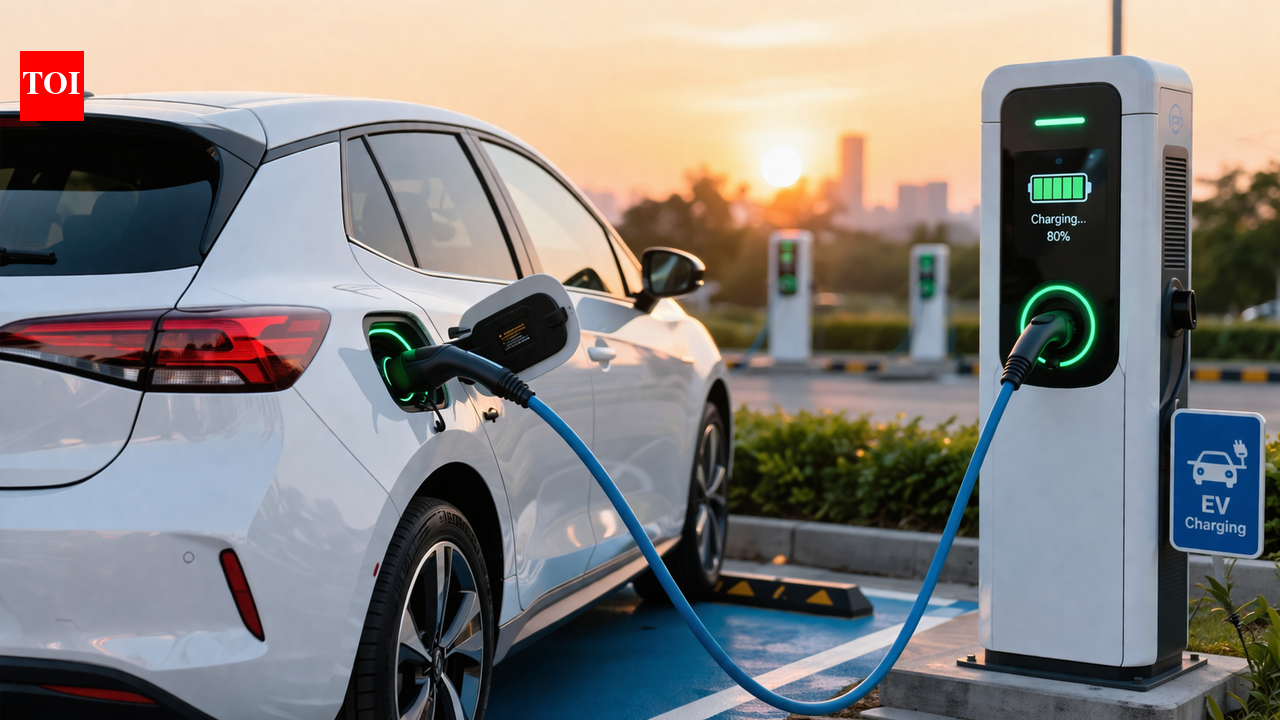
100% road tax waiver for electric cars, new rules for 2, 3 and 4 wheelers – what Delhi govt’s draft EV policy says – The Times of India

-
 Sports6 days ago
The case for Man United’s Fernandes as Premier League’s best
-
 Entertainment6 days ago
Palace left in shock as Prince William cancels grand ceremony
-
Business1 week ago
100% road tax waiver for electric cars, new rules for 2, 3 and 4 wheelers – what Delhi govt’s draft EV policy says – The Times of India
-

 Entertainment1 week ago
Dua Lipa hits major career high ahead of wedding with Callum Turner
-
 Business6 days ago
UK could adopt EU single market rules under new legislation
-
 Business1 week ago
The FAA wants gamers to apply for air traffic control jobs
-

 Fashion6 days ago
Energy emerges as biggest cost driver in textile margins
-

 Sports1 week ago
Lamar Jackson hits back at critics with faithful message on social media