

Tech
I Turned My Backyard Into a Nature Documentary With a Flock of Smart Bird Feeders

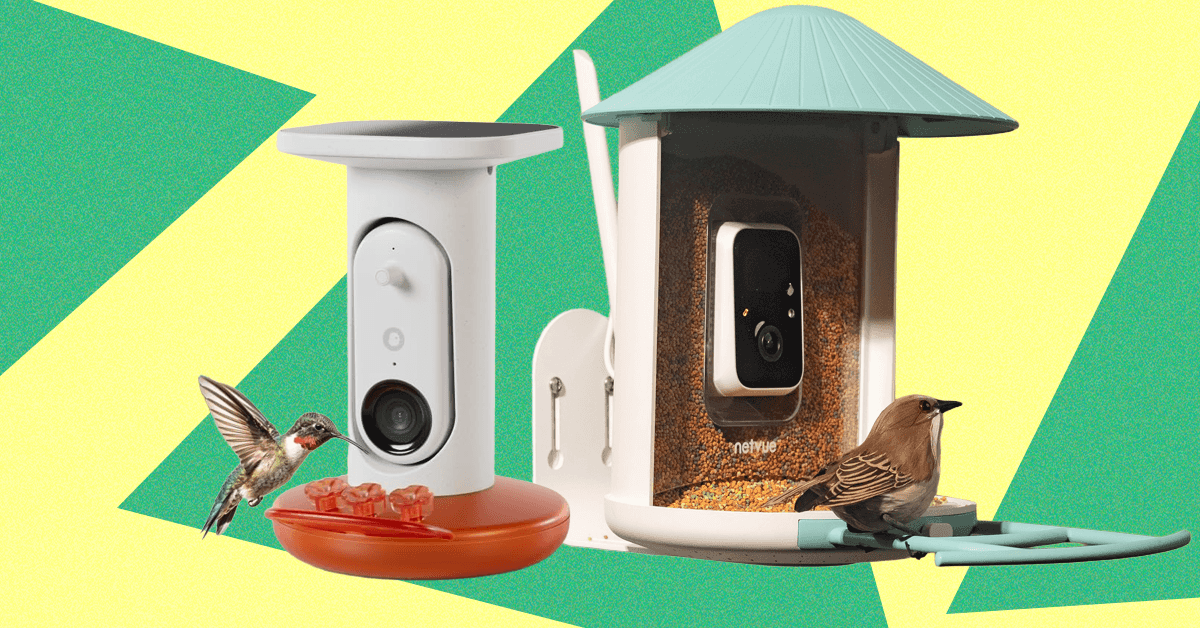
you’ve probably seen a smart bird feeder or know someone who has one. They’re fairly recognizable from a distance with their clear housing, cameras, and solar panels, and perhaps a friend or family member has sent you a photo or video of a bright goldfinch or handsome woodpecker (guilty). The question at this point, then, is whether these things are really worth the $100-plus price tag. Are they actually durable? And what about the squirrel problem?
Lucky for you, we’ve been testing the most popular smart bird feeder models, including Netvue’s original Birdfy Lite feeder ($140) and Birdbuddy’s Pro ($179), for over a year—in rain, snow, and heat, and in a yard with persistent squirrels. We’ve explored the apps and notification settings, examined the photo and video quality, noted which features are hidden behind a subscription paywall, and used Cornell Lab’s All About Birds—as well as Google Lens and our own local expertise—to verify the accuracy of AI identifications.
Updated January 2026: I’ve added the solar-roof version of Kiwibit’s Beako as a new pick and new testing notes for both Birdbuddys, added a feeder from Detiko to Others Tested, and ensured up-to-date links and prices. Next up is the Coolfly Aura, a feeder with a unique modular camera system, which debuted at CES this week.
Featured in this article
Jump to Section
Best Overall
-
-
Photograph: Medea Giordano


Netvue
Birdfy Plastic Smart Bird Feeder
WIRED
- Reliable and easy to set up
- User-friendly app
- Decently wide field of view
TIRED
- Not the best video resolution
- Lightweight construction
This cheery blue- or yellow-roofed feeder, from security company Netvue, is the first smart feeder WIRED tested, back in 2022. At that time, we gave it a 6/10 rating for its high price and wonky AI. Both metrics have improved dramatically since then—Birdfy’s app is now the second-most user-friendly on the market, behind only Birdbuddy, and this feeder is often on sale for $150 or less. If you pay $20 more, you get a lifetime subscription for AI identification, which is a solid deal, especially since the AI’s success rate is fairly decent. Without it, it’ll cost you $5 a month, but it’s not required to get plenty of enjoyment. This is the feeder I bought my elderly parents for Christmas during an Amazon Prime Day sale for its reliability, easy setup, and easy-to-navigate app, and it’s still going strong two years later.
The 1080p camera has one of the widest viewing angles of any smart feeder, at 155 degrees, and it offers color night vision. The IP65 plastic construction also makes this feeder durable and easier to clean, and the 50-ounce seed reservoir is super easy to fill with its convenient flip-up top. Not all bundles come with a solar panel, but you can buy it separately. Unlike other feeders, the solar panel is not built in and will have to be mounted and connected separately with the included 9.8-foot charging cable. (The Birdfy can be mounted on a pole, wall, or tree, though if you mount it on a pole using the 5-7-9 siting rule, you won’t be able to mount the solar panel.)
Best Upgrade


Kiwibit
Beako (With Solar Roof)
WIRED
- Thoughtful engineering makes for easy maintenance
- Solar panel works great in all weather
- Very sturdy construction
- 8 MP photos and 4K HD video
TIRED
- Pricey for a smart feeder and rarely on sale
- Only works on 2.4 GHz Wi-Fi
- Requires a subscription for all features
This Beako model is not only one of the most thoughtfully designed feeders on the market, it’s also what I use in my own yard when I’m not testing feeders for work. The 1.5L dual-hopper plastic seed reservoir is removable from the body for refilling, so you don’t have to take the whole feeder down; the 8 MP photos and 4K HD video are much better quality than you’ll find from most competitors; and the components come apart for easy cleaning. I also tested the original version with a separate solar panel, and my only complaint was that the panel stopped charging the camera after about six weeks. There’s now a version with a built-in solar roof, which has done an excellent job keeping things charged during its six-week-long test, even in cloudy weather. The IP65 plastic body is extremely thick and sturdy, and unlike lighter-weight models, it’s designed to hold up in more extreme weather.
The app is easy to navigate, and the whole setup is fully functional without a Kiwibit Plus subscription ($4/month or $47/year, purchasable through the Kiwibit app)—it even includes AI identification as a base feature, and it’s pretty decent. However, Kiwibit Plus is necessary to access all features, mainly extended 60-day storage and the ability to record up to three minutes of video if a bird is doing something interesting, which is a unique feature among smart feeders and one I discovered I love. (Nothing more frustrating than having a video cut off right as a bird is about to do something funny.) If you’ve tried other smart feeders and found them lacking, this one costs a bit more for what it is, and it’s almost never on sale, but if you know you like having a smart feeder, I think it’s worth the investment. Note, however, that it only works on 2.4 GHz Wi-Fi, and the warranty is half the length you get from competitors.
Best Connectivity

WIRED
- Runs on 2.4 5 GHz and 5 GHz
- 4K Ultra HD video
- Solar panel stays charged even in cloudy weather
TIRED
- Heavier than most smart feeders
- AI is still just OK
- Subscription now required for all features
Camojojo’s original Hibird feeder has long been a reliable model in my testing stable, unique for its ability to run on both 2.4-GHz and 5-GHz Wi-Fi bands—almost all smart feeders are 2.4 GHz only—and this year saw the debut of an upgraded model, the Hibird Pro. This one has built-in solar panels, an option for pole mounting, and supposedly improved AI identification, though it still frequently misidentifies even common birds in my West Coast backyard as East Coast species. The app is not as streamlined or user-friendly as Birdfy’s or Birdbuddy’s, but it’s still easy enough to navigate, with options for changing video length (default is 10 seconds) or viewing in slo-mo. Video is the default media type it saves, though this is 4K Ultra HD. Without a subscription, you can’t search past videos by bird, and cloud storage is capped at 5 GB over 60 days, though the feeder does come with a 128-GB SD card. You’ll also get “smarter” chats with the app’s AI Q&A function, “Dr. Bird,” and the ability to share across two devices ($45 year/$4 month).
I appreciate the generous 1.5L seed hopper, though this, combined with the solar panel and battery, makes this one heavy feeder. When filled, it tips the scales at 5 pounds, so if you do pole mount, you will need to use both included hose clamps. I also wouldn’t attempt to mount it on anything unstable. Other Hibird features transferred to the Pro are the assembly screws having little handles on them, so you won’t need a screwdriver, and a chunky IP66 plastic body. It was subjected to a little bit of squirrel chewing during my test, but still held up well.
Best Smart Hummingbird Feeder


Birdbuddy
Pro Smart Solar Hummingbird Feeder
WIRED
- Fun and feature-rich app usable without a subscription
- Built-in solar panel works great
- Easy to clean and refill
TIRED
- Camera doesn’t always capture all birds
Birdbuddy is known for its user-friendliness and thoughtful and fun app, and its new Pro Smart Hummingbird Feeder is no exception. Everything about its use is intuitive and easy. AI identification, 5 MP photos, 2K HD video with slo-mo—everything you need is included out of the box. A subscription is optional to unlock features like family sharing and a higher bit rate, but the feeder is perfectly usable without it. There’s also no auxiliary solar panel to worry about, as it’s built into the roof. Pairing with your phone is a cinch, integrating it into the Birdbuddy app with other feeders is a snap, and even filling it is no problem—unlike other hummingbird feeders that have weirdly cavernous capacities and/or need to be filled upside down, the Birdbuddy’s bottom screws off and holds a reasonable 1.75 cups of liquid. This is more important than you’d think, as Cornell Lab of Ornithology points out that the easier it is to clean a hummingbird feeder, the more likely you are to do it often and well.
It also comes with extra plastic flowers and a little brush to clean them with, and the app sends reminders as to when it’s time to clean. You’ll also find fun, seasonal touches in the app, like the ability to send digital bird holiday cards with your pics, or a tool to superimpose hats, clothes, and various accessories on the birds, which is actually funnier than it sounds. However, as with the Birdbuddy Pro seed feeder, below, the big downside is that the feeder’s sensor doesn’t always pick up every bird that visits, which can definitely be a bummer when you see something interesting out the window but it doesn’t show up in the app.
A Unique Smart Birdhouse
Birdfy’s Polygon Smart Birdhouse isn’t the first smart birdhouse on the market, but it is the most interesting-looking. The parallelogram-esque, turquoise-paneled shape won a Gold award at 2024’s French Design Awards, and it’s easy enough to mount on a pole, fence, or tree. All the camera equipment is located in an easy-to-open rear hatch, and there’s even a remote control at the end of a 10-foot cord to be able to charge (though it has a built-in solar panel, so you likely won’t need to) or reset the 1080p camera.
It’s simple to integrate with the easy-to-use Birdfy app, which is ready and waiting to assemble a bird’s shareable “story,” from assembly of the nest to hatching to fledgling, and finally “the end,” when the nest is abandoned for the season. Note that the camera does emit an audible click whenever it’s triggered by movement or the app, and the inside is a little larger than most birds would naturally gravitate to, though I did like that it comes with interchangeable hole sizes to interest different species. We did have a few assorted connectivity issues, and our test house didn’t attract any visitors this year, but a project director for Cornell Lab of Ornithology’s NestWatch said it should only be a matter of time.
Best App
-
-
Screenshot courtesy of Kat Merck


Birdbuddy
Smart Bird Feeder Pro
WIRED
- Fun and feature-rich app
- Built-in solar panel works great
TIRED
- Camera doesn’t always capture all birds
Birdbuddy’s Pro model sports a snazzy new HDR camera that can also shoot 2K HD video with slow-motion capability. In addition to having a visibly larger and more advanced lens, the camera’s now got a larger focus range, 122-degree field of view, and high-fidelity microphone. (A subscription to Birdbuddy Premium for $70 a year unlocks 2K Ultra with a higher video bit rate, allowing for richer colors, sharper images, and less background noise—plus the ability to set alerts for sick or injured birds, among other things—but it’s perfectly usable without this. )
The photos aren’t nearly as impressive as those by competitors like the Birdfy Pro Duo, Camojojo Hibird, or Kiwibit Beako, and the camera, frustratingly, only captures a handful of the birds that visit. (The non-solar version is occasionally flagged as a frequently returned item on Amazon due to both this and charging issues, so I recommend the solar version.) However, Birdbuddy’s app is a consistent standout, with a user-friendly design and plenty of helpful alerts, like if a cat is detected nearby, or if it’s time to clean the feeder.
It also serves you insights gathered over time, like what time certain species seem to prefer to visit. (Finches apparently like to visit my yard at 10 am daily.) The Birdbuddy also “sleeps” at night and does not seem to emphasize capturing photos of people, so it wouldn’t make a good choice to double as a security camera, and there are also unique seasonal features like the ability to send holiday cards or “dress up” visiting birds with hats, glasses, and sweaters. (It is funnier than it sounds, really!) Both Birdbuddys work with 2.4-GHz Wi-Fi only.
Another Birdbuddy downside is the infuriatingly small, hinged opening for filling the 4 cups’ worth of seed. The feeder comes with its own spouted cup, but I have yet to fill the feeder without making an enormous mess. I also tested the 3-in-1 Nutrition Set ($39), which includes a screw-on tray that can variably become a water fountain, jelly dish, or fruit stake for fruit-loving species like orioles. I’ve used it as a jelly dish and water fountain and found that it blocks enough of the perch area that birds tend to shift out of camera view to avoid it. However, this feeder is still worth it for those who like a more streamlined app experience and/or want to take advantage of some of its unique sharing features, especially Premium’s ability to share your feeder livestream with others.
If You Want to Use an Existing Bird Feeder


WIRED
- Flexible design allows you to use an existing bird feeder
- High-quality photo and video
- Works with 5 GHz Wi-Fi
TIRED
- Only has 90-degree field of view
- Only comes with a wall mount
- Solar panel has to be mounted separately
If you have an existing bird feeder you like, or are interested in building your own and are just looking for a camera, Hibird’s stand-alone DIY feeder camera is for you. It’s compatible with both 2.4-GHz and 5-GHz Wi-Fi bands—a rarity for bird feeder cameras—and the cute green owl face streams the same 4K HD video and 1080p pics as the bigger Hibird feeder, above. There is a subscription tier with features like increased storage, but the camera is still usable without it. There’s an auxiliary solar panel included for charging, and you can mount it via its ¼-inch nut on the included bendable arm and bracket, or jury-rig a custom solution. It pairs seamlessly with the Hibird app, with access to AI (which is just OK), livestreaming, and the Dr. Bird ChatGPT-like feature, where you can ask bird-related questions. (The answers are corny and not as granular as they could be, but it still could be useful for some.)
A Truly Squirrel-Proof Design


TT Nature
Squirrel-Proof Metal Bird Feeder
WIRED
- Design really deters squirrels
- Can be pole-mounted
TIRED
- Design also deters larger and even medium-sized birds
- App is not user-friendly and requires a subscription
- Solar panel must be mounted separately
Let’s get the bad news out of the way first—the app for this feeder is not good. Not only is it suspiciously called “Birdty,” it’s not intuitive to navigate and requires a subscription to access all features—including AI identification, which is terrible. I have also seen this feeder body (TT Nature offers it in green or red) sold from time to time under other Amazon insignias, so it’s not unique to this brand. However, those usually have solar panels attached to the roofs, from which squirrels can hang upside down to avoid tripping the spring-loaded perch. This one leaves off the panel (there is one that can be mounted separately, but it’s not possible when the feeder is pole-mounted, which is what I recommend), but it doesn’t need it, as the charge from the 5,200-mAh battery lasts well over a month.
I had my test unit sited on a pole with a baffle far from fences and overhanging branches, and though an occasional squirrel would still manage to find the feeder, the spring-loaded perch mechanism worked as intended—a squirrel tries to sit, and a bar flips up to block access to the seed. (There’s also a squirrel alarm feature that can be toggled on and off in the app, but in my experience, those never work.) I have seen squirrels try to chew through the sides, but given that the body is metal, their efforts are fruitless.










A national housing shortage is straining finances and communities across the United States. In Massachusetts, at least 222,000 homes will have to be built in the next 10 years to meet the population’s needs. At the same time, there are numerous challenges in traditional construction. There’s a shortage of skilled construction workers. Most projects involve multiple contractors and subcontractors, adding complexity and lag time. And the construction process, as well as the buildings themselves, can be a major source of emissions that contribute to climate change.
Reframe Systems, co-founded by Vikas Enti SM ’20, uses robotics, software, and high-performance materials to address these problems. Founded in 2022, the company deploys microfactories that bring housing fabrication and production closer to the regions where the homes are needed. The first homes designed and manufactured in Reframe’s first microfactory have been fully built in Arlington and Somerville, Massachusetts.
Enti’s experiences in MIT System Design and Management (SDM) shaped the company from its start. “Learning how to navigate the system and finding the optimal value for each stakeholder has been a key part of the business strategy,” he says, “and that’s rooted in what I learned at SDM.”
Better tools for system-level problems
Enti applied to SDM’s master of science in engineering and management while he was working at Kiva Systems, overseeing its acquisition by Amazon and transformation into Amazon Robotics. He found that the SDM program’s fundamentals of systems engineering, system architecture, and project management provided him with the tools he needed to address system-level problems in his work.
While he was at MIT, Enti also served as an associate director for the MIT $100K Entrepreneurship Competition, which offers students and researchers mentorship, feedback, and potential funding for their startup ideas. He realized that “there isn’t a single formula for how businesses start, or how long it takes to get them started,” he says, which helped shape his plans to start his own business.
Enti took a leave of absence from MIT to oversee the expansion of Amazon Robotics in Europe. He returned and completed his degree in 2020, writing his thesis on developing technology that could mitigate falls for elderly people. This instinct to use his education for a good cause resurfaced when his daughters were born. He wanted his future business to address a real-world problem and have a social impact, while also reducing carbon emissions.
Growing housing, shrinking emissions
Enti concluded that housing, with immediate real-world impact and a significant share of global carbon emissions, was the right problem to work on. He reached out to his colleagues Aaron Small and Felipe Polido from Amazon Robotics to share his idea for advanced, low-cost factories that could be deployed quickly and close to where they were needed. The two joined him as co-founders.
Currently, the microfactory in Andover, Massachusetts, produces structural panels, with robotics completing wall and ceiling framing and people completing the rest of the work, including wiring and plumbing. Eventually, Reframe hopes to automate more of the building process through further use of robotics. The modular construction process allows for reduced waste and disruption on the eventual home site. And the finished homes are designed to be energy-efficient and ready for solar panel installation. The company is set to start work soon on a group of homes in Devens, Massachusetts.
In addition to the Andover location, Reframe is setting up in southern California to help rebuild homes that were destroyed in the area’s January 2025 wildfires. The company’s software-assisted design process and the adjustability of the microfactories allows them to meet local zoning and building codes and align with the local architectural aesthetic. This means that in Somerville, Reframe’s completed buildings look like modernized versions of the neighboring three-story buildings, known locally as “triple-deckers.” On the other side of the country, Reframe’s design offerings include Spanish-style and craftsman homes.
“Housing is a complex systems problem,” Enti says, explaining the impact SDM has had on his work at Reframe. The methods and tools taught in the integrated core class EM.412 (Foundations of System Design and Management) help him tackle systems-level problems and take the needs of multiple stakeholders into account. The Reframe team used technology roadmapping as they devised their overall business plan, inspired by the work of Olivier de Weck, associate head of the MIT Department of Aeronautics and Astronautics. And lectures on project management from Bryan Moser, SDM’s academic director, remain relevant.
“Embracing the fact that this is a systems problem, and learning how to navigate the system and the stakeholders to make sure we’re finding the optimal value, has been a key part of the business strategy,” Enti says.
Reframe Systems is set to continue learning through iteration as they plan to expand their network of microfactories. The company remains committed to the core vision of sustainably meeting the country’s need for more housing. “I’m grateful we get to do this,” Enti says. “Once you strip away all the robotics, the advanced algorithms, and the factories, these are high-quality, healthy homes that families get to live in and grow.”
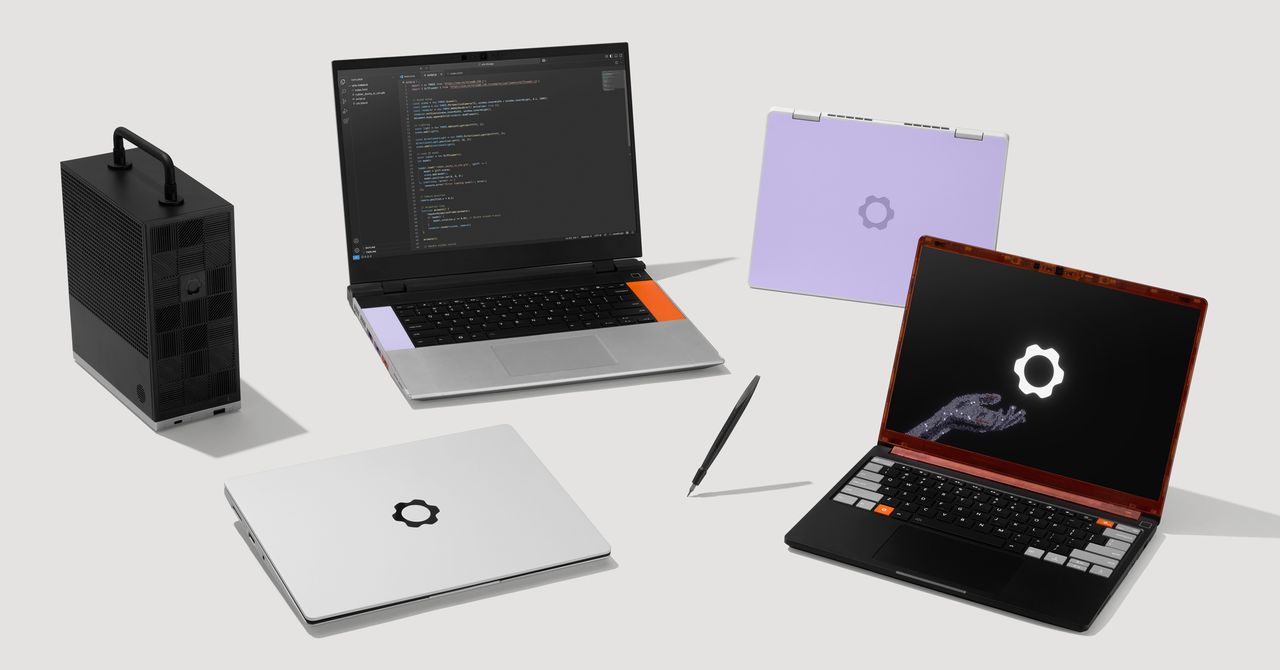
Framework, the company that makes laptops designed for optimal repairability, announced a new version of its main product, a 13-inch screen laptop. It’s called the Framework Laptop 13 Pro, and it has far better battery life, a touchscreen, a haptic touchpad, and is fitted with Intel processors.
At an event in San Francisco today, Framework CEO Nirav Patel showed off the company’s new tech, opening with a joke about making Framework AI—something the company is very much not doing. Framework’s whole thing, after all, is aiming to give users control over the physical tech they use.
“That industry is fighting for you to own nothing, and they own everything,” Patel said about the AI industry. “We’re fighting for a future where you can own everything and be free.”
Framework used the event to detail other updates coming to its 16-inch laptop. It also showed off previews of an official developer kit and a wireless keyboard for controlling your rig from the couch.
Framework 13 Pro
As the name implies, the 13 Pro is a step up from the company’s last version, the Framework 13. It’s also pricier, starting at $1,199 for a DIY Edition that requires assembling the computer yourself. Pre-built units start at $1,499 but can be upgraded with more features. Framework says it will start shipping the 13 Pro in June.
Framework’s signature move for its products is the ability to take the thing apart. The 13 Pro is made with that ethos in mind, so its parts can be easily swapped out, upgraded, or replaced. Four Thunderbolt 4 interfaces let you pick which ports (USB-C, HDMI, etc.) you want and then choose where to place them. Framework says it planned the laptop with cross-generation compatibility in mind, so current Framebook 13 laptop owners will be able to use new 13 Pro parts like the mainboard, display, and battery, and put them into their existing machine.
The big changes in the guts of the 13 Pro come from Framework’s shift away from using an AMD processor to Intel’s Core Ultra Series 3 processors, which Framework described in its press release as “just insanely efficient.” That efficiency, along with a bigger battery, translates to more than 20 hours of battery life while streaming 4K Netflix videos, at least that’s the claim. That’s almost 12 hours longer than the Framework 13.

Courtesy of Framework

Courtesy of Framework

OpenAI launched a new image generation AI model on Tuesday, dubbed ChatGPT Images 2.0. This model can generate more than one image from a single prompt, like an entire study booklet, as well as output text, including in non-English languages, like Chinese and Hindi. This release is available globally for ChatGPT and Codex users, with a more powerful version available for paying subscribers.
When any major AI company releases a new image model, it can revive interest and boost usage, especially if social media users adopt a meme-able trend, transforming images of themselves. Last year, Google’s launch of the Nano Banana model was a major moment for the company, especially when users started posting hyperrealistic figurines of themselves online. Earlier this year, ChatGPT Images made waves on social media as users shared AI-generated caricatures.
What’s Different?
Since the new model can tap into ChatGPT’s “reasoning” capabilities, Images 2.0 can search the internet for recent information and generate more than one image at a time. In essence, the bot can use additional steps to output more thorough generations from a single prompt. Images 2.0 also has a more recent knowledge cutoff date: December 2025.
This also means that outputs from the new model are more granular. For example, I generated an infographic with San Francisco’s weather forecast for the next day, as well as activities worth doing. The image ChatGPT generated included accurate weather details for the rainy day, along with accurate-looking drawings of the Ferry Building, Castro Theater, Painted Ladies houses, and Transamerica Pyramid.
Additionally, Images 2.0 is more customizable for users who want unique aspect ratios for image outputs. The new model can generate images, ranging from 3:1 wide to 1:3 tall, and users can adjust the image’s size as part of their prompt to the AI tool.
First Impressions
After a few hours of generating images with the new model, I was generally impressed with the text rendering capabilities, in English at least. Not that long ago, image outputs featuring text, from any of the major models, often included numerous malformed characters or words with errant extra letters. ChatGPT struggled to label images accurately two years prior, so the cleaner, more complex outputs from Images 2.0 are a sign of continued improvement. Google has also focused on improving image outputs featuring text in its recent iterations of Nano Banana.



Trump repeats call for Congress to rein in college sports

I was left with an £8,000 vet bill when my insurer cancelled my pet policy

Reese Witherspoon breaks silence after AI support controversy

-

 Fashion6 days ago
France’s LVMH Q1 revenue falls 6%, shows resilience amid Iran war
-

 Sports1 week ago
The case for Man United’s Fernandes as Premier League’s best
-

 Entertainment1 week ago
Palace left in shock as Prince William cancels grand ceremony
-
 Business1 week ago
UK could adopt EU single market rules under new legislation
-

 Entertainment6 days ago
Is Claude down? Here’s why users are seeing errors
-

 Fashion1 week ago
Energy emerges as biggest cost driver in textile margins
-
 Business1 week ago
Delta Air Lines unveils first new Delta One suite in premium cabin arms race
-

 Fashion1 week ago
Asia claims largest share of markets on Kearney FDI Confidence Index