

Business
Bengaluru Techie Tried Rapido As A Side Hustle For 4 Days: Here’s What He Made


Last Updated:
The rider chose to work mostly after ten at night. Rapido offers a 20% incentive for rides between ten pm and six am, making late-night slots more rewarding than daytime hours.



Over four days, he rode mainly at night, sometimes starting in the evening and continuing past midnight. Image: X
It began as a simple experiment. A Bengaluru resident, curious about the buzz around gig work, decided to spend a few late nights riding for Rapido to see if the money really matched the hype. He was not looking to switch careers or become a full-time rider. He just wanted to know whether a few spare hours after work could actually make a difference to his monthly finances.
Four days later, he had more than just an answer. He had numbers, experiences and a reality check that soon went viral on Reddit, sparking a wider conversation about part-time work in the city.
Why he chose Rapido and the night shift
The rider chose to work mostly after ten at night. The reason was practical. Rapido offers a twenty percent incentive for rides between ten pm and six am, making late-night slots more rewarding than daytime hours.
Another detail that caught attention was his claim that Rapido was not charging any commission on rides at the time. While he admitted he was unsure if this was permanent or linked to regulatory issues around bike taxis, the zero-commission factor clearly boosted his take-home earnings.
For him, the goal was simple. Test whether a few hours on the road could actually translate into meaningful extra income.
How the four days unfolded
Over four days, he rode mainly at night, sometimes starting in the evening and continuing past midnight.
On the first day, he worked from six thirty in the evening to nine at night and earned Rs 170. Later, between eleven at night and one thirty in the morning, he earned another Rs 460. His total for around five hours of riding came to Rs 630.
On the second day, he stayed online for about five hours and earned Rs 750.
On the third and fourth days, he rode for roughly three to four hours each night and earned Rs 420 on both days. He noted that these days were slightly slower, with fewer ride requests compared to the earlier shifts.
By the end of the fourth day, he had enough data to calculate what part-time riding really meant in practical terms.
The final numbers
Across four days, the rider clocked a total of seventeen working hours. His gross earnings stood at Rs 2220. From this, he deducted fuel expenses of around Rs 400. That left him with a net profit of Rs 1820 for the entire period.
In simple terms, he earned just over Rs 100 per hour after accounting for petrol. For some readers, that sounded modest. For others, especially those struggling with stagnant salaries and rising living costs, it felt like a useful safety net.
When the internet joined the debate
The Reddit post quickly filled with comments from people living similar double lives.
One user shared that he works in an IT firm from two in the afternoon to ten at night, earning Rs 24000 a month. After his shift, he rides for Rapido from ten pm to six am. According to him, the money he makes on the bike often matches or even beats what he earns at his desk job.
Stories like these pushed the conversation beyond one person’s experience. They raised bigger questions about whether flexible gig work is slowly becoming more attractive than low-paying formal jobs, especially for young workers.
Who this kind of work suits best
The Bengaluru rider ended his post with a grounded conclusion. Rapido and similar platforms may not be perfect, but they work well for students, people from economically weaker backgrounds and those who have free hours late at night.
Lower traffic, higher incentives and the freedom to log in and log out without long-term commitment make gig riding easier to fit around studies or a regular job.
At the same time, he did not romanticise it. Long hours, physical strain and rising fuel costs remain real challenges. This is not easy money. But for many, it is better than having no extra income at all.
A glimpse of Bengaluru’s changing workforce
This four-day experiment reflects a bigger shift in the city’s work culture.
Bengaluru is no longer a place where one job defines a person’s identity. Today, the same individual can be a software employee by day and a bike captain by night.
The story of this part-time Rapido rider is not just about earnings. It is about how people are stitching together livelihoods in a city where ambition often moves faster than paycheques.
And in those late-night rides through quieter streets and glowing phone screens, many are finding not just fares, but a new way to stay afloat.
January 09, 2026, 06:29 IST

Stay Ahead, Read Faster
Scan the QR code to download the News18 app and enjoy a seamless news experience anytime, anywhere.

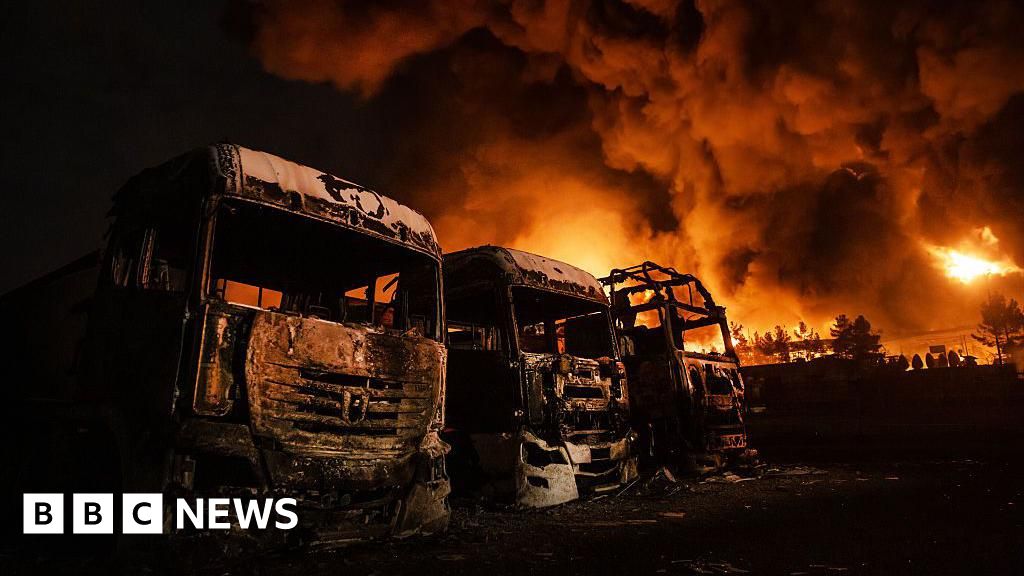
Major disruption to energy supplies threatens to push up prices for consumers and businesses around the world.
Source link
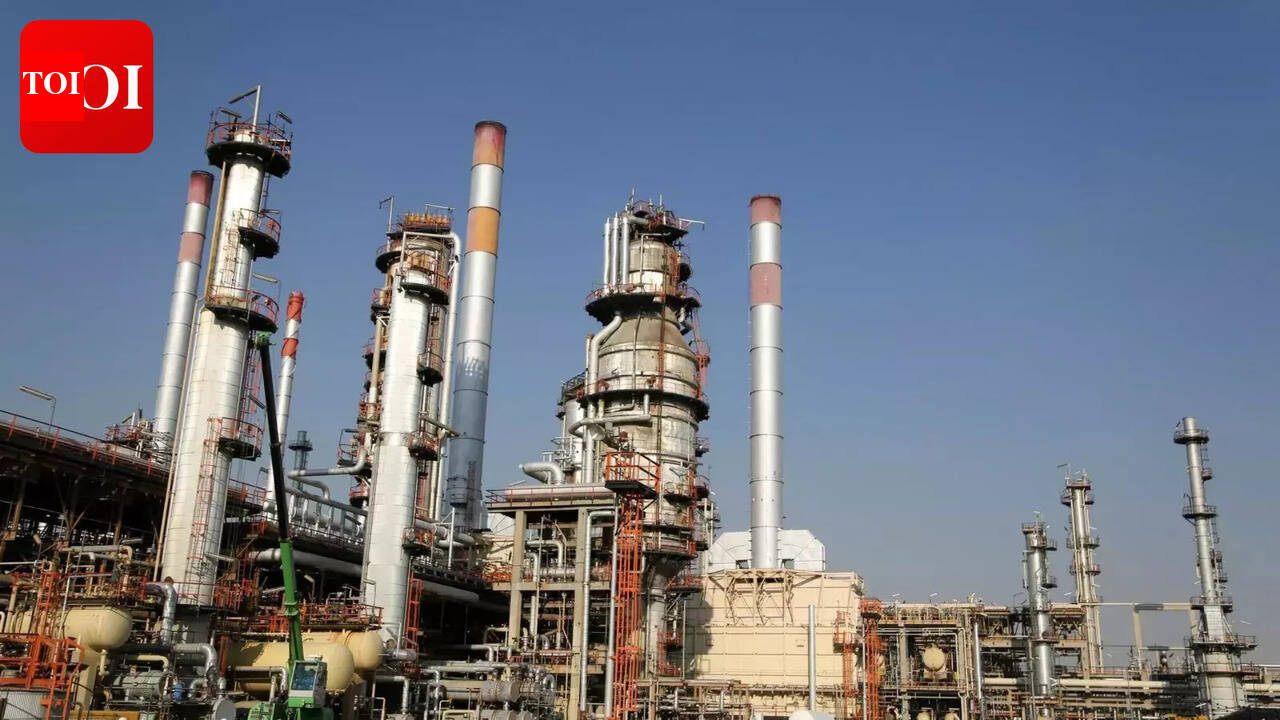
Saudi Aramco jumped the most since April 2023 on Sunday as the Iran war entered its second week, prompting supply disruptions that may send oil prices higher when global markets reopen. Shares of the state-backed oil giant climbed as much as 4.9% in Riyadh before paring gains to close up 4.1%, on the first day of trading for the stock since Brent crude prices topped $90 a barrel on Friday.Brent may climb further after UAE and Kuwait started reducing oil production amid a near-closure of Strait of Hormuz waterway, adding to interruptions affecting worldwide energy supply and exports. “For Aramco, we believe that the gain in oil prices would offset a decline in exports,” said Junaid Ansari, head of research and strategy at Kamco Investment Co. “We also believe that Aramco should be able to re-route a bulk of its shipments to the Red Sea. It’s just about logistics and handling the excess capacity.” Aramco has been redirecting oil cargoes to Red Sea facilities on Saudi Arabia’s west coast to avoid the Strait of Hormuz.

ISLAMABAD:
The Middle East once again stands on the verge of a dangerous escalation. What began as a confrontation between Iran and Israel risks evolving into a broader regional conflict involving the Gulf states and major global powers. Such a development would carry profound implications for global energy security and economic stability.
The big war clouds gathering over the Gulf are not merely a regional security concern. They represent a geopolitical confrontation with the potential to reshape global energy markets, international trade and economic stability. If the current escalation expands into a wider Gulf conflict, the shockwaves will be felt far beyond the Middle East.
The rapidly intensifying tensions in the region risk transforming what began as limited strikes and retaliatory attacks between Iran and Israel, backed by the United States and its allies, into a broader regional confrontation. Increasing missile and drone exchanges have heightened fears that the Gulf Cooperation Council (GCC) states may become directly involved. Should this happen, the Middle East could once again become the epicentre of a conflict with global consequences.
The Gulf occupies a uniquely strategic position in the global economy, both for sea and air routes. Nearly one-third of the world’s seaborne oil trade passes through the Strait of Hormuz, making it one of the most sensitive chokepoints in international commerce. Even a temporary disruption in this narrow corridor can trigger volatility in energy markets, driving up oil and LNG prices, increasing transport costs and fuelling inflation worldwide.
History offers a sobering reminder that conflicts in the Gulf rarely remain localised. From the Iran-Iraq war in the 1980s to the Gulf wars that followed, instability in the region has repeatedly reshaped global energy markets and geopolitical alliances. The current escalation carries similar risks at a time when the global economy is already grappling with inflation, supply chain disruptions and geopolitical fragmentation.
Beyond the immediate military dimension, the crisis must also be understood within the broader context of global power competition. The Middle East has long been central to international geopolitics due to its vast energy reserves and its geographic location linking Asia, Europe and Africa. Control over energy supply routes has historically been a key determinant of global influence.
In today’s evolving geopolitical landscape, this factor has gained renewed significance. China, now one of the world’s largest energy consumers, relies heavily on oil imports from the Middle East. Any disruption in regional energy supplies would therefore have consequences not only for global energy markets but also for the balance of economic power among major economies.
Behind the immediate military confrontation lies a deeper strategic contest shaping global geopolitics. The Gulf remains central to the control of energy flows that sustain the world economy, and influence over these supply routes has historically translated into geopolitical leverage. As emerging economies, particularly China, depend heavily on Middle Eastern energy imports, disruptions or shifts in regional alliances could alter the balance of economic influence among major global powers. In this sense, the current escalation reflects not only regional rivalries but also a broader strategic competition unfolding across the international system.
For the Gulf states themselves, the stakes are particularly high. Over the past several decades, many GCC economies have pursued ambitious strategies to diversify beyond oil by investing in financial services, logistics, real estate development, tourism and advanced industries. These economic transformation plans depend heavily on regional stability, peace and investor confidence.
A prolonged military confrontation would threaten these gains. Conflict in the initial days has already disrupted airlines and shipping routes, endangered energy infrastructure and triggered capital flight from regional markets. Brent surged near $85 per barrel. LNG shipping rates soared 650% to $300,000 per day. QatarEnergy declared force majeure, shut down production and halted LNG supplies. Export cargoes of essential food commodities such as rice, fresh fruits and vegetables have halted at various points of origin, endangering the food security of GCC states, particularly those small states with limited local production.
Rising defence expenditures may also divert resources away from long-term development priorities such as infrastructure, education and technological innovation. Another troubling dimension of the current tensions is the risk that geopolitical rivalry may increasingly be framed through sectarian narratives. Relations between Iran and several Gulf states already contain elements of Sunni-Shia competition. If the confrontation intensifies, sectarian polarisation could deepen divisions across the region and make diplomatic solutions more difficult.
Such a development would weaken the Muslim world economically and politically and may send it back to conditions reminiscent of the 1960s. Instead of focusing on economic modernisation, innovation and human capital development, states could find themselves allocating growing resources to defence procurement and military alliances.
For countries like Pakistan, the economic consequences of a wider Gulf war would be immediate and significant. Pakistan remains heavily dependent on imported fuel from Saudi Arabia, the wider Middle East and LNG from Qatar. Food commodities are imported from global sources, and any sharp increase in global energy, shipping costs and food prices would widen the country’s trade deficit by around $4-5 billion and intensify inflationary pressures, while exacerbating the current account deficit.
Furthermore, Pakistan’s external trade relies substantially on foreign shipping companies. War-risk insurance premiums, higher sea freight charges and disruptions in maritime routes would raise the cost of both imports and exports. These pressures would further strain an economy already navigating fiscal and external sector challenges.
Remittances present another important concern, providing a cushion for the current account. Millions of Pakistani workers are employed across Gulf economies and send a major share of remittances from Gulf countries. Any economic slowdown or instability in the region could affect employment opportunities and remittance inflows – one of Pakistan’s most vital sources of foreign exchange and rupee stability.
At this critical moment, restraint and diplomacy are essential. Escalation may serve short-term strategic objectives, but the long-term costs of a wider regional war would be immense. The Middle East has already endured decades of instability and conflict; another large-scale confrontation would deepen humanitarian suffering while undermining economic progress.
History offers a clear lesson: wars in the Gulf rarely remain confined to the region. They reshape global markets, redraw alliances and influence the trajectory of the world economy. Preventing such an outcome requires diplomacy, dialogue and leadership capable of recognising the heavy cost of further escalation.
The Gulf has long been the world’s energy heartland; turning it into a battlefield would endanger not only regional stability but the foundations of the global economy itself.
The writer is a former vice president of KCCI, an independent economic analyst focusing on global trade, energy economics and geopolitical risk


Rihanna’s Beverly Hills home hit by gunfire; suspect arrested, LAPD says
Iran war: Oil prices jump above $100 for first time in four years

King Charles urges unity, brighter future, wishing Happy Commonwealth Day

-

 Fashion1 week ago
South Korea’s Misto Holdings completes planned leadership transition
-

 Politics1 week ago
Iran launches retaliation against Israel, launches ballistic missiles
-

 Entertainment1 week ago
Al Jazeera broadcast interrupted by emergency missile alert in Qatar
-

 Politics2 days ago
India let Iran warship dock the day US sank another off Sri Lanka, say officials
-

 Sports1 week ago
Transfer rumors, news: Man City, Man United in for Anderson
-

 Sports1 week ago
College basketball star suspended by team for spitting toward opposing fan
-
 Fashion1 week ago
India’s real GDP estimated to grow 7.6% in FY26 under new base FY23
-

 Sports1 week ago
Sources: Trump, college leaders to tackle issues at roundtable