

Politics
US Senate advances resolution to limit Trump’s Venezuela war powers



The U.S. Senate advanced a resolution on Thursday that would bar President Donald Trump from taking further military action against Venezuela without congressional authorisation, paving the way for further consideration in the 100-member chamber.
The vote on a procedural measure to advance the war powers resolution was 52 to 47, as five of Trump’s fellow Republicans voted with every Democrat in favour of moving ahead. One Republican senator did not vote.
The vote took place days after U.S. forces captured Venezuelan President Nicolas Maduro in a dramatic military raid in Caracas on Saturday, and marked a shift in the 100-member chamber.
Trump’s Republicans had blocked two previous attempts to advance similar resolutions in the Senate last year, as the administration ramped up military pressure on Venezuela with attacks on boats in the southern Caribbean and eastern Pacific.
However, the vote blocking the last resolution in November was only 51-49, just after top Trump advisors told lawmakers they did not plan to change the government or conduct strikes on Venezuelan territory.
After Maduro’s capture, some lawmakers accused the administration of misleading Congress, including Democrats publicly and some Republicans behind the scenes.
Maduro’s capture and Trump’s rhetoric have also raised concerns that he might launch military action to capture Greenland, an Arctic island that is a territory of Denmark.
“I spoke to at least two Republicans today who did not vote for this resolution previously who are thinking about it,” Senator Rand Paul, a Kentucky Republican who is co-sponsoring the resolution, told a press conference on Wednesday.
“I can’t guarantee you how they vote, but at least two are thinking about it, and some of them are talking publicly about their misgivings over this,” Paul said, speaking beside Democratic Senator Tim Kaine of Virginia, another leader of the resolution.
Both senators are members of the Foreign Relations Committee.
The five Republicans who voted on Thursday to move ahead were Paul, Susan Collins of Maine, Josh Hawley of Missouri, Lisa Murkowski of Alaska and Todd Young of Indiana. Trump’s party holds a 53-47 majority in the Senate.
HURDLES AHEAD
Thursday’s vote setting the stage for further consideration in the Senate was a significant victory for lawmakers who have been arguing that Congress, not the president, should declare war, as spelled out in the Constitution.
However, the measure faces steep hurdles before going into effect.
Even if it passes the Senate, to become law, the resolution must also pass the Republican-led House of Representatives and override an expected Trump veto, which would require two-thirds majorities in both chambers.
The bill’s backers have acknowledged the hurdles, but said Republicans may be wary of a possible prolonged and expensive campaign of government change in Venezuela, as the U.S. faces steep budget deficits.
Trump on Wednesday said he wanted U.S. military spending to increase to $1.5 trillion from $1 trillion.
Kaine noted that U.S. forces have been striking Venezuelan boats for months, and mentioned Trump’s statement that the U.S. would “run” Venezuela as well as the seizures of Venezuelan oil.
“This is not a surgical arrest operation by any stretch,” Kaine said.
Senators who opposed the war powers resolution said Maduro’s seizure was a law enforcement operation, not a military action. Maduro faces trial in a U.S. court on drug and gun charges, to which he has pleaded not guilty.
The senators also say that Trump is within his rights as commander-in-chief to launch limited military actions he feels are necessary for national security.
“The purpose of this resolution is to slap the president in the face.
It will do nothing that it purports to do because it can’t stop something that isn’t going on right now,” Senator Jim Risch of Idaho, the Republican chairman of the foreign relations panel, said in a Senate speech before the vote.
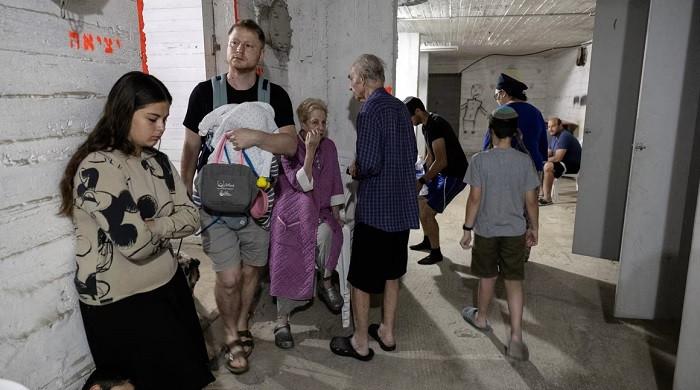
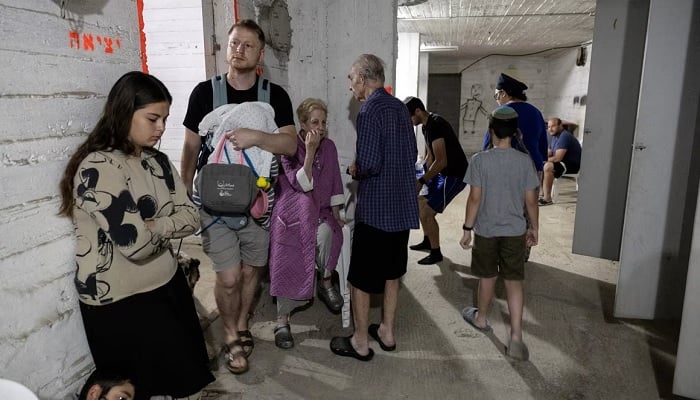
What is Israel’s best bomb shelter? And when is the best time of day to shower without interruption from a missile alert?
The Middle East war that began with US and Israeli strikes on Iran has provoked waves of retaliatory Iranian fire as well as some tricky questions for Jews and Arabs from Tel Aviv to Jerusalem.
A new app, which went viral in the country within hours of launching, uses statistical analysis of recent air raid alerts in specific areas to guide users on the optimal time of day to bathe, while limiting the chances of having to run for cover mid-wash.
“Can’t even take a shower. I’m naked in the dining room. Is that normal?” quipped an Israeli on a Telegram account with 60,000 followers, as an alert warning of incoming Iranian missiles ordered residents to head for shelter.
Time Out, a publication known for directing people towards trendy restaurants and cocktail bars, is also trying to help the public navigate the war.
It has published a list of desirable Tel Aviv beach spots based on their proximity to a shelter.
“We searched and found beaches that are near compliant protected areas (shelters) you can reach in just a few minutes’ walk if necessary. Don’t panic!”
Journalist Ofek Tzach has offered a ranking of Tel Aviv’s public shelters.
Among the low performers are one that he derides as packed with tourists, another “with barking dogs,” and a third he says is “quiet but with no one to talk to.”
Married in bomb shelter
There have also been endearing moments that have captured the public’s attention.
The wedding venue booked by Lior and Michael was no longer available, due to security restrictions, so the couple got married in a shelter — four levels below ground in a shopping centre parking lot.
“It was a wonderful moment,” even if 70% of the people there were strangers, Michael told Israel’s Channel 13.
There has also been a surge of online advice on how to make time in shelters more bearable.
Books, music and cushions are popular recommendations, standing in contrast to the more austere guidance from Israeli authorities, which includes having a radio, batteries, a phone charger and ID papers.
For Palestinians living in Israeli-annexed East Jerusalem, responses to the relentless air raid sirens have tilted towards dark humour.
There are a few public shelters in the eastern part of the city, and private shelters are almost non-existent.
“At the moment, Palestinians are taking a plate of qatayef and going up to the roof” to watch the missiles, said a Facebook post by pastry chef Mohammad Alayan, referring to the dessert traditionally eaten during the Muslim holy month of Ramadan.
Palestinians in East Jerusalem regularly film rockets streaking through the sky from their rooftops.
Palestinians also took playful aim at a Facebook post by Jerusalem Mayor Moshe Lion detailing the proper conduct when an air raid siren sounds.
One comment on the post, apparently from a resident of the east Jerusalem refugee camp Shuafat, asked: “What is someone in Shuafat refugee camp supposed to do? Jump out the window?”


- Prosecutors link plot to Iranian authorities.
- Merchant says he acted to protect family.
- Plot tied to Soleimani killing, says prosecutors.
WASHINGTON: Pakistani national Asif Merchant was convicted on Friday in the United States over a plot to kill President Donald Trump and other prominent American politicians allegedly directed by Iran, according to the US Department of Justice.
Merchant admitted during the trial that he joined the plot with Iran’s Islamic Revolutionary Guard Corps, but told the court he had acted unwillingly and only to protect his family in Tehran.
Merchant was accused of trying to recruit people in the US in a plan targeting Trump and others in retaliation for Washington’s killing of Iranian military commander Qassem Soleimani in 2020, when Trump was in his first term.
Targets in the 2024 plot also included then-President Joe Biden and Nikki Haley, who ran against Trump that year for the Republican presidential nomination, federal prosecutors said.
Merchant was convicted of “murder for hire and attempting to commit an act of terrorism transcending national boundaries,” directed by the Iranian authorities, the DOJ said in a statement.
The trial in the New York City borough of Brooklyn started last week, days before Trump ordered an assault on Iran, carried out with Israel, that has expanded into the region’s biggest war in years.
Merchant said he was never ordered to kill a specific person but that his Iranian handler named three people in the course of conversations in the Iranian capital.
Law enforcement thwarted the plan before any attack occurred. A person Merchant contacted in April 2024 to help with the plot reported his activities and became a confidential informant, the DOJ said.
Merchant was arrested and pleaded not guilty that year. Tehran has denied accusations that it targeted Trump or other US officials.


LONDON: London Mayor Sadiq Khan has written to billionaire Asif Aziz over allegations that his property firm is carrying out “mass evictions” of London residents through the use of soon-to-be-banned Section 21 notices at over 600 flats in several parts of London to avoid an upcoming law that will favour tenants.
Criterion Capital, a real estate company which also owns the Trocadeo building in Leicester Square, said it was inaccurate to state that hundreds of residents had been served eviction notices, but declined to share exactly how many eviction notices had been given.
A Mayor of London spokesperson said Khan is “appalled” at the reports and has written to Criterion Capital asking the company to “urgently explain their actions” as “it is unacceptable to force Londoners out of their homes for no good reason – it leaves residents in an awful position, scared about the future for themselves and their family.”
Through The Aziz Foundation, his family’s charity, the Malawi-born Aziz has collaborated with the Mayor of London every year since 2023 to sponsor the official Ramadan Lights switch-on, taking place as recently as February 14.
In a letter sent directly to Aziz, the mayor wrote: “No such explanation has been forthcoming, and you have failed to provide assurances at all about the security of residents. This has created an increasingly worrying and uncertain situation for tenants, particularly now that further allegations have been put to us about evictions already underway. The right to a good, safe and stable home is fundamental and I am steadfast in my opposition to the use of Section 21 no-fault evictions, let alone their potential use on a mass scale.”
Section 21 notices grant landlords the power to evict tenants from their properties at two months’ notice without needing to give any reason. They will be banned from May under Labour’s flagship Renters’ Rights Act. Housing campaigners fear the notices could be use more frequently ahead of the clampdown.
Housing charity Shelter has called the notices “one of the leading causes of homelessness” because they give tenants little notice to find a new property to rent and often come without warning.
A spokesperson for Criterion Capital said stories about the alleged evictions had been “materially misrepresented and politicised routine and lawful tenancy matters”.
The Aziz Foundation was founded in 2015 and funds grants and internships to support British Muslims. Mr Aziz was previously appointed on the board for Mosaic, a leadership programme set up by King Charles in 2007.
Recently, one of the former senior-most Scotland Yard officers, Tariq Ghaffur CBE, announced he has started a criminal investigation into the multi-billionaire Mayfair landlord over the complaints made by the residents of Fountain House, a posh Mayfair block of apartments on the main Park Lane owned by one of Aziz’s companies, in the neighbourhood of Shahrukh Khan and the Sharif family.
Aziz — who calls himself Mr Mayfair and Mr West End — is a multi-billionaire landlord who runs an organisation called the Aziz Foundation and owns hundreds of high-net-worth properties in London.
His company, which manages Fountain House, is called Parkgate Aspen.
Tarique Ghaffur said: “We are conducting a criminal investigation into Fountain House over several matters concerning Asif Aziz and his management company and cohorts. The investigation has risen due to several complaints from leaseholders and information I have subsequently received and reviewed. In our opinion due to the serious concerns regarding matters that have occurred, it merits a criminal investigation. We have started to collect evidence to prove criminal offences and thereafter we shall report our findings to the relevant authorities.”
Asif Aziz’s company got into the current dispute with the residents, who are all rich and millionaires, over the way the residents have been made to pay service charges and a whole range of other complaints. Residents have shown concern at the way the company has failed to provide them with reasonable services.
In 2017, Aziz argued at the High Court that his wife of 14 years was not entitled to a share of his fortune, then estimated at £1.1bn, because they had “not legally married”. The couple, who have four children, agreed to a settlement.
In 2025, reports emerged highlighting widespread maintenance issues and vermin infestations in properties managed under Asif Aziz’s “Dstrkt” housing brand, despite rapidly rising rents. Aziz also reportedly paid £150,000 to settle allegations that he had illegally operated an unlicensed Forrest Gump-themed shrimp restaurant at Piccadilly Circus.


Rihanna’s Beverly Hills home hit by gunfire; suspect arrested, LAPD says

Iran war: Oil prices jump above $100 for first time in four years

King Charles urges unity, brighter future, wishing Happy Commonwealth Day

-

 Fashion1 week ago
South Korea’s Misto Holdings completes planned leadership transition
-

 Politics1 week ago
Iran launches retaliation against Israel, launches ballistic missiles
-

 Entertainment1 week ago
Al Jazeera broadcast interrupted by emergency missile alert in Qatar
-

 Politics2 days ago
India let Iran warship dock the day US sank another off Sri Lanka, say officials
-

 Sports1 week ago
College basketball star suspended by team for spitting toward opposing fan
-

 Fashion1 week ago
India’s real GDP estimated to grow 7.6% in FY26 under new base FY23
-

 Sports1 week ago
Transfer rumors, news: Man City, Man United in for Anderson
-

 Sports2 days ago
Pakistan set for FIH Pro League debut | The Express Tribune