

Business
US approves sale of Nvidia’s advanced H200 chips to China

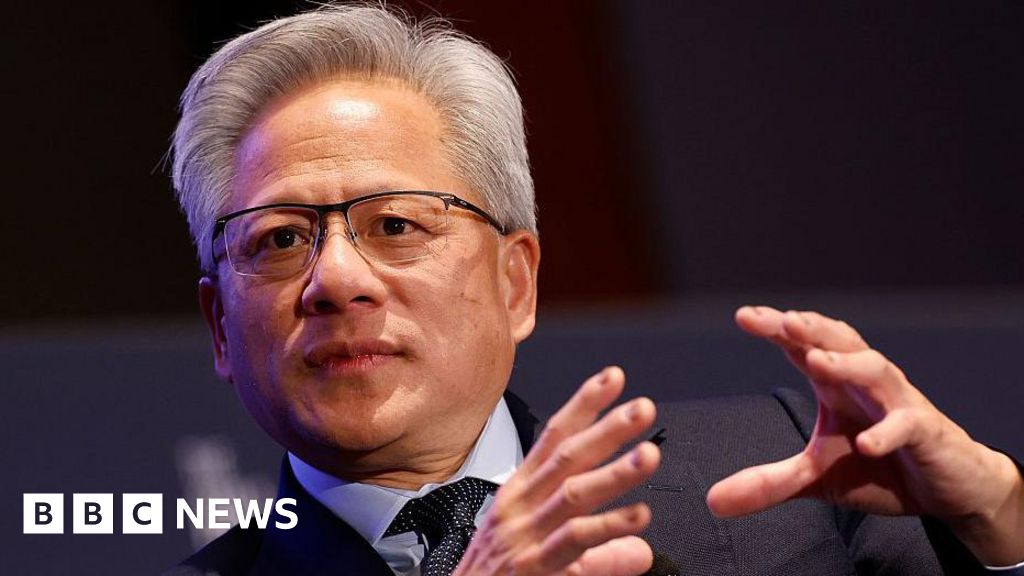
The US government has given chip giant Nvidia the green light to sell its advanced artificial intelligence (AI) processors in China, the Department of Commerce said on Tuesday.
The H200, Nvidia’s second-most-advanced semiconductor, had been restricted by Washington over concerns that it would give China’s technology industry and military an edge over the US.
The Commerce Department said the chips can be shipped to China granted that there is sufficient supply of the processors in the US.
President Donald Trump said last month that he would allow the chip sales to “approved customers” in China and collect a 25% fee.
The BBC has contacted Nvidia for comment.
The Commerce Department’s Bureau of Industry and Security said its revised export policy applies to Nvidia’s H200 chips, as well as less advanced processors.
The H200 chip is a generation behind Nvidia’s Blackwell processor, which is considered to be the world’s most advanced AI semiconductor and remains blocked from sale in China.
Nvidia has been caught in a geopolitical tug-of-war between the US and China – two sides of a global AI race.
Trump reversed the chip-selling restriction last July, but demanded that Nvidia pay a cut of its earnings from China to the US government.
Beijing then reportedly ordered its tech companies to boycott Nvidia’s China-bound chips and prioritise semiconductors made domestically. That move was designed to bolster China’s tech industry, though experts have consistently said that the country’s chips still lag behind the US.
Throughout 2025, Nvidia CEO Jensen Huang continually lobbied Washington to allow the sale of the firm’s high-powered chips to China, arguing that global market excess is essential for America’s competitiveness.
Some officials in the US, however, have expressed concerns that the chips would benefit Beijing’s military and hurt America’s progress in AI development.
Business
Middle East conflict may hit India’s exports beyond region if prolonged, says government – The Times of India
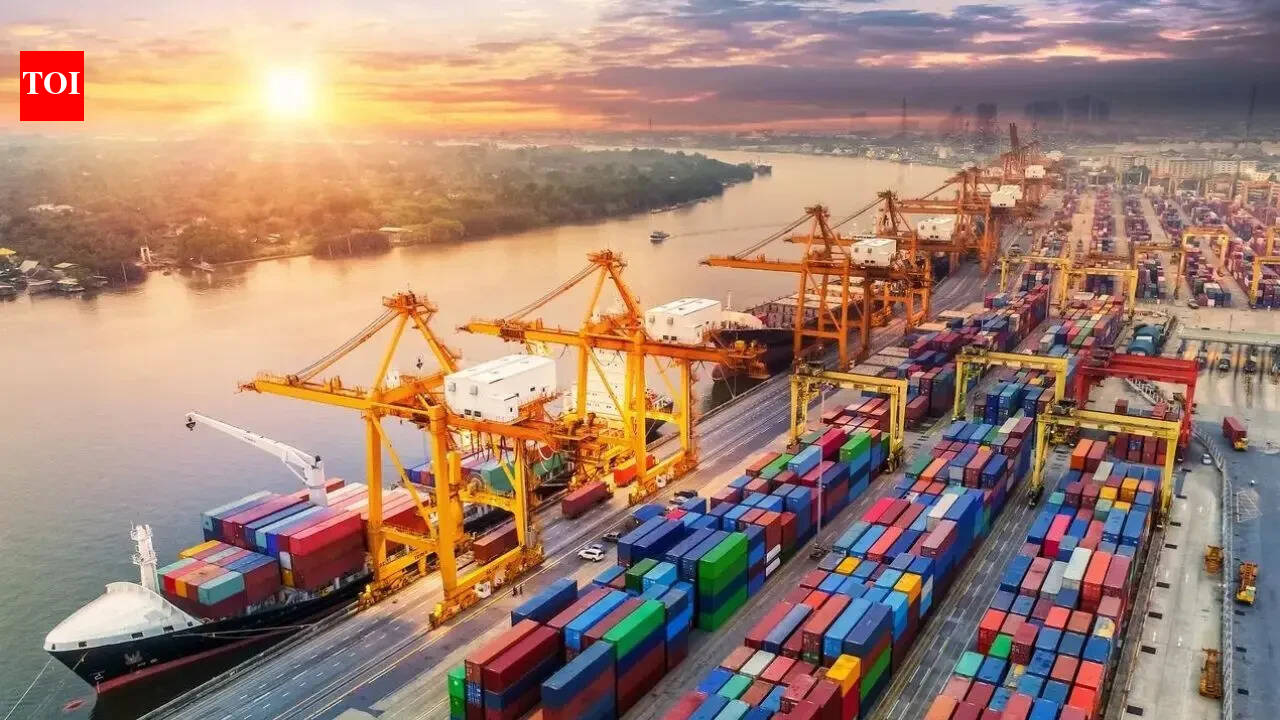
A prolonged conflict in Middle East could begin to hurt India’s exports not just to the region but also to other global markets, as disrupted supply chains ripple outward, commerce secretary Rajesh Agrawal said on Saturday, He also urged the pharmaceutical industry to reduce dependence on imported raw materials and build more resilient export and import linkages.Speaking on the sidelines of ‘Chintan Shivir – Scaling Up Pharma Exports’ in Hyderabad, Agrawal said the government has already seen an impact on both imports and exports over the past month because of the Middle East crisis, with energy imports and regional trade flows under pressure.
“Middle East is also an important market. Around 12-13 per cent of our exports go to the region. So, that will directly get impacted. And if it goes on for long, maybe our exports to other parts of the world will also get impacted as some of the value chains will rotate back. We are cognizant of it,” Agrawal told reporters, as per news agency PTI.He said the exact impact of the conflict on India’s trade would become clearer in the next couple of weeks, but indicated that both exports and imports could see some decline.“And I assume, it will not only be a one-way traffic, in terms of export going down, but it will also be imports having some downfall,” he said.Agrawal cautioned that even if the war ends soon, the disruption may linger for months or even years, depending on the extent of damage to supply chains and infrastructure.“So, at this juncture, it will be very difficult to take a very long-term view on it,” he said.He said the Centre is trying to ensure that supply chains face the minimum possible disruption, while acknowledging that some trade numbers may soften in the near term.
Pharma sector already feeling supply pressure
The commerce secretary said the pharmaceutical sector has already seen some impact in the availability of key intermediates and solvents because supply chains are getting affected by the regional crisis.Agrawal said all arms of the government are working to prioritise limited LPG supply and are attempting to ease the situation by diversifying imports and sourcing from alternative suppliers.“So, as we are able to resolve that overall supply, we will try to alleviate some of the pain in every sector. The Pharma sector will be one of the priority sectors,” he said.He added that the government and industry are jointly working on ways to make supply chains more resilient.
Call for self-reliance in APIs, bulk drugs and intermediates
At the same event, Agrawal asked the pharmaceutical industry to use the current geopolitical uncertainty as a trigger to reduce dependence on critical imported inputs and strengthen domestic capacity.Addressing industry stakeholders in Hyderabad, he stressed “the importance of ensuring greater self-reliance by meeting 80-90 per cent (or higher) of domestic pharmaceutical requirements through indigenous production, while reducing critical import dependencies in APIs, bulk drugs, and intermediates”.He also emphasised the “importance of insulating import supply chains in a geopolitically fragmented world, where availability may be important”.Agrawal called for a broader strategic repositioning of India as a global hub for quality, affordable pharmaceuticals, saying that quality would remain the decisive factor in healthcare. He urged the sector to build a stronger quality ecosystem to enhance global trust and align with emerging areas such as biologics and biosimilars.He also encouraged the industry to shift from a volume-driven to a value-driven model, with greater focus on innovation and new patents, while maintaining India’s strength in generics.
Exports remain on positive path despite uncertainty
Despite the geopolitical overhang, Agrawal said India’s exports in the last financial year were expected to remain on a positive trajectory.The broader pharmaceutical export picture remains resilient. India’s pharma exports stood at $30.47 billion in 2024-25, up 9.4 per cent over the previous year.During April–February 2025-26, pharma exports reached $28.29 billion, registering growth of over 5 per cent compared with the corresponding period of the previous year.India remains the third-largest producer of pharmaceuticals globally by volume and 14th by value, underscoring both the sector’s scale and the stakes involved in insulating it from external shocks.
Business
India Pharmaceutical Exports: India’s pharma exports rise 5.6% to $28.29 billion till Feb in FY26; sector seen doubling to $130 billion by 2030 – The Times of India
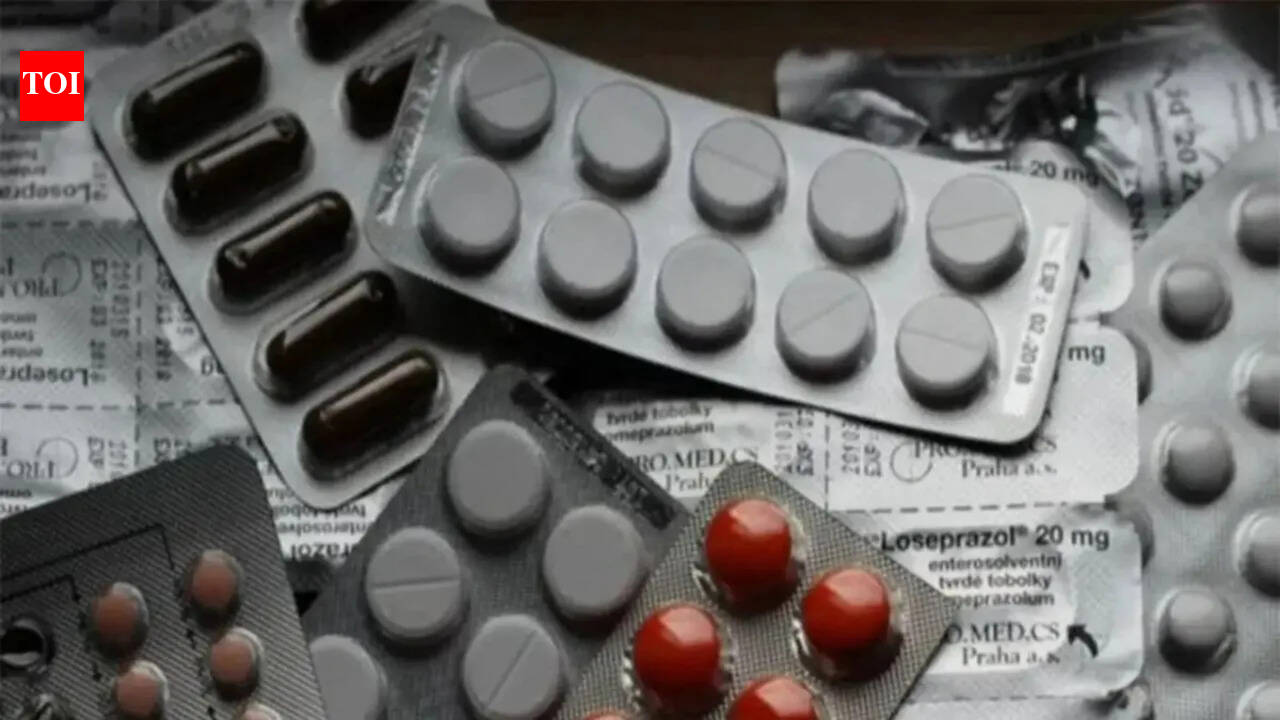
India’s pharmaceutical exports remained on a growth track in the last financial year despite global headwinds, crossing $28 billion during April–February FY26, while industry leaders said the sector is on course to nearly double in size to $130 billion by 2030.Speaking at the inaugural session of the ‘Chintan Shivir: Scaling Up Pharma Exports’ on Saturday, K Raja Bhanu, director general of the Pharmaceuticals Export Promotion Council of India (Pharmexcil), said pharma exports stood at $28.29 billion in April–February FY26, marking a 5.6 per cent increase over the same period of FY25.“Despite global challenges, pharmaceutical exports have been among the few sectors to maintain growth momentum. Exports during April–February FY26 stood at $28.29 billion, reflecting a growth of 5.6 per cent compared to the same period in FY25, led by formulations, biologicals, vaccines and AYUSH products,” Bhanu said.Bhanu said the Indian pharmaceutical sector, currently valued at around $60 billion, is projected to grow to $130 billion by 2030. He added that pharma exports reached $30.47 billion in FY2024–25, recording a 9.4 per cent year-on-year growth despite global pricing pressures and trade volatility.He said Pharmexcil is targeting $65 billion in exports by 2030, backed by policy prioritisation, diversification beyond traditional markets, higher FDI inflows and faster regulatory clearances.India currently ranks third globally in pharmaceutical production by volume, with shipments reaching more than 200 markets, he said. Bhanu also noted that over 60 per cent of India’s pharma exports go to highly regulated markets, highlighting the sector’s quality and compliance standards.According to him, the United States accounts for 34 per cent of India’s pharmaceutical exports, followed by Europe at 19 per cent.Commerce secretary Rajesh Agrawal said the sector is likely to stay on a positive trajectory even if export targets prove difficult to meet in dollar terms, given the weakening rupee.“The target we have set appears difficult to meet, but we will remain on a positive trajectory,” Agrawal said.He added that regardless of whether targets are achieved in dollar terms, export growth would still reflect positively in rupee terms as the Indian currency continues to weaken against the US dollar.Pharmexcil chairman Namit Joshi said India is likely to end the current financial year at levels comparable to FY25, while flagging the effect of front-loaded US buying.“That is why we expect to end up close to last year’s performance, with some growth coming from that,” Joshi said.Joshi said tariff-related issues in 2025 led to higher procurement of medicines worth $1.6 billion in the US, above normal levels, and that this is expected to influence FY26 numbers.
US tariff backdrop may shape future outlook
While the immediate focus remains on export resilience, the external environment—especially in the US, India’s biggest pharma market—could become a key variable going forward.The US has announced a fresh tariff framework targeting patented drugs and certain high-value pharmaceutical ingredients manufactured outside America, with duties of up to 100 per cent set to take effect between August and September 2026 after a transition period.However, the near-term hit to India may be limited because generic medicines are currently exempt, and about 90 per cent of India’s pharmaceutical exports to the US are generics, as per a GTRI report. The report said India exported $9.7 billion worth of pharmaceuticals to the US in 2025, accounting for 38 per cent of its global pharma exports of $25.8 billion.
Business
‘India solidly through global shocks’: EAM Jaishankar calls for ‘hedge, de-risk, diversify’ strategy amid Iran war – The Times of India
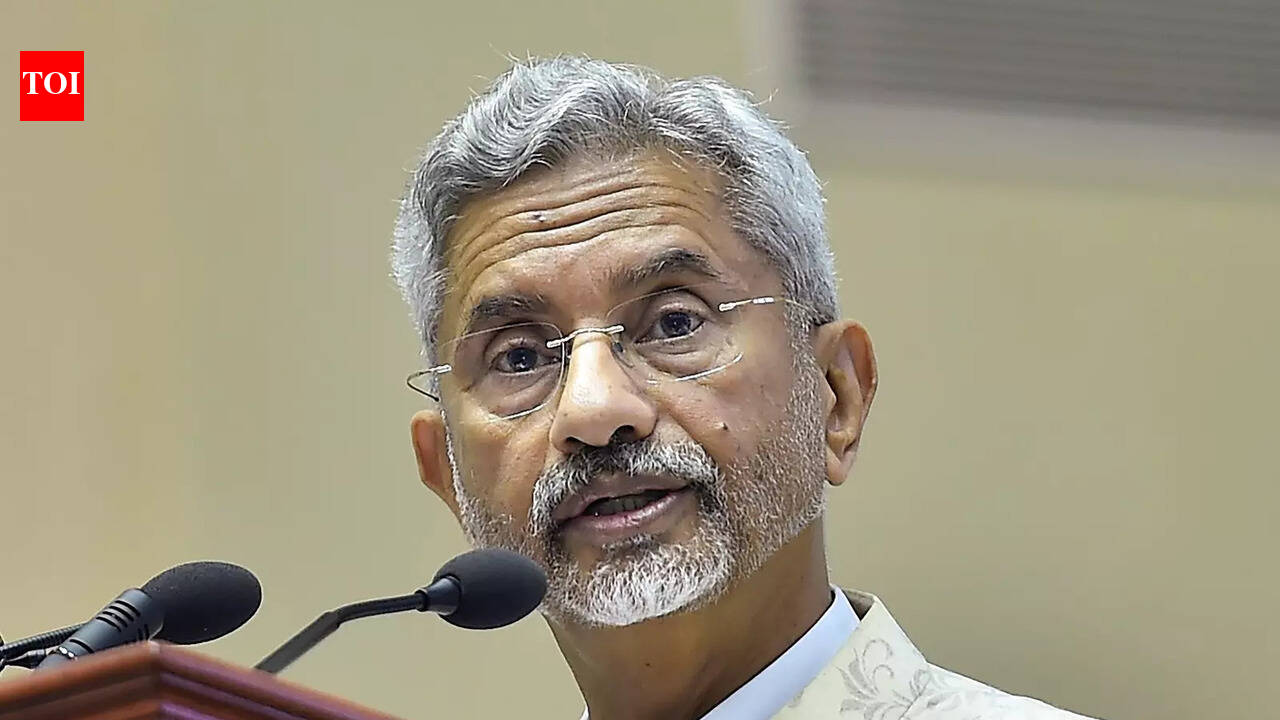
External affairs minister S Jaishankar on Saturday said that India has “solidly come through” a the ongoing turbulent geopolitical situation amid the Middle East conflict and the Russia-Ukraine war, adding that the country has been “managing domestic and external challenges successfully.”Speaking at the 15th Annual Convocation Ceremony of IIM Raipur, he said countries today must focus on “hedging, de-risking and diversifying” as the global order changes rapidly.
He said the world is going through a “structural” shift, adding, “The global order is changing before our very eyes with visible shifts in the relative power and influence of countries. The politics of some societies find it difficult to come to terms with these changes.”Jaishankar also said, “New developments in technology, in energy, military capabilities, in connectivity and in resources have encouraged risk-taking in an increasingly competitive environment. Everything today is being leveraged, if not actually weaponised. The world is then confronted with the prospect of securing itself in an increasingly volatile and unpredictable environment. This has necessitated the need to hedge, de-risk and diversify.”He said India has reasons for optimism compared to many other countries. “There is an optimism in our society that is lacking in many other parts of the world,” he said, adding that India is now among the top five economies and has handled recent global shocks well.He further stated, “No one can dispute that the multiple global shocks that have recently tested our resilience, and that India has come through that solidly. We have managed both domestic and external challenges fairly successfully.”The minister said building national capabilities is key for India’s goal of Viksit Bharat 2047. He also praised “inclusive growth, representative politics, and decisive leadership.”He said, “Building national capabilities has become more critical in the light of the global trends that I have mentioned… We must endeavour to build and secure within our control as many capacities as we can.”On foreign policy, Jaishankar said India is focusing on expanding market access, securing resources and technology, and supporting Indians abroad, while promoting “Brand India.”“Our foreign policy is today focused on expanding market access for Indian producers. It is also focused on helping to secure resources, technologies and essential goods. It looks after Indians… And it promotes Brand India,” he said.These remarks come at a time when the Middle East tensions that began on February 28 with US-Israel strikes on Iran have stretched beyond the 1 month mark. The crisis has since intensified with Iran’s chokehold over the strategically crucial Strait of Hormuz, sending ripples to oil baskets across the globe.


UConn dispatches Illinois to make third men’s national title game in four years

Geno Auriemma needs to be better than bizarre postgame actions against South Carolina

Blake Lively refuses to back down after claims dropped

-
 Business1 week ago
How do you spot a fake online review?
-

 Sports1 week ago
Illinois defense gets tough, ousts Houston to reach Elite Eight
-

 Entertainment1 week ago
Lee Sang-bo dies at 45: Funeral details revealed
-

 Sports7 days ago
USMNT handed reality check by Doku, Belgium ahead of World Cup
-

 Sports7 days ago
2026 NCAA men’s hockey tournament: Schedule, results
-
 Fashion1 week ago
China rolls out tariff cuts on Congo imports from April 1
-
 Fashion1 week ago
EU apparel imports slump 15.48% YoY in Jan; Bangladesh hardest hit
-

 Sports1 week ago
Man City show why they are worthy WSL title winners as tired United wilt