

Business
Economic stability fails to ease job anxieties | The Express Tribune

Survey shows 84% respondents call for job creation, human development over large infrastructure initiatives
LAHORE:
Pakistan closed 2025 with signs of economic stabilisation, but the public remains divided on whether the recovery has translated into broad-based prosperity, according to a nationwide survey conducted by the Institute of Cost and Management Accountants of Pakistan (ICMA).
The survey, which captures the views of citizens, professionals, students and business stakeholders, presents a mixed but cautiously hopeful picture for 2026, with governance, jobs and long-term reforms emerging as decisive factors for sustained growth.
The survey indicates that 54.3% of respondents acknowledged an improvement in the economy during 2025, pointing to easing inflation, higher remittances and a relatively more stable external position. These developments helped pull the country out of an immediate crisis phase. However, the recovery was uneven, as 45.7% described the year as turbulent, marked by highs and lows. Weak performance in agriculture and persistent fiscal pressures limited the benefits of stabilisation for a large segment of the population. Only 10.3% reported that 2025 turned out much better than expected, while 12.1% believed the economy showed steady performance, underscoring that consistent and inclusive growth remains elusive.
Looking ahead, public sentiment for 2026 reflects cautious optimism rather than strong confidence. The survey shows that 56.9% of respondents expect the economy to improve, while 43.1% believe it will remain stable. Within this group, 29.3% described the outlook as promising and 25% expect economic growth, largely driven by hopes of recovery in industry, exports and domestic demand. Yet only 2.6% view the economy as strong, highlighting that deep-rooted structural weaknesses, low investment levels and productivity challenges continue to weigh on long-term prospects.
The survey also reveals that economic performance alone is n`ot the public’s biggest concern for 2026. Political instability tops the list of anxieties, cited by 33.6% of respondents, reflecting fears that policy uncertainty and leadership conflicts could derail fragile gains. Youth unemployment follows closely at 29.3%, signalling the urgency of translating macroeconomic stability into job creation for a rapidly growing workforce. High inflation, though easing, still worries 26.7% of respondents, while extreme weather and climate-related risks were considered a relatively distant concern by 10.3%.
Respondents sent a strong message on what Pakistan must stop doing to secure sustainable progress. According to the survey, 31% called for ending the repetition of failed policies and short-term fixes that have historically failed to deliver lasting growth. Political conflict was identified by 28.4% as a major obstacle that creates uncertainty and weakens investor confidence. Another 26.7% emphasised reducing reliance on foreign loans, urging a shift towards self-reliance through higher domestic revenues and stronger exports. Neglect of public services such as health and education was also flagged as an issue that must be addressed to improve social and economic outcomes.
In terms of priorities for 2026, the public overwhelmingly placed people before physical projects. A striking 84% of respondents stressed that job creation and human development should take precedence over large infrastructure initiatives. Within this, 45.7% demanded urgent action on employment generation, while 37.9% highlighted education and skills development as critical to tackling youth unemployment and building a competitive workforce. Infrastructure and healthcare were still considered important, but respondents viewed them as secondary to creating widespread opportunity and improving human capital.
On the external front, the survey highlights a pragmatic approach to international partnerships. China emerged as the most important partner for 2026, cited by 44.8% of respondents for its role in investment, infrastructure development and China-Pakistan Economic Corridor (CPEC)-related projects. Neighbouring countries followed at 26.7%, reflecting the importance of regional peace and trade. Gulf countries were identified by 18.1% for their contribution through jobs and remittances, while 10.3% pointed to the United States for technology and education links. Overall, respondents emphasised that foreign relations should be driven by tangible economic benefits rather than symbolic alliances.
The survey also reflects a growing sense of individual responsibility in shaping economic outcomes. More than half of respondents, 56.9%, said they plan to learn new digital skills in 2026 to adapt to a technology-driven economy. Another 25% expressed intentions to start a business or project, highlighting entrepreneurial ambition, while mentoring and volunteering were seen as secondary priorities.
According to ICMA, the findings underline a clear public mandate: governance reform, job creation and efficient public services matter more to citizens than headline projects. With 62.9% calling for efficient delivery of public services, the message for policymakers is that 2026 will be judged not just by economic indicators, but by whether stability translates into better daily lives for ordinary Pakistanis.





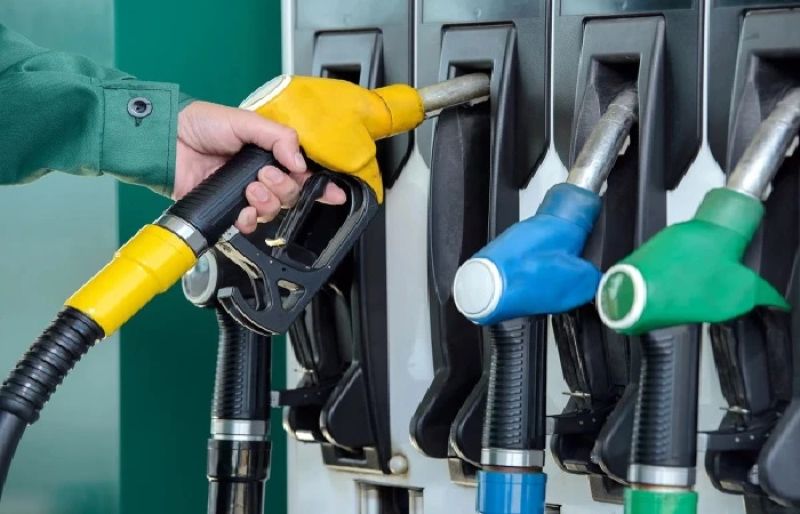
The federal government announced a Rs26.77 per litre hike in the price of petrol and high-speed diesel each on Friday, according to a notification issued by the Petroleum Division.
The new prices will be effective from April 25, 2026 for a week, the notification stated.
Following the increase, the price of HSD has jumped from Rs353.42 to Rs380.19, while the petrol price now stands at Rs393.35.
The government has been reviewing petroleum prices every Friday night following the now-paused US-Israel war on Iran, which began on February 28.
In the previous weekly review, the prime minister announced a reduction of Rs32.12 per litre in the price of high-speed diesel, while the petrol price remained unchanged.
The government jacked up petrol and diesel prices despite oil prices falling globally on Friday after it appeared a second round of Middle East talks was back on, bolstering prospects for an end to a war that has crippled energy shipments from the Gulf.
Oil prices had been climbing earlier as investors worried about a lack of progress in ending the Middle East crisis, with Tehran keeping the Strait of Hormuz closed and the US maintaining a blockade of Iranian ports.
But they dropped on reports that Iran’s Foreign Minister Abbas Araghchi was to arrive in Islamabad on Friday night.
Brent crude, the international benchmark contract, fell back below $100 a barrel.
facebook twitter
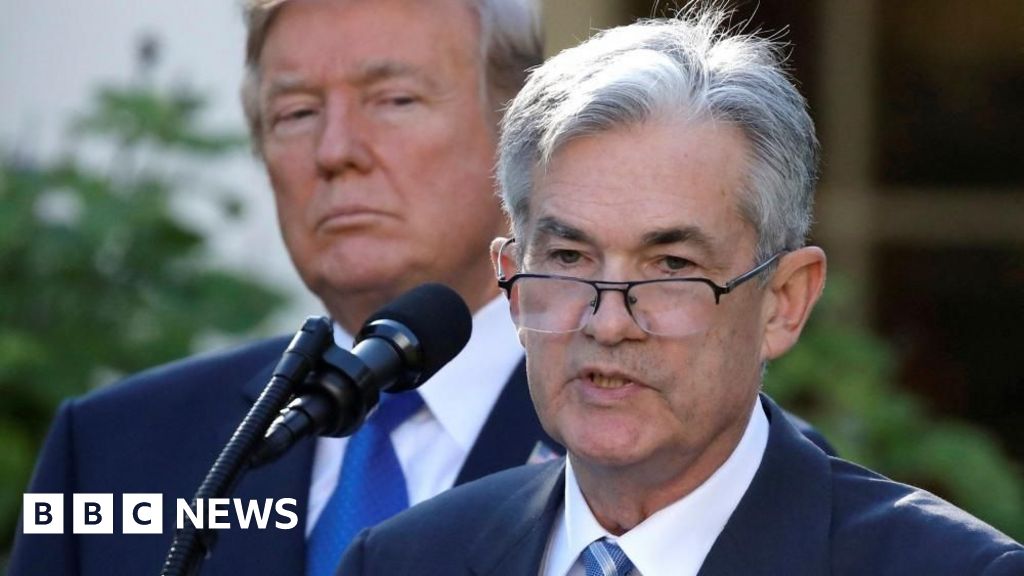
Powell’s term is nearing its end and the US Senate is considering Trump’s nominee for his replacement, Kevin Warsh. A key Republican, Thom Tillis, has withheld his support for Warsh unless the Trump administration would drop its investigation into Powell.
Business
Intel bags big gains! Chipmaker’s shares jump 26% on blockbuster results; how Trump admin benefits – The Times of India
Intel share price soared sharply on Friday after the chipmaker delivered a first-quarter performance that exceeded market expectations. And the win was not just for the chipmaker, but also the whole of US!The stock climbed 26.7% during trading on Friday, marking what could be its strongest single-day gain since 1987. Momentum continued after the closing bell, with shares rising a further 20% in after-hours trading as investors reacted to signs of a sustained turnaround driven by artificial intelligence.Intel reported revenue of $13.58 billion (€11.6bn) for the quarter, ahead of the $12.3 billion (€10.5 bn) forecast and up 7.2% from a year earlier. Adjusted earnings per share came in at $0.29, far exceeding expectations of $0.01.A key contributor to this performance was the company’s Data Centre and AI (DCAI) division, which delivered revenue of $5.05 billion (€4.2bn), up 22.4% year-on-year and well above analyst estimates of $4.41 billion (€3.77bn). The results indicate strong demand for Intel’s Xeon 6 processors and Gaudi 3 AI accelerators, particularly among enterprise clients and cloud service providers.Chief executive Lip-Bu Tan pointed to a broader shift in artificial intelligence usage as a major factor behind the growth. He said, “the next wave of AI will bring intelligence closer to the end user, moving from foundational models to inference to agentic.” He added, “This shift is significantly increasing the need for Intel’s CPUs and wafer and advanced packaging offerings.”The company also issued an upbeat outlook for the second quarter, forecasting revenue in the range of $13.8 billion (€11.8billion) to $14.8 billion (€12.6billion), surpassing investor expectations of $13 billion (€11.1billion).
But how is Washington winning?
The rally has had a direct impact on the US administration’s investment in Intel. In 2025, during a period of severe financial strain for the company, the administration of Donald Trump acquired a 9.9% stake in a move aimed at stabilising the business. The government invested $8.9 billion (€7.8bn) at a share price of $20.47 (€18.01), with $5.7 billion (€5bn) of that amount coming from previously approved but unpaid grants, according to the Euro News.At the time, Intel was facing multi-billion dollar losses and operational challenges, prompting concerns over its viability. As part of the intervention, the company cancelled planned factory projects in Germany and Poland, redirected focus towards US-based manufacturing, and reduced its global workforce by 25%, cutting around 25,000 jobs.Following the latest jump, Intel’s shares are now trading at $81.3 (€71.5), representing an increase of nearly 300% since the government first took its stake. The sharp rise highlights how the company’s improved financial performance has translated into substantial gains for the US administration.


Extended interview: Don Cheadle – CBS News

Charlie Sheen updates on relationship with old pal Jon Cryer

Iranian FM Abbas Araghchi lands in Pakistan ahead of renewed US talks

-

 Fashion1 week ago
France’s LVMH Q1 revenue falls 6%, shows resilience amid Iran war
-

 Tech1 week ago
CYBERUK ’26: UK lagging on legal protections for cyber pros | Computer Weekly
-

 Sports5 days ago
WWE WrestleMania 42 Night 2: Live match results and analysis
-

 Sports1 week ago
Faheem Ashraf backs Islamabad United’s push, calls league a ‘career-changing platform’
-

 Sports5 days ago
NCAA men’s gymnastics championship: All-time winners list
-
 Business1 week ago
PepsiCo earnings beat estimates as North American food business improves
-

 Tech1 week ago
Anthropic Plots Major London Expansion
-

 Entertainment4 days ago
Lee Anderson, Zarah Sultana kicked out of UK Parliament for calling PM ‘liar’