

Business
Economic stability fails to ease job anxieties | The Express Tribune


Survey shows 84% respondents call for job creation, human development over large infrastructure initiatives
LAHORE:
Pakistan closed 2025 with signs of economic stabilisation, but the public remains divided on whether the recovery has translated into broad-based prosperity, according to a nationwide survey conducted by the Institute of Cost and Management Accountants of Pakistan (ICMA).
The survey, which captures the views of citizens, professionals, students and business stakeholders, presents a mixed but cautiously hopeful picture for 2026, with governance, jobs and long-term reforms emerging as decisive factors for sustained growth.
The survey indicates that 54.3% of respondents acknowledged an improvement in the economy during 2025, pointing to easing inflation, higher remittances and a relatively more stable external position. These developments helped pull the country out of an immediate crisis phase. However, the recovery was uneven, as 45.7% described the year as turbulent, marked by highs and lows. Weak performance in agriculture and persistent fiscal pressures limited the benefits of stabilisation for a large segment of the population. Only 10.3% reported that 2025 turned out much better than expected, while 12.1% believed the economy showed steady performance, underscoring that consistent and inclusive growth remains elusive.
Looking ahead, public sentiment for 2026 reflects cautious optimism rather than strong confidence. The survey shows that 56.9% of respondents expect the economy to improve, while 43.1% believe it will remain stable. Within this group, 29.3% described the outlook as promising and 25% expect economic growth, largely driven by hopes of recovery in industry, exports and domestic demand. Yet only 2.6% view the economy as strong, highlighting that deep-rooted structural weaknesses, low investment levels and productivity challenges continue to weigh on long-term prospects.
The survey also reveals that economic performance alone is n`ot the public’s biggest concern for 2026. Political instability tops the list of anxieties, cited by 33.6% of respondents, reflecting fears that policy uncertainty and leadership conflicts could derail fragile gains. Youth unemployment follows closely at 29.3%, signalling the urgency of translating macroeconomic stability into job creation for a rapidly growing workforce. High inflation, though easing, still worries 26.7% of respondents, while extreme weather and climate-related risks were considered a relatively distant concern by 10.3%.
Respondents sent a strong message on what Pakistan must stop doing to secure sustainable progress. According to the survey, 31% called for ending the repetition of failed policies and short-term fixes that have historically failed to deliver lasting growth. Political conflict was identified by 28.4% as a major obstacle that creates uncertainty and weakens investor confidence. Another 26.7% emphasised reducing reliance on foreign loans, urging a shift towards self-reliance through higher domestic revenues and stronger exports. Neglect of public services such as health and education was also flagged as an issue that must be addressed to improve social and economic outcomes.
In terms of priorities for 2026, the public overwhelmingly placed people before physical projects. A striking 84% of respondents stressed that job creation and human development should take precedence over large infrastructure initiatives. Within this, 45.7% demanded urgent action on employment generation, while 37.9% highlighted education and skills development as critical to tackling youth unemployment and building a competitive workforce. Infrastructure and healthcare were still considered important, but respondents viewed them as secondary to creating widespread opportunity and improving human capital.
On the external front, the survey highlights a pragmatic approach to international partnerships. China emerged as the most important partner for 2026, cited by 44.8% of respondents for its role in investment, infrastructure development and China-Pakistan Economic Corridor (CPEC)-related projects. Neighbouring countries followed at 26.7%, reflecting the importance of regional peace and trade. Gulf countries were identified by 18.1% for their contribution through jobs and remittances, while 10.3% pointed to the United States for technology and education links. Overall, respondents emphasised that foreign relations should be driven by tangible economic benefits rather than symbolic alliances.
The survey also reflects a growing sense of individual responsibility in shaping economic outcomes. More than half of respondents, 56.9%, said they plan to learn new digital skills in 2026 to adapt to a technology-driven economy. Another 25% expressed intentions to start a business or project, highlighting entrepreneurial ambition, while mentoring and volunteering were seen as secondary priorities.
According to ICMA, the findings underline a clear public mandate: governance reform, job creation and efficient public services matter more to citizens than headline projects. With 62.9% calling for efficient delivery of public services, the message for policymakers is that 2026 will be judged not just by economic indicators, but by whether stability translates into better daily lives for ordinary Pakistanis.




Now one of the biggest sportswear firms, Anta’s rise follows a playbook adopted by many Chinese giants.
Source link
Business
Gold price prediction today: Will gold prices continue to be volatile? Key levels to watch out for April 27, 2026 week – The Times of India

Gold price prediction today: Gold prices will closely track movements on the rate decisions by several central banks, including the US Federal Reserve, this week, says Manav Modi, Senior Analyst, Commodity Research at Motilal Oswal Financial Services Ltd.Gold is currently consolidating after sharp swings in a broad range, indicating a pause rather than a reversal. Price action shows a higher-high structure intact, but the recent sideways movement suggests indecision near the upper supply zone around 158,000–160,000. The formation resembles a short-term flag/triangle continuation pattern, where a breakout on either side will define the next directional move. Volume has tapered slightly, reinforcing the consolidation narrative.Gold prices recently moved from the upper band toward the mid-band (20 DMA), and are now attempting to stabilize. The bands have started to contract, signaling a potential volatility expansion ahead. Sustaining above the mid-band (~150,500–151,000 zone) keeps bullish bias intact, while a breakdown below this could trigger a deeper mean reversion toward the lower band.For the week, immediate support for gold prices is placed at around Rs 150,500, which is followed by stronger support near Rs 148,500. On the upside, the resistance stands at around Rs 155,500, and after that the key supply zone is at Rs 158,000. A decisive close for gold above Rs 158,000 levels can then resume the broader uptrend. However, a break in gold prices below levels of Rs 148,500 may shift the momentum to bearish in the near term.The economic docket is filled with data points and events this week as the focus will be on FED, BOJ, ECB and ECB policy meetings. US consumer confidence, GDP, inflation and durable goods orders data will also be in radar.(Disclaimer: Recommendations and views on the stock market, other asset classes or personal finance management tips given by experts are their own. These opinions do not represent the views of The Times of India)

British families tell BBC Panorama how the Iran war is affecting their monthly budgets.
Source link


UNCTAD, Maritime and Port Authority of Singapore launch partnership

Strait of Hormuz disruption ‘systemic shock’ threatening SE Asia: ERIA
Anta: The Chinese sports brand taking on Nike and Adidas

-

 Sports1 week ago
WWE WrestleMania 42 Night 2: Live match results and analysis
-

 Sports1 week ago
NCAA men’s gymnastics championship: All-time winners list
-

 Fashion1 week ago
UK’s Sosandar returns to profitability amid robust FY26 performance
-

 Politics6 days ago
UK’s Starmer seeks to deflect blame over Mandelson appointment
-

 Entertainment7 days ago
Lee Anderson, Zarah Sultana kicked out of UK Parliament for calling PM ‘liar’
-

 Entertainment1 week ago
Ruby Rose old essay resurfaces detailing night of alleged Katy Perry assault
-

 Entertainment1 week ago
Nathalie Baye, low-key legend of French cinema, dies aged 77
-
 Business1 week ago
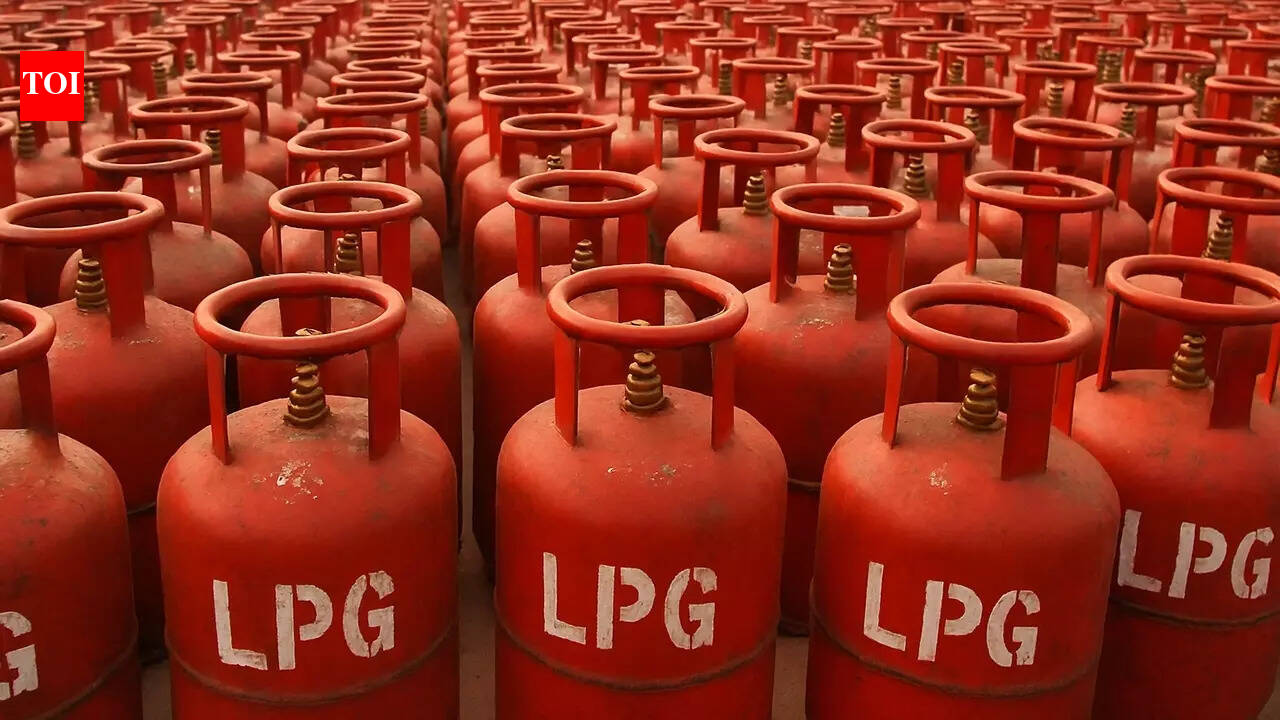
No fuel shortage: Govt assures 100% domestic LPG, PNG, CNG supply amid Hormuz energy crunch – The Times of India