

Business
Survival costs leave Rs2.50 for school | The Express Tribune

KARACHI:
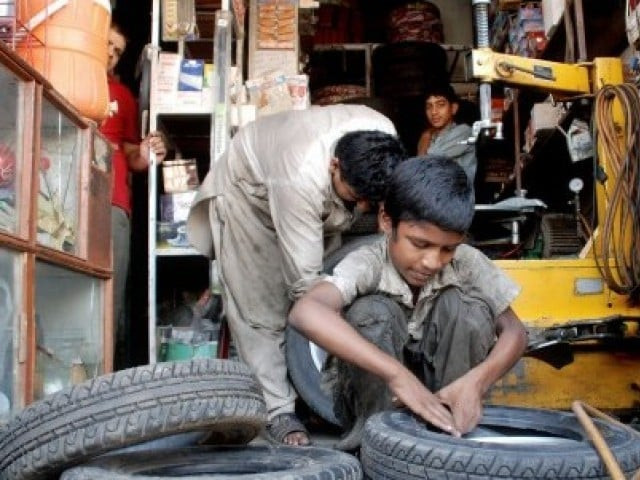
On New Year’s Day 2026, the release of the Household Integrated Economic Survey (HIES) 2024-25 revealed that 20.3 million children remain out of school. Based on the first fully digital post-Census 2023 survey of 32,000 households, the data shows that Pakistan’s “education emergency” is not an abstract policy failure but a matter of household arithmetic, illustrating how a Rs100 note in a Pakistani father’s hand disappears before it can keep a child in school.
Countdown to zero
The survey shows how households spend their income and identifies the top three “life costs” that consume most of every Rs100 earned. Translating the 2024-25 HIES data into daily budgets reveals what the report describes as a “countdown to zero”.
Assuming every Rs100 earned represents total household expenditure, the 37% share allocated to food and beverages becomes a literal Rs37 taken from the wallet before the day begins. Once the Rs37 (36.72) for food is deducted from a hundred-rupee note, the countdown accelerates as Rs26 (25.72) is immediately claimed by housing and utilities.
This combined 63% (62.44) share, described as the “survival wall”, creates an economic chokehold. Before a family can consider a child’s future, nearly two-thirds of its income has already vanished into non-negotiable costs of bread, light and heat. In this imbalance, the state’s utility demands outweigh what a father can spare for schooling by almost ten to one, leaving just Rs2.50 (Rs2.48) for education.
Population divided into quintiles
Quintiles divide the population into five equal segments of 20% each. The first quintile represents the poorest 20% of households, followed by the lower-middle, middle, upper-middle and richest 20%.
Interpreting the graphs, renowned economist Dr Sajid Amin Javed, Deputy Executive Director and Founding Head of the Policy Solutions Lab at the Sustainable Development Policy Institute (SDPI), told The Express Tribune that a decline in the share of spending on education is not an automatic indicator of neglect or poverty. “In higher-income groups, rising incomes often outpace relatively stable education costs, shrinking the education spending ratio,” he said.
“However, a stark contrast appears in the bottom 40%, whose limited income is almost entirely spent on necessities, especially food, driven by stagnant wages and peak food inflation. This reveals a much harsher story of survival.” For these households, non-negotiable costs absorb the vast majority of income, leaving little room for other expenses. While education ratios may appear low because fees remain stable, Dr Javed said the persistently high share of food expenditure among the bottom 40% is the true marker of economic distress.
The ‘survival wall’
The struggle for a child’s future begins with the forced subtraction of the present. Before a student can pick up a pencil, a large “survival wall” consumes most of the household income.
The hunger cost takes the first Rs37 for basic food and nutrition, leaving Rs63. Next, the cost of light and heat takes Rs26 for electricity, gas and rent, leaving Rs37. Finally, only Rs2.50 is allocated for school fees and supplies. By the time these essentials are addressed, the family has already hit a survival wall of Rs63. The remaining Rs37 must cover all other necessities, including transport, medicine, clothing and emergencies.
Out-of-school children
While Rs2.50 for education may appear a minor line item in a household budget, global data suggests it is one of the strongest predictors of a family’s ability to escape poverty.
World Bank Global Director for Education and Skills Luis Benveniste has described education as an “economic imperative for individual prosperity”. The 202425 HIES, following the 2023 Digital Census, shows that the national out-of-school rate fell slightly from 30% to 28%. Despite this marginal improvement, around 20 million children remain out of school, with 20% never enrolled and 8% dropping out after initial attendance.
According to Khanzaib Ahmad, research assistant at the IBA Economic Growth and Forecasting initiative, inflation has forced Pakistani parents to reduce education spending from 3.98% to 2.48% of household budgets to cover food and utilities. Despite this reduction, literacy rose to 63% and out-of-school rates declined, reflecting increased awareness, reliance on community options and household resilience, even as government education spending remains at 0.8% of GDP. Echoing Dr Javed, Ahmad noted that the bottom 40% of households, often with seven or more members, are trapped in subsistence living. Nearly all available resources go toward basic staples, leaving no financial space for education or economic mobility.
Provincial breakdown
The provincial picture shows persistent divides. In Punjab, 21% of children are out of school, while food insecurity affects 22.6% of households. The Rs2.50 that could be allocated to schooling is often diverted to meet rising food costs.
In Sindh, 39% of children are out of school. The Rs2.50 for education cannot cover uniforms or transport, while Rs63 spent on food and utilities leaves many rural families unable to begin the enrolment process, which often never starts.
In Khyber-Pakhtunkhwa, 28% of children are out of school. Even when Rs2.50 is spared, underfunded schools mean seven in ten children are classified as “learning poor”, unable to read a basic sentence by the age of 10.
Balochistan faces the most severe challenge, with 45% of children out of school. With food insecurity exceeding 30%, the entire Rs100 earned by many households is consumed by survival needs, pushing families into a permanent deficit.
Gilgit-Baltistan records the lowest rate, with 18% of children out of school, showing that strong local community engagement can reduce “survival wall” barriers even during economic hardship.
Sacrificing tomorrow for today’s heat and light
Federal and Sindh education ministers did not comment. Ministry sources said conditions are better in capitals and major cities, where private schooling options exist. For ordinary households, however, many children are withdrawn from school due to the inability to afford basic learning materials, forcing early work.
The most painful 2026 indicator is the 8% dropout rate, with children pushed out by economic necessity. Four in ten boys leave school for “odd jobs” to recover the Rs26 spent on utility bills.
This arithmetic shows the education crisis cannot be separated from the cost of living. With the survival wall fixed at 63%, the Rs2.50 for a child’s education remains at constant risk. Until the state eases the Rs63 burden of food and fuel, classrooms will remain a luxury that 20 million children cannot afford, as a generation’s future is traded to pay heat and light bills.






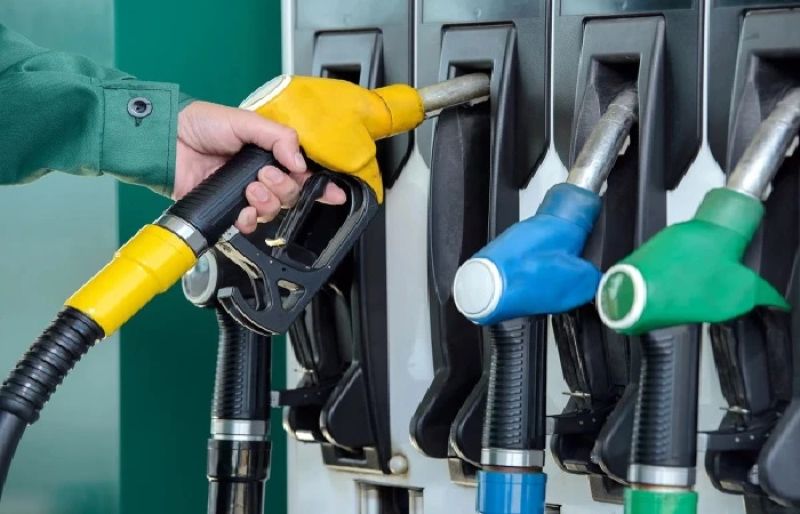
The federal government announced a Rs26.77 per litre hike in the price of petrol and high-speed diesel each on Friday, according to a notification issued by the Petroleum Division.
The new prices will be effective from April 25, 2026 for a week, the notification stated.
Following the increase, the price of HSD has jumped from Rs353.42 to Rs380.19, while the petrol price now stands at Rs393.35.
The government has been reviewing petroleum prices every Friday night following the now-paused US-Israel war on Iran, which began on February 28.
In the previous weekly review, the prime minister announced a reduction of Rs32.12 per litre in the price of high-speed diesel, while the petrol price remained unchanged.
The government jacked up petrol and diesel prices despite oil prices falling globally on Friday after it appeared a second round of Middle East talks was back on, bolstering prospects for an end to a war that has crippled energy shipments from the Gulf.
Oil prices had been climbing earlier as investors worried about a lack of progress in ending the Middle East crisis, with Tehran keeping the Strait of Hormuz closed and the US maintaining a blockade of Iranian ports.
But they dropped on reports that Iran’s Foreign Minister Abbas Araghchi was to arrive in Islamabad on Friday night.
Brent crude, the international benchmark contract, fell back below $100 a barrel.
facebook twitter
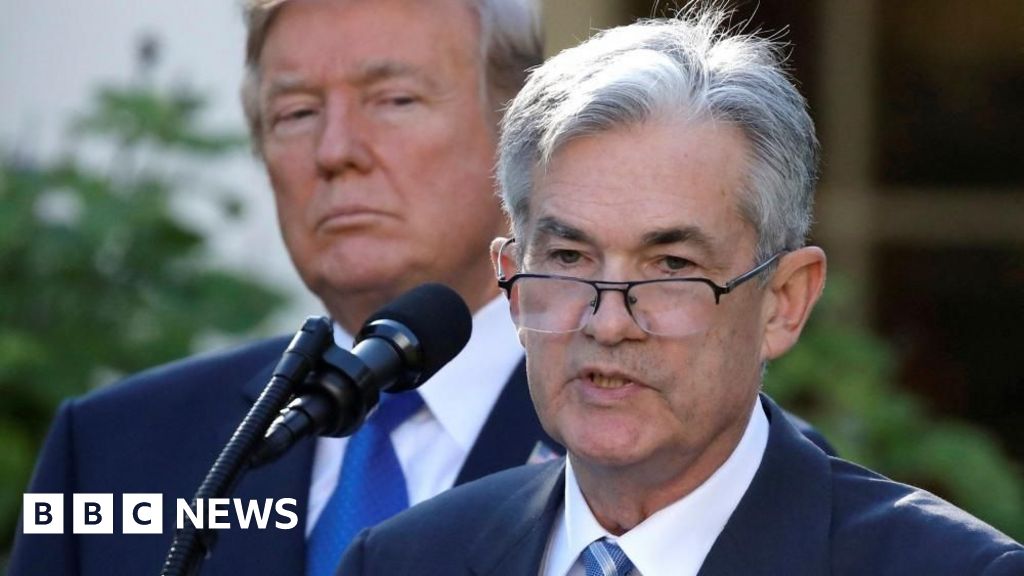
Powell’s term is nearing its end and the US Senate is considering Trump’s nominee for his replacement, Kevin Warsh. A key Republican, Thom Tillis, has withheld his support for Warsh unless the Trump administration would drop its investigation into Powell.
Business
Intel bags big gains! Chipmaker’s shares jump 26% on blockbuster results; how Trump admin benefits – The Times of India
Intel share price soared sharply on Friday after the chipmaker delivered a first-quarter performance that exceeded market expectations. And the win was not just for the chipmaker, but also the whole of US!The stock climbed 26.7% during trading on Friday, marking what could be its strongest single-day gain since 1987. Momentum continued after the closing bell, with shares rising a further 20% in after-hours trading as investors reacted to signs of a sustained turnaround driven by artificial intelligence.Intel reported revenue of $13.58 billion (€11.6bn) for the quarter, ahead of the $12.3 billion (€10.5 bn) forecast and up 7.2% from a year earlier. Adjusted earnings per share came in at $0.29, far exceeding expectations of $0.01.A key contributor to this performance was the company’s Data Centre and AI (DCAI) division, which delivered revenue of $5.05 billion (€4.2bn), up 22.4% year-on-year and well above analyst estimates of $4.41 billion (€3.77bn). The results indicate strong demand for Intel’s Xeon 6 processors and Gaudi 3 AI accelerators, particularly among enterprise clients and cloud service providers.Chief executive Lip-Bu Tan pointed to a broader shift in artificial intelligence usage as a major factor behind the growth. He said, “the next wave of AI will bring intelligence closer to the end user, moving from foundational models to inference to agentic.” He added, “This shift is significantly increasing the need for Intel’s CPUs and wafer and advanced packaging offerings.”The company also issued an upbeat outlook for the second quarter, forecasting revenue in the range of $13.8 billion (€11.8billion) to $14.8 billion (€12.6billion), surpassing investor expectations of $13 billion (€11.1billion).
But how is Washington winning?
The rally has had a direct impact on the US administration’s investment in Intel. In 2025, during a period of severe financial strain for the company, the administration of Donald Trump acquired a 9.9% stake in a move aimed at stabilising the business. The government invested $8.9 billion (€7.8bn) at a share price of $20.47 (€18.01), with $5.7 billion (€5bn) of that amount coming from previously approved but unpaid grants, according to the Euro News.At the time, Intel was facing multi-billion dollar losses and operational challenges, prompting concerns over its viability. As part of the intervention, the company cancelled planned factory projects in Germany and Poland, redirected focus towards US-based manufacturing, and reduced its global workforce by 25%, cutting around 25,000 jobs.Following the latest jump, Intel’s shares are now trading at $81.3 (€71.5), representing an increase of nearly 300% since the government first took its stake. The sharp rise highlights how the company’s improved financial performance has translated into substantial gains for the US administration.


Extended interview: Don Cheadle – CBS News

Charlie Sheen updates on relationship with old pal Jon Cryer

Iranian FM Abbas Araghchi lands in Pakistan ahead of renewed US talks

-

 Fashion1 week ago
France’s LVMH Q1 revenue falls 6%, shows resilience amid Iran war
-

 Tech1 week ago
CYBERUK ’26: UK lagging on legal protections for cyber pros | Computer Weekly
-

 Sports5 days ago
WWE WrestleMania 42 Night 2: Live match results and analysis
-

 Sports1 week ago
Faheem Ashraf backs Islamabad United’s push, calls league a ‘career-changing platform’
-

 Sports5 days ago
NCAA men’s gymnastics championship: All-time winners list
-
 Business1 week ago
PepsiCo earnings beat estimates as North American food business improves
-

 Tech1 week ago
Anthropic Plots Major London Expansion
-

 Entertainment4 days ago
Lee Anderson, Zarah Sultana kicked out of UK Parliament for calling PM ‘liar’