

Business
Survival costs leave Rs2.50 for school | The Express Tribune

KARACHI:
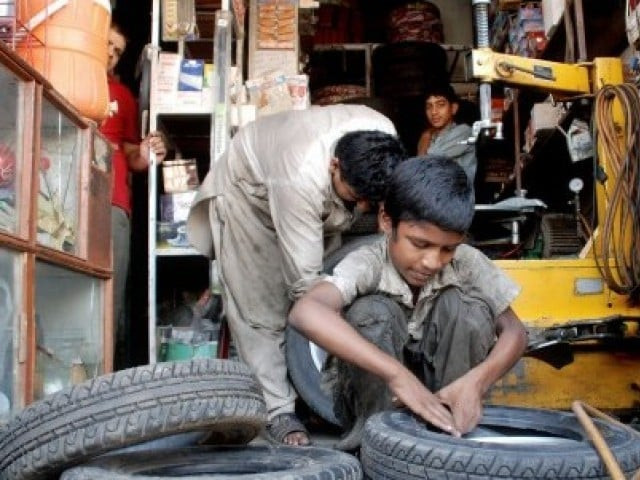
On New Year’s Day 2026, the release of the Household Integrated Economic Survey (HIES) 2024-25 revealed that 20.3 million children remain out of school. Based on the first fully digital post-Census 2023 survey of 32,000 households, the data shows that Pakistan’s “education emergency” is not an abstract policy failure but a matter of household arithmetic, illustrating how a Rs100 note in a Pakistani father’s hand disappears before it can keep a child in school.
Countdown to zero
The survey shows how households spend their income and identifies the top three “life costs” that consume most of every Rs100 earned. Translating the 2024-25 HIES data into daily budgets reveals what the report describes as a “countdown to zero”.
Assuming every Rs100 earned represents total household expenditure, the 37% share allocated to food and beverages becomes a literal Rs37 taken from the wallet before the day begins. Once the Rs37 (36.72) for food is deducted from a hundred-rupee note, the countdown accelerates as Rs26 (25.72) is immediately claimed by housing and utilities.
This combined 63% (62.44) share, described as the “survival wall”, creates an economic chokehold. Before a family can consider a child’s future, nearly two-thirds of its income has already vanished into non-negotiable costs of bread, light and heat. In this imbalance, the state’s utility demands outweigh what a father can spare for schooling by almost ten to one, leaving just Rs2.50 (Rs2.48) for education.
Population divided into quintiles
Quintiles divide the population into five equal segments of 20% each. The first quintile represents the poorest 20% of households, followed by the lower-middle, middle, upper-middle and richest 20%.
Interpreting the graphs, renowned economist Dr Sajid Amin Javed, Deputy Executive Director and Founding Head of the Policy Solutions Lab at the Sustainable Development Policy Institute (SDPI), told The Express Tribune that a decline in the share of spending on education is not an automatic indicator of neglect or poverty. “In higher-income groups, rising incomes often outpace relatively stable education costs, shrinking the education spending ratio,” he said.
“However, a stark contrast appears in the bottom 40%, whose limited income is almost entirely spent on necessities, especially food, driven by stagnant wages and peak food inflation. This reveals a much harsher story of survival.” For these households, non-negotiable costs absorb the vast majority of income, leaving little room for other expenses. While education ratios may appear low because fees remain stable, Dr Javed said the persistently high share of food expenditure among the bottom 40% is the true marker of economic distress.
The ‘survival wall’
The struggle for a child’s future begins with the forced subtraction of the present. Before a student can pick up a pencil, a large “survival wall” consumes most of the household income.
The hunger cost takes the first Rs37 for basic food and nutrition, leaving Rs63. Next, the cost of light and heat takes Rs26 for electricity, gas and rent, leaving Rs37. Finally, only Rs2.50 is allocated for school fees and supplies. By the time these essentials are addressed, the family has already hit a survival wall of Rs63. The remaining Rs37 must cover all other necessities, including transport, medicine, clothing and emergencies.
Out-of-school children
While Rs2.50 for education may appear a minor line item in a household budget, global data suggests it is one of the strongest predictors of a family’s ability to escape poverty.
World Bank Global Director for Education and Skills Luis Benveniste has described education as an “economic imperative for individual prosperity”. The 202425 HIES, following the 2023 Digital Census, shows that the national out-of-school rate fell slightly from 30% to 28%. Despite this marginal improvement, around 20 million children remain out of school, with 20% never enrolled and 8% dropping out after initial attendance.
According to Khanzaib Ahmad, research assistant at the IBA Economic Growth and Forecasting initiative, inflation has forced Pakistani parents to reduce education spending from 3.98% to 2.48% of household budgets to cover food and utilities. Despite this reduction, literacy rose to 63% and out-of-school rates declined, reflecting increased awareness, reliance on community options and household resilience, even as government education spending remains at 0.8% of GDP. Echoing Dr Javed, Ahmad noted that the bottom 40% of households, often with seven or more members, are trapped in subsistence living. Nearly all available resources go toward basic staples, leaving no financial space for education or economic mobility.
Provincial breakdown
The provincial picture shows persistent divides. In Punjab, 21% of children are out of school, while food insecurity affects 22.6% of households. The Rs2.50 that could be allocated to schooling is often diverted to meet rising food costs.
In Sindh, 39% of children are out of school. The Rs2.50 for education cannot cover uniforms or transport, while Rs63 spent on food and utilities leaves many rural families unable to begin the enrolment process, which often never starts.
In Khyber-Pakhtunkhwa, 28% of children are out of school. Even when Rs2.50 is spared, underfunded schools mean seven in ten children are classified as “learning poor”, unable to read a basic sentence by the age of 10.
Balochistan faces the most severe challenge, with 45% of children out of school. With food insecurity exceeding 30%, the entire Rs100 earned by many households is consumed by survival needs, pushing families into a permanent deficit.
Gilgit-Baltistan records the lowest rate, with 18% of children out of school, showing that strong local community engagement can reduce “survival wall” barriers even during economic hardship.
Sacrificing tomorrow for today’s heat and light
Federal and Sindh education ministers did not comment. Ministry sources said conditions are better in capitals and major cities, where private schooling options exist. For ordinary households, however, many children are withdrawn from school due to the inability to afford basic learning materials, forcing early work.
The most painful 2026 indicator is the 8% dropout rate, with children pushed out by economic necessity. Four in ten boys leave school for “odd jobs” to recover the Rs26 spent on utility bills.
This arithmetic shows the education crisis cannot be separated from the cost of living. With the survival wall fixed at 63%, the Rs2.50 for a child’s education remains at constant risk. Until the state eases the Rs63 burden of food and fuel, classrooms will remain a luxury that 20 million children cannot afford, as a generation’s future is traded to pay heat and light bills.



Gold prices in Pakistan have risen again at the start of the business week after several days of decline, according to the All Pakistan Bullion Market.
The price of gold per tola increased by Rs 800, reaching Rs 493,962.
Similarly, the price of 10 grams of gold rose by Rs 686 to Rs 423,492.
In the global market, gold also recorded an increase of $8 per ounce, reaching $4,716.
Experts say global economic uncertainty, currency fluctuations, and investor preference for safe-haven assets are driving the upward trend in gold prices.
They add that changes in international markets directly impact Pakistan’s local bullion rates, leading to continued fluctuations in domestic prices.

Now one of the biggest sportswear firms, Anta’s rise follows a playbook adopted by many Chinese giants.
Source link
Business
Gold price prediction today: Will gold prices continue to be volatile? Key levels to watch out for April 27, 2026 week – The Times of India

Gold price prediction today: Gold prices will closely track movements on the rate decisions by several central banks, including the US Federal Reserve, this week, says Manav Modi, Senior Analyst, Commodity Research at Motilal Oswal Financial Services Ltd.Gold is currently consolidating after sharp swings in a broad range, indicating a pause rather than a reversal. Price action shows a higher-high structure intact, but the recent sideways movement suggests indecision near the upper supply zone around 158,000–160,000. The formation resembles a short-term flag/triangle continuation pattern, where a breakout on either side will define the next directional move. Volume has tapered slightly, reinforcing the consolidation narrative.Gold prices recently moved from the upper band toward the mid-band (20 DMA), and are now attempting to stabilize. The bands have started to contract, signaling a potential volatility expansion ahead. Sustaining above the mid-band (~150,500–151,000 zone) keeps bullish bias intact, while a breakdown below this could trigger a deeper mean reversion toward the lower band.For the week, immediate support for gold prices is placed at around Rs 150,500, which is followed by stronger support near Rs 148,500. On the upside, the resistance stands at around Rs 155,500, and after that the key supply zone is at Rs 158,000. A decisive close for gold above Rs 158,000 levels can then resume the broader uptrend. However, a break in gold prices below levels of Rs 148,500 may shift the momentum to bearish in the near term.The economic docket is filled with data points and events this week as the focus will be on FED, BOJ, ECB and ECB policy meetings. US consumer confidence, GDP, inflation and durable goods orders data will also be in radar.(Disclaimer: Recommendations and views on the stock market, other asset classes or personal finance management tips given by experts are their own. These opinions do not represent the views of The Times of India)


SBP raises policy rate by 100bps to 11.5% as inflation risks mount

Finalise Bangladesh’s textile-RMG circular economy strategy: Experts
Gold prices rise rebound in Pakistan after recent decline – SUCH TV

-

 Sports1 week ago
WWE WrestleMania 42 Night 2: Live match results and analysis
-

 Sports1 week ago
NCAA men’s gymnastics championship: All-time winners list
-

 Fashion1 week ago
UK’s Sosandar returns to profitability amid robust FY26 performance
-

 Politics6 days ago
UK’s Starmer seeks to deflect blame over Mandelson appointment
-

 Entertainment7 days ago
Lee Anderson, Zarah Sultana kicked out of UK Parliament for calling PM ‘liar’
-
 Business1 week ago
No fuel shortage: Govt assures 100% domestic LPG, PNG, CNG supply amid Hormuz energy crunch – The Times of India
-
 Business7 days ago
How Trump’s psychedelics executive order could unlock stalled cannabis reform
-
 Business1 week ago
Exercise to test response to offshore energy threat involving vessels and drones