

Business
Current account deficit hits $1.17b | The Express Tribune

Reaches $244m in Dec, reversing last year’s surplus; FDI records outflow of $135m
KARACHI:
Pakistan’s current account deficit reached $1.174 billion during the first half of FY26, marking a sharp reversal from a surplus of $957 million recorded in the same period of last year, as rising imports, weaker capital inflows and persistent structural challenges weighed on the external account.
Every month, the country recorded a current account deficit of $244 million in December 2025, compared to a surplus of $454 million in December 2024 and a surplus of $98 million in November 2025, indicating renewed stress on the balance of payments despite relatively stable remittance inflows.
Analysts noted that the widening deficit reflects a combination of seasonal import pressures, subdued export growth in non-services sectors, and limited improvement in foreign investment flows. While services exports, particularly in IT and IT-enabled segments, continued to provide some cushion, they were insufficient to offset the overall deterioration in the trade and income accounts.
The pressure on the external account was further compounded by weak performance on the financial account, where foreign direct investment (FDI) flows remained subdued. According to market estimates, net FDI inflows during 1HFY26 declined by 43% year-on-year to $808 million, compared to $1.425 billion in the same period of last year, underscoring persistent investor caution towards Pakistan.
December proved particularly challenging, as net FDI recorded an outflow of $135 million, reversing a net inflow of $180 million in November, according to Arif Habib Limited (AHL).
Analysts attributed this mainly to a large one-off divestment in the telecom sector following Telenor’s exit from Pakistan, which resulted in a sizeable outflow. However, they cautioned that beyond this transaction, the broader investment climate remains weak due to structural and policy-related concerns.
“The largest net FDI outflow in this month was from Norway of $376 million in the IT sector, led by Telenor’s exit from Pakistan following the sale of its assets to PTCL, in our view. We expect FY26 FDI to clock in at $2.5 billion,” noted Topline Securities.
Country-wise, China, Hong Kong and the UAE accounted for nearly 86% of the total net FDI inflows during the first half of the current fiscal year, highlighting a narrow concentration of foreign investment sources. Market participants view this concentration as a vulnerability, particularly in an environment of heightened global uncertainty and tightening financial conditions.
Commenting on the deteriorating trend, economist Muzammil Aslam said the investment situation remains discouraging despite Pakistan’s engagement with the IMF. “Foreign investment is down 43% in the first six months of the current fiscal year. Companies have either exited or are planning to leave due to heavy taxation, non-competitive utility prices, and policy uncertainty,” he said.
Aslam added that the persistence of weak inflows raises questions about the credibility of the government’s stability narrative. “Being in an IMF programme has not translated into investor comfort. The core issue is political stability, without which economic adjustments alone will not restore confidence,” he remarked.
Meanwhile, movements in the Real Effective Exchange Rate (REER) suggest a marginal easing in currency overvaluation. The REER clocked in at 103.73 in December 2025, down from 104.76 in November, reflecting a 0.98% month-on-month decline. However, on a cumulative basis, the REER remains up 5.81% in FY26 to date, while posting a marginal increase of 0.06% in calendar year 2025, indicating that the rupee is still relatively overvalued against a basket of trading-partner currencies.
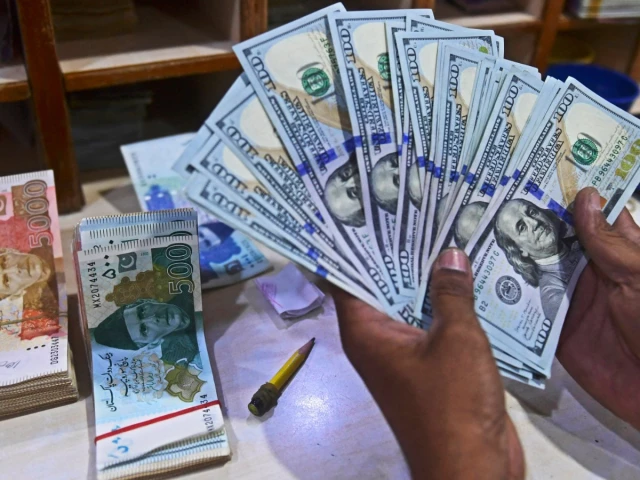
Meanwhile, the Pakistani rupee registered a slight appreciation against the US dollar in the inter-bank market on Monday, gaining 0.01%. By the close of trading, the local currency settled at 279.92, strengthening by Rs0.03 against the greenback, as reported by the State Bank.
The rupee had also posted a modest gain over the previous week, appreciating by Rs0.07, or 0.03%, in the inter-bank market. It ended the week at 279.95, compared to 280.02 at the close of the preceding week.
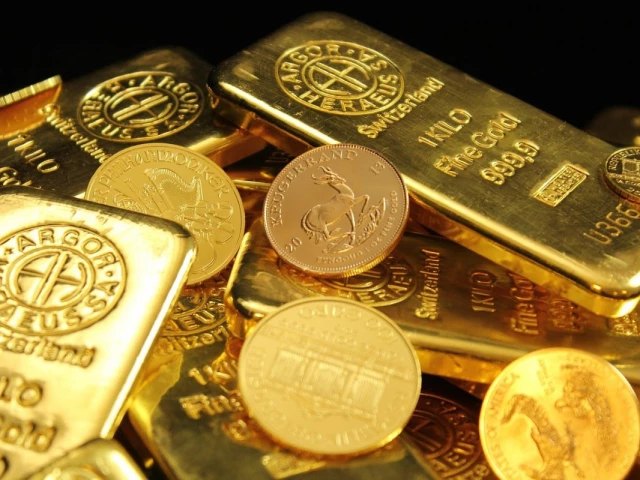
Furthermore, bullion prices registered a sharp increase in the local market, as 24-karat gold per tola surged by Rs7,500 to settle at Rs489,362 – an all-time high. The price of 10 grams of 24-karat gold increased by Rs6,431 to Rs419,549, according to the All Pakistan Sarafa Gems and Jewellers Association. Likewise, the price of 10 grams of 22-karat gold went up by Rs5,895 to Rs384,600.
Silver prices also registered a growth, with 24-karat silver per tola increasing by Rs300 to Rs9,782 and the price of 10 grams of silver rising by Rs257 to Rs8,386.
In the international market, gold prices increased by $75 to $4,670 per ounce, while silver prices rose by $3 to $93.07 per ounce, the association reported.







Business
Stock markets outlook: Dalal Street braces for swings as RBI MPC decision, war risks weigh on sentiment–Check key triggers – The Times of India

Domestic equities are expected to remain volatile this week as investors track the Reserve Bank’s monetary policy decision, global macroeconomic cues and evolving developments in the West Asia conflict, analysts said, according to PTI.Market participants will also keep a close watch on crude oil price movements and foreign fund flows, which continue to influence sentiment.Vinod Nair, Head of Research at Geojit Investments Ltd, said the RBI’s Monetary Policy Committee (MPC) meeting will be the key domestic trigger, with investors focusing on the central bank’s stance on inflation and growth.“A rate pause is near-certain consensus, the central bank walks a tightrope between crude-driven inflation risks and a four-year low Manufacturing PMI signalling a softening growth impulse. The governor’s commentary on the rate cycle trajectory and FY27 projections will be closely monitored.“Globally, the US March CPI reading will carry significant importance, as it buries residual Fed rate-cut hopes, strengthens the dollar and tightens financial conditions for emerging markets, including India,” Nair said.He added that geopolitical developments in West Asia will remain the dominant factor shaping market direction.“Indian markets return after a three-day gap and remain acutely vulnerable to weekend war developments, with crude trajectory and any credible ceasefire signal being the decisive variable that could either trigger a sharp relief rally or extend the current sell-on-rise mode,” he said.In the previous holiday-shortened week, the BSE Sensex declined 263.67 points, or 0.35%, while the NSE Nifty fell 106.5 points, or 0.46%.Siddhartha Khemka, Head of Research (Wealth Management) at Motilal Oswal Financial Services Ltd, said investor sentiment will remain closely linked to developments in the West Asia conflict.Brent crude prices have stayed elevated near $107 per barrel, fuelling concerns around imported inflation. Currency pressures have also intensified, with the rupee weakening sharply before recovering towards Rs 93 against the US dollar following RBI intervention, he noted.Foreign institutional investor (FII) outflows remain a key overhang, with March witnessing heavy selling of Rs 1.2 lakh crore, among the highest monthly outflows in recent years.“Investors will monitor the US Federal Open Market Committee (FOMC) meeting minutes, GDP data, and initial jobless claims for further cues on growth and the policy trajectory.“Overall, markets are expected to remain volatile as geopolitical developments, crude price movements, FII flows and global macro data continue to drive sentiment,” Khemka said.Analysts said any signs of de-escalation in the West Asia conflict could ease crude prices and stabilise the currency, offering relief to markets, while further escalation may prolong risk aversion and keep pressure on foreign flows.

One elderly couple had to find £1,000 for an oil delivery and suppliers are not giving quotes, a councillor says.
Source link
Business
Middle East conflict may hit India’s exports beyond region if prolonged, says government – The Times of India
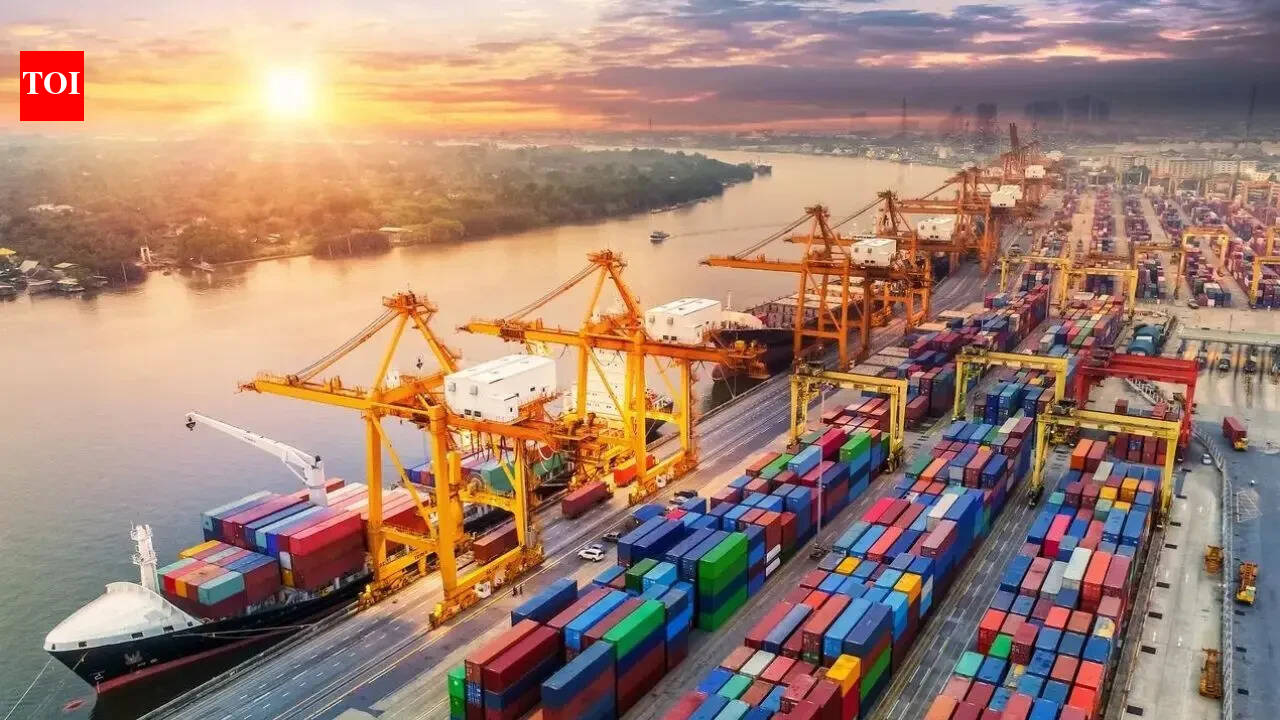
A prolonged conflict in Middle East could begin to hurt India’s exports not just to the region but also to other global markets, as disrupted supply chains ripple outward, commerce secretary Rajesh Agrawal said on Saturday, He also urged the pharmaceutical industry to reduce dependence on imported raw materials and build more resilient export and import linkages.Speaking on the sidelines of ‘Chintan Shivir – Scaling Up Pharma Exports’ in Hyderabad, Agrawal said the government has already seen an impact on both imports and exports over the past month because of the Middle East crisis, with energy imports and regional trade flows under pressure.
“Middle East is also an important market. Around 12-13 per cent of our exports go to the region. So, that will directly get impacted. And if it goes on for long, maybe our exports to other parts of the world will also get impacted as some of the value chains will rotate back. We are cognizant of it,” Agrawal told reporters, as per news agency PTI.He said the exact impact of the conflict on India’s trade would become clearer in the next couple of weeks, but indicated that both exports and imports could see some decline.“And I assume, it will not only be a one-way traffic, in terms of export going down, but it will also be imports having some downfall,” he said.Agrawal cautioned that even if the war ends soon, the disruption may linger for months or even years, depending on the extent of damage to supply chains and infrastructure.“So, at this juncture, it will be very difficult to take a very long-term view on it,” he said.He said the Centre is trying to ensure that supply chains face the minimum possible disruption, while acknowledging that some trade numbers may soften in the near term.
Pharma sector already feeling supply pressure
The commerce secretary said the pharmaceutical sector has already seen some impact in the availability of key intermediates and solvents because supply chains are getting affected by the regional crisis.Agrawal said all arms of the government are working to prioritise limited LPG supply and are attempting to ease the situation by diversifying imports and sourcing from alternative suppliers.“So, as we are able to resolve that overall supply, we will try to alleviate some of the pain in every sector. The Pharma sector will be one of the priority sectors,” he said.He added that the government and industry are jointly working on ways to make supply chains more resilient.
Call for self-reliance in APIs, bulk drugs and intermediates
At the same event, Agrawal asked the pharmaceutical industry to use the current geopolitical uncertainty as a trigger to reduce dependence on critical imported inputs and strengthen domestic capacity.Addressing industry stakeholders in Hyderabad, he stressed “the importance of ensuring greater self-reliance by meeting 80-90 per cent (or higher) of domestic pharmaceutical requirements through indigenous production, while reducing critical import dependencies in APIs, bulk drugs, and intermediates”.He also emphasised the “importance of insulating import supply chains in a geopolitically fragmented world, where availability may be important”.Agrawal called for a broader strategic repositioning of India as a global hub for quality, affordable pharmaceuticals, saying that quality would remain the decisive factor in healthcare. He urged the sector to build a stronger quality ecosystem to enhance global trust and align with emerging areas such as biologics and biosimilars.He also encouraged the industry to shift from a volume-driven to a value-driven model, with greater focus on innovation and new patents, while maintaining India’s strength in generics.
Exports remain on positive path despite uncertainty
Despite the geopolitical overhang, Agrawal said India’s exports in the last financial year were expected to remain on a positive trajectory.The broader pharmaceutical export picture remains resilient. India’s pharma exports stood at $30.47 billion in 2024-25, up 9.4 per cent over the previous year.During April–February 2025-26, pharma exports reached $28.29 billion, registering growth of over 5 per cent compared with the corresponding period of the previous year.India remains the third-largest producer of pharmaceuticals globally by volume and 14th by value, underscoring both the sector’s scale and the stakes involved in insulating it from external shocks.


4/5: Sunday Morning

Jamie Bell returns to ‘Peaky Blinders’ for new generation

Royal Family out in full bloom with Kate and Charlotte like two peas in pod

-

 Sports1 week ago
USMNT handed reality check by Doku, Belgium ahead of World Cup
-

 Sports1 week ago
2026 NCAA men’s hockey tournament: Schedule, results
-
 Fashion1 week ago
EU apparel imports slump 15.48% YoY in Jan; Bangladesh hardest hit
-
Uncategorized6 days ago
[CinePlex360] Please moderate: “Further tariff
-

 Sports1 week ago
Man City show why they are worthy WSL title winners as tired United wilt
-
Uncategorized1 week ago
[CinePlex360] Please moderate: “Apple scrapping
-

 Entertainment1 week ago
The Avett Brothers’ bassist explains why he wrote a book about John Quincy Adams
-

 Entertainment1 week ago
Demystifying the PTI