

Entertainment
India releases massive flow into Sutlej, flooding Kasur’s villages, farmland

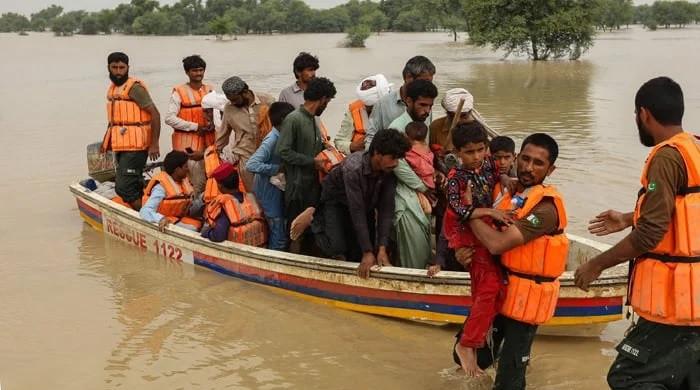
In the latest act of water aggression, India’s sudden discharge of excess cusecs into the Sutlej River has triggered flooding in Kasur’s Ganda Singh Wala, submerging villages and devastating thousands of acres of farmland.
According to officials, rescue efforts have been launched as villagers and their livestock are being shifted to safer ground.
In Burewala, floodwaters spread through the Sahu Ka area and nearby rural settlements, submerging farmland and cutting off hundreds of villages after a breach on the Sahu Ka–Chishtian road.
Dozens of agrarian families in Bahawalpur and Bahawalnagar helplessly watched their livelihoods wash away as their mainstay crops — cotton, rice, and sesame — were now underwater.
Moreover, panicked villagers have been forced to leave behind ancestral homes built over generations, carrying whatever they can and wading through waist-deep waters in search of shelter.
According to the Flood Forecasting Division in Lahore, a medium flood is passing through Head Sulemanki. The River Chenab is also swelling, with a low flood recorded at Marala and Khanki.
In the River Indus, moderate flooding is being reported at Guddu and Sukkur barrages, while at Tarbela, Kalabagh, and Chashma, the water levels are high enough to cause a low flood situation, according to the division.
Meanwhile, breaking a long silence since their May military standoff, India has reached out to Pakistan through the Indus Waters Treaty (IWT), sharing details on potential flood threats, official sources said early on Monday.
According to the sources, New Delhi warned Pakistan of a potential major flood in the Tawi River at Jammu.
The Indian High Commission in Islamabad conveyed the alert, with the communication made on the morning of August 24, they added.
It is the first major contact of its kind since the Pakistan-India war in May, the sources noted.
Following the alert, Pakistani authorities issued warnings based on the information provided by India, the sources confirmed.
In the wake of the killing of 26 people in the Pahalgam area of the Indian Illegally Occupied Jammu and Kashmir (IIOJK) in April, India held the IWT with Pakistan in abeyance.
New Delhi accuses Islamabad of orchestrating the deadly militant attack, an allegation that Pakistan denies.
Based on these groundless allegations, India waged a war against Pakistan in May, resulting in the heaviest military engagement in decades, before a ceasefire was brokered by the US.
The nuclear-armed neighbours disagree over the use of the water from rivers that flow downstream from India into the Indus River basin in Pakistan.
The use of the water is governed by the IWT, which was mediated by the World Bank and signed by the neighbours in September 1960.
There is no provision in the treaty for either country to unilaterally suspend or terminate the pact, which has clear dispute resolution systems.
The treaty had survived three wars and other conflicts between the two rivals, while withstanding many twists and turns in diplomatic ties.
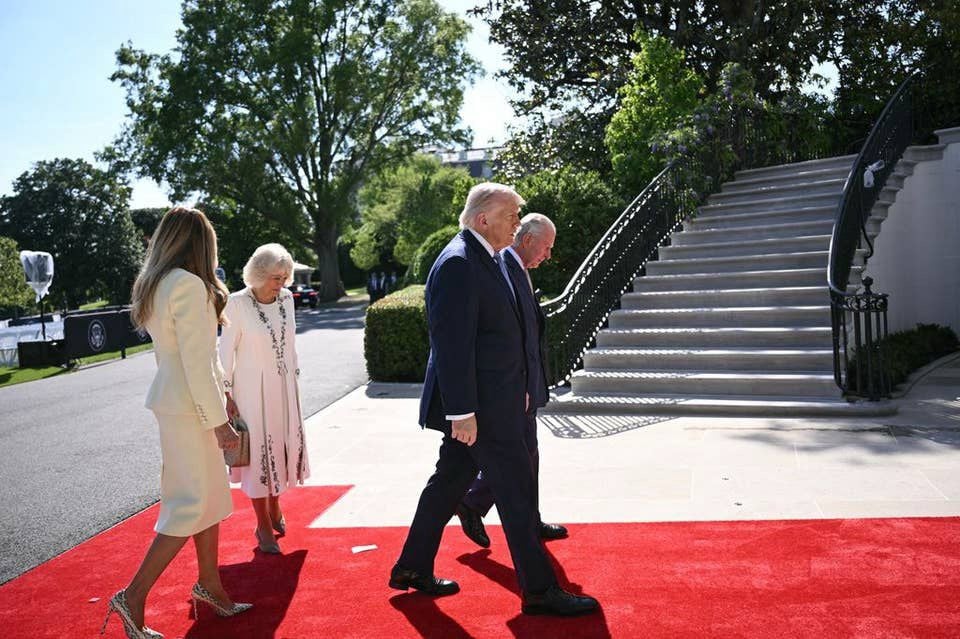
A ceremonial welcome finally happened at the White House as Donald Trump and Melania Trump greeted King Charles and Queen Camilla at the South Portico.
The royal tour coincides with celebrations of America’s 250th anniversary an occasion rooted in the nation’s independence from Britain.
Both the leaders and their spouses gathered for tea, seated together over a carefully arranged spread that included finger sandwiches, cakes, and honey.
The first lady was wese into a butter-yellow outfit designed by Adam Lippes, while the Queen opted for an elegant white chiffon dress adorned with black beaded embroidery by Anna Valentine.
Newly released images show the King and Queen in conversation with the Trump’s standing before a striking painting that portrays the president in the aftermath of the July 2024 assassination attempt in Butler, Pennsylvania.
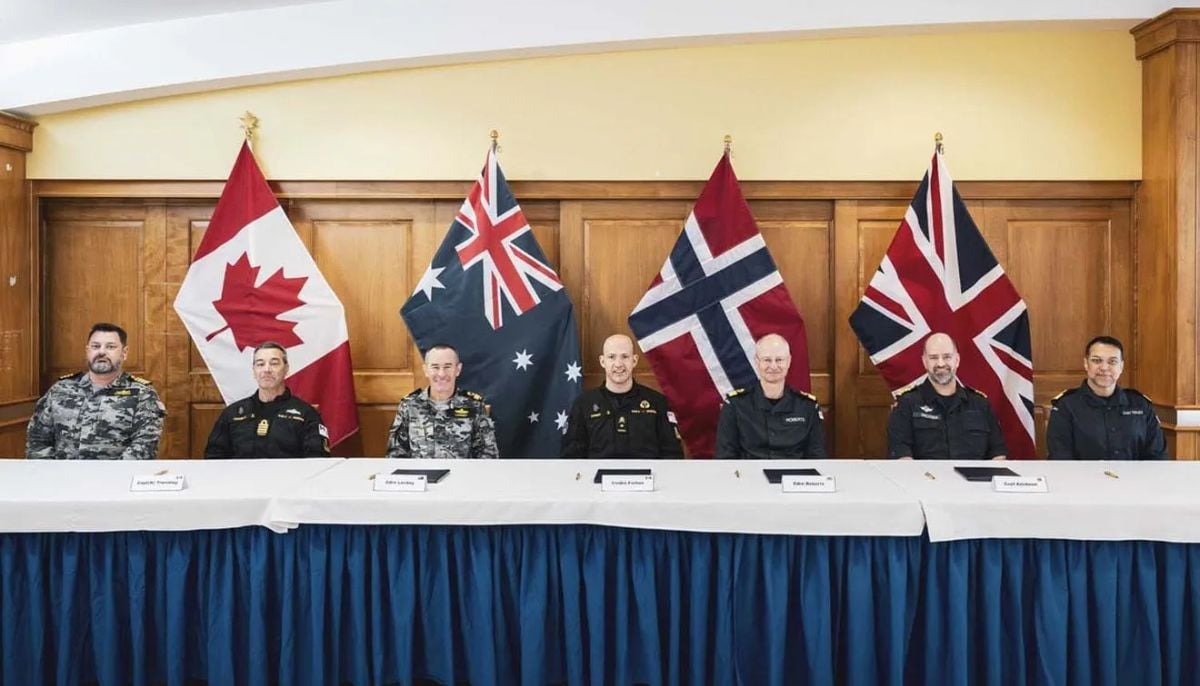
Norway has joined the Type 26 frigates project with Australia, Canada and the United Kingdom in a bid to enhance its naval capabilities and build a formidable naval force for any future conflict.
The Global Combat Ship User Group Charter, overseeing the development, construction and operation of frigates formally welcomed the Royal Norwegian Navy into the team.
The group is building 34 world-class warships for the four states, including Type 26 frigates for Norway and the UK, the River-class frigates for Canada and the Hunter-class frigates for Australia.
The multi-billion-dollar project was initiated in the early 2010s; however, it saw real progress in 2017, gaining momentum after the UK began construction.
Norway was invited to sign the charter around a year ago and now the Kingdom has officially joined the partnership.
Norway wants to procure five Type 26 frigates to enhance its navy’s defensive capabilities in the Atlantic and Europe’s northern flank. The country already operates eight identical warships.
Commodore Stephen Roberts, the Senior Responsible Owner for the UK Type 26 frigate programme, welcomed Norway to the program and said, “Our strategic maritime security partnership with allies is further strengthened by Norway’s inclusion in the wider GCS enterprise alongside our Canadian and Australian partners.”
Captain Alexander Erichsen, Chief Fleet Programme for the Royal Norwegian Navy said that enhanced security cooperation and aligning the designs of frigates will strengthen interoperability and collective security measures across allied navies.
Entertainment
Trump calls for Jimmy Kimmel to be fired over jokes made before White House Correspondents’ Dinner shooting
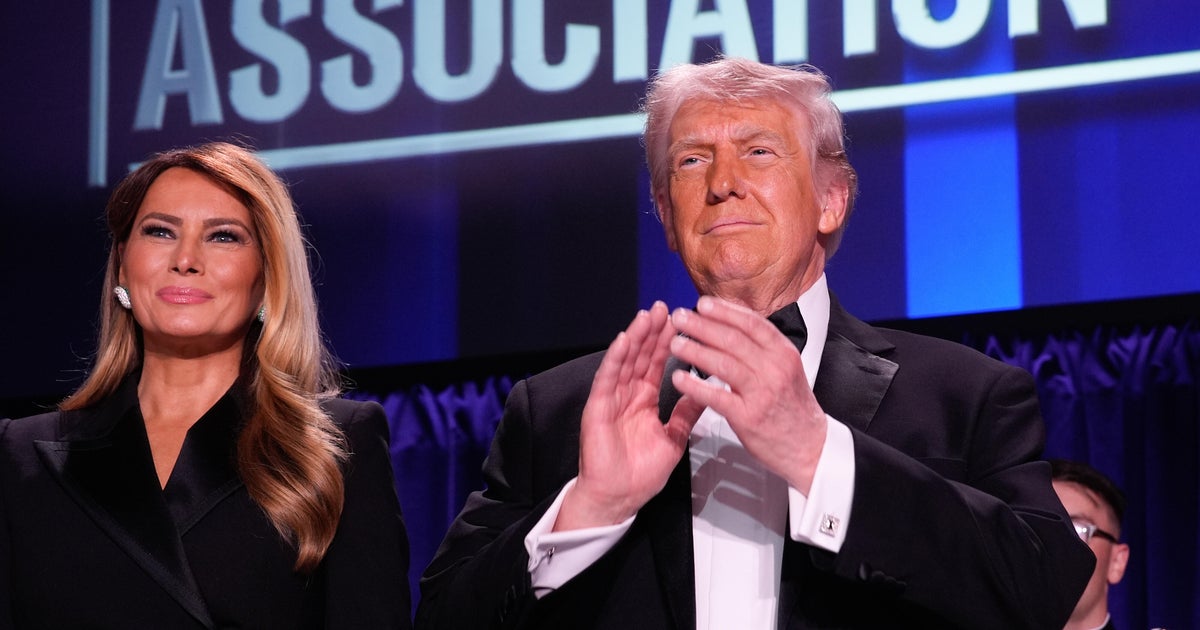
President Trump on Mondaycalled for comedian Jimmy Kimmel to be fired Monday over jokes the late-night host made days before the shooting at the White House Correspondents’ Dinner.
The president’s call for Kimmel’s firing came after hours after first lady Melania Trump, in a rare statement, called the jokes “hateful and violent rhetoric.”
On his show on Thursday, Kimmel said he was taking “a page from the Kid Rock alternative half-time show” and created a mock correspondents’ dinner, which has featured comedians in the past but this year was set to feature mentalist Oz Pearlman. In the skit, Kimmel referred to Melania Trump as having a “glow like an expectant widow.”
Mr. Trump called the joke a “call to violence.”
“I appreciate that so many people are incensed by Kimmel’s despicable call to violence, and normally would not be responsive to anything that he said but, this is something far beyond the pale,” the president wrote on Truth Social on Monday. “Jimmy Kimmel should be immediately fired by Disney and ABC.”
The first lady had said that ABC should “take a stand” against Kimmel.
“Kimmel’s hateful and violent rhetoric is intended to divide our country. His monologue about my family isn’t comedy- his words are corrosive and deepens the political sickness within America,” Melania Trump posted on social media. “People like Kimmel shouldn’t have the opportunity to enter our homes each evening to spread hate. A coward, Kimmel hides behind ABC because he knows the network will keep running cover to protect him.”
Melania Trump was sitting next to Mr. Trump on Saturday at the correspondents’ dinner when gunshots rang out and they were evacuated from the ballroom. No one was injured and the suspected gunman, Cole Allen, was tackled and taken into custody. He is set to appear in federal court on Monday.
CBS News has reached out to ABC for comment.
Kimmel was pulled from the air for several nights in September after being criticized by conservatives, including Mr. Trump, for his remarks in the aftermath of the Charlie Kirk assassination. Kimmel had said that America “hit some new lows over the weekend with the MAGA gang trying to characterize this kid who murdered Charlie Kirk as anything other than one of them, and doing everything they can to score political points from it.”
Kimmel did not issue a blanket apology for the remarks, but he did say he could see how they were offensive to some. When he returned to the air on Sept. 23, he said it was “not my intention to blame any specific group for the actions of what was obviously a deeply disturbed individual,” referring to the alleged gunman, who is in custody pending trial.


‘I had £20,000 stolen and had to fight a 13-month fraud reporting rule to get it back’

King Charles and the Trumps unite at White House for a historic tea meeting

This M5 MacBook Air Discount Has Renewed My Faith in Cheap Laptops for 2026

-

 Sports1 week ago
NCAA men’s gymnastics championship: All-time winners list
-

 Sports1 week ago
WWE WrestleMania 42 Night 2: Live match results and analysis
-

 Fashion1 week ago
UK’s Sosandar returns to profitability amid robust FY26 performance
-

 Politics7 days ago
UK’s Starmer seeks to deflect blame over Mandelson appointment
-
 Entertainment1 week ago
Lee Anderson, Zarah Sultana kicked out of UK Parliament for calling PM ‘liar’
-
 Business1 week ago
How Trump’s psychedelics executive order could unlock stalled cannabis reform
-
 Business1 week ago
No fuel shortage: Govt assures 100% domestic LPG, PNG, CNG supply amid Hormuz energy crunch – The Times of India
-

 Sports1 week ago
Quetta Gladiators opt to bowl after winning toss against Peshawar Zalmi in PSL 11 clash