

Business
Trump calls for Congress to enact 10% credit card interest rate cap; bank stocks rise


President Donald Trump on Wednesday urged U.S. lawmakers to pass legislation to limit credit card rates to 10%, following his social media post this month ordering banks to voluntarily lower their rates.
“I’m asking Congress to cap credit card interest rates at 10% for one year, and this will help millions of Americans save for a home,” Trump said from the World Economic Forum in Davos, Switzerland.
“They charge Americans interest rates of 28%, 30%, 31%, 32%,” Trump said. “Whatever happened to usury?”
Shares of banks climbed after the comments. The KBW Bank Index rose 2.2% in morning trading. Capital One, which relies on cards for most of its revenue, advanced 1.9%.
Among the options that the Trump administration had for applying pressure to American banks over card rates, the legislative path may be the least threatening to the industry. Sens. Josh Hawley, R-Mo., and Bernie Sanders, I-Vt., introduced a bill last year that would limit card APRs at 10% for five years, but that proposal has stalled in Congress.
Analysts including Sanjay Sakhrani of KBW have said it is unlikely that a card bill will have enough bipartisan support to become law. Lawmakers from Trump’s own Republican Party, including House Speaker Mike Johnson, have expressed caution when it comes to card price controls.
“If this is the path, the odds of implementation are low,” Sakhrani said in an interview. “There is a lot of Republican leadership that opposes the idea” and other industries, including airlines and retailers, would be hurt by the policy.
It’s unclear whether pressure from Trump — who holds massive sway among GOP lawmakers — will improve the plan’s chances of passing.
Breaking ‘the law?’
The episode may show the limits of Trump’s ability to cajole the financial industry into voluntarily giving up billions of dollars in revenue to support his election year affordability push.
After Trump’s Jan. 9 Truth Social post on the rate cap, banks said on earnings conference calls that such a limit would have unintended consequences, including that lenders would simply cancel accounts for many card customers, especially those with lower credit scores.
The president told reporters that lenders who didn’t comply on rates will be “in violation of the law,” but behind closed doors, bankers countered that they were already compliant with the law.
Privately, bankers and their lobbyists told CNBC they hoped to fend off the president’s request, given the difficulty of passing legislation.
Several large credit card lenders contacted by CNBC on Tuesday said they had made no changes to their interest rates, but they all declined to be identified. KBW’s Sakhrani said he wasn’t aware of any major card player that cut its rates.
On Wednesday, JPMorgan Chase CEO Jamie Dimon told a Davos audience that the U.S. government should test out the rate cap in just two states, Vermont and Massachusetts. Those are the home states of Sanders and Democratic Sen. Elizabeth Warren, who have both championed interest rate caps.
Doing so would teach “a real lesson” to those in favor of price controls, Dimon said.
“It would be an economic disaster,” Dimon said. “In the worst case, you’d have a drastic reduction of the credit card business” for 80% of Americans, he said.




Business
Top stocks to buy today: Stock recommendations for April 24, 2026 – check list – The Times of India

Stock market recommendations: Bharat Electronics, and Colgate-Palmolive (India) have been recommended as the top stocks to buy today (April 24, 2026) by Bajaj Broking Research. Take a look at the target prices and expected returns:Bharat ElectronicsBuy in the range of ₹ 440.00-450.00
The stock is in structural up trend forming higher high and higher low in all time frame signaling strength and continuation of the uptrend. The entire up move of the last 8 months is in a rising channel as can be seen in the chart highlighting sustained demand at an elevated level.On the smaller time frame, the stock is at the cusp of generating a breakout above the bullish Flag like formation as post a sharp up move in the first 3 weeks of April the stock went into a consolidation phase in the last four sessions. It is seen resuming up move and is at the cusp of generating a breakout above the bullish Flag formation highlighting continuation of the up move and offers fresh entry opportunity.We expect the stock to extend the up move and head towards 495 levels in the coming months being the confluence of the 123.6% external retracement of the previous decline 473 – 400 and the upper band of the rising channel of the last 8 months.Colgate-Palmolive (India)Buy in the range of 2120-2160
The share price of Colgate-Palmolive has generated a breakout above bullish Flag pattern signaling continuation of the up move and offers fresh entry opportunity.We expect the stock to head higher towards 2330 levels in the coming months being the measuring implication of the bullish flag breakout.The daily 14 periods RSI is in buy mode thus supports the positive bias in the stock.(Disclaimer: Recommendations and views on the stock market, other asset classes or personal finance management tips given by experts are their own. These opinions do not represent the views of The Times of India)
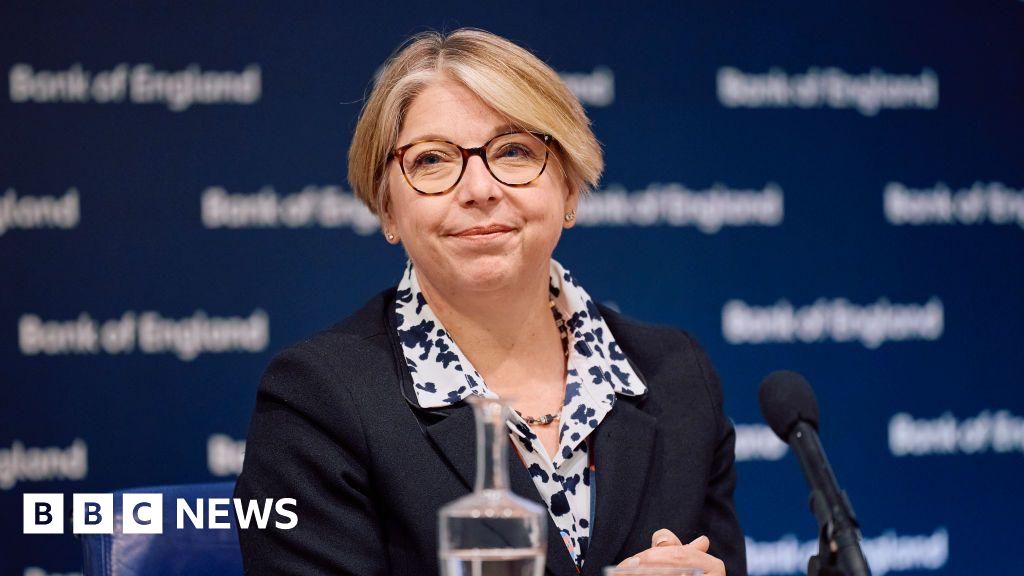
It is unusual for a senior figure at the Bank to be so forthright on market movements.
Source link

Consumer confidence has fallen for the third consecutive month amid household “jitters” over rapid price rises, figures show.
GfK’s long-running consumer confidence index fell four points to minus 25 in April, following falls of two points and three points in March and February respectively.
The deepening concern was driven by perceptions of the UK economy, with a six-point slide in confidence for the next 12 months to minus 43, its lowest level since February 2023.
Confidence in personal finances over the coming year fell five points to minus four – one point lower than this time last year.
The major purchase index – an indicator of confidence in buying big ticket items – held steady, albeit at minus 18 but one point better than last April.
The only measure to improve was the savings index – often an indication that households are concerned about their finances and looking to build contingency funds – which is up five points to 32.
Neil Bellamy, consumer insights director at GfK, said: “Consumers really do have the jitters now.
“It is a year since we last saw a monthly drop of this size, and we have to go back to October 2023 to find the last time consumer confidence was lower.
“Everyone is grappling with rapid price rises, especially at the fuel pumps, which are taking a dent out of household budgets, and people know further price hikes are coming.
“Consumer confidence is deteriorating sharply, with fuel prices and threats of more energy price increases acting as constant reminders of inflation.
“While the Gulf crisis is intensifying pressures, much of the current strain reflects earlier domestic cost increases.
“How long can all this disruption and pain continue?”


Former Giants co-owner Steve Tisch seen in team’s draft room

UK’s clothing exports down 7.6% to $293 mn in Jan-Feb
Top stocks to buy today: Stock recommendations for April 24, 2026 – check list – The Times of India

-

 Fashion1 week ago
France’s LVMH Q1 revenue falls 6%, shows resilience amid Iran war
-

 Entertainment1 week ago
Is Claude down? Here’s why users are seeing errors
-

 Sports1 week ago
PSL 11: Peshawar Zalmi win toss, opt to field first against Quetta Gladiators
-

 Tech1 week ago
The Deepfake Nudes Crisis in Schools Is Much Worse Than You Thought
-
 Business1 week ago
Standard Life buys rival in £2b deal to create savings giant
-

 Tech1 week ago
CYBERUK ’26: UK lagging on legal protections for cyber pros | Computer Weekly
-

 Fashion1 week ago
Raymond unveils luxury Chairman’s Collection Store in Mumbai
-
 Business1 week ago
PepsiCo earnings beat estimates as North American food business improves