Sports
How NFL players prepare for the coldest games of the year
(Editor’s note: This story was originally published on Jan. 15, 2026, ahead of the NFC and AFC divisional round games.)
A FEW HOURS before kickoff of the Jan. 20, 2008, NFC Championship Game between the Giants and Packers in frigid Green Bay, around 10 New York players did what they always do: took a walk around the field.
They were bundled up, with temperatures falling to minus 1 with a minus 23 wind chill. Their vaporized breath filled the air; the cold snapped at their faces.
Suddenly, they were slapped with another cold reality: No player from Green Bay was on the field.
“They knew a little more than we did,” former Giants punter Jeff Feagles said. “That’s when I knew it was going to be super, super cold.”
The severity of the cold didn’t surprise the Giants players. They read the weather reports. They brought extra clothing and toe and hand warmers. They brought the usual halftime refreshments appropriate for cold weather — broth and hot chocolate.
But it wasn’t enough early on. During pregame warmups, despite wearing gloves for the first time in his 21-year career, Feagles, who also served as the holder for kicker Lawrence Tynes, said his hands and feet were so cold that when it was time for him to take some practice kicks he caught one snap and opted not to kick. He said it was the only time in his career that he did not punt a ball in warmups.
“I was freezing and didn’t want to put bad thoughts in my head,” said Feagles, whose hands would become important to the outcome. “I remember putting my hands underneath the sink with warm water and my hands just started to hurt.
“I’m like, ‘Oh, God, this is ridiculous.'”
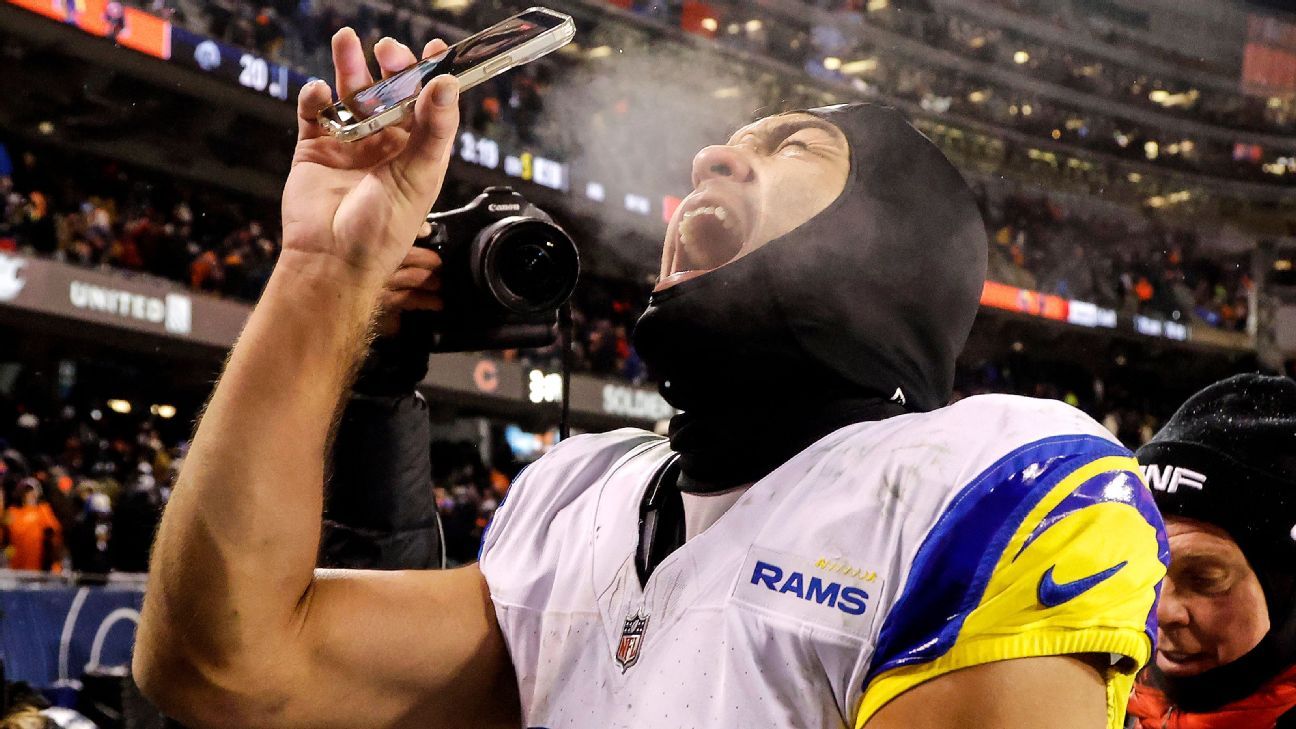
While not as severe as what Feagles & Co. experienced, frigid weather took center stage in the Bears‘ 20-17 overtime loss to the Los Angeles Rams in Sunday’s NFC divisional round game in Chicago, where the temperature for the 6:30 p.m. ET kickoff was 19 degrees, with a wind chill that dipped to around minus-4.
Tested out the @RamsNFL cayenne pepper to beat the cold strategy today since it’s negative one zillion in Chicago … and it really works??? pic.twitter.com/WydTLsLmii
— Kalyn Kahler (@kalynkahler) January 23, 2026
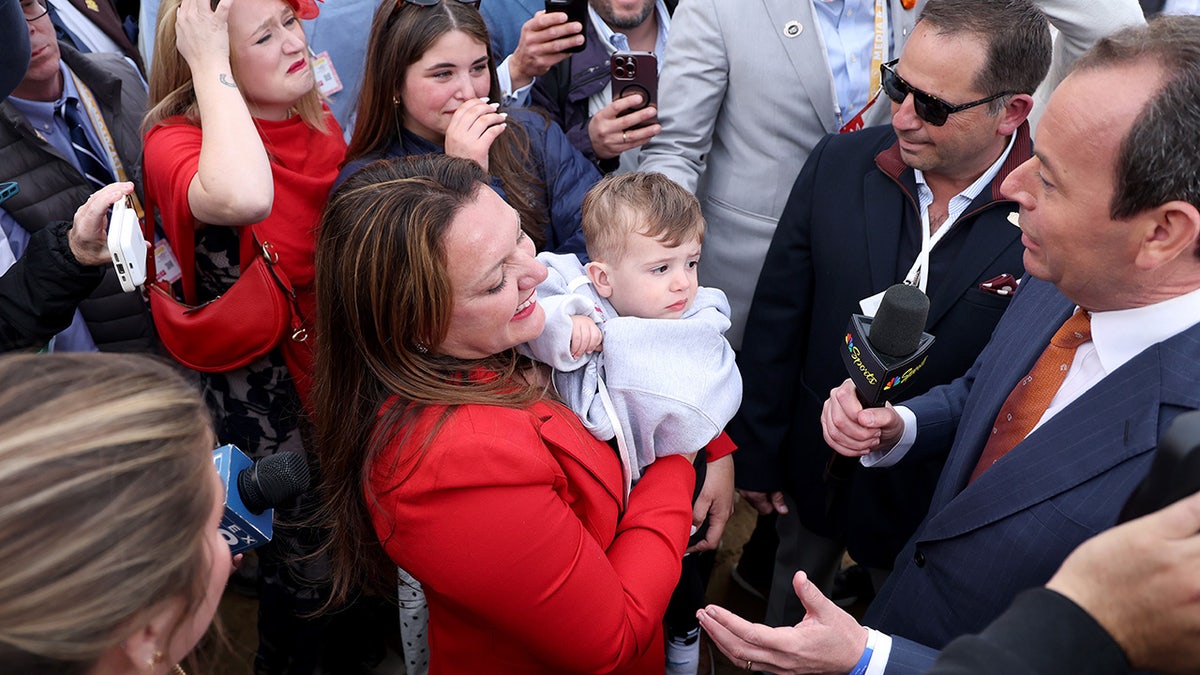
More than a dozen current and former NFL players told ESPN that preparing to play in below-freezing temperatures is a challenge that comes with many considerations and strategies. Players know they must be physically prepared, with some — such as Tom Brady — wearing scuba suits to fend off the cold, while others, like some players in the Rams’ game at Chicago, resorted to applying Cayenne pepper to their feet.
The Rams won’t need the pepper trick Sunday when they travel to face the Seahawks in Seattle, where the temps are expected to be in the low 40s. The AFC title game between the New England Patriots and Broncos in Denver, however, is expected to have a temp around 20 with wind chills around 15.
There’s also mental prep. Players hunt for signs the weather is affecting an opponent in order to gain a psychological or on-field advantage. Others, such as Von Miller, play mind games to convince themselves that others have played in worse conditions.
Other hurdles include frozen fingers getting jammed and numb hands changing the way offensive linemen approach their blocking assignments. Even the simple act of drinking water becomes a difficult task. On a more serious note is the risk of frostbite, which Dolphins defensive lineman Zach Sieler and former Seahawks safety Kam Chancellor said they’ve both suffered during games.
How well players navigate the frigid conditions can impact the outcome of games. That’s especially true for teams and players unaccustomed to the cold. According to ESPN Research, teams from warm climates are 3-12 in the past 10 postseasons when the temperature is 32 degrees or lower, with Houston‘s wild-card win at Pittsburgh on Monday representing the most recent such contest.
Although players differ on their approach, many agree there is one thing that can warm their bodies instantly: winning.
That’s what Feagles remembers most about the game at Lambeau.
In overtime, the Giants’ ticket to Super Bowl XLII rested on a 47-yard Tynes field goal attempt. Tynes trotted out, and Feagles, with his tackified receiver gloves on, prepped to hold.
“It was a high snap, and I was able to get it down. I knew once he hit it he had the distance because I could tell the sound of it. It started out right, but I knew it was coming back right to left,” Feagles said of the successful kick, which gave the Giants a 23-20 victory. “Then Lawrence left me hanging there and ran right into the locker room. I guess he just wanted the warmth.
“I’ll tell you one thing, I did not feel an ounce of cold after the game was over.”
LEAVE IT TO Brady to come up with a unique way to combat the cold. New England‘s divisional round game against the Tennessee Titans on Jan. 10, 2004, was considered the coldest game in Pats franchise history — 4 degrees at kickoff; a wind chill of minus 10.
Brady, who went 35-8 in games when the temperature at kickoff was 32 degrees or less, knew what he was doing. He told ESPN’s Mike Reiss in 2017 that the suit “insulates you from the cold. It keeps the wind from penetrating, and it really doesn’t limit movement too much.”
If it worked for Brady, then it must be worth trying. Stafford said he wore one when he played for Detroit in cold weather games. The Lions played in a dome but visited Green Bay and Chicago every year.
“I’ve worn it quite a few times since I’ve been here,” said Stafford, who joined the Rams in 2021. “It keeps you warmer. That’s how it affects me. It’s not skintight or anything like that.”
His coach, Sean McVay, is a proponent of it as well.
“Yeah, I throw on a damn scuba suit underneath,” McVay said last month, reminiscing about a Week 16 game at the New York Jets, where the wind chill was 6 degrees. “I got that trick from Matthew. I said, ‘This thing is awfully snug, but it is nice and warm.’ I don’t do much. My mom always gets on me about not wearing a hat because my little ears and my hands get so frozen.”
But that doesn’t mean everyone swears by the garb. Quarterback Marcus Mariota wore one while playing for the Titans during a game at the Kansas City Chiefs in the 2017 postseason — a suggestion from former Brady teammate Matt Cassell. It was one of two pieces of equipment that failed Mariota that day.
“I was somewhat warm with it, but I just felt like it was kind of restricting as a thrower,” Mariota said. “I remember I usually wear a visor, and pregame had to take the visor off. From my breath, it froze the eye shield, and it was crazy. They couldn’t even get it off my helmet until we got back into the locker room.”
Former Chiefs offensive lineman Nick Allegretti, currently with the Washington Commanders, played in a handful of cold weather games each season in Kansas City. They practiced 20 to 30 days in cold weather and had a chance to learn how to dress for such conditions.
“I still go sleeveless just because I don’t like playing with sleeves,” said Allegretti, who was a reserve lineman in the Chiefs’ 2024 playoff win over Miami. “I would do a scuba suit and then thermal [shirt], double socks, usually like a small thin winter glove under the gloves. … Obviously, it was much colder [vs. Miami], so I just amped it up a little bit.”
Edge rusher Von Miller played in Buffalo and Denver and said because of heated benches and insulated jackets available to players, he doesn’t feel the need to wear anything extra but a turtleneck.
“Practicing in the cold is different than playing in the cold,” Miller said. “Playing in the cold, we got everything that we need. You got hand warmers. You got shoe warmers. The bench is heated.
“And then you’re only going out [on the field] for five minutes. Then you’re coming back to the sideline and putting the jackets on, getting bundled up on the sideline. Games are not as bad as people think.”
San Francisco receiver Kendrick Bourne, who played in cold weather in college at Eastern Washington, has his system down: long sleeves, maybe tights. But only one layer.
“You don’t need to wear a ton because I’m going to get hot and it could slow me down. You can always heat up. You can’t cool down,” he said. “Once you’re in the game and adrenaline [is] going, you’re good. But the hardest part is pregame and early on.”
Guard Andrew Wylie, who played in cold weather games with the Chiefs from 2017 to 2022, uses the heaters on the bench to keep his hands warm before taking the field. He also sticks his cleats in front of them to “stay hot for a minute or two.”
“Just keeping feelings in the body parts that have the most contact,” he said.
Bears safety Kevin Byard III played in extreme cold weather twice, also at Kansas City. As a rookie in 2016, the temperature was 1 degree; four years later, the Titans played at Arrowhead in the AFC Championship Game when it was 17 degrees at kickoff.
“The whole lead-up — warmups, when you’re kind of just standing around — that’s the annoying part,” Byard said. “The TV timeouts, I stand over by the heaters and when there’s 30 seconds left in the TV timeout, I run back on the field and get the playcall. During the game, you’re thinking about the game and what the offense is doing. Both teams have to play in the same weather.”
Another strategy: the halftime drink. Some players drink bone or chicken broth. Allegretti preferred hot chocolate.
With mini marshmallows?
“Oh, yeah. You have to,” he said. “But halftime is never shorter than during a cold game because you finally get warm and they’re like, ‘Two minutes!’ It’s a challenge.”
And then there’s the this: Before playing Chicago on Sunday, some Rams players even turned to the spice cabinet, applying Cayenne pepper on their feet. Nose tackle Poona Ford said he watched a teammate do it when he played in Seattle from 2018-22 and figured he’d “give it a shot.” The Rams’ equipment staff brought the Cayenne with them.
“The first time I did it, I put too much on them and my feet was too hot,” Ford said.
But he’s stuck with the spice.
Cornerback Cobie Durant thought Ford was kidding with him at first. Then he tried it himself. They have heaters on the sideline to warm their feet and toe warmers to stick in their cleats. But sprinkling a little spice helped Sunday.
“It just keeps your feet warm. I don’t know how to explain it. It just works,” Ford said.
There was one tactic, however, Ford said he once heard that his teammates couldn’t believe.
“I heard a story of somebody peeing on themselves to stay warm, but that only worked for so long,” Ford said. “[My teammates] thought I was crazy.”
BOBBY WAGNER WITNESSED a first while warming up for a Jan. 10, 2016, NFC wild-card game in Minnesota.
The Vikings were in between stadiums, transitioning from the Metrodome, their home from 1982 to 2013, to their current digs, U.S. Bank Stadium, which opened for the 2016 season. In the meantime, they played at the University of Minnesota’s open-air TCF Bank Stadium, which is where Wagner and his Seahawks teammates encountered temperatures that plummeted to minus 6 degrees with a minus 25 wind chill.
“I saw somebody sneeze, and I saw it turning to ice before it hit their lip,” Wagner said.
Chancellor said he noticed black marks on his fingertips and fingernails a couple of days after that Seattle win. After being diagnosed by doctors, he was told he had frostbite.
“I had never had frostbite,” Chancellor told ESPN. “I was like, ‘Wait, are y’all going to cut my fingers off?'”
When it turns bitterly cold, players must account for even the smallest things, such as squirting water into their mouths. Miller knows why, thanks to Denver’s 2013 divisional round overtime loss to Baltimore.
“If you don’t get [the water] all in your mouth, and it spills on your mustache or your shirt, it icicled up,” Miller said. “[Ravens guard] Marshall Yonda had a beard, and he had icicles in his beard, and he had icicles on his chest.”
There are also painful scenes: Giants coach Tom Coughlin’s bright red face in that 2008 game.
“I thought he was going to permanently have skin damage,” Feagles said.
Not even the equipment is safe. In that 2024 game between the Chiefs and Dolphins — played in conditions Dolphins left tackle Terron Armstead called “borderline inhumane” — a Miami defender hit Chiefs’ quarterback Patrick Mahomes hard enough to knock a piece of the plastic shell from his helmet, perhaps made brittle by the cold. He needed a replacement, which the club had on the sideline.
There was just one problem.
“It was like frozen,” Mahomes said after the game.
The cold often exacts a painful toll on linemen.
“The worst part is a jammed finger. You jam a finger in the cold, and it’s shattered,” Allegretti said. “You make it through a cold game without jamming a finger, that’s rare. They’re just more rigid.”
The hardest part for them, Wylie said, is keeping their hands warm. He said in some games he couldn’t feel the defender with his hands.
“You’re just patty-caking,” he said. “You’re not striking and grabbing. You’ve got to have feeling in your hands.”
Even penmanship suffers. In 2007, in his third year with Green Bay as a backup, quarterback Aaron Rodgers experienced his coldest game when the Packers played at Chicago on Dec. 23. Wind gusts of 22 miles an hour turned a 16-degree day into a minus 22 wind chill.
“I was trying to chart plays, and my fingers were shaking so bad, in the second quarter I said I can’t even write at this point,” Rodgers said.
THE COLD ALSO presents opportunities to gain an advantage on opponents if you know what to look for.
Offensive linemen “don’t like to grab as much,” Miller said. “They don’t like to shoot their hands as much. I like it as cold as possible. So long as the field’s not frozen, as long as it’s not snowing, it’s good. Once it starts snowing, it evens out because guys can wrestle you and you can’t hit those [rush] angles that you want.”
Before the Chiefs’ 26-7 win over Miami in 2024, Allegretti said he knew during pregame warmups that Miami was struggling.
“On the jumbotron, you saw them staring at the clock, like huddled up, waiting ’til the last second to jog out,” Allegretti said. “It was almost a 100-degree change for them. Mentally, I don’t know how they were going to find a way to win that game because it was frozen. Guys who are tough normally were frozen.”
Wagner said they looked for little signs against Minnesota.
“I saw a guy come out and he was just no sleeves,” Wagner said. “And then the next drive he had a [ski] mask on and we was like, ‘OK, we got him.’ I’m like, mentally we got him, so we already won. … It’s all mental.”
Such was the case for Jimmie Giles and the Tampa Bay Buccaneers in a December 1985 game later dubbed the “Snow Bowl.” Giles, a tight end, and the Bucs left a city that was 81 degrees on Dec. 1 for a game at Green Bay, where that same day the wind chill was zero degrees.
They prepared for the cold as much as a team coming from warm weather could. But they were greeted by even worse weather than anticipated: 14 inches of snow fell before, during and after the game.
They lost 21-0.
“We had no concept it was going to be like that,” said Giles, who added that the Bucs had no heated benches and their jackets lacked insulation. “You have to come up for air and take your helmet off to get the snow out of your face. I’d never seen that much snow before.
“We just weren’t prepared.”
Miller likes to convince himself that he has an advantage — physically and mentally — over his opponent on a frozen turf. That’s one of the reasons he loved playing in Buffalo from 2022 to 2024, citing the cold and lack of five-star amenities contributing to a tougher experience for opponents.
Could he tell his opponent didn’t want to be there?
“Not really, but in my head that’s the game that I play,” he said. “Maybe it’s me saying I don’t want to be here. But I’m convincing myself that it’s actually them feeling like they don’t want to be there.”
Mind games don’t always work.
Rams edge rusher Jared Verse was born in Ohio, attended high school in Pennsylvania and spent three years of his college career in upstate New York at Albany. He thought he was friends with the cold. Before that Jets game last month, he went shirtless in warmups.
“Not happening again,” he said. “That was the coldest game I’ve ever played in my life. At Albany, we used to practice in the snow, so that’s saying a lot.
“It was freezing that game. We were on the sideline, and me and [Byron Young] looked at each other and I was like, ‘I’m not doing that again.'”
Players say winning ultimately cures the cold. Feagles instantly heated up as he gleefully ran off the field in Green Bay. But there are no such warming effects on the losing sideline.
Bourne realized that truth in the 2021 wild-card game after his Patriots lost to the Bills in 7-degree weather.
“It makes it even colder,” Bourne said.
Nick Wagoner, Sarah Barshop, Courtney Cronin, Brooke Pryor and Rob Demovsky contributed to this story.
Sports
Who’s next at UNC? Potential candidates to replace Hubert Davis, their priorities
Hubert Davis is out at North Carolina, just five days after the Tar Heels’ catastrophic collapse against VCU. After entering the season on the hot seat, a signature win against Duke in February and a 24-8 record seemed to have kept Davis safe from dismissal after entering the NCAA tournament as a 6-seed.
Especially given the season-ending injury to star forward Caleb Wilson, all signs pointed to Davis returning to Chapel Hill regardless of what happened in March. Then the Tar Heels blew a 19-point lead to 11-seed VCU in the second half of their first-round game, with Davis mismanaging down the stretch of regulation.
Davis’ head coaching tenure at Carolina comes to an end after five seasons, a stretch that included a national championship game appearance in 2022 and an ACC regular-season championship in 2024.
So what’s next in Chapel Hill?
When Roy Williams retired in 2021, the job was perceived to be among the best in the entire sport. After an up-and-down half decade, the question is whether that’s still the case. Industry sources still consider Carolina to be the same elite, blue-blood destination it was when Davis took the helm in 2021.
“I think there’s plenty of money if they want,” one source told ESPN. “The history, the tradition, the facilities. No doubt it’s still [at the top]. It’s North Carolina.”
“It’s still Carolina, man,” another said. “It’s the brand.”
The position comes with challenges this time, though. Longtime athletic director Bubba Cunningham is leaving his post this summer and will be succeeded by former NASCAR executive Steve Newmark. The department also faces the question of whether to renovate the Dean Smith Center or move the basketball team elsewhere. And with Bill Belichick in town, the football program is getting its fair share of resources — and attention.
Let’s take a look at which candidates could be on the radar, plus what they would be inheriting.
Who is up next?
When Williams retired, North Carolina opted to keep it in the family, promoting Davis to the top job after nine seasons on Williams’ staff. Davis, of course, also played for the program under Dean Smith from 1988 to 1992. It’s unlikely the school will select another former Tar Heel this time.
Expect Carolina to take some massive swings.
Billy Donovan is expected to be at or near the top of the list. The Chicago Bulls head coach hasn’t coached at the college level since 2015, spending the past 11 years with the Oklahoma City Thunder (2015-20) and Bulls (since 2020). He has rejected opportunities to return to college before, but he could be more open to the idea now that the Bulls are going to miss the playoffs. He led Florida to two national championships (2006 and 2007) and took the Gators to two additional Final Fours (2000 and 2014). One complicating issue with Donovan would be timing; the Bulls’ last game is April 12.
Brad Stevens also wouldn’t be a surprising target. The Boston Celtics president of operations hasn’t coached at the college level since 2013, or in any capacity since 2021. But he led Butler to back-to-back national title game appearances in 2010 and 2011, then made seven trips to the NBA playoffs at the helm of the Celtics before transitioning into the front office in 2021.
Industry insiders also believe the best of the best in the college ranks are likely on the short list: Arizona’s Tommy Lloyd, Michigan’s Dusty May, Iowa State’s TJ. Otzelberger, Florida’s Todd Golden and Alabama’s Nate Oats. Texas Tech’s Grant McCasland could also be in the conversation. The Tar Heels could even gauge interest from UConn’s Dan Hurley, like Kentucky (and the Lakers) did a couple of years ago.
A few of those coaches come with massive buyouts: Lloyd’s would be between $9 million and $12 million, depending on timing; Golden’s would cost $16 million; and Oats’ would cost $18 million until April 1, when it drops to $10 million. McCasland’s buyout is just north of $10 million as well. May and Otzelberger have smaller buyouts, with May’s believed to be around $7 million and Otzelberger’s around $4 million.
What this means for incoming recruits
No. 9 Dylan Mingo
No. 21 Maximo Adams
NR Malloy Smith
North Carolina has a top-10 recruiting class, headlined by a pair of top-25 recruits: Mingo and Adams. Mingo gave Davis a top-15 recruit for the fourth straight recruiting class, and he is one of the class’s elite backcourt players when healthy. Mingo’s recruitment didn’t end until February, with the Tar Heels ultimately beating out Baylor for his commitment. Could he rethink his decision? It’s worth noting that his brother, Kayden Mingo, was one of the best freshman guards in the Big Ten at Penn State this season.
Adams surged as a breakout player last spring and summer, rising all the way into the top 25 of the rankings. He also considered Michigan State, Kentucky and Texas before picking Carolina. His brother, Marcus Adams Jr., recently announced he planned to enter the transfer portal following the firing of Arizona State coach Bobby Hurley.
Retention priorities
Henri Veesaar
Jarin Stevenson
Derek Dixon
Keeping Veesaar in Chapel Hill was at the top of Davis’ priority list entering the offseason, and the second-team All-ACC selection will undoubtedly be the focus of whichever coach replaces Davis. Veesaar was terrific after transferring from Arizona, averaging 17.0 points and 8.7 rebounds before ending the season with a 26-point, 10-rebound performance against VCU. He was a projected second-round pick in ESPN’s most recent NBA mock draft and would likely have lucrative offers from elsewhere if he opts to reenter the transfer portal when it opens April 7.
Stevenson became a real factor for Carolina down the stretch of the season, especially following Wilson’s injury, averaging 10.7 points and 6.4 boards per game over his final 10 games. He should also be a priority for the new coach, second to Veesaar.
On the perimeter, expect Dixon to be a focus, regardless of what Mingo opts to do with his commitment. Dixon showed plenty of promise as a freshman, especially late in the season: 17 points vs. Duke, 16 points vs. Clemson, 11 points and six assists vs. VCU.
Other potential returnees include Luka Bogavac, Jonathan Powell and Jaydon Young.
Sports
USMNT players speak up about what Pochettino the coach is like
At first glance, descriptions of what it’s like to play for U.S. men’s national team manager Mauricio Pochettino are littered with contradictions. Among the words players use are “intense,” “passionate” and “demanding” — but those are almost immediately followed by words seemingly at the other end of the emotional spectrum. “Family” comes up, as does “likeable,” even “loving.”
In many respects, that is the nature of coaching. When trying to extract the best out of a group of players, the emotions and approaches cover a broad spectrum, and can vary widely across individuals, or even from minute to minute. There are times to drop the hammer, and other moments to put an arm around the shoulder. And despite a coach’s best efforts, they can’t reach every player. That doesn’t mean they stop trying.
Based on recent evidence, Pochettino’s approach appears to be working. The USMNT is unbeaten in its last five games heading into friendly matches against Belgium on March 28 and Portugal three days later.
Granted, this string of positive results consisted of all friendlies, but with the U.S. co-hosting this summer’s World Cup, and no World Cup qualifying slog to go through, the USMNT can only play the teams that are in front of them. To that end, the team’s trajectory is decidedly upward, and that is down in large part to Pochettino’s approach — and the players’ receptiveness to his methods.
“Above all, he just expects intensity, and he expects mentality — he expects energy,” midfielder Cristian Roldan told ESPN when asked about Pochettino. “I think those things are really contagious. So he’s very likable. He’ll hug you. He’ll have a conversation with you. He’ll yell at you. But in the end, it comes from a good place. And as long as you bring what he wants, you’re going to be in a good spot.”
– The latest USMNT Big Board: Who’s in and who’s out?
– Ranked: Every USMNT World Cup kit from 1990 to 2026
– USWNT transfer grades: Every American move assessed
A USMNT culture that’s “more strict”
It was clear when Pochettino was hired back in September 2024 that things needed to change within the USMNT. Like the dark side of the force, negative habits and emotions had slowly crept into the U.S. team.
Some of this was down to having two back-to-back interim managers over six months — Anthony Hudson and B.J. Callaghan — to start 2023, and then opting to rehire Gregg Berhalter to the post full-time later that year. The progress the USMNT achieved during the 2022 cycle wasn’t replicated in Berhalter’s second go-round. Complacency set in and the project stagnated.
So, when Pochettino came on board as an objective outsider, he made it clear that there would be no guaranteed starters. Players would have to earn their spots, regardless of their perceived status within the team or from the broader public. Everyone would be held accountable.
“No one’s special — when you come into camp, you’re a U.S. men’s national team player, you deserve to be here,” midfielder Tyler Adams told ESPN. “[He’ll] make sure that you get better each time you come into camp and feel worthy. But at the same time, it’s required from you to put what you’re going to get in and get out of it. So, every single camp guys have learned and adjusted to that.
“But I don’t want to say that he’s changed the culture — I’d say he’s brought the culture out of us. I think we’ve had that in us and it was just took someone to bring it out of us, and I think he’s done a great job of that.”
And how did Pochettino do that exactly? To hear Adams tell it, the approach — at least a high level — was simple.
“I think he’s a little bit more strict in certain things,” Adams said. “I think that the standards that were set were clear from day one. You don’t break my trust. You don’t break the rules. You don’t disrespect one another or you won’t be around.”
The adjustment did take some time. The performances at the 2025 Concacaf Nations League finals, when the USMNT fell in consecutive matches to Panama and Canada, were horrid. It led to multiple former USMNT players questioning the heart and desire of the current generation.
Pochettino responded by not calling up certain players — most notably Weston McKennie — for subsequent camps. Due in part to injuries to the likes of Antonee Robinson and Folarin Balogun, but also what Pochettino called “football decisions,” the coach took a decidedly youthful squad to the 2025 Gold Cup. Twelve players on the roster had five or fewer international appearances.
While the U.S. ultimately lost to Mexico in the Gold Cup final, the message was clear: Pochettino would call up the best team that worked together, not the best 26 players.
But the Argentine also showed patience. Every player encounters a coaching change at some point in their career. With Pochettino, there was an understanding that a different coach from a very different background would take some getting used to.
“You understand that there’s going to be nuances and there’s going to be growing pains that come along with [a coaching change], but you also understand you have to have grace with one another,” U.S. defender Mark McKenzie told ESPN. “So I think that was the biggest thing, is recognizing that it’s not going to be perfect in the first moments. They started to learn us the same way we need to learn them.”
2:58
Is Mauricio Pochettino is under pressure to deliver success for USMNT at the World Cup?
The ‘Futbol Americas’ crew to debate if Mauricio Pochettino is under serious pressure to deliver success for the USMNT as they prepare to host the 2026 FIFA World Cup.
Those growing pains now appear to have been overcome. But with less than 100 days until the World Cup, and just one more international window taking place, tensions are bound to rise as the May date for the World Cup roster announcement approaches. With Pochettino’s no-favorites approach, will fear be the predominant emotion during the run-up to the tournament?
“I’ll be very honest: I think some guys will probably feel scared,” veteran U.S. defender Tim Ream told ESPN. “I think that’s a realistic and a real feeling that some guys will have.
“The approach that you have to take is, well, your spot is never guaranteed no matter where you are. Someone’s always younger, faster, better, trying to take your spot. So how do you hold that off as long as possible? Well, you just keep working. That’s the way the sport is.”
The USMNT’s intense “die for the shirt” approach
Pochettino’s culture of accountability bleeds into the training sessions, sometimes literally. For the players, the moment the boots go on, there is nothing else in the world that matters. Perfection isn’t expected but maximum effort, intensity and laser-like focus are. Training sessions become a test of mental endurance as much they are about physical fortitude.
“What’s the most important thing? That pass is the most important thing. That touch is the most important thing,” said Ream. “That piece of communication — whether you’re telling somebody left, right, go this way, go that way — is the most important thing. And so when I [refer to] how demanding he is, he wants all of that.
“In every single training session, as soon as you cross the line, your focus is nowhere but there. And that can be draining. Yeah — it can be very draining.”
Pochettino expects that intensity to permeate every aspect of the training session. That includes reaching a level of physicality that replicates game-like situations. Yes, the tackles do fly in at times.
“Whether it’s 11-v-11, a small sided game, yeah, I’m going to get stuck in,” said McKenzie. “I’m not doing it to the point where it’s going to harm or hurt my teammate. But at the same time, I’m not just going to jump over his foot just because — I’m going to make sure I’m getting stuck in.
“I want to win this tackle. I want to win this duel. So there’s ways to go about it without harming each other, but you want to have that competitive nature, competitive edge in trainings because that’s the way we want to play the game.”
The thinking behind this approach is that it raises the level of the entire group.
“You have guys that don’t normally want to get into tackles, getting into tackles,” said Roldan. “Those are the things that are contagious.”
1:38
Is Pulisic right to hit back at USMNT criticism?
The Futbol Americans crew discuss if Christian Pulisic was correct to hit back criticism aimed at him from some USMNT legends including Landon Donovan.
In terms of the cadence of the sessions, they are intended to condition the players to what they will see in the game. Every drill, tactical session, gym workout or activation has a purpose behind it. The philosophy is that there is no wasted energy.
“[The drills] all form this tunnel to make sure that the final product on the field is the way we want it to look or the way that we are training for it to look,” said McKenzie.
It results in training sessions that end with the right level of utter exhaustion and the desire to want to do it again the next day. Pochettino’s cultural reset has had the desired effect.
“I think the overarching culture is that guys would die for the shirt right now,” goalkeeper Matt Turner told ESPN
No longer “inmates running the asylum”
In the previous cycle, Berhalter appointed a so-called leadership council of select players, which the coaching staff used to take the temperature on certain issues. Under Pochettino there’s no such structure in place. Multiple players said the current setup makes for better dialogue where anyone can speak up.
“It becomes almost like the inmates running the asylum,” said Ream about the past leadership council. “So, it almost becomes where there’s a group of players who have a lot of the say, and then there’s a group who are a little bit hesitant. So they’re like, ‘Well, he chose those guys. I can’t say anything.’
“Now it’s like, ‘Guys, we’re all in this together.’ Okay, yes, I’m the oldest. I’m not the loudest. So, Tyler [Adams], Chris [Richards], you want to be the loudest? Be the loudest, bro. It’s no problem. And it’s a give-and-take, but everybody feels empowered to speak and say whatever they feel — equal and in a positive way.”
While Pochettino prefers to leave players alone when they are with their clubs, Ream feels the level of communication now among players, even away from camp, is greater than it has ever been. The number of group chats has increased to the point that he says he “can’t keep up with them all.”
Make no mistake. Pochettino is still the boss, and hasn’t hesitated to publicly come down on players when he feels they’ve strayed out of their lane.
The USMNT’s biggest star and face of the team, Christian Pulisic, said he “didn’t understand” Pochettino’s decision to not include him in a pair of pre-Gold Cup friendlies, even as Pulisic said he was skipping the Gold Cup. Pochettino declared that as manager, he was “not a mannequin” and would make the decisions he felt were best for the team, regardless of what Pulisic thought.
Pochettino also later criticized midfielder Timothy Weah for a seemingly innocuous comment about how high World Cup ticket prices were, stating that it’s not a player’s “duty” to discuss such topics, insisting he focus purely on his game.
Whether that’s just Pochettino keeping his players in line and focused on the task ahead, or the hints of possible discontent, remain to be seen. The ultimate judge of Pochettino’s approach will be the results of this summer’s World Cup. But for now, there appears to be total buy-in from the players — at least from what they are saying publicly.
Pochettino getting “personal” with players
Communication is arguably the most important aspect of coaching. It enables a manager to impart knowledge, build trust, increase motivation and improve performance. Entire locker rooms can be lost by saying the wrong thing at the wrong time.
Pochettino’s communication style can be divided into two parts: the way he speaks on the field, and away from it.
On the field during training, timing is everything. Knowing when to keep quiet is just as important as knowing what to say. In moments of struggle, there is benefit to seeing if players can solve problems on their own. Stop things too often, and the rhythm of the training session gets mangled.
“I think [Pochettino] does a really good job of knowing when to step in in a training session and say, ‘Guys, we have to have more. You need more. I need more from you’ or ‘We need to do this as a group better,'” said Ream. “And I think when you interject immediately when you see something wrong, I think if you do it too much, it loses its value.
“Mauricio, he has this innate ability to know when is the right time to step in and when is the right time to just watch and see.”
That dovetails well with what happens in matches. It’s a players’ game, and once the whistle blows, the manager only has so much influence. Oftentimes, it’s up to the players to figure out things on the fly. McKenzie likens it to an assembly line.
“You’re going through the training sessions and you’re building that framework of the car, but the driver is going to be the one who ultimately is able to get the most out of that vehicle,” he said. “And that’s pretty much the picture I’d say of what Mauricio wants to do.”
Away from the training ground is when Pochettino does some of his most important work. It’s where he can sidle up to a player, get details about their background and what’s happening with their home life. It’s a moment to communicate with a gentler touch rather than the heightened, competitive emotions of a game or practice. It gives Pochettino more data on what buttons to push with which players and when.
“He’s wanting to have personal conversations. He’s wanting to know about your family,” Ream said. “He’s wanting to understand and know everybody on a much deeper connected level. Guys were a little bit uneasy about that kind of thing early on and now they understand how he operates and how he works.”
Turner added: “When you have a coach that is intense, demanding, and loving, you take the time to get to know him, and you see what works communication-wise and what doesn’t work. Then, you try to learn a lot about each other and just open up.”
The result is greater sense of connectedness throughout the team. During the previous cycle, there was lots of talk about the brotherhood that existed among the players. Now the word that gets used is “family” — one that includes not just players, but the entire staff as well.
“That family side of it is huge,” McKenzie said, “and it creates an environment where the door is open for guys to have conversations and feel like you’re part of the team, whether it’s your first camp or whether it’s your 51st camp.”
That closeness is preparing both the players and staff for the gauntlet of the World Cup, which starts for the USMNT on June 12 against Paraguay. If the USMNT performs as they hope, they could end up spending two months together in the intense pressure cooker of the sport’s biggest tournament, from the time their camp begins in May to the World Cup final on July 19.
“It has to be that way because you’re all trying to do something incredible,” said Ream. “You’re all going to a tournament that’s going to be the biggest one in the history of this sport. You have to have those feelings. You have to be that close. You have to be that tight-knit. You have to feel all of that, because without that it doesn’t matter.”
Sports
Ranking each NHL team’s top prospect: Hagens, Iginla, more
Every NHL franchise has a prospect pool. Some, usually the perennial contenders, have thinner prospect pools because of a lack of draft capital. However, each team usually has one guy about whom the organization and fan base are excited.
Some of those players are polished and NHL-ready, producing at high rates in other leagues, while others are early in their development with a high ceiling. Each represents hope, a possible answer to a roster hole, or, in the best-case scenario, a foundational piece of a Stanley Cup contender.
To be considered a prospect for this list, the player must be under 23 and not an established NHL player. Generally, that means fewer than 50 games in the current season. But in the case of someone like Michael Misa, who has played only 30 games but very clearly has an established roster spot with the Sharks, those players would be ineligible for this list.
Here is a look at the top prospect in each team’s pipeline, what they do well, where they need to grow, and a look at reasonable NHL timelines and expectations.


Roger McQueen, F
2025-26 team: Providence (NCAA)
McQueen is a 6-foot-5, right-shot center with the handling skill of a first-line playmaker, a sniper’s release, and defensive instincts among the best outside the NHL. The toolkit is undeniable and has been tested against tougher competition this season at Providence College.
McQueen attacks with a wonderful skating posture, full-wingspan dekes that bait defenders before beating them, cross-body wristers, and passes through layers to teammates in space. All of this from a player who throws hits on the forecheck and battles with genuine aggression.
After a wonderful freshman season at Providence, McQueen earned Hockey East Rookie of the Year honors with 11 goals and 16 assists, and he continued to demonstrate projectable two-way play. If McQueen stays healthy and continues to develop the way he has in his first college season, he has a real chance to be a star in the NHL.
0:29
Roger Mcqueen finds the back of the net

James Hagens, F
2025-26 team: Boston College (NCAA)
The Bruins have their center of the future in the Boston College sophomore.
He plays at high pace and has a game built on elite processing and edge work. He floats through neutral-zone traffic with effortless crossovers and weight shifts, creating time and space. He’s a dual-threat offensive center, with high-end playmaking and a shot that has taken a real step forward this season, doubling his goal output and winning the Hockey East scoring title.
What separates Hagens from other undersized pivots is the professional detail in his two-way game. He patrols passing lanes, anticipates breakouts and supports the puck in positions that allow for quick-strike offense without cheating the defensive side.
Hagen’s motor, intelligence and ability to drive play project him as a legitimate top-six center in Boston as soon as next season. The B’s signed him to an AHL deal Monday.

Radim Mrtka, D
2025-26 team: Seattle Thunderbirds (WHL)
Mrtka is going to fit perfectly on Buffalo’s talented blue line.
The physical profile alone is rare, standing 6-foot-6, 216 pounds, and being a right-handed shot. But what makes Mrtka special is how well he moves around the ice with that frame. His first step is quick, his pivots are clean and he escapes pressure with poise. Defensively, his reach allows him to funnel attackers wide, kill plays in transition and maneuver with high-end awareness. With the puck, Mrtka is a transporter, joining the rush with purpose and threading passes to the middle of the ice off retrievals.
The offensive ceiling has room to grow, but the defensive floor is already high. Buffalo will have a minutes-eating defender with a combination of size, skating, and high-end defensive capability who will likely be ready for the 2027-28 season. As a righty, Mrtka also helps an imbalanced Buffalo blue line and should allow either Owen Power or Rasmus Dahlin to move back to their natural side.

Zayne Parekh, D
2025-26 team: Calgary Flames/Wranglers (NHL/AHL)
This was a lost season for Parekh, and he would benefit from playing a major role in the AHL, where he can run the power play. His offensive toolkit remains arguably the best among all defensive prospects in the game.
Parekh’s entire game is built on deception, four-way mobility, elite edgework, head fakes, look-offs and a release that catches goalies by surprise. The professional reality has been harder, which isn’t surprising for a 19-year-old defenseman. Parekh has yet to find his offensive game in the NHL while playing sheltered minutes on Calgary’s third pairing, a far cry from the dynamic offensive creator who put up 107 points in the OHL. The offensive instincts have yet to translate, with Parekh giving up more high-danger chances than he creates.
The IIHF World Junior Championship offered a reminder of his capabilities, with five goals and 13 points, shattering the Canadian record for points by a defenseman at the event. The ceiling remains a power-play quarterback and top-four dynamo who can be a game changer. But the Flames cannot afford to keep mismanaging his development the way they did this season.

Bradly Nadeau, F
2025-26 team: Chicago Wolves (AHL)
Nadeau is built to be a scoring winger at the NHL level. His shot is a combination of power, deception and accuracy, combined with a release that goalies have trouble picking up. That shot has seen him average more than half a goal per game in his first two seasons in the AHL with the Chicago Wolves.
Adding to his threatening offensive profile is his high-end awareness. He picks apart defensive structures, scans the ice and exploits passing lanes. His two-way game has taken a massive developmental step forward, and he has become a consistent penalty killer and is trusted in high-leverage situations.
At 5-foot-10, 172 pounds, the physical limitations see him lose board battles and get muscled off 50/50 pucks, and he lacks net-front presence against bigger defenders.
The good news is Carolina doesn’t need him to be a power forward; they need a difference-making goal scorer. If he continues to develop his two-way game and find the open space in the offensive zone, Nadeau projects as a top-six scoring winger — exactly the type of player the Hurricanes need — as soon as the 2026 playoffs.

Anton Frondell, F
2025-26 team: Djurgardens IF (SHL)
Get ready, Chicago!
Frondell is built like a tank and shoots like a sniper. At 6-foot-1, 205 pounds, he is physically mature for his age (he’ll turn 19 in May), leaning on opponents, throwing reverse hits, and winning position at the net front with a physicality that will serve him well in the NHL.
He’s a quality off-puck player, which has only improved with his experience in the SHL, Sweden’s top league. He reads the play, pushes pace to beat defensemen to rebounds and deflections and gets himself to the quiet areas, where he only needs a moment to beat goaltenders. His shot is versatile, blending power, accuracy, a good one-timer from the flank and impressive hand-eye coordination for tip-ins.
Frondell scored 20 goals for Djurgårdens IF in 43 SHL games as an 18-year-old, which is fourth all time for a player at that age. After a dominant performance at the World Juniors, he made significant development strides offensively, scoring 10 goals in his final 18 SHL games and showing improved playmaking ability.
He played mostly on the wing, which is the best spot for him to start in the NHL while his skating develops. Frondell is not particularly explosive or elusive, and adding that will give him more space to make plays. At his floor, he’s a top-six scoring winger and power-play weapon who rides shotgun with Connor Bedard. At his ceiling, he’s a force up the middle of the ice in Chicago’s top six and takes the rebuild to the next level.

Gavin Brindley, F
2025-26 team: Colorado Avalanche (NHL)
Brindley is 5-foot-9 — and plays like he doesn’t know it or doesn’t care.
His motor is relentless, his forechecking eliminates space, and his defensive engagement is the kind that makes coaches trust a 21-year-old in an NHL lineup. The offensive numbers don’t jump off the page, but the impact transcends the scoresheet. Brindley is exceptional at pressuring puck carriers and winning races to loose pucks, and he is reliable in his own end. His skating and agility are strengths because of quick feet and good edge work, and he has the ability to make plays under duress in tight spaces.
He’s unlikely to become a top-six driver, but the tenacity, two-way detail, and compete level project a middle-six, all-situations forward who elevates every line on which he plays. In a league that increasingly values players who do the hard things right, Brindley’s game translates, though he’ll likely be a fourth-line player at least to start.

Sergei Ivanov, G
2025-26 team: SKA St. Petersburg (KHL)
We could’ve picked a number of Blue Jackets prospects here, but it is rare that a 21-year-old goaltender puts up the numbers that Ivanov is registering in the KHL. He has exceptional post-to-post movement, a quick glove hand and an unconventional “just make the save” competitiveness blended with modern technique.
After posting a .911 save percentage with HC Sochi last season, Ivanov moved to SKA St. Petersburg this season and has taken another step. He posted a .927 save percentage and three shutouts across 29 games and was named to the KHL All-Star Game at 21 years old.
Ivanov studies Igor Shesterkin and Sergei Bobrovsky, and if you’re going to emulate goaltenders, there are certainly worse ones than those two.
Blue Jackets GM Don Waddell said the organization believes Ivanov is ready, and he confirmed his intention to come to North America when his KHL contract expires after this season. His size (6-foot) will always invite skepticism, but Ivanov covers ground he has no business reaching via anticipation and sheer will. He has genuine starting potential in the NHL once he adjusts to the North American game.

Emil Hemming, F
2025-26 team: Barrie Colts (OHL)
At 6-foot-1, 200 pounds, Hemming plays a prototypical power forward’s game. He drives the net, absorbs contact, links up with linemates on breakouts and backchecks with purpose rather than going through the motions.
Hemming’s shot is high-end, with the ability to fire off either leg and the ability to shoot through defenders’ triangles off the rush. Dallas gave him a brief AHL look to open the season before reassigning him to Barrie, where the OHL version of Hemming reemerged immediately. He produced 62 points in 45 games, with his shot volume jumping to nearly four shots per game and his playmaking emerging as a secondary weapon.
The Stars’ pipeline is thin due to limited draft capital, which makes Hemming’s development all the more critical. He represents their best chance at a homegrown middle-six forward if the shot translates as expected and the two-way habits keep maturing.

Nate Danielson, F
2025-26 team: Grand Rapids Griffins (AHL)
Danielson is one of the better skaters among center prospects in the NHL pipeline. He possesses a long, smooth stride with good edgework and agility.
His two-way play is the foundation of his game. He competes hard everywhere, supports the play, reads passing lanes and has been effective on both the penalty kill and power play with the Grand Rapids Griffins in the AHL. Danielson is a smart, connective playmaker rather than a dynamic one, and his impact tends to show up in the details of his game.
The offensive ceiling is the biggest question, but his statistical profile projects him to become a middle-six forward whose two-way play sees him play tough matchups. There’s a path to becoming a legitimate second-line center who anchors both ends of the ice and makes the players around him better. He has the skating ability to become an offensive play driver.

Isaac Howard, F
2025-26 team: Bakersfield Condors (AHL)
The Hobey Baker winner parlayed his dominant college career into a trade from Tampa Bay to Edmonton, where the Oilers’ development staff immediately identified what makes him special: the ability to find soft ice in the offensive zone and finish.
Howard has split this season between the NHL (five points in 28 games) and AHL Bakersfield (38 points in 36 games), showing the kind of shoot-first mentality and transitional intelligence that suggest he can be a 30-goal scorer with the Oilers. Howard’s skating helps him get to spots to shoot, especially with his ability to deftly stickhandle at full speed.
The concern is defensive responsibility, but if Howard can show he deserves a role next to Connor McDavid or Leon Draisaitl, he will be buoyed by their play. His puck skills are high-end, his creativity at speed is rare, and his willingness to try things other players wouldn’t attempt makes him a dynamic offensive weapon. The adjustment to NHL pace is ongoing, but he’s exactly the type of winger who should be given time to develop chemistry with one of Edmonton’s elite centers.

Jack Devine, F
2025-26 team: Charlotte Checkers (AHL)
Devine has spent his entire development arc proving that the teams who drafted 220 players ahead of him in 2022 missed something.
At the University of Denver, he was one of the most productive players in college hockey, winning the national scoring title as a senior with 57 points in 44 games, and he helped the Pioneers win two NCAA championships. His ability to adapt to his linemates has translated seamlessly to pro hockey, immediately becoming an impact AHL scorer with the Charlotte Checkers.
He drives play with tenacious playmaking, keeps plays alive and wins battles. He hangs on to pucks between checks, blending effort with above-average skill and has developed into a dual-threat passer and shooter. His motor is relentless, his reads are high-end and his speed has improved to complement his game.
At 5-foot-10, he’s still not viewed as a surefire NHL forward, but his feel for the game and hockey sense are there. It is more likely than not that Devine figures it out and becomes an everyday NHL contributor who outworks opponents and makes a difference in the bottom six.

Carter George, G
2025-26 team: Sault Ste. Marie Greyhounds (OHL)
George is the most intriguing goaltending prospect in the Kings’ pipeline, and that’s saying something for an organization that has three netminders with legitimate NHL futures.
At 6-foot-1, George doesn’t have the imposing frame of a modern goaltender, but his crease movement is quick and poised, his positioning is mature and his puckhandling is as confident as that of any goalie prospect in the game. He reads the play early, tracks through traffic easily and fills the net with an upright stance that maximizes his coverage.
After making his AHL debut with the Ontario Reign last spring — winning both of his starts, including a shutout — George returned to the OHL this season and posted a .908 save percentage across 45 games including four shutouts and 23 wins. George’s anticipation, lateral quickness and ability to launch breakouts with stretch passes project him as a starting-caliber goaltender at the NHL level. He and Hampton Slukynsky could become L.A.’s future tandem in goal.

Charlie Stramel, F
2025-26 team: Michigan State (NCAA)
Stramel is a 6-foot-3, 216-pound center who has finally started looking like the player Minnesota believed it was drafting 21st in 2023.
After a quiet first two college seasons, Stramel broke out as a junior after transferring to Michigan State. He’s physically imposing and plays like it, punishing forecheckers, containing cycles and using his reach to cut off skating lanes and read passing options. The skating stride remains awkward, and his first step lacks explosiveness, but his top-end speed is legitimate and his balance through contact is a real asset at his size.
The offensive development has been the revelation. Soft hands, improved playmaking vision and the confidence to hold on to pucks and attack make him a scoring threat. Stramel’s floor is a reliable bottom-six center who wins battles and defends well. His ceiling, if the offensive game keeps trending, is a second-line, two-way force, something Minnesota really needs.
0:23
Charlie Stramel scores goal

Michael Hage, F
2025-26 team: Michigan (NCAA)
Simply put, Hage is a well-rounded player without a glaring flaw. His sophomore season at Michigan has been spectacular; he’s among the NCAA scoring leaders and firmly in the Hobey Baker conversation.
He’s a dynamic rush attacker who drives the middle and processes the play at lightning-quick pace, allowing him to make give-and-go plays at full speed to leave defenders scrambling. Hage reads defensive coverage, creates passing lanes and delivers pucks in prime scoring areas. A dual threat, his shot fools goaltenders with a toe drag snap that catches them on their heels. He’s creative, intelligent and has no significant weaknesses, and he’s capable of elevating a line.
Hage’s two-way game has matured; he’s a 200-foot player with the strength to win battles against tough competition. His development trajectory suggests he may be ready to play behind Nick Suzuki as a potential second-line center as soon as next season. If Hage signs his entry-level deal this spring, he could step in and play meaningful playoff minutes, too.

Brady Martin, F
2025-26 team: Sault Ste. Marie Greyhounds (OHL)
Martin is a one-of-a-kind blend of manipulative playmaking and bone-crushing physicality, a forward who can fake a pass on his first touch, thread a no-look feed across the slot, and then immediately try to send someone through the boards. His motor is relentless, his hits are punishing and devastatingly timed and his forechecking generates more turnovers than many forwards I can remember.
Nashville saw enough to give him an NHL look out of training camp, and he was impactful for Canada at the World Juniors. Unfortunately, he has struggled since returning from injury in February.
The skating needs to take another step, but the intelligence, physicality and scoring tools are all top-six caliber. If his speed and pace of play improve, Martin becomes a unique power playmaker who elevates when the games matter most. If it doesn’t, he’s still a middle-six player whom teams will hate to play against.

Anton Silayev, D
2025-26 team: Torpedo Nizhny Novgorod (KHL)
Silayev is a physical anomaly. At 6-foot-7, 207 pounds, he’s a mammoth right-shot defenseman with the skating ability to cross the neutral zone in three or four strides; he moves like a player who has no right to be that big and that fluid simultaneously.
His defensive game is built on reach, aggression and an ability to close gaps, making opposing forwards feel like the ice is shrinking. His decisions with the puck are quick and sound. Becoming a shutdown defender who thrives in physical battles and denies space with suffocating range is the floor. The ceiling, if the offensive game develops, is a minutes-munching, top-four presence who can move pucks, kill plays and physically dominate.
Silayev’s KHL contract with Torpedo Nizhny Novgorod runs through May, at which point he’s expected to come to North America and be ready for NHL action next season.

Victor Eklund, F
2025-26 team: Djurgardens IF (SHL)
Eklund is the kind of prospect who people point to and say, “Size does not matter when the skill and motor are that good.”
At 5-foot-11, 170 pounds, he has no business winning board battles against men who outweigh him by 40 pounds, but he does so consistently by attacking their hands, getting underneath and leveraging his body to gain a positioning advantage. His forechecking is elite and is going to be a nightmare for every defenseman he plays against. The skating isn’t a standout tool on its own, but paired with that seemingly bottomless motor, it creates a pace that suffocates defenders and drives transition.
Playing full-time for Djurgårdens IF (the same team as the Blackhawks’ Frondell), he scored 24 points in 43 SHL games as a teenager. He has been on a tear of late and owns a statistical profile that lends very well to an NHL player. He’s not going to be an elite offensive creator in the NHL, but his vision below the goal line, his ability to turn steals off the forecheck into chances and his willingness to do everything the hard way will endear himself to any coach.
Eklund projects as a top-six winger who elevates every line he plays on. The Isles got a real good one 16th overall last summer, and there is a good chance other teams will regret passing on him.

Liam Greentree, F
2025-26 team: Windsor Spitfires (OHL)
Greentree solves problems with the puck on his stick. At 6-foot-3, 215 pounds, he has an NHL-ready frame and uses it to power through checks, protect possession and navigate traffic. He manipulates space off the rush with look-offs and give-and-goes, while forcing defenders and goalies to respect a high-end shot.
Greentree has been on a 14-goal, 25-point tear for the OHL’s Windsor Spitfires since being acquired by the Rangers as the centerpiece of the Artemi Panarin trade. He’s a crafty, powerful forward who racks up points through playmaking and finishing in equal measure.
His skating is the legitimate concern; his first step and acceleration need meaningful improvement to project as more than a middle-six contributor at the NHL level. The offensive intelligence, size and production profile suggest a player who will find ways to score even if the footspeed never becomes a strength. New York got a prospect with middle-six tools and a frame built for playoff hockey.

Carter Yakemchuk, D
2025-26 team: Belleville Senators (AHL)
Yakemchuk’s offensive instincts from the back end are rare, and he’s producing at a high-end rate on the Senators’ AHL squad (Belleville). He jumps into rushes aggressively, gets shots through from the point and has the power to score from range.
At 6-3, right-handed, with a booming point shot and dynamic puck skills, the power-play upside is clearly there. The majority of his growth has been on the defensive side, including improved gap control, better consistency in the corners, and a willingness to play within structure that Ottawa’s development staff has prioritized.
The forward skating is strong, but lateral and backward mobility remain hurdles to full-time NHL play. If the defensive details keep trending upward alongside the offensive firepower, Yakemchuk projects as a middle-pair defenseman who can anchor a power play and change games with his shot. Ottawa is rightfully being patient, and giving Yakemchuk a steady defensive partner when he steps into the NHL will help him.

Porter Martone, F
2025-26 team: Michigan State (NCAA)
Martone is one of the smartest prospects in an NHL pipeline. He constantly scans, anticipates defenders’ movements, manipulates coverage and delivers passes that are translatable to the NHL. His dual-threat shot is a violent power transfer through his entire body, and he also has the deception to rip a no-look short-side wrister that freezes goaltenders.
After moving to Michigan State, Martone performed well against bigger, stronger competition, and his skating continued to improve. Questions remain around pace of play and physical engagement, as he’s currently a soft-skill player in a power forward’s body.
But if his skating and willingness to use his powerful body continue to improve, at 6-3, 208 pounds, Philadelphia has a potential top-line winger and elite power-play weapon. Philadelphia is the perfect place for a power forward to thrive, and Martone has all the tools to be a dominant NHL winger.
0:41
Porter Martone finds the back of the net
Porter Martone scores goal

Will Horcoff, F
2025-26 team: Michigan (NCAA)
Horcoff towers over most everyone on the ice. At 6-5, 200 pounds, the son of longtime NHLer Shawn has an NHL frame, and he has developed offensively during his sophomore season at Michigan.
Horcoff’s defensive play is a real asset. He’s fueled by proactive reads, physical disruption and a backcheck that suffocates puck carriers with his range and positioning. The playmaking has emerged as a legitimate weapon, including one-touch passes, area feeds, deft wall plays and delays for teammates to jump into lanes.
His ability to be a play driver remains a question, largely related to his skating. His edge work needs work, and he can slow the game down too much when he’s hunting the perfect play. If the pace and mobility improve as the body fills out, Horcoff has the hockey sense, defensive detail and skill to become more than a bottom-six center. His ability to become a play driver and support the play will ultimately determine how high he plays in the lineup.

Igor Chernyshov, F
2025-26 team: San Jose Sharks/Barracuda (NHL/AHL)
Chernyshov’s combination of size, skating and skill makes him one of the more intriguing young wingers. At 6-2 with pro-caliber speed and high-end puck handling, he has been a reliable point producer at every level. With the Barracuda, he produced 33 points in 41 AHL games, and when San Jose recalled him, Chernyshov didn’t look out of place, posting 22 points in 31 NHL games while skating alongside Macklin Celebrini and Will Smith.
His playmaking is more refined than the power-forward archetype suggests. He sees the ice well, shows poise with the puck and is creative with his rush play. Chernyshov is a dynamic transition threat with the size, speed and skill to become a top-six winger who can score and facilitate.
San Jose’s rebuild has a centerpiece forward group forming, and Chernyshov looks like a core piece of it.

Jake O’Brien, F
2025-26 team: Brantford Bulldogs (OHL)
Passing is O’Brien’s first, second and third play, which is a major reason he is the owner of the most points in Brantford Bulldogs history. When he can’t find a lane, he creates one by shifting defenders or selling a shot fake before slipping a feed through multiple defenders. He passes through sticks, under skates, behind his own back, and spots teammates at the far post before anyone recognizes the threat.
He’s a forward who is likely to be a quarterback for an NHL power play because of his vision, deceptive releases and cross-slot passing. Back with Brantford this season as captain, O’Brien led the OHL in assists and scored 1.75 points per game, answering questions about whether he can drive a team on his own.
He needs to fill out his frame, but at 6-foot-2 and 177 pounds, the physical runway is enormous, and the playmaking ceiling makes the bet worthwhile. If the skating and strength develop alongside the creativity, Seattle has a top-line, play-driving center. At worst, O’Brien is a play-driving winger in the top six who will pile up the assists.

Justin Carbonneau, F
2025-26 team: Blainville-Boisbriand Armada (QMJHL)
The 6-foot-1 winger can fly while keeping tight control over the puck, slipping it around skates, under sticks and behind defenders. His scoring tools are elite, with an excellent release he can fire from uncomfortable positions, deceptive passing that draws multiple defenders before threading feeds through coverage and the off-puck instincts to time himself into pockets to catch-and-release.
The decision-making remains the primary area of development. When everything clicks, he looks like a first-line play driver; when it doesn’t, the turnovers multiply and his impact vanishes. Those turnovers will hold him back from earning trust at the NHL level right now. However, the tools, self-confidence and adaptability suggest the processing will catch up. Carbonneau’s ceiling is a first-line, dual-threat winger.

Conor Geekie, F
2025-26 team: Syracuse Crunch (AHL)
The younger brother of Boston’s Morgan Geekie, the 21-year-old is the most complete prospect in Tampa Bay’s system — and the foundation for whatever comes after the Golden Years.
At 6-4, his combination of size, reach, hands and offensive IQ is rare. He handles pucks through tight spaces, protects possession and is a dual-threat playmaker and shooter with a release that punishes goalies who cheat to his passing lanes.
Tampa Bay sent him to Syracuse this season with a specific prescription: play as the first-line center, on the top power play and the penalty kill. He has responded with 54 points in 40 AHL games.
The skating remains the primary development requirement. His stride is upright and lacks explosiveness out of turns; at the NHL level, that limits his ability to separate and win races he should win with that frame. But his defensive play is already strong, he tracks well in transition and takes good routes to the puck.
If the skating improves to even league-average level, Geekie has the toolkit of a 60-point, two-way center. If it doesn’t, he’s a bottom-six guy who can contribute offensively.

Ben Danford, D
2025-26 team: Brantford Bulldogs (OHL)
With the graduation of Easton Cowan, Danford reigns as the top Leafs prospect.
For all the talk about the Leafs needing to add some physicality and a mean streak to their lineup, Danford has no shortage of either. He delivers thunderous body checks, is reliable in the defensive zone, wins the majority of his puck battles and plays in key situations. His skating is slightly above average, allowing him to have good gap control and disrupt passes with a well-placed stick.
His offensive capabilities have grown over the past couple of seasons, beating the first layer of pressure and getting shots through. He’s unlikely to be an offensive producer in the NHL, as his strengths are suited to a shutdown role with heavy penalty-killing minutes. Danford makes a good first pass under pressure and has shown more patience.
His decision making and execution with the puck will determine whether he becomes a middle-pairing defender or a bottom-pair player.

Tij Iginla, F
2025-26 team: Kelowna Rockets (WHL)
Iginla is a tour de force and seems destined to become a top-six point producer in the NHL.
Through 47 WHL games this season, he led the league in points per game (1.93) while driving a Kelowna team preparing to host the Memorial Cup.
His shot is his calling card. It is quick and deceptive, and when combined with the ability to create his own time and space, it is a game changer. Iginla’s details are well-rounded. His wall game is high-end, and he wins the vast majority of puck battles. His habits away from the puck are an equal strength, with constant threat identification, an active stick and hard-nosed backchecking.
Simply put, he’s one of the best prospects outside the NHL. The dual-threat offensive ability, the compete level, and the rapidly improving all-around game project a player who can impact an NHL lineup in every situation and make impactful plays in the playoffs.
In Iginla, Utah has the type of player that many in the industry say “you win with.”

Braeden Cootes, F
2025-26 team: Prince Albert Raiders (WHL)
Cootes is a one-man forechecking machine who already looks like an NHL player at age 19. His motor and energy are undeniably elite. His feet never stop moving, and he makes plays while absorbing hits, which separates him from other prospects.
Vancouver believed enough to put him on their opening night roster this season, before sending him back to the WHL to develop. Now with Prince Albert after a midseason trade, Cootes is leading the Raiders in scoring and driving a Memorial Cup contender. His playmaking is above average and his rush game is dynamic. He dangles with his feet moving, attacks the middle and skates through back pressure.
Cootes’ defensive detail is already projectable, which is largely why he got to the NHL look to start the season. Vancouver — perhaps more than any other franchise — is starved for centers, and Cootes’ floor is a high-energy, third-line pivot. The ceiling is a matchup second-line center with 65-point upside. He’d benefit from a full AHL season, where he can further develop both sides of his game and adjust to the speed of professional hockey.

Trevor Connelly, F
2025-26 team: Henderson Silver Knights (AHL)
Connelly is a brilliantly skilled forward with the creativity and pace to score and make plays at the NHL level.
His skating is among the fastest and most agile outside of the NHL, making him a monster in transition. He has the ability to change direction at full speed, leaving defenders flat-footed. Combine that with quick hands, jaw-dropping deception and the ability to make difficult plays look easy, and the offensive toolkit is undeniable.
Connelly made his AHL debut with Henderson this season and quickly showed why Vegas believes in the top-six projection. The development path requires patience as his decision-making consistency needs to improve. When the processing catches up to the raw offensive tools, Connelly has the ceiling of a dynamic, top-six winger who makes everyone around him more dangerous.

Cole Hutson, D
2025-26 team: Boston University (NCAA)
The emergence of Cole Hutson is likely why the Capitals moved off John Carlson at the trade deadline — and the freshly signed 19-year-old scored his first NHL goal into an empty net last week.
His offensive creativity from the blue line is otherworldly and already impactful in the NHL. His edgework is elite; a combination of lateral slides, hesitation moves and the kind of confidence while carrying the puck that lets him walk the line and break defensive coverage.
In his sophomore season at Boston University, Hutson led the Terriers in scoring with 32 points in 35 games and averaged over 25 minutes of ice time per game, earning All-Hockey East first-team honors for a second consecutive season. The offensive toolkit projects him as a power-play quarterback and transition weapon. The defensive game will develop as he plays more in the NHL, including gap control, defending against the cycle and shoulder checking for threats.
Washington didn’t use the No. 43 pick in 2024 on him to be a shutdown defender; the Caps drafted him to be an offensive catalyst. If the defensive details sharpen, the offensive upside makes him a legitimate top-four option with game-breaking ability.
0:47
Cole Hutson lights the lamp
Cole Hutson tallies goal vs. Senators

Brayden Yager, F
2025-26 team: Manitoba Moose (AHL)
Yager is one of the smartest players at the AHL level. His shot is his offensive calling card, whether he’s ripping a wrister or loading up a one-timer; it’s NHL-caliber already.
Yager provides defensive value across all three zones, competes on retrievals, supports the play and does not cheat for offense. In his first professional season with Manitoba, he has earned middle-six center duties and time on both the power play and penalty kill. He is producing at a respectable clip while adjusting to the AHL’s pace and physicality. The hockey sense and puck skills are evident.
The areas for growth are strength and quickness. Yager still has time to develop on both sides of the puck, but the foundation of a middle-six secondary point producer who brings reliable two-way play is there. He is the kind of center Winnipeg can slide onto its third line once the physical tools catch up to the hockey IQ.
-
Fashion1 week agoSales at US apparel, clothing accessories stores up 4% YoY in Jan 2026
-
Business1 week agoPeloton is launching bikes and treadmills for gyms, accelerating commercial strategy
-
Tech1 week agoJustice Department Says Anthropic Can’t Be Trusted With Warfighting Systems
-
Fashion1 week agoTrump signs order to combat fraudulent ‘Made in America’ labels
-
Business1 week agoStocks and pound rise as US rate call approaches
-
Entertainment7 days agoVal Kilmer revived 1 year after death through AI
-
Sports1 week agoPCB files complaint over allowing Bangladesh to take review on penultimate ball – SUCH TV
-
Sports1 week agoMarch Madness 2026 – How to watch in SA, start time, schedule, TV channel for NCAA championship basketball tournament