

Tech
Nick Bostrom Has a Plan for Humanity’s ‘Big Retirement’

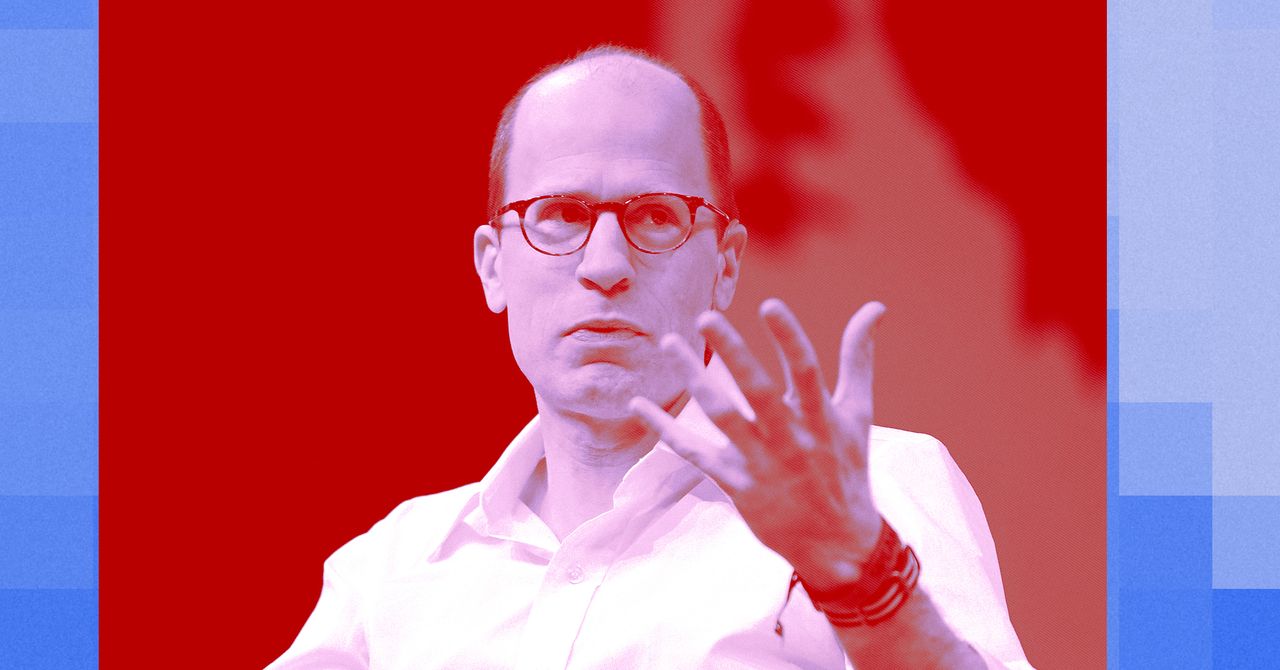
Philosopher Nick Bostrom recently posted a paper, where he postulated that a small chance of AI annihilating all humans might be worth the risk, because advanced AI might relieve humanity of “its universal death sentence.” That upbeat gamble is quite a leap from his previous dark musings on AI, which made him a doomer godfather. His 2014 book Superintelligence was an early examination of AI’s existential risk. One memorable thought experiment: An AI tasked with making paper clips winds up destroying humanity because all those resource-needy people are an impediment to paper clip production. His more recent book, Deep Utopia, reflects a shift in his focus. Bostrom, who leads Oxford’s Future of Humanity Institute, dwells on the “solved world” that comes if we get AI right.
STEVEN LEVY: Deep Utopia is more optimistic than your previous book. What changed for you?
NICK BOSTROM: I call myself a fretful optimist. I am very excited about the potential for radically improving human life and unlocking possibilities for our civilization. That’s consistent with the real possibility of things going wrong.
You wrote a paper with a striking argument: Since we’re all going to die anyway, the worst that can happen with AI is that we die sooner. But if AI works out, it might extend our lives, maybe indefinitely.
That paper explicitly looks at only one aspect of this. In any given academic paper, you can’t address life, the universe, and the meaning of everything. So let’s just look at this little issue and try to nail that down.
That isn’t a little issue.
I guess I’ve been irked by some of the arguments made by doomers who say that if you build AI, you’re going to kill me and my children and how dare you. Like the recent book If Anyone Builds It, Everyone Dies. Even more probable is that if nobody builds it, everyone dies! That’s been the experience for the last several 100,000 years.
But in the doomer scenario everybody dies and there’s no more people being born. Big difference.
I have obviously been very concerned with that. But in this paper, I’m looking at a different question, which is, what would be best for the currently existing human population like you and me and our families and the people in Bangladesh? It does seem like our life expectancy would go up if we develop AI, even if it is quite risky.
In Deep Utopia you speculate that AI could create incredible abundance, so much that humanity might have a huge problem with finding purpose. I live in the United States. We’re a very rich country, but our government, ostensibly with support of the people, has policies that deny services to the poor and distribute rewards to the rich. I think that even if AI was able to provide abundance for everyone, we would not supply it to everyone.
You might be right. Deep Utopia takes as its starting point the postulation that everything goes extremely well. If we do a reasonably good job on governance, everybody gets a share. There is quite a deep philosophical question of what a good human life would look like under these ideal circumstances.
The meaning of life is something you hear a lot about in Woody Allen movies and maybe in the philosophers community. I’m worried more about the wherewithal to support oneself and get a stake in this abundance.
The book is not only about meaning. That’s one out of a bunch of different values that it considers. This could be a wonderful emancipation from the drudgery that humans have been subjected to. If you have to give up, say, half of your waking hours as an adult just to make ends meet, doing some work you don’t enjoy and that you don’t believe in, that’s a sad condition. Society is so used to it that we’ve invented all kinds of rationalizations around it. It’s like a partial form of slavery.












Billionaire California gubernatorial candidate Tom Steyer is rolling out a new proposal that would guarantee jobs with benefits for workers displaced by artificial intelligence. He’s the first state-wide candidate to make such a pledge.
The plan, which builds on a broader AI policy framework Steyer released in March, promises to make California “the first major economy in the world” to ensure “good-paying” jobs to workers impacted by AI. To do so, Steyer tells WIRED he plans to build off a previous proposal to introduce a “token tax” which would tax big tech companies “a fraction of a cent for every unit of data processed” for AI. The funding generated by that tax would go to what Steyer has called the Golden State Sovereign Wealth Fund, with some of that money being earmarked for jobs building housing, health care, and modernizing California’s energy infrastructure.
“The aim of the initiative will be to strengthen the foundation of the state’s economy, invest in our communities, and create beautiful, vibrant public spaces,” states a campaign memo viewed by WIRED. “To support these efforts, Tom will also invest heavily in training and apprenticeship programs across the state.”
The new plan also intends to expand unemployment insurance and establish a new agency called the AI Worker Protection Administration that would include union leaders, academics, and technologists that would adopt rules to protect workers’ rights, the memo says.
“People all over this state are terrified that AI is going to hollow out this whole economy and they’re going to lose their jobs. Young people are worried they’ll never get a job,” Steyer tells WIRED. “We believe this can be an amazing transformational technology in many ways, but we’re not in the business of leaving people in California behind.”
Steyer’s job guarantee comes as lawmakers across the state and federal levels—and even some AI executives—scramble to address the ramifications of widespread AI adoption across the US workforce. In New Jersey, state senator Troy Singleton recently put out a bill that would require companies that replace workers with AI to contribute to a fund that would pay to retrain those workers. In Congress, there are a handful of proposals for grants and tax credits for companies to provide AI training to existing employees.
Dario Amodei, CEO of Anthropic, has previously suggested the concept of a token tax that is now being proposed by Steyer. “Obviously, that’s not in my economic interest,” Amodei told Axios last year. “But I think that would be a reasonable solution to the problem.” In April, OpenAI proposed a similar public wealth fund to what Steyer has rolled out.
Steyer’s announcement comes days after Democratic primary opponent Xavier Becerra—former Health and Human Services secretary under president Joe Biden—offered his own AI plan. In that proposal, Becerra calls for “workforce investment and transition support” but doesn’t provide a specific funding mechanism.
“Displacement without support is abandonment,” Becerra said in a Monday memo outlining his plan. “I will work with the Legislature, the California public education system and industry partners to build accessible, stackable workforce programs that prepare Californians for the AI economy and support workers navigating role changes.”
Over the past few months, the White House has threatened to go after states that choose to regulate AI. In December, President Donald Trump signed an executive order that could revoke federal broadband funding from states that approve “onerous” AI laws. This is happening in local races as well: In New York, a super PAC backed by a number of Silicon Valley powerhouses, including OpenAI cofounder Greg Brockman, has targeted Alex Bores, a Manhattan congressional candidate who has made AI regulation the centerpiece of his campaign.
“Not regulating AI doesn’t seem remotely reasonable,” Steyer says. “But if California wants to lead, we’ve got to have a vision for the future that includes something that is not just about letting entrepreneurs get rich at the expense of everybody else.”
Tech
I Tried the Best Mobile Gaming Controllers That Make Playing for Hours on End Easy and Comfortable
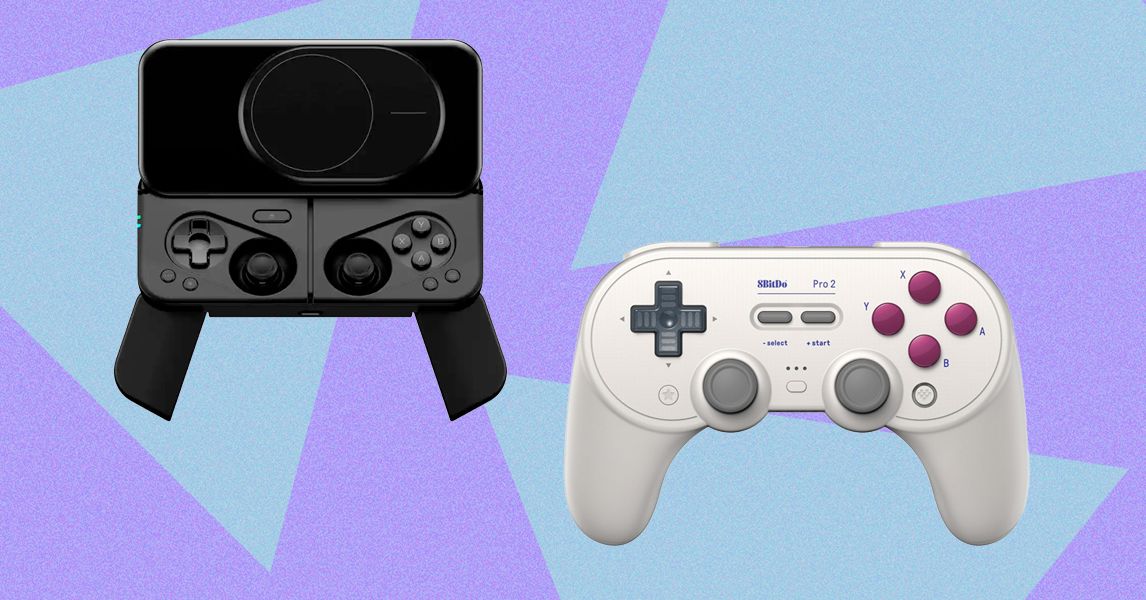
The best mobile gaming controllers are excellent tools that allow you to play compatible games for hours on end. Whether you’re looking for an iPhone or Android controller, we’ve tested all the top picks (aka we’ve played a bunch of games on our phones) and have opinions on them all. Backbone makes the best mobile gaming controllers we’ve tried that’ll work for most people, but we also have solid recommendations for specific uses, like for pairing with smart glasses or a tablet.
Make sure to check out our related buying guides, including the Best Cheap Phones, Best Android Phones, Best Gaming Controllers, and Best MagSafe Accessories.
Our Top Picks


Jump to Section
Best Mobile Gaming Controller

The Backbone One is as easy to recommend as it is to use. Slot the connector—either USB-C or Lightning—into your phone and stretch the controller over the back. The buttons and triggers are clicky and responsive, and the controller feels comfortable for hours-long gaming sessions without being too bulky. It also has pass-through charging, a screenshot or screen recording button, a mute button, and a headphone jack.
Part of what makes all Backbone controllers so great is the manufacturer’s software and additional features. The controller supports a number of gaming apps and services, and the companion app is fantastic (though not required). My favorite bit is the list of recommended games with controller support. You can also use the app to message and party chat with your friends, stream directly to Twitch, record and edit videos in 1080p at 60 frames per second, and more. Some of these features are locked behind a Backbone+ membership, which costs $40 per year. The subscription is nice, but you don’t need it to have a great experience. The controller is also available in some limited-edition styles or platform-dedicated versions like PlayStation Edition, but the differences are cosmetic.
Officially works with iPhone, Android, Nvidia GeForce Now, Xbox and PlayStation Remote Play, Amazon Luna, and Steam Link
Best Upgrade Mobile Gaming Controller
-
Photograph: Louryn Strampe
-
Photograph: Louryn Strampe
-
-


The Backbone Pro expands on all of the features I loved about the Backbone One. The Pro is slightly chunkier, grippier, and more comfortable, and although my hands are small, I can imagine this is easier to hold for folks with larger hands. It has a quieter, more premium feel, and it still has the headphone port and pass-through charging capabilities of the One. The Pro feels just as ergonomic to me as a console controller, with no drawbacks or compromises. I liked the full-size joysticks, programmable back buttons, and Hall-effect rear triggers.
The Backbone Pro also has Bluetooth connectivity, which means you can use it with your phone, tablet, laptop, VR headset, and compatible smart TVs. You can connect to multiple devices simultaneously and switch between them with just a tap. If you’re serious about mobile gaming, or you want a comfortable controller that can swap between your devices seamlessly, I recommend the Backbone Pro. I think it’s worth snagging a carrying case like this one, though, to store it.
Officially works with iPhone, Android, Nvidia GeForce Now, Xbox and PlayStation Remote Play, Amazon Luna, and Steam Link
Best Magnetic Mobile Gaming Controller
-
Photograph: Louryn Strampe
-
Photograph: Louryn Strampe

ohsnap!
Mcon Mobile Gaming Controller
The Mcon controller from Ohsnap has some quirks, but its general concept is neat. The MagSafe controller attaches to the back of your iPhone or Android phone (a magnetic ring is included for Android users, though Ohsnap recommends using a MagSafe case). Press the Eject button to pop out your phone, almost like you would with an old-school T-Mobile Sidekick, and reveal the D-pad, joystick, and buttons below. You can also pop off the entire magnetic component and use the built-in kickstand to prop up your phone while controlling it with the separate controller half of the device. There are hand grips you can pull down and out for added stability if you’d rather have a more traditional design than playing with a rectangular controller. The Mcon pairs with your phone via Bluetooth and has minimal latency, with recessed thumbsticks and buttons that feel satisfying to press.
There are myriad Mcon accessories that are neat, like the Key Cast or Dock, which can charge your controller (via USB-C) and cast your phone screen to a monitor or TV. I could see this device especially coming in handy for travel, given its compact size that you can slip it in your pocket—which is not true for many of the controllers in this guide. It’s also a great option if you’d rather play on your phone but not while you’re holding your phone.
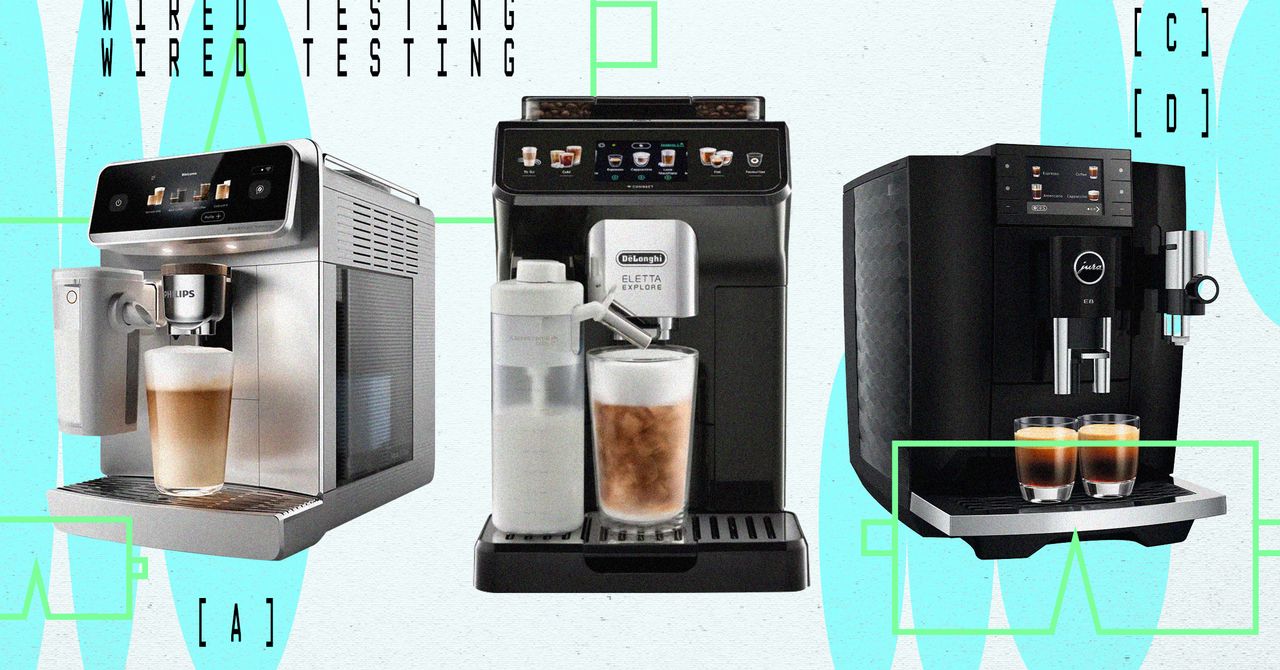
What do you love about coffee? Is it the caffeine boost in the morning, the creamy sweetness of a cappuccino or latte, the bucket of filter coffee you can sip on all day, or the quick kick of a good espresso? Or is it the zen-like ritual of it all, the measuring of beans and the precision of the perfect extraction? Good thing it’s much better for you than science previously realized.
If the marketing hype is to be believed, you can have it all, thanks to the best in fully automatic coffee machines. These compact countertop cafés promise to deliver a vast menu of drinks at the touch of a button, all with no barista prowess needed. But are the brews actually any good?
WIRED tests a lot of coffee machines—productivity would grind to a halt if we stopped. But for this group blind test, we wanted to see what coffee professionals thought of the drinks produced by the “best” in fully automatic machines, without being influenced by any fancy design or brand awareness. We’re not judging the machine’s usability here, the app’s interface (there’s always an app), or how easy it is to clean. We only want to know about the Joe.
By the end of our experiment, it was clear that while money can buy you endless choice and push-button convenience, it doesn’t necessarily guarantee barista-grade, café-quality coffee at home.
Our Experts
Adam Cozens is the cofounder of Perky Blenders, a UK specialty coffee brand from coffee-shop-dense, hipster-populated East London. He was joined in WIRED’s test café by his business manager and coffee aficionado Calum Hunt. Launching in 2015 from a three-wheeled coffee cart, they now have multiple cafés and more than 100 retail partners across the UK.
For this test, they chose their Forest Blend beans, noted for their dark chocolate, molasses, and walnut notes, creamy body, low acidity, and a sweet, lingering finish. Crucially, Cozens and Hunt know implicitly how the Forest Blend beans should taste, and they are ideally positioned to decide which of our machines produces the best coffee with the most accurate flavor profile from the beans provided.
The Test
Each of the machines we chose is a fully automatic bean-to-cup behemoth capable of producing upwards of 50 types of coffee drinks at the push of a button; everything from espresso and cortado to iced lattes with syrup or a simple long black.
WIRED chose the latte—America’s most popular steamed-milk coffee order—and a classic espresso to blind taste test. The latte allows us to test the milk-heating, frothing, and steaming mechanisms, while the espresso reveals any weaknesses in extraction and coffee flavor. Per Cozens’ instructions, we used organic whole milk.
Our experts were blindfolded and then presented with one latte and one espresso from each machine. Labelled A, B, C, and D, the machines were visible to the testers, but they had no idea which coffee came from which. They then assessed each drink on looks, milk-steaming quality, crema (the golden aromatic foam on top of espresso), temperature, extraction, and flavor. The coffees were then ranked in order from best to worst.
To reiterate, this is not a test of the machine’s usability, desirability, or features. Each design can have every aspect of every recipe tweaked, but we’re not convinced the average buyer will want to dive deep into the settings. These are sophisticated push-button machines designed to take the faff and fiddle out of making good coffee at home—anything for an easy life.
The Coffee Machines
Machine “A”
One of only a few machines capable of making espresso-based drinks and classic drip coffee, the TK-02, from NYC-based Terra Kaffe, is a gorgeous-looking piece of kitchen kit with premium components, a delightful glass milk carafe, a super-cool monochrome touchscreen, extensive personalization, and full app control.


Former South Carolina QB Stephen Garcia changes his approach on mental health amid cancer battle

Car finance payouts hang in the balance ahead of legal battle

US’ Unifi improves Q3 profitability despite lower sales

-

 Politics5 days ago
Iran weighs US reply delivered via Pakistan as Trump signals opposition to deal terms
-
 Business1 week ago
PSX plunges over 4,800 points | The Express Tribune
-

 Fashion7 days ago
US’ J.Jill, Inc. appoints Kimberly Wallengren as CMO
-

 Fashion1 week ago
Canada’s Lululemon appoints Esi Eggleston Bracey to board of directors
-

 Tech1 week ago
Almost half of UK businesses hit by cyber attacks | Computer Weekly
-

 Tech1 week ago
This Indigenous Language Survived Russian Occupation. Can It Survive YouTube?
-

 Entertainment1 week ago
David Allan Coe, country singer who wrote “Take This Job and Shove It,” dies at age 86
-
 Business1 week ago
Government hikes jet fuel prices by 5% for international airlines – The Times of India