

Politics
Israeli Airstrikes on Yemen’s Capital Kill Six Civilians

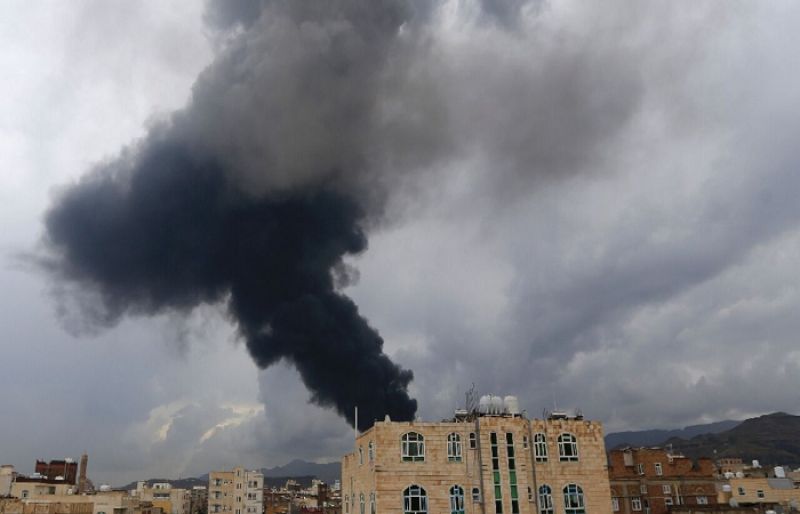

Israeli strikes on Yemen’s capital, Sanaa, on Sunday killed at least six people, according to Iran-backed Huthi rebels, who have repeatedly launched missiles and drones at Israel throughout the Gaza conflict.
AFP images showed a massive fireball lighting up the skies over the rebel-held capital, leaving a column of thick, black smoke.
The Huthi-run Saba news agency reported six deaths and 86 injuries in the Israeli raid, with more than 20 in critical condition, citing the health ministry.
A Huthi security source told AFP that the strikes targeted a building in central Sanaa.
Al-Masirah TV, run by the Huthis, reported that an oil company facility and a power station in southern Sanaa already hit in a previous strike last Sunday were also targeted.
The Israeli army stated it had struck a military compound near the presidential palace, along with two power stations and a fuel depot.
The army said the strikes were “in response to repeated attacks by the Huthi terrorist regime against the State of Israel and its civilians,” including those carried out “in recent days.”
Late Friday, the Huthis fired a missile that Israeli authorities said had “most likely fragmented in mid-air.”
Media outlets, including The Times of Israel and Ynet, citing the Israeli military, reported that the missile carried a cluster warhead, marking the first known use of such a weapon fired from Yemen.
Heart of the capital
The Israeli defence ministry released a photo on Sunday showing Prime Minister Benjamin Netanyahu, Defence Minister Israel Katz and military chief Eyal Zamir following the strikes in Yemen from a command bunker.
Netanyahu said the air force had struck “the presidential palace in the heart of the capital Sanaa, the city’s power plant and the fuel tanks that supply it”, according to a statement released by his office.
“The terrorist Huthi regime is learning the hard way that it will pay and has paid already a very high price for its aggression against the State of Israel,” he said, adding “the whole region” was also learning a lesson in Israeli power.
In a statement from their political bureau, the Huthis vowed to respond, saying they would “not deviate from the fight” against Israel and its ally the United States “until the aggression stops and the (Israeli) blockade on Gaza is lifted”.
Iran’s foreign ministry on Sunday condemned the Israeli strikes.
Compound interest
Since the October 2023 start of the Israel-Hamas war in the Gaza Strip, the Huthis have repeatedly fired missiles and drones at Israel, claiming to be acting in solidarity with the Palestinians.
Most of the Huthi attacks have been intercepted, but they have prompted retaliatory Israeli air strikes on rebel targets in Yemen.
On August 17, Israel said it targeted an energy infrastructure site in Sanaa linked to the Huthis, with Al-Masirah reporting at the time the capital’s Haziz power station was hit.
The Israeli military said the Haziz facility was also struck on Sunday.
Katz said earlier this month that the Huthis would “pay with compound interest for every attempt to fire at Israel”.
Beyond attacks on Israel itself, the Huthis have also targeted ships they say are linked to the country in the Red Sea and Gulf of Aden.
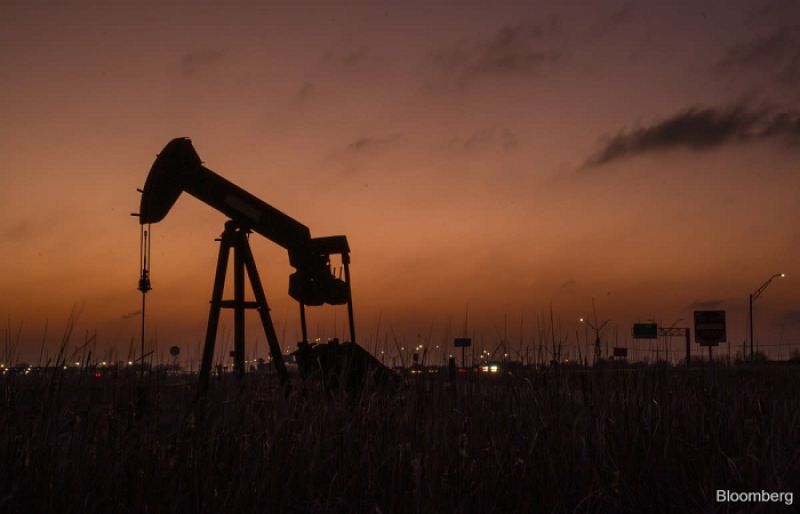
Asian stocks fluctuated on Wednesday while oil prices swung as talks to end the Iran war appeared to be at a standstill and the crucial Strait of Hormuz no nearer being reopened.
While the White House has said Donald Trump and his team were considering Tehran’s latest proposal to restore traffic through the waterway, CNN and the Wall Street Journal said the president was sceptical.
The Islamic republic this week submitted a plan that would reportedly see it ease the chokehold and Washington lift its retaliatory blockade on the country’s ports as talks continued, including over its nuclear programme.
While US Secretary of State Marco Rubio said Iran’s proposal was “better than what we thought they were going to submit”, he insisted any eventual deal had to be “one that definitively prevents them from sprinting towards a nuclear weapon”.
Iranian defence ministry spokesman Reza Talaei-Nik said Washington “must abandon its illegal and irrational demands”, adding the United States was “no longer in a position to dictate its policy to independent nations”.
Qatar warned of the possibility of a “frozen conflict” if a definitive resolution is not found.
Concerns about the stalled peace push have pushed crude prices higher for more than a week, with Trump’s decision to cancel his envoys’ trip for peace talks in Pakistan last weekend adding to the downbeat mood.
Brent is above the level it hit before the two sides announced a ceasefire at the start of April, sitting around $112, while West Texas Intermediate broke $100 Tuesday for the first time in two weeks.
Both contracts were slightly higher on Wednesday.
“Iran wants the blockade lifted and access to its flows restored,” wrote Stephen Innes at SPI Asset Management.
“Washington holds that lever and is in no hurry to give it away without extracting value.
“Meanwhile, the longer this drags on, the more second-order effects start to bite. Storage pressure builds, production risks emerge, and the system begins to strain in ways that futures prices cannot ignore.”
There was little major reaction to news that key producer United Arab Emirates had decided to withdraw from the OPEC and OPEC+ oil cartels on Friday, calling it a strategic decision.
Still, CNN also cited sources familiar with the mediation as saying the two sides were not as far apart as they seemed.
It added that intense diplomacy continued and talks were focused on a staged process with the first part of a potential deal aimed at returning to the pre-war status and reopening the Strait.
Iran’s nuclear programme would be dealt with down the line, it said.
Equity markets were mixed, with Hong Kong, Shanghai, Jakarta and Manila up while Sydney, Singapore, Seoul and Taipei fell.
Traders were given a weak lead from Wall Street, where the Nasdaq-led losses owing to a tech selloff that came on the back of a report in the Wall Street Journal that ChatGPT-maker OpenAI had missed targets on the number of users and revenue.
The news came as markets gear up for the release of earnings from Wall Street titans Amazon, Google, Meta and Microsoft this week.
The Federal Reserve will also conclude a two-day meeting later in the day, with investors keeping tabs on its outlook for inflation and interest rates as energy costs soar.
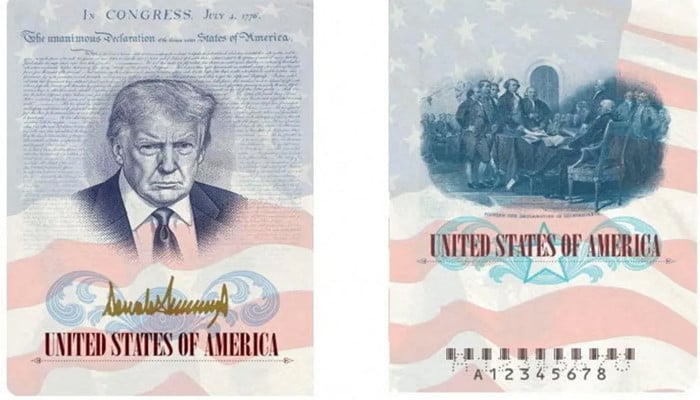
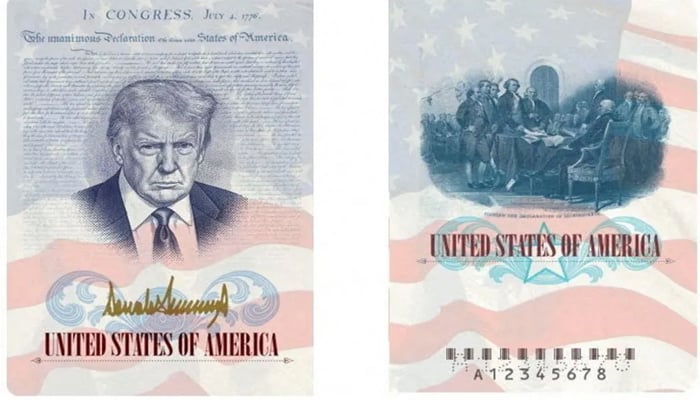
An image of Donald Trump will soon appear in some US passports, officials said Tuesday, shattering another norm as the president aggressively puts his personal stamp on government institutions.
There are few precedents anywhere in the world, let alone in a democracy, of displaying sitting leaders’ pictures in passports, and Trump would be the first sitting US president featured in Americans’ travel documents.
The State Department said it would offer the limited-edition passport to mark this year’s 250th anniversary of the US Declaration of Independence.
The department — which has historically viewed itself as outside US partisan politics — posted on social media a sample of the passport, which features a stern-looking Trump superimposed over the Declaration of July 4, 1776.
Trump’s signature — in gold — lies underneath.
A second limited-edition passport showed a historic painting of the US Founding Fathers.
“As the United States celebrates America’s 250th anniversary in July, the State Department is preparing to release a limited number of specially designed US passports to commemorate this historic occasion,” State Department spokesman Tommy Pigott said.
Another department official, speaking on condition of anonymity, said the Trump-themed passports would only be available at in-person appointments in Washington “for as long as there is availability.”
The passports would come at no additional cost, the official said.
It was not immediately clear if passport applicants could refuse the Trump picture, although the majority of Americans seeking passports do so through local post offices, which would not provide the special edition.
‘Indulging Trump’s vanity’
Lawmakers of the rival Democratic Party criticised Secretary of State Marco Rubio over the passport initiative.
“Secretary Rubio should spend more time convincing his boss to end his war of choice in Iran, and less on wasting American tax dollars indulging Trump’s vanity,” the House Foreign Affairs Committee’s Democrats wrote on X.
Among countries that carry artwork in their passports, nearly all feature either historical imagery or nature.
Even North Korea, which plasters pictures of leader Kim Jong Un across the country and demands reverence, does not feature him in the passport, which instead depicts sacred Mount Paektu.
Current US passports depict multiple scenes from the country’s history such as the Moon landing along with historic sites including the Statue of Liberty.
Since returning to office last year, Trump has slapped his name and image on government institutions in an unprecedented way.
Several government buildings in the capital have put up banners of the president, while officials have added his name onto the Kennedy Center for the performing arts and the dismantled US Institute of Peace.
Last month the Treasury Department also said Trump’s signature would soon start appearing on the dollar bill, in another first.
Britain and other Commonwealth countries feature on their currency the likeness of King Charles III, who is a head of state without direct involvement in politics.
The king met with Trump on Tuesday during a state visit to Washington.
Only around half of Americans hold valid passports, less than in many other Western nations, and people in states that voted for Trump are less likely to travel internationally, according to surveys.
- Cost-of-living concerns rise as gasoline prices surge after war with Iran.
- Rep support for Trump remains high, but many disapprove of his response.
- Independent voters lean Democratic for midterms, with many still undecided.
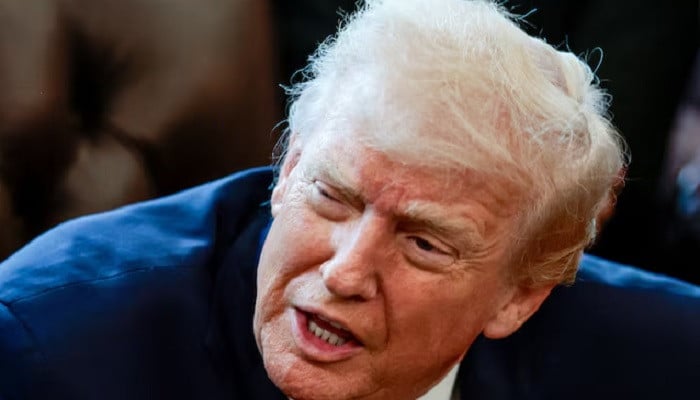
President Donald Trump’s approval rating sank to the lowest level of his current term, as Americans increasingly soured on his handling of the cost of living and an unpopular war with Iran, according to a new Reuters/Ipsos poll.
The four-day poll, completed on Monday, showed 34% of Americans approve of Trump’s performance in the White House, down from 36% in a prior Reuters/Ipsos survey conducted from April 15 to 20.
The majority of responses were gathered before the Saturday night shooting at the White House Correspondents’ Association dinner, where Trump was due to speak. It remains to be seen if the incident, in which a gunman was stopped before he could enter a hall where Trump was dining, might affect people’s views of the US leader. Federal prosecutors have charged the accused shooter with attempting to assassinate the president.
Trump’s standing with the US public has trended lower since taking office in January 2025, when 47% of Americans gave him a thumbs-up.
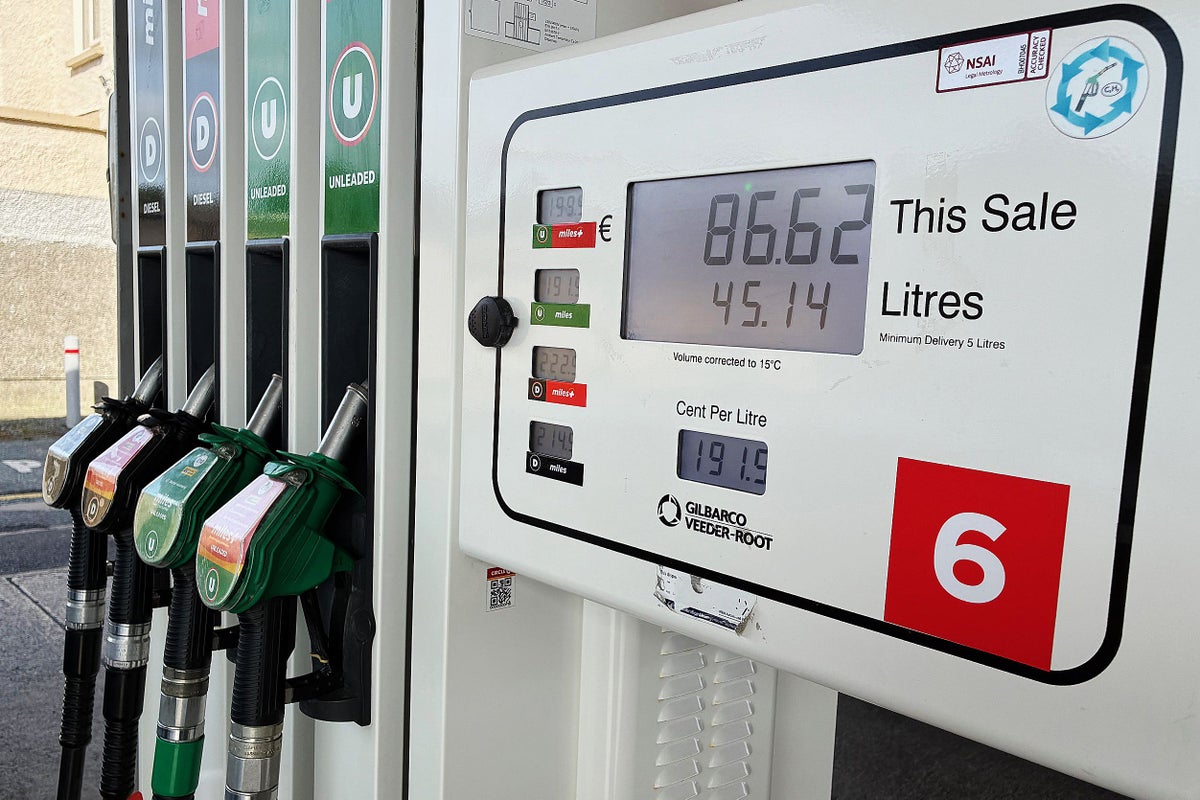
His popularity has taken a beating since the US and Israel launched a war against Iran on February 28, which has led to a surge in gasoline prices. Only 22% of poll respondents approved of Trump’s performance on the cost of living, down from 25% in the prior Reuters/Ipsos poll.
Surging gas prices weigh on voters
US gasoline prices have surged more than 40% to roughly $4.18 a gallon since the US and Israel launched surprise attacks on Iran on February 28, triggering a response that shut down a fifth of the global oil trade.
The price hikes are weighing heavily on American households and fueling concern among Trump’s Republicans that they could lose control of the US Congress in the November midterm elections.
While a solid majority of Republicans – 78% – still say they back Trump, 41% of the party say they disapprove of his handling of the cost of living, the Reuters/Ipsos poll found.
Independent registered voters, a group that could be decisive in the midterms, favoured Democrats by 14 points, 34% to 20%, when asked who would get their vote in congressional elections. One in four said they were still undecided.
Trump won the 2024 presidential election on promises to bring down prices after several years of high inflation vexed his predecessor, Democrat Joe Biden. Now Trump’s approval rating on the economy – at 27% – is well below any reading he had during his 2017-2021 administration, and also lower than Biden’s weakest economy rating.
While the US conflict with Iran has cooled since the two sides agreed to a ceasefire earlier this month, Iran’s threats are preventing most oil shipments from leaving the Persian Gulf, fueling further increases in US and global energy prices as oil reserves decline.
Just 34% of Americans approve of the US conflict with Iran, down from 36% in mid-April and 38% in mid-March, the Reuters/Ipsos poll found.
During Trump’s first administration, his popularity hovered around 40% for long stretches. The latest reading remains a touch above the low point of his first term, which was 33%.
The latest Reuters/Ipsos poll, conducted nationwide and online, gathered responses from 1,269 US adults, including 1,014 registered voters, with a margin of error of 3 percentage points.


Uh-Oh: This Office Chair Is So Comfortable I Can Fall Asleep in It

New Zealand’s apparel imports dip slightly to $1.18 bn in FY2025–26

Prince Harry sets ‘non-negotiable’ condition for Meghan in UK plans

-

 Politics1 week ago
UK’s Starmer seeks to deflect blame over Mandelson appointment
-
 Business1 week ago
How Trump’s psychedelics executive order could unlock stalled cannabis reform
-

 Entertainment1 week ago
Lee Anderson, Zarah Sultana kicked out of UK Parliament for calling PM ‘liar’
-
 Business1 week ago
Us-India Trade Talks: US–India trade deal: Where do talks stand & what to expect – explained – The Times of India
-

 Fashion1 week ago
India, US to resume BTA talks today
-

 Tech1 week ago
A Humanoid Robot Set a Half-Marathon Record in China
-
 Business1 week ago
UK inflation accelerates after Iran war drives sharp rise in fuel prices
-
 Fashion1 week ago
Global energy growth slows to 1.3% in 2025: Report