

Politics
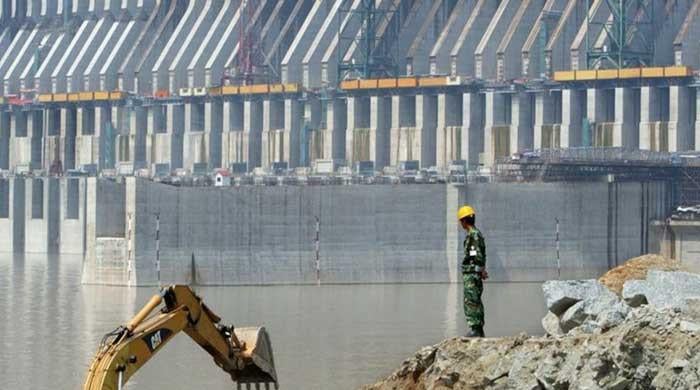
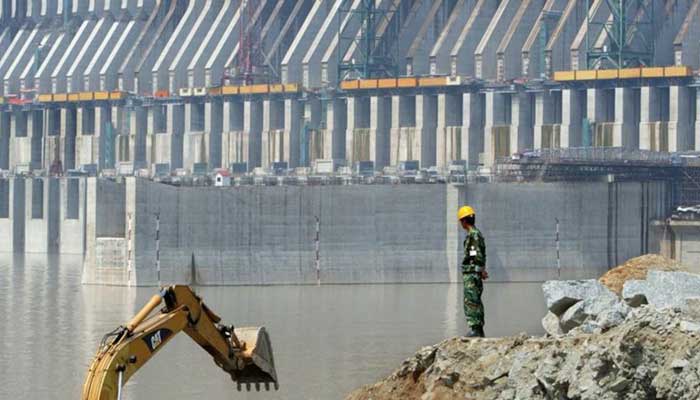
China’s new mega dam triggers fears of water war in India

- Beijing building world’s largest dam upstream of India.
- India fears Chinese dam will reduce flow on major river.
- Delhi says mega dam of its own will mitigate risks.
PARONG, INDIA: India fears a planned Chinese mega-dam in Tibet will reduce water flows on a major river by up to 85% during the dry season, according to four sources familiar with the matter and a government analysis seen by Reuters, prompting Delhi to fast-track plans for its own dam to mitigate the effects.
The Indian government has been considering projects since the early 2000s to control the flow of water from Tibet’s Angsi Glacier, which sustains more than 100 million people downstream in China, India and Bangladesh. But the plans have been hindered by fierce and occasionally violent resistance from residents of the border state of Arunachal Pradesh, who fear their villages will be submerged and way of life destroyed by any dam.
Then in December, China announced that it would build the world’s largest hydropower dam in a border county just before the Yarlung Zangbo river crosses into India. That triggered fears in New Delhi that its longtime strategic rival – which has some territorial claims in Arunachal Pradesh – could weaponise its control of the river, which originates in the Angsi Glacier and is known as the Siang and Brahmaputra in India.
India’s largest hydropower company in May moved survey materials under armed police protection near a prospective site of the Upper Siang Multipurpose Storage Dam, which would be the country’s biggest dam, if completed. Senior Indian officials have also been holding meetings about accelerating construction this year, including one organised in July by Prime Minister Narendra Modi’s office, according to two of the sources, who spoke on condition of anonymity to discuss sensitive government matters.
Delhi’s concerns were described in the undated Indian government analysis of the Chinese dam’s impact, the specifics of which Reuters corroborated with four sources and is reporting for the first time.
Beijing hasn’t released detailed plans about the dam’s construction, but the analysis drew on past work conducted by Indian government-affiliated institutions like the Central Water Commission and accounted for the expected size of the Chinese project, which broke ground in July and will cost nearly $170 billion.
Delhi estimates the Chinese dam will allow Beijing to divert as much as 40 billion cubic meters of water, or just over a third of what is received annually at a key border point, according to the sources and the document. The impact would be especially acute in the non-monsoon months, when temperatures rise and lands become barren across swathes of India.
The Upper Siang project would alleviate that with its projected 14 BCM of storage capacity, allowing India to release water during the dry season. That could mean the major regional city of Guwahati, which is dependent on water-intensive industry and farming, would see a reduction in supply of 11%, according to the sources and the document, as opposed to 25% if the Indian dam isn’t built.
The project could also mitigate any move by Beijing to release devastating torrents of water downstream, the sources said.
If the dam is at its minimum drawdown level – where water is stored at less than 50% of its height – it would be able to fully absorb any excess water released from a breach in Chinese infrastructure, according to the document and the sources. India is considering a proposal to keep 30% of its dam empty at any time in order to account for unexpected surges, two of the sources said.
A spokesperson for China’s foreign ministry said in response to Reuters‘ questions that the hydropower projects “have undergone rigorous scientific research on safety and environmental protection, and will not adversely impact the water resources, ecology, or geology of downstream countries.”
“China has always maintained a responsible attitude toward the development and utilisation of transboundary rivers, and has maintained long-term communication and cooperation with downstream countries such as India and Bangladesh,” the spokesperson added.
Modi’s office and the Indian ministries responsible for water and external affairs did not respond to Reuters‘ questions. State-owned hydropower major NHPC also did not return a request for comment.
India’s foreign ministry has said that top diplomat S Jaishankar raised concerns about the dam during a meeting with his Chinese counterpart on Aug 18. A Jaishankar deputy also told lawmakers in August that the government was implementing measures to safeguard the lives and livelihoods of citizens in downstream areas, including building the dam.
India has itself been accused by Pakistan, a Chinese ally that it briefly clashed with in May, of weaponizing water. Delhi this year suspended its participation in a 1960 water-sharing treaty with Islamabad and is considering diverting flows from another crucial river away from its downstream neighbour.
An international tribunal has ruled that India must adhere to the agreement but Delhi says the panel lacks jurisdiction.
Development or destruction?
When NHPC workers moved surveying materials near the village of Parong in May, angry locals damaged their machinery, destroyed a nearby bridge and looted the tents of police sent to guard the operation.
Many of them are members of Arunachal’s Adi community, who live off paddy, orange and sweet lime farms in the mist-shrouded hills and valleys nourished by the Siang.
The villagers have set up makeshift watch posts on regional roads to deny access to NHPC workers. That has forced security personnel to trek miles, often under cover of night, to reach a prospective site of the dam.
At least 16 Adi villages are likely to be lost to the storage area of the dam, directly affecting an estimated 10,000 people, according to two of the sources. Community leaders say more than 100,000 people will be impacted overall.
“The cardamom, paddy, jackfruit and pear we grow on this land help educate our children and support our family,” said Odoni Palo Pabin, an Adi grocer and mother of two. “We will fight the dam to death.”
The dam has the support of Arunachal’s chief minister, who is a member of Modi’s party and has called the Chinese project an existential threat.
The project will “ensure water security and provide flood moderation to counter any potential water surges,” the state government said in a statement, adding that it decided in June to engage in detailed compensation discussions with families that could be affected by the dam.
Lawmaker Alo Libang, an Adi who represents an area that would be submerged by the Indian project, said he believed locals could be convinced to move if they received generous compensation.
NHPC has plans to spend more than $3 million on education and emergency infrastructure to incentivise the villagers to move elsewhere, three of the sources said, citing instructions from Modi’s office.
In one sign of progress, three villages in the area recently agreed to let NHPC officials carry out dam-related work, according to the Arunachal government and dozens of locals.
India has a history of activist movements against large dams, which have sometimes slowed these projects by years or forced them to scale down.
Even if the Upper Siang dam gets the go-ahead, it could take a decade to build after breaking ground, according to four of the sources. That means the project would likely be completed after China’s project, which Beijing expects to start generating power by the early-to-mid 2030s.
The delay means an Indian project would be vulnerable during construction if Beijing suddenly releases water during the monsoon season, triggering a surge that could wash away temporary dams, two of the sources said.
International experts and Adi activists have also warned that building large dams in seismically active Tibet and Arunachal could heighten risks for downstream communities.
The Chinese “dam is being built in a zone of high seismicity and in a zone that experiences extreme weather events,” said Sayanangshu Modak, an expert on the India-China water relationship at the University of Arizona.
“These kinds of extreme weather events trigger landslides, mudslides, glacial lake outburst flooding,” he said. “So that raises concerns about dam safety… it’s a very legitimate concern and India should engage with China.”
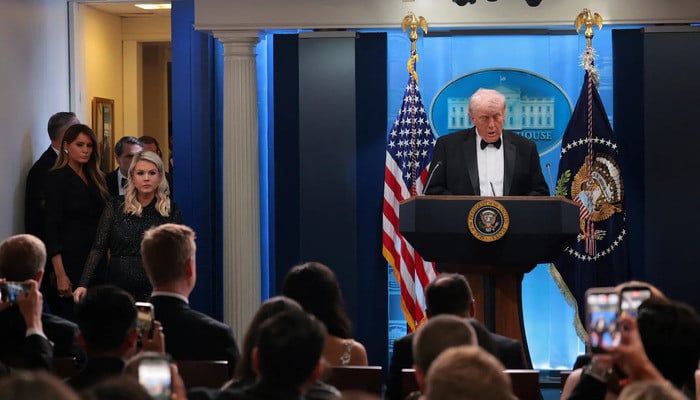
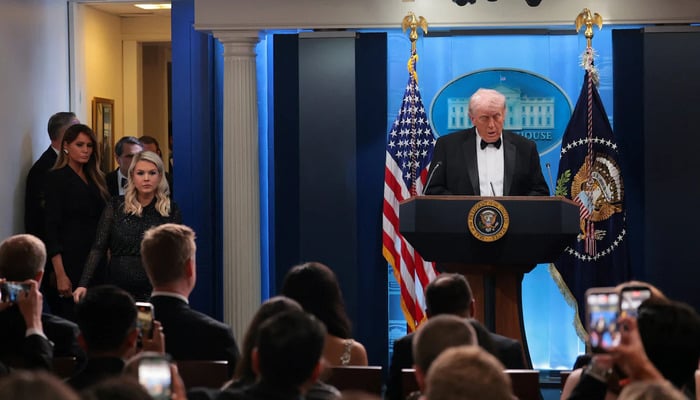
US President Donald Trump has said that the suspect accused of trying to attack administration officials at a black-tie gala on Saturday night was a “pretty sick guy” who had been flagged to law enforcement by family members.
Trump said in TV interviews on Sunday that the suspect, whom an official identified as 31-year-old Cole Tomas Allen, of Torrance, California, had posted what Trump described as an “anti-Christian” manifesto.
“He was a Christian, believer, and then he became an anti-Christian, and he had a lot of change,” Trump told CBS‘ “60 Minutes” programme. “He was probably a pretty sick guy.”
In the manifesto, Allen calls himself the “Friendly Federal Assassin” and said he planned to attack Trump administration officials, prioritising them from highest-ranking to lowest but excluding FBI Director Kash Patel, a law enforcement official told Reuters. Allen cited Christian theology as he said he was trying to protect those harmed by the administration’s policies.
“Turning the other cheek when ‘someone else’ is oppressed is not Christian behaviour; it is complicity in the oppressor’s crimes,” the manifesto read, according to the official.
The manifesto, which was sent to members of Allen’s family shortly before the attack, mocked the “insane” lack of security at the Washington Hilton, where the White House Correspondents’ Association dinner was held, the official added. Allen was arrested at the scene.
“Like, the one thing that I immediately noticed walking into the hotel is the sense of arrogance,” the manifesto’s author reportedly wrote. “I walk in with multiple weapons and not a single person there considers the possibility that I could be a threat.”
The chaotic events raised fresh questions about the security of top US officials, many of whom were gathered in the hotel’s expansive ballroom. Trump seized on the attention brought by the incident to promote his planned White House ballroom as a safer venue for such events.
“This event would never have happened with the Militarily Top Secret Ballroom currently under construction at the White House. It cannot be built fast enough!” Trump wrote on Truth Social.
The suspect travelled by Amtrak train from Los Angeles to Chicago and then to Washington, checking into the Hilton on Friday, acting US Attorney General Todd Blanche said on multiple Sunday talk shows, adding that Trump and top members of his administration were the likely targets. Train passengers in the United States are not required to pass through airport-style metal detectors.
Amtrak said it is cooperating with the investigation.
Political violence
Officials have said the suspect fired a shotgun at a Secret Service agent at a security checkpoint in the Washington Hilton hotel before being tackled and arrested.
Trump, first lady Melania Trump, Vice President JD Vance and Cabinet officials were rushed out as the incident unfolded. The Secret Service agent who was shot escaped serious injury because the bullet struck his protective vest, Trump said.
Trump, who had boycotted the media gala in the past, has requested that the dinner be rescheduled within 30 days. White House Correspondents’ Association President Weijia Jiang of CBS said the group’s board would determine their next steps.
The suspect will be charged in federal court on Monday with assault of a federal officer, discharging a firearm and attempting to kill a federal officer, Blanche said, adding he did not know if there was an Iran connection to the attack. Further federal indictments will be coming later, Blanche said.
Saturday’s incident was another reminder of a rising tide of political violence in the United States in recent years. Conservative political activist Charlie Kirk was shot dead at a rally last September, just months after the June 2025 slaying of Democratic Minnesota State Representative Melissa Hortman and her husband and the wounding of a Minnesota state senator.
A Reuters/Ipsos poll, opens new tab conducted in the days following Kirk’s murder found Americans believe increasingly harsh rhetoric surrounding politics is encouraging violence in the US.
A White House official said law enforcement officials who interviewed Allen’s sister were told he had a tendency to make radical statements, had attended an anti-Trump “No Kings” protest and referred to a plan to do “something” to fix issues with today’s world.
Trump suggested the protest might have spurred the suspect to action. “Part of the reason you have people like that is you have people doing No Kings,” he told CBS. “I’m not a king.”
Around the world, leaders condemned the attack and expressed relief that Trump and all present were safe.
A planned US visit by King Charles of Britain scheduled to start on Monday will proceed, Trump and British officials said.
Little was immediately known about the alleged shooter’s background, but social media posts indicated he had worked at C2 Education, a national private test preparation and tutoring service. C2 Education said in a statement that it was cooperating with law enforcement investigators.
Washington Interim Police Chief Jeffery Carroll said the suspect was armed with a shotgun, a handgun and multiple knives.
Allen had purchased two handguns and a shotgun and stored them at his parents’ home, the White House official said.
The suspect lived with his parents in a two-story house on a tree-lined street with picket fences and craftsman-style homes in the historic district of Torrance, a seaside town in the South Bay area of greater Los Angeles.
Neighbours in the middle-class neighbourhood on Sunday said they were only casually acquainted with him and his parents, with most saying they never spoke to him beyond a brief hello or waving to them as they gave Halloween candy to trick-or-treaters.
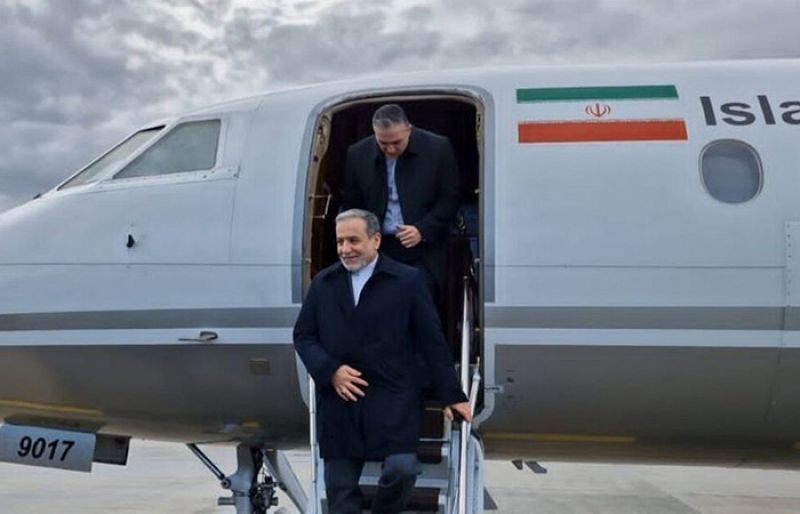
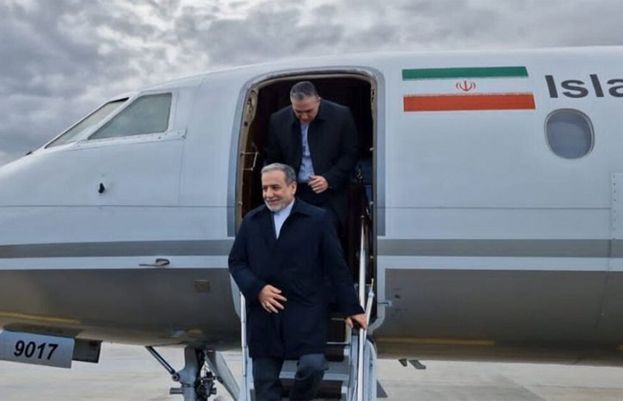
“He arrived early on Monday morning with the aim of meeting and holding talks with Russian President Vladimir Putin,” Iranian state news agency IRNA posted on Telegram.
Moscow’s TASS news agency confirmed earlier that Putin plans to meet Araghchi, citing Kremlin spokesman Dmitry Peskov.
Earlier, Araghchi headed to Russia as peace efforts between Tehran and Washington hung in the balance, following a flurry of regional diplomacy and the collapse of planned talks in Pakistan.
Abbas Araghchi visited Oman between trips to Pakistani capital Islamabad and is expected to meet President Vladimir Putin on Monday, according to the Iranian ambassador.
On Saturday, US President Donald Trump scrapped a planned trip to Islamabad by his envoys Steve Witkoff and Jared Kushner.
In a sign that efforts were ongoing, the Fars news agency said Iran had sent “written messages” to the Americans via mediator Pakistan outlining red lines, including nuclear issues and the Strait of Hormuz.
Fars said the messages were not part of formal negotiations, however.
US media outlet Axios reported on Sunday that Iran had sent a new proposal to reopen the Strait of Hormuz and end the war, with nuclear negotiations postponed for a later stage, citing a US official and two other sources with knowledge of the matter.
Iranian state news agency IRNA cited the report without denying it.
A ceasefire in the US-Israeli war with Iran has so far held, but its economic shockwaves continued to reverberate globally.
Iran has sealed off the strait, cutting flows of oil, gas and fertiliser and sending prices soaring, raising fears of food insecurity in developing countries.
Hopes for a second round of talks in Pakistan had centred on a planned visit by Witkoff and Kushner, but Trump cancelled the trip, dismissing it as “sitting around talking about nothing”.
On Sunday, Trump told Fox News that if Iran wanted the talks, “they can come to us, or they can call us.”
Trump faces domestic pressure as fuel prices rise following Iran’s closure of Hormuz, with midterm elections due in November. Polls show the war is unpopular among Americans.
Safe transit
Asked whether cancelling signalled renewed fighting, Trump said: “No, it doesn’t mean that.”
On Saturday, Araghchi met Pakistan’s military chief Asim Munir, Prime Minister Shehbaz Sharif and Foreign Minister Ishaq Dar, before travelling to Oman and returning to Islamabad.
He later left for Russia for talks with senior officials, his ministry said.
Russian and Iranian state media confirmed Araghchi’s talks with Putin, citing officials from their respective governments.
Iran’s official IRNA news agency quoted Iran’s envoy to Moscow, Kazem Jalali, saying they would meet in St Petersburg, Russia’s second city.
Araghchi himself posted on X that the talks in Oman had focused on ensuring safe transit through Hormuz, “to benefit of all dear neighbours and the world.”
“Our neighbours are our priority,” he added.
Pressure to end the war has intensified as the Strait of Hormuz remains closed. Iran’s Revolutionary Guards said they had no intention of lifting their blockade, which has roiled energy markets.
“Controlling the Strait of Hormuz and maintaining the shadow of its deterrent effects over America and the White House’s supporters in the region is the definitive strategy of Islamic Iran,” the Guards said on their official Telegram channel.
The United States has imposed a blockade of Iranian ports in retaliation.
In a statement carried by state media, Iran’s military warned that continued US “blockading, banditry and piracy” would draw a response.
Israel strikes Lebanon
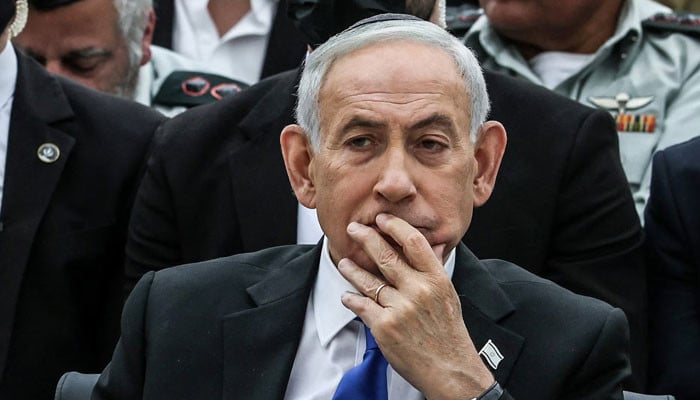
Israel and Hezbollah traded blame over violations of the fragile ceasefire in Lebanon, with Prime Minister Benjamin Netanyahu saying the military was “vigorously” targeting the Iran-backed militia as both sides claimed new attacks.
Hezbollah drew Lebanon into the Middle East war on March 2 by firing rockets at Israel to avenge the death of Iran’s supreme leader Ali Khamenei, with Israel responding with strikes and a ground invasion.
But claims that both sides have breached a 10-day ceasefire agreed earlier this month have continued.
Netanyahu told Sunday’s weekly cabinet meeting that Hezbollah’s actions were “dismantling the ceasefire” while Hezbollah said it would respond to Israeli violations and its “continued occupation”.
Lebanon’s health ministry said Israeli strikes on the country’s south on Sunday killed 14 people, including two women and two children, and wounded 37.
The state-run National News Agency reported that Israeli warplanes had struck after evacuation warnings in Kfar Tibnit.
An Israeli strike on Zawtar al-Sharqiyah, another of the flagged villages, destroyed a mosque and another religious building, the news agency said.
Israel, which reported a soldier killed in combat in south Lebanon, says it can act against “planned, imminent or ongoing attacks”.
“This means freedom of action not only to respond to attacks…but also to pre-empt immediate threats and even emerging threats,” Netanyahu said.
- Netanyahu plans to lead his party’s list in October elections.
- Opinion polls sees Bennett as best candidate to defeat Netanyahu.
- Bennett supports Israeli settlements in occupied West Bank.
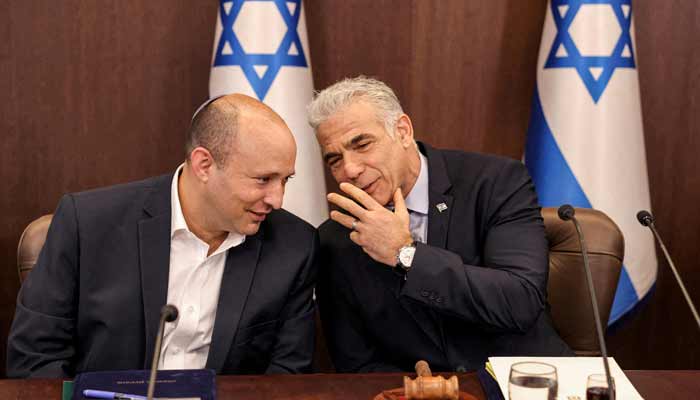
Israeli opposition leader Yair Lapid said on Sunday he would join forces with former premier Naftali Bennett ahead of this year’s elections, in a move aimed at unseating incumbent Benjamin Netanyahu.
Lapid, himself a former premier, said they would run on a joint list in the parliamentary election due in October, with a formal announcement expected later on Sunday.
In a post on X, Lapid said the pair would “announce today the first step in the process of repairing the State of Israel: the merger of Yesh Atid and ‘Bennett 2026’ into a single party led by former Prime Minister Naftali Bennett”.
“The move brings about the unification of the Repair Bloc, enabling all efforts to be focused on leading Israel toward the necessary repair.”
Both have been outspoken critics of Netanyahu’s handling of the country’s wars since October 2023, with Lapid going so far as to label the recent two-week ceasefire agreed with Iran a “political disaster”.
Right-winger Bennett, a longtime supporter of Israeli settlements in the occupied West Bank, and centrist Lapid previously formed a coalition government in June 2021.
It was replaced at the end of 2022 by the current administration led by Netanyahu, after Bennett said in June of that year that his coalition was no longer tenable and Lapid served a brief stint as caretaker prime minister.
Opinion polls suggest Bennett is the candidate best placed to defeat Netanyahu in the October vote.
The 54-year-old son of American immigrants and a former high-tech entrepreneur, Bennett sold his start-up in 2005 for $145 million (110 million euros).
As a former Israeli commando officer, he has a profile that resonates with part of the country’s younger generation after more than two years of the Gaza war.
Once a Netanyahu adviser, Bennett has over time become a staunch opponent of his former mentor’s policies.
He led several right-wing parties before forming a broad unity government in 2021.
His new running mate, 62-year-old Lapid, is the son of the late journalist and minister Tommy Lapid, a Holocaust survivor, and acclaimed author Shulamit Lapid.
A prominent television journalist, Lapid entered politics in 2012 by founding Yesh Atid, which went on to become the country’s second-largest political force.
He has since served as opposition leader, aside from his brief stint as prime minister.
Netanyahu plans to lead his party’s list in the general election that must be held no later than the end of October.
At 76, the leader of the right-wing Likud party is Israel’s longest-serving prime minister, with more than 18 cumulative years in office across multiple stints.


SBP raises policy rate by 100bps to 11.5% as inflation risks mount

Finalise Bangladesh’s textile-RMG circular economy strategy: Experts

Gold prices rise rebound in Pakistan after recent decline – SUCH TV

-

 Sports1 week ago
WWE WrestleMania 42 Night 2: Live match results and analysis
-

 Sports1 week ago
NCAA men’s gymnastics championship: All-time winners list
-

 Fashion1 week ago
UK’s Sosandar returns to profitability amid robust FY26 performance
-

 Politics6 days ago
UK’s Starmer seeks to deflect blame over Mandelson appointment
-
 Business7 days ago
How Trump’s psychedelics executive order could unlock stalled cannabis reform
-

 Entertainment7 days ago
Lee Anderson, Zarah Sultana kicked out of UK Parliament for calling PM ‘liar’
-
 Business1 week ago
No fuel shortage: Govt assures 100% domestic LPG, PNG, CNG supply amid Hormuz energy crunch – The Times of India
-
 Business6 days ago
Us-India Trade Talks: US–India trade deal: Where do talks stand & what to expect – explained – The Times of India