

Business
GM tops earnings expectations, announces dividend increase and stock buyback program


DETROIT – General Motors beat Wall Street’s fourth-quarter earnings expectations Tuesday, while guiding for another year of “strong financial performance” in 2026.
The Detroit automaker, which slightly missed revenue expectations, also announced a 20% increase in its quarterly dividend and a new $6 billion share repurchase authorization.
GM stock rose 8.75% Tuesday.
Here’s how the company performed in the fourth quarter, compared with average estimates compiled by LSEG:
- Earnings per share: $2.51 adjusted vs. $2.20 expected
- Revenue: $45.29 billion vs. $45.8 billion expected
GM’s 2026 earnings guidance is better than its expectations and results from last year. It includes net income attributable to stockholders of between $10.3 billion and $11.7 billion; adjusted earnings before interest and taxes of $13 billion to $15 billion; and EPS of between $11 and $13 for the year.
Those expectations include anticipated spending of between $10 billion and $12 billion for the automaker, which continues to reevaluate its product portfolio away from all-electric vehicles amid billions of dollars in write-downs.
GM CEO Mary Barra told investors during a call Tuesday that the automaker expects to return to adjusted profit margins of between 8% and 10 % this year in North America. It was 6.8% in 2025, down from 9.2% the prior year.
GM’s 2025 results included $2.7 billion in net income attributable to stockholders, or earnings per share of $3.27; EBIT-adjusted earnings of $12.7 billion, or $10.60 per share; and adjusted automotive free cash flow of $10.6 billion. Those results were largely down double digits compared with 2024.
The company’s 2026 adjusted EPS target is in line with consensus of $11.73 per share, according to LSEG.
GM’s 2025 revenue was down 1.3% compared with 2024 to $185.02 billion, including a 5.1% decline, to $45.3 billion from a year earlier, during the fourth quarter.
During the final quarter of last year, the Detroit automaker reported EBIT-adjusted earnings of $2.8 billion and a net loss attributable to stockholders of $3.3 billion, or a loss of $3.60 a share, compared with a net loss of $2.96 billion, or a loss of $1.64 a share, a year earlier. The loss includes more than $7.2 billion in special charges largely related to its pullback in electric vehicles and restructuring efforts in China.
GM preannounced $7.1 billion of the special charges for the fourth quarter earlier this month. The additional special charges included $357 million in “legal matters,” related to OnStar and airbags, $5 million for its recent headquarters move and $133 million related to its defunct Cruise robotaxi unit.
Automakers commonly exclude “special items” or one-time charges from their adjusted financial results to provide investors with a clearer picture of their core, ongoing business operations.
Barra said the automaker’s significantly downsized headquarters in Detroit is expected to save the automaker hundreds of millions of dollars annually.
Despite the automaker’s ongoing reevaluation, Barra said GM remains in a strong position to return capital to shareholders.
To continue those efforts, the company said Tuesday that its board is authorizing a new $6 billion share repurchase and increasing its quarterly common stock divided by 3 cents to 18 cents per share.
Mary Barra, chairman and chief executive officer of General Motors Co., speaks during the grand opening of General Motors global headquarters at Hudson’s Detroit in Detroit, Michigan, US, on Monday, Jan. 12, 2026.
Jeff Kowalsky | Bloomberg | Getty Images
That continues GM’s ongoing effort to reduce its outstanding shares to help boost its stock price. To end last year, the company had 904 million shares outstanding. That was down from 995 million at the end of the prior year, and 1.2 billion to end 2023.
Regionally, GM’s North American operations continued to lead the automaker’s results, but were down 28.1% last year to $10.45 billion, including a 1.3% loss during the fourth quarter to $2.24 billion.
GM CFO Paul Jacobson said U.S. tariffs cost the automaker $3.1 billion in 2025, below the company’s previous expectations of between $3.5 billion and $4.5 billion.
The Detroit automaker’s international operations — such as South Korea, Brazil and the Middle East — reported adjusted earnings of $737 million last year, up $434 million compared with 2024. Its equity income from China was a loss of $316 million, down from a $4.4 billion loss in 2024.
Barra on Tuesday said GM is “hopeful” the U.S. and South Korea can finalize a new trade deal with South Korea that includes a 15% tariff on vehicles exported to the U.S. from South Korea, which was used in GM’s 2026 forecast.
President Donald Trump on Monday said the U.S. would increase the tariff back to 25% after the South Korean legislature failed to approve the pact.
“We’re really encouraging the countries to get the trade deal done that they agreed to last October,” Barra told CNBC’s Phil LeBeau during “Squawk Box.”
GM is the second-largest U.S. importer of vehicles behind South Korean automaker Hyundai Motor. The Detroit automaker relies heavily on plants in the country for entry-level vehicles such as the Chevrolet Trax and Buick Envista.





Business
Top stocks to buy today: Stock recommendations for May 7, 2026 – check list – The Times of India

Top stock market recommendations: Aakash K Hindocha, Deputy Vice President – WM Research, Nuvama Professional Clients Group has picked Godrej Properties, V-Mart Retail, and Dr Reddy’s Laboratories as the top stock recommendations for May 7, 2026. The analyst has also shared his outlook for Nifty, Bank Nifty. Let’s take a look:Index View: NiftyThe index has broken out of its consolidation band of 23750 – 24300 as global news flow acted as a tailwind in the second half of yesterday’s session. 24000 is now likely to act as base for an up move towards 24770 / 25000. A 2 week range has broken out, and initial upside can unfold for a target of 500 points higher.Bank NiftyBank Nifty as well has broken out from its sideways one-week range, the index had been underperforming for the past 1 week to Nifty while that underperformance seems to be ending now. The ongoing leg can now open for another 1000 pt upside for a target of 57100 odd.
Stock recommendations:
Godrej Properties (BUY):
- LCP: 1867
- Stop Loss: 1750
- Target: 2080
Godrej Properties is on the verge of an 18-month sloping trendline breakout which could potentially mark an end to its ongoing 6 quarter correction which eroded over 50% of market value from its all-time highs. Stock is likely to gain further traction given its weightage on the Nifty Realty index and strength across the board on the index. Nifty realty is by far the best sectoral index on percentage gain from turf to current highs in this broader market recovery started from fiscal 2027.V-Mart Retail (BUY):
- LCP: 650
- Stop Loss: 610
- Target: 714
An inverted head and shoulder pattern has broken out on daily charts of VMART. This is a textbook style formation given both shoulders in the pattern have spent an equal amount of time in its formation before breaking out. Stock has also closed at a 12 week high yesterday with results due today, expectations have built up on the counter while price action suggests a northward continuation to unfold.Dr Reddy’s Laboratories (BUY):
- LCP: 1311
- Stop Loss: 1265
- Target: 1420
The stock has broken out from its18-month consolidation on weekly charts with it completing its retest of the breakout as well. With Nifty Pharma index making a fresh all time high, a strong tailwind on all of its components are here to play. DRREDDY has ~10% weightage on the index and its rising 200 DMA is likely to act as a smoothened support going forward. Strong traction is likely to unfold once the stock starts trading above the 1325-1330 zone. (Disclaimer: Recommendations and views on the stock market, other asset classes or personal finance management tips given by experts are their own. These opinions do not represent the views of The Times of India.)
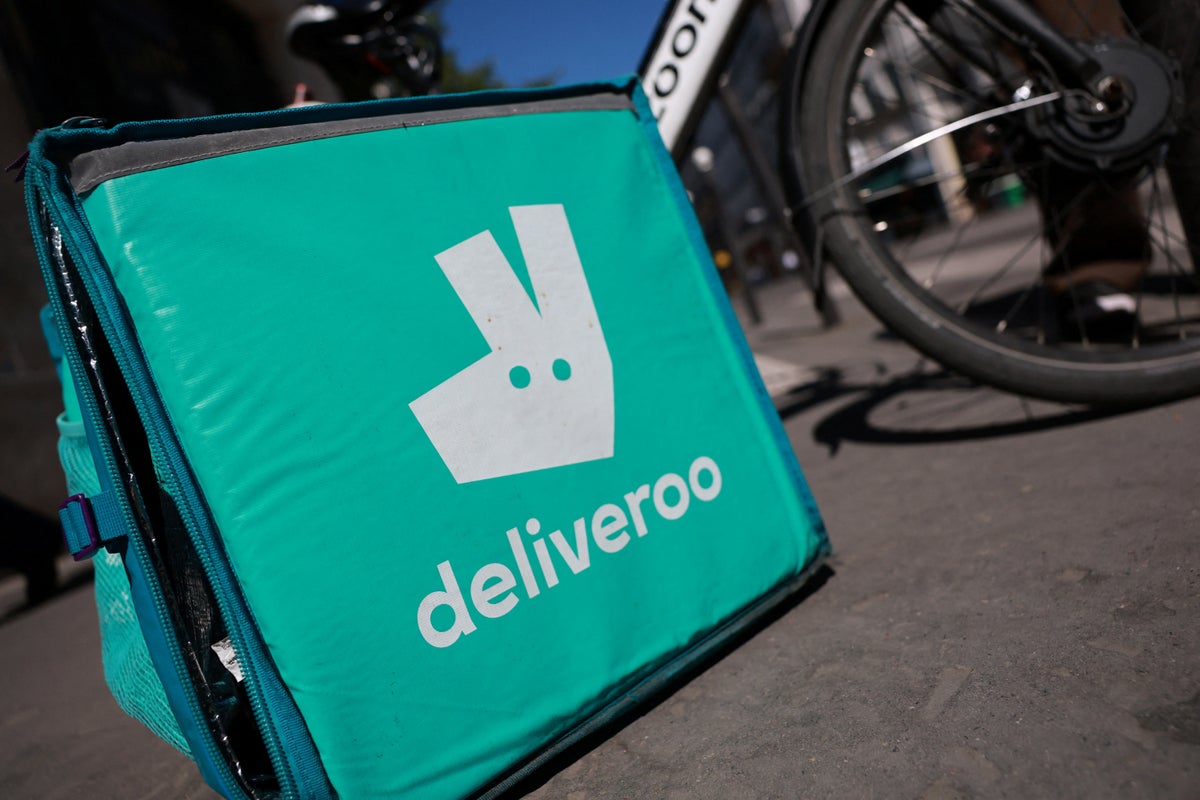
Deliveroo is set to significantly broaden its offerings beyond its core takeaway service, introducing a new feature that will allow customers to book restaurant reservations directly through its platform.
The initiative, named Deliveroo Reservations, is scheduled to launch initially in London this Thursday.
Customers will gain the ability to secure tables at a range of prominent London eateries, including Dishoom, Dove, Hide, Kricket, Barrafina, and Kolae. This expansion marks a strategic move for the company, which was acquired by US-based DoorDash for £2.9 billion last year.
The new reservation system integrates technology from SevenRooms, a restaurant booking platform business that DoorDash also purchased for approximately £900 million.
This integration follows DoorDash’s own expansion into restaurant bookings on its platform in the United States late last year, setting a precedent for Deliveroo’s latest venture.
This move is central to Deliveroo’s ambitions to grow beyond its established takeaway delivery model in the UK. While the feature will first be rolled out to restaurants in London, Deliveroo has indicated plans to extend the service across the wider UK later in the year.
Suzy McClintock, vice president for consumer and new verticals at Deliveroo, commented on the development: “This launch is about supporting restaurants to grow in new ways. Whether it’s a Deliveroo order or a reservation in store, we want to drive discovery, demand and revenue across every channel.”
She added: “By fully integrating SevenRooms into the Deliveroo app, we’re giving restaurants access to new customers and giving diners an easier way to discover and book some of London’s best tables – all in one place.”
Joel Montaniel, vice president and co-founder of SevenRooms, echoed this sentiment, stating: “Bringing reservations into the Deliveroo app gives London restaurants a new way to connect with diners and grow, while making it easy for consumers to discover and book great restaurants.”
Business
Warner Bros. Discovery books $2.9 billion net loss tied to Paramount deal, restructuring costs

An American flag flies at Warner Bros. Studio in Burbank, California, on Sept. 12, 2025.
Mario Tama | Getty Images
Warner Bros. Discovery on Wednesday reported a staggering net loss for the first quarter, but it has an explanation.
The company booked a net loss of $2.9 billion, far larger than the net loss of $453 million it reported in the year-earlier quarter.
The figure included $1.3 billion of “pre-tax acquisition-related amortization of intangibles, content fair value step-up and restructuring expenses” as well as the $2.8 billion termination fee that Warner Bros. Discovery owed Netflix after their pending transaction fell through in February.
Netflix walked away from its proposed deal to buy WBD’s assets after Paramount Skydance came in with a higher offer. Paramount agreed to pay the termination fee as part of its agreement to buy the entirety of WBD, but the cost lives on WBD’s books until the close of that deal.
Since the amount is refundable to Paramount under certain circumstances, such as if it were to terminate the deal with Paramount for a higher offer, the obligation would be shifted to WBD.
Paramount’s proposed acquisition received approval from WBD shareholders in April and is currently in the midst of a regulatory review process. On Monday, Paramount said in its earnings release that it has “made significant progress” toward closing the deal, which it expects to be completed in the third quarter.
WBD on Wednesday also reported first-quarter revenue that was down 1% year over year to $8.89 billion. The company’s adjusted earnings before interest taxes, depreciation and amortization was up 5% to $2.2 billion. WBD had $33.4 billion in gross debt at the end of the quarter.
Streaming continued to be a highlight for the company.
Total streaming revenue was up 9% to about $2.89 billion as subscriber revenue increased due to the expansion of HBO Max — WBD’s flagship streaming platform — in international markets. Advertising revenue for the unit was up 20% due to an increase in customers subscribing to the ad-supported tier.
The company said in a shareholder letter it exceeded its guidance of more than 140 million global streaming customers at the end of the first quarter, and it remains on track to surpass 150 million global subscribers by the end of the year.
WBD’s portfolio of pay TV networks, which includes CNN, TBS and the Discovery Channel, continued to weigh on the company. The linear TV networks reported $4.38 billion in revenue, down 8% from the prior year. The company said linear advertising revenue was down 11%, which was primarily driven by the absence of NBA media rights from its portfolio.
Revenue for the film studio division, meanwhile, increased 35% to $3.13 billion year over year.


Motorbike gunmen kill political aide in India’s West Bengal

Melissa Barrera reacts to Jenna Ortega exiting ‘Scream’ after her firing

Brazil’s apparel imports double in 5 years, momentum persists

-

 Sports1 week ago
Pro wrestling star Steph De Lander reveals how colleague’s advice helped lead her to title triumph at ACW
-
 Business1 week ago
PSX plunges over 4,800 points | The Express Tribune
-
 Tech1 week ago
This Ambitious Laptop Doesn’t Leave Much Room for Your Hands
-

 Tech7 days ago
Almost half of UK businesses hit by cyber attacks | Computer Weekly
-
Uncategorized1 week ago
[CinePlex360] Some plugins have failed to updat
-
 Fashion6 days ago
Canada’s Lululemon appoints Esi Eggleston Bracey to board of directors
-
 Business1 week ago
BP profits more than double as oil trading booms amid Iran war
-
 Business6 days ago
Apollo Sports Capital and Tom Dundon make landmark $225 million investment in pickleball