

Fashion
US inks reciprocal trade agreement with Guatemala

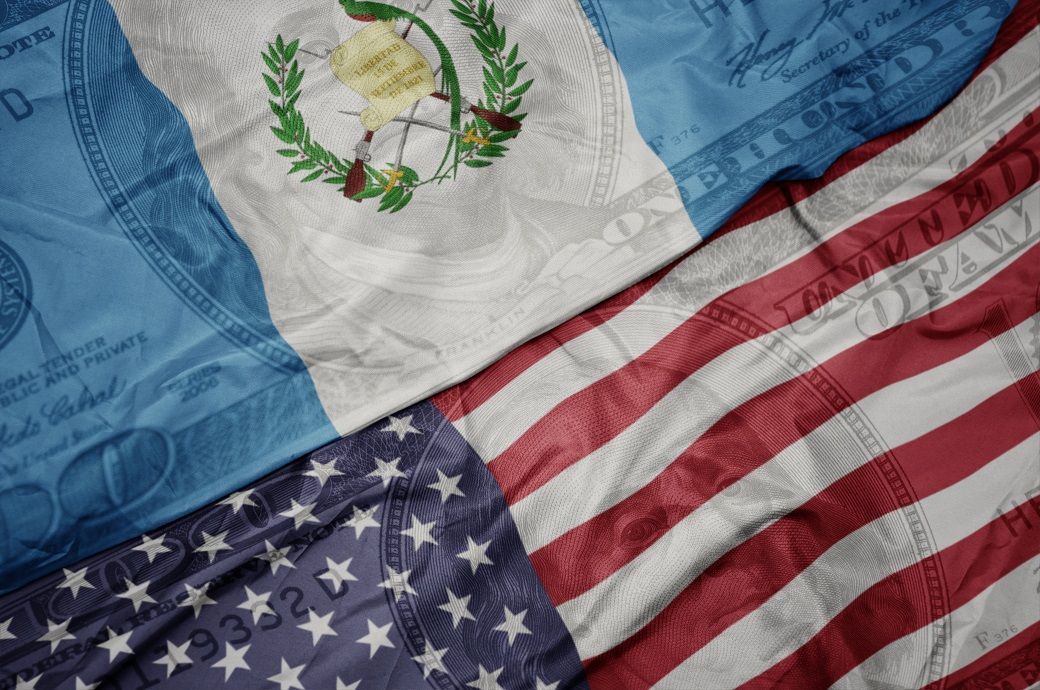
“President Trump’s leadership is forging a new direction for trade that promotes partnership and prosperity in Latin America, further strengthening the American economy, supporting American workers, and protecting our national security interests,” said Ambassador Greer in a USTR release.
USTR Jamieson Greer and Guatemala’s Minister of Economy Adriana Gabriela Garcia recently signed the US-Guatemala Agreement on Reciprocal Trade.
The agreement addresses trade barriers facing American workers and producers, expands and solidifies markets for US exports and strengthens strategic economic ties in the Western Hemisphere, Greer said.
US trade body NCTO welcomed the signing.
The agreement addresses trade barriers facing American workers and producers, expands and solidifies markets for US exports and strengthens strategic economic ties in the Western Hemisphere, he said.
“This agreement builds on our long-standing trade relationship and shared interest in reinforcing regional supply chains,” he added.
The key terms of the agreement includes breaking down non-tariff barriers for US industrial and exports, advancing trade facilitation and sound regulatory practices; protecting and enforcing intellectual property; preventing barriers for digital trade; improving labour standards; strengthening environmental protection; strengthening economic security alignment; and confronting state-owned enterprises and subsidies.
Guatemala has committed to take steps to restrict access to central level procurement covered by its free trade agreement commitments for suppliers from non-free trade agreement partners, permitting exemptions as necessary, in a manner comparable to US procurement restrictions.
Welcoming the announcement, National Council of Textile Organizations (NCTO) president and chief executive officer Kim Glas said the agreement marks an important step toward strengthening the US textile supply chain.
“Guatemala is a key partner in the CAFTA-DR [Dominican Republic-Central America-United States Free Trade Agreement] region, with nearly $2 billion in two-way textile and apparel trade. Together, the region operates as an integrated co-production platform that is essential to the US textile supply chain,” he noted.
The US-Western Hemisphere textile and apparel supply chain remains ‘a critical strategic alternative’ to China and other Asian producers, he added.
Fibre2Fashion (DS)












On a year-on-year (YoY) basis, final demand prices climbed 3.4 per cent in the 12 months ended February, matching the largest annual increase recorded in February 2025. Margins for apparel, footwear, and accessories retailing declined by 4.5 per cent, BLS said in a press release.
US producer prices rose 0.7 per cent MoM in February 2026, with annual inflation at 3.4 per cent.
The increase was driven mainly by services, up 0.5 per cent, while goods prices climbed 1.1 per cent, led by energy.
Apparel retail margins fell 4.5 per cent.
The data signals broad-based wholesale inflation, with sustained pressure despite weakness in select consumer-facing segments.
The February rise was driven largely by services, which accounted for more than half of the overall increase. Prices for final demand services advanced 0.5 per cent, marking the third consecutive monthly gain. Within this category, prices for services excluding trade, transportation, and warehousing rose 0.6 per cent, contributing nearly three-fourths of the increase. Trade services and transportation and warehousing services also posted gains of 0.4 per cent and 0.5 per cent, respectively.
Meanwhile, prices for final demand goods rose 1.1 per cent in February, the steepest increase since August 2023. Energy prices also increased by 2.3 per cent, while prices for goods excluding food and energy registered a more modest rise of 0.3 per cent.
Fibre2Fashion News Desk (SG)

During the period, apparel imports declined by *.** per cent to **,***.*** million SME from **,***.*** million SME in ****. Imports of textiles (non-apparel) reached **,***.*** million SME in ****, marking a decline of *.** per cent compared with **,***.*** million SME in ****.
The import volume of cotton products fell by *.** per cent to **,***.*** million SME during the review period, compared with **,***.*** million SME a year earlier. Meanwhile, imports of man-made fibre (MMF) products decreased to **,***.*** million SME in ****, down from **,***.*** million SME in ****.


US wholesale inflation accelerates as producer prices rise 0.7% in Feb

North India cotton yarn strengthens on supply shortage

UK borrowing higher than expected in February

Stock market crash today (March 12, 2026): Nifty50 opens below 23,600; BSE Sensex down over 900 points on continuing US-Iran war – The Times of India

UK’s Topshop unveils Tolu Coker capsule collection

India’s textile recycling market may reach $3.5 bn by 2030: Report

-
Business1 week ago
Stock market crash today (March 12, 2026): Nifty50 opens below 23,600; BSE Sensex down over 900 points on continuing US-Iran war – The Times of India
-
 Fashion1 week ago
UK’s Topshop unveils Tolu Coker capsule collection
-
 Fashion1 week ago
India’s textile recycling market may reach $3.5 bn by 2030: Report
-

 Tech1 week ago
Meta Developed 4 New Chips to Power Its AI and Recommendation Systems
-
 Business1 week ago
8th Pay Commission: How Much Will Central Govt Employees’ Salaries Rise? What We Know So Far
-

 Entertainment1 week ago
Ed Sheeran makes surprising Benny Blanco confession after hygiene uproar
-

 Fashion1 week ago
Is Bangladesh facing price challenges from China in the EU?
-

 Entertainment1 week ago
Gas, food, household prices explained