

Fashion
France’s LVMH posts $96.96 bn 2025 revenue as currency headwinds weigh

Profit from recurring operations stood at €17.8 billion, translating into an operating margin of 22 per cent, which was affected by unfavourable currency movements. Net profit attributable to the group declined 13 per cent to €10.9 billion, while operating free cash flow rose 8 per cent to €11.3 billion. Net financial debt fell sharply by 26 per cent to €6.9 billion, underscoring strong cash discipline.
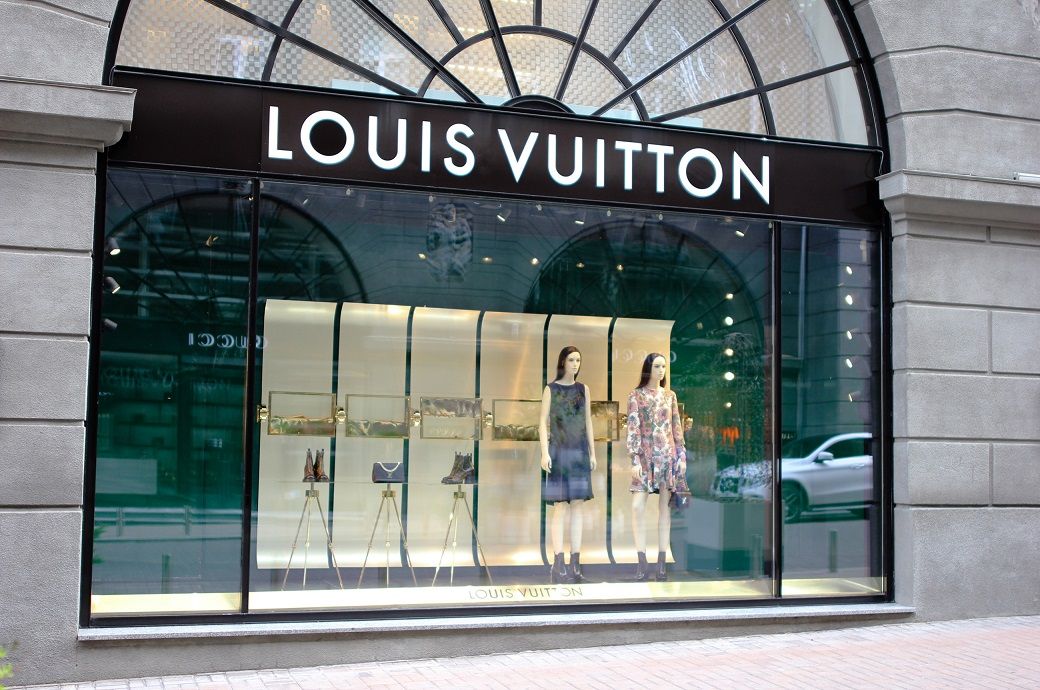
French luxury group LVMH has reported €80.8 billion (~$96.96 billion) revenue in 2025, down 5 per cent reported and 1 per cent organically, amid currency headwinds.
Profit from recurring operations reached €17.8 billion, while net profit fell 13 per cent.
Performance stabilised in H2 and Q4, supported by US demand and strong cash generation, reinforcing confidence for 2026.
Region-wise, sales in Europe declined in the second half of the year, while the United States recorded growth, supported by solid local demand. Japan saw a decline compared with 2024, when tourist spending had been boosted by a much weaker yen. In contrast, Asia excluding Japan showed a ‘noticeable improvement’ compared with 2024, returning to growth in the second half, LVMH said in a press release.
Despite the full-year decline, performance improved in the second half, with organic revenue growth of 1 per cent, reflecting better trends across business groups after the slowdown seen since 2023. Fourth-quarter organic revenue growth also came in at 1 per cent, in line with the third quarter, signalling stabilisation towards year-end.
In Fashion & Leather Goods, revenue declined YoY in 2025, although LVMH reported an improvement in the second half, supported by local customers after 2024 had benefited from tourist-led demand, particularly in Japan. Profit from recurring operations fell 13 per cent, largely due to currency effects, while the division maintained a very high operating margin of 35 per cent. The group highlighted Louis Vuitton’s product and experiential strength, including The Louis in Shanghai, alongside strong brand momentum driven by fashion shows, and new store concepts. Dior’s creative reset, major store openings, and renewed creative leadership at Celine, Loewe, Givenchy and Fendi were also cited as contributing to fresh energy across the portfolio.
“Once again in 2025, LVMH demonstrated its solidity and effective strategy upheld by its highly engaged teams. The Group was buoyed by the loyalty and growing demand shown by our local customers. This momentum was once again underpinned by the powerful desirability of our brands, which embody creative passion and the pursuit of the utmost quality, and by our ambition of offering our customers extraordinary stores and cultural experiences, as demonstrated by The Louis in Shanghai, and our House of Dior stores in a number of cities around the world,” said Bernard Arnault, chairman and CEO of LVMH.
“In 2026, in an environment that remains uncertain, our Maisons’ ability to inspire dreams—coupled with the highest levels of vigilance with regard to cost management, and our environmental and social commitments—will once again be a decisive asset underscoring our leadership position in the luxury goods market. We will remain true to our entrepreneurial tradition as a forward-looking family group focused on sustainable creativity in high-quality products, exceptional spaces and the long-term future of our outstanding craftsmanship,” added Arnault.
Selective Retailing delivered 4 per cent organic revenue growth and a 28 per cent rise in profit from recurring operations, lifting operating margin by 2 percentage points to 9.7 per cent. DFS showed stabilisation, with streamlining measures improving profitability despite weak international conditions. In January 2026, LVMH signed an agreement with China Tourism Group Duty Free to acquire DFS’ business in Greater China, including the Gallerias in Hong Kong and Macao.
LVMH also reported progress under its Life 360 environmental programme, accelerating circular design initiatives. Forty-one per cent of materials used for products and packaging were sourced through recycling processes, up 8 per cent versus 2024. The proportion of certified raw materials increased further, with cotton at 84 per cent and wool at 76 per cent.
Looking ahead, LVMH said it remains confident for 2026, despite continued geopolitical and macroeconomic uncertainty. The group will continue to focus on brand development, innovation, disciplined cost management and long-term sustainability, aiming to further strengthen its global leadership position in luxury goods.
Fibre2Fashion News Desk (SG)












The trains will originate in the Eastern Province, departing from King Abdulaziz Port in Dammam and passing through Jubail Commercial Port and King Fahad Industrial Port, reach destinations in Jordan and countries north of the country.
Saudi Arabia Railways has opened new freight routes linking Arabian Gulf ports to the Haditha border crossing near Jordan.
The trains will start in the Eastern Province, departing from King Abdulaziz Port and passing through Jubail Commercial Port and King Fahad Industrial Port, reach points in Jordan and beyond.
The aim is to boost the flow of goods, support exports and improve supply chain efficiency.
Each freight train will carry more than 400 containers and travel over 1,700 kilometres.
The initiative aims at boosting the flow of goods, supporting exports and improving supply chain efficiency, SAR was cited as saying by Gulf media outlets.
The new route is also expected to strengthen regional trade connectivity, improve maritime integration and boost export movement. It also supports sustainability goals in the logistics and transport sectors and reduces shipping time by up to half compared to other land transport methods.
SAR operates an integrated rail network extending over 5,500 kilometres, providing passenger and freight transport services, including minerals.
Fibre2Fashion News Desk (DS)
Clothing emerged as the primary driver of inflation, contributing the largest upward impact on both CPI and CPIH annual rates. In contrast, motor fuels provided the biggest downward pressure, partially offsetting overall price gains, ONS said in a press release.
Core inflation (excluding energy, food, alcohol and tobacco) edged up to 3.2 per cent in February from 3.1 per cent in January, indicating underlying price pressures remain firm. Within this, goods inflation stayed unchanged at 1.6 per cent, while services inflation eased slightly to 4.3 per cent from 4.4 per cent.
UK inflation held steady in February 2026, with CPI at 3 per cent YoY and a 0.4 per cent monthly rise, according to ONS.
Clothing drove inflation, while motor fuels offset gains.
Core inflation edged up to 3.2 per cent. Producer input prices rose 0.5 per cent, while output slowed to 1.7 per cent.
Import prices increased 0.3 per cent, indicating moderate external cost pressures.
Category-level data showed a notable rebound in clothing and footwear prices, which rose 0.9 per cent annually in February compared to no change in January. On a monthly basis, the segment recorded a 0.6 per cent increase, reversing a decline seen a year earlier.
Meanwhile, the producer input prices rose 0.5 per cent YoY, recovering from a revised 0.4 per cent decline in January, while output prices increased 1.7 per cent, though at a slower pace than the 2.5 per cent rise in the previous month. Monthly trends showed input costs climbing 0.8 per cent, even as factory gate prices fell by 0.5 per cent.
The Import Price Index (IPI) registered a modest 0.3 per cent annual increase, reflecting relatively contained imported inflation. Overall, the data suggests that while headline inflation remains stable, sector-specific pressures, particularly in clothing, continue to influence price dynamics across the UK economy.
Fibre2Fashion News Desk (SG)

The increase in import prices was driven by both fuel and nonfuel categories. Fuel import prices surged 3.8 per cent, led by higher petroleum and natural gas prices, although they remained 10.6 per cent lower year-on-year (YoY), US Bureau of Labor Statistics said in a press release.
US import and export prices rose sharply in February 2026, with imports up 1.3 per cent and exports 1.5 per cent, driven by fuel, industrial supplies and capital goods.
Non-agricultural exports and energy costs supported growth.
Regional price trends varied, while earlier shutdown disruptions affected data.
The increase reflects strong global demand alongside persistent cost pressures.
Meanwhile, nonfuel imports rose 1.1 per cent, supported by higher costs of capital goods, industrial supplies, and consumer goods, import prices increased by 1.3 per cent in February, following a 0.6 per cent rise in January, marking the steepest monthly gain since March 2022.
Rising prices in finished goods were particularly notable, with capital goods import prices jumping 1.3 per cent, the largest increase on record. Gains were also seen in consumer goods, including apparel, footwear and household products, reflecting steady consumer demand despite inflationary pressures.
On the export side, non-agricultural exports drove growth, increasing 1.7 per cent in February, while industrial supplies and materials surged 3.6 per cent. Higher prices for natural gas, and crude petroleum. Export prices increased 3.5 per cent YoY, indicating sustained global demand for US goods.
Trade dynamics varied across regions. Import prices from the European Union rose 0.6 per cent and from Canada 1.6 per cent, while prices from China edged up 0.5 per cent despite a 1.9 per cent annual decline. On the export front, prices to the European Union jumped 3.2 per cent, while shipments to Japan and Canada also recorded strong gains.
These price movements come at a time when global industry events, trade exhibitions, and policy discussions are influencing supply chains and pricing strategies. Rising costs of industrial inputs and energy are being closely monitored by businesses participating in key international platforms, where sourcing, pricing, and resilience remain central themes.
Additionally, earlier disruptions caused by the federal government shutdown between October and November 2025 have led to some suppressed data points, adding complexity to trend analysis.
Fibre2Fashion News Desk (SG)


Riyadh opens rail freight route linking eastern ports to Jordan border

Iran deal may be finalized ‘soon’, says Trump

UK consumer inflation remains flat at 3% YoY in Feb

-

 Politics6 days ago
Afghanistan announces release of detained US citizen
-

 Tech6 days ago
Can a Home Appliance Fix the Problem of Soft-Plastic Waste?
-

 Entertainment6 days ago
UN warns migratory freshwater fish numbers are spiralling
-

 Sports1 week ago
Men’s March Madness live tracker: Updates on Saturday’s games
-
 Business6 days ago
Property Play: Home flippers see smallest profits since the Great Recession, real estate data firm says
-

 Sports1 week ago
Arne Slot: Liverpool’s defeat to Brighton ‘hurts a lot’
-

 Sports6 days ago
Broadcast industry CEO says consolidation is ‘essential’ to compete for NFL soaring media rights prices
-
 Business6 days ago
Gold prices soar in Pakistan – SUCH TV