

Business
Wide gap in corruption perception, real situation | The Express Tribune


FPCCI survey claims only 27% Pakistanis have faced bribery vs 68% who perceive such malpractices as common feature
ISLAMABAD:
Pakistan’s corruption problem appears to be bigger in perception compared to the situation on the ground as data has revealed a significant gap between people’s opinion and the real experience.
According to Pakistan’s first homegrown transparency survey – the Index of Transparency and Accountability in Pakistan (iTAP), 68% of Pakistanis perceive bribery as a common feature, but only 27% have reported actual experience of being asked to pay bribe.
The Federation of Pakistan Chambers of Commerce and Industry (FPCCI), in collaboration with Ipsos, on Tuesday officially launched the study at the FPCCI Capital House, Islamabad.
Federal Minister for Planning, Development and Special Initiatives Ahsan Iqbal, representatives from the public and private sectors, civil society, academia and media were present on the occasion. Survey results show that the Perception Index score was substantially higher at 67.06 while the Live Experiences Index stood at 15.6.
Institution-wise, the traffic police, government hospitals and Federal Board of Revenue (Inland Revenue) ranked high in terms of public perception.
On the experience index, the government hospitals topped the list, followed by the National Database and Registration Authority (NADRA) and public educational institutions. A majority (67%) of Pakistanis reported having not encountered any malpractices during their interactions with public institutions.
Similarly, 56% perceive patronage/nepotism as widespread, but only 24% have personally faced it. The widest gap exists in illicit enrichment as 59% believe it is common among public officers, yet only 5% personally know an officer who has illicitly enriched themselves.
Building on these findings, the data was aggregated to construct composite index scores. The survey also captured critical data regarding awareness of public institutions and anti-corruption measures.
NADRA holds the highest satisfaction rating among citizens and the National Accountability Bureau (NAB) is the most recognised anti-corruption agency (37% top-of-mind recall). Yet overall interaction and engagement with anti-corruption bodies remains remarkably low at 8%.
Public knowledge of legal protection is low as only 11% are familiar with the right to information laws and 15% are aware of whistleblower protection laws.
The iTAP initiative was conceived in May 2025 as a strategic effort to develop an indigenous, recurring benchmark for measuring transparency and accountability. The survey aims to provide an objective assessment of public trust in the government and its institutions. The field survey was conducted during December 2025 and January 2026, ensuring contemporary and nationally representative insights.
Overall, the findings establish a credible baseline for reform, demonstrating that despite negative perceptions, a majority of citizen interactions with public institutions are reported to be corruption-free.
Strengthening transparency, addressing awareness gaps and effectively communicating institutional improvements now emerge as the next critical frontier for advancing governance, building public trust and improving Pakistan’s investment outlook.
Addressing the audience, Planning Minister Ahsan Iqbal praised the FPCCI for bringing the critical issue of transparency and accountability to the forefront of national discourse. He emphasised that transparency and accountability form the foundation of good governance and were essential for citizen satisfaction, a business-enabling environment, investor confidence and sustainable national development.
The minister highlighted the gap between public perceptions and actual experience and stressed that negative perceptions, if left unaddressed, could undermine national progress and distort realities. “Bridging this perception-reality gap must, therefore, be a shared priority.”
He lauded the public institutions that had earned citizen’s trust through improved service delivery and expressed confidence that if iTAP was tracked consistently over time, it could serve as a powerful monitoring and reform tool by reinforcing the principle “what gets measured gets improved”.

Two ads promoting British beef and milk have been banned after television presenter and environmental campaigner Chris Packham complained that they misled consumers about the products’ carbon footprints.
Both ads for the Agriculture and Horticulture Development Board’s (AHDB) Let’s Eat Balanced campaign used the carbon footprint of British beef and milk to promote the products, firstly stating: “British beef not only tastes great, but has a carbon footprint that’s half the global average*.”
The asterisk linked to text that stated: “Full lifecycle emissions of CO2 eq (carbon dioxide equivalent) per kg of beef.”
The ad for milk stated: “British milk not only tastes good, but is also produced to world-class standards, and has a carbon footprint a third lower than the global average.”
Packham complained to the Advertising Standards Authority (ASA) that the ads, and specifically the carbon footprint claims, were misleading as they did not reflect the full environmental impact of British meat and dairy.
The AHDB said the ads’ mention of carbon emissions would be understood in relation to the environmental impact of beef and milk that occurred between the “cradle-to-retail” stages.
But the ASA said the average consumer “being reasonably well-informed, observant and circumspect” would understand the claims to apply beyond the retail stage and include actions such as cooking and wastage.
The ASA said: “While we acknowledged the potential difficulties in producing post-retail emissions data, the claims in the ads suggested those emissions were included and we therefore expected the evidence provided to also include them.
“We therefore concluded that the evidence presented was insufficient to support the full life-cycle claims in the ads, which was how the average consumer was likely to interpret them.
“We reminded AHDB that environmental claims should be based on the full life cycle unless the ad stated otherwise.”
AHDB’s director of communications and market development, Will Jackson, said: “Let’s Eat Balanced is doing what it was designed to do, providing clear, factual, evidence-led information about British food, nutrition and farming standards.
“Since the investigation began, we have conducted independent consumer research which found that the majority of respondents interpreted these adverts as relating to the production phase only, from farm to retail.
“This research provides important insight into consumer understanding and supports our belief that consumers were not misled by the information we shared in these two specific adverts.”

BENGALURU: India’s Gen Z workforce is embracing what experts describe as “portfolio careers” – balancing multiple professional identities and income streams simultaneously. New research from LinkedIn shows that 75% of Gen Z entrepreneurs in India now manage multiple income streams, significantly higher than the 62% among Gen X entrepreneurs. The findings point to a growing preference among younger professionals for flexibility, autonomy and diversified sources of income. “We’re also seeing the rise of the ‘portfolio era’, with more professionals creating multiple income streams and redefining what a career can look like. This shift is making entrepreneurship more accessible than ever before,” said LinkedIn India country manager Kumaresh Pattabiraman.Rather than depending on a single full-time role, many professionals are simultaneously building businesses, freelancing, consulting, creating online content and monetising specialised skills through digital platforms. The trend comes amid a broader rise in entrepreneurial activity in India. LinkedIn recorded a 104% year-on-year increase in members adding “Founder” to their profiles – the highest growth among all global markets.AI is also emerging as a major enabler of this shift. The report found that 85% of Gen Z entrepreneurs consider AI and digital tools important to their business operations.

Sam Altman said Elon Musk tried many times for total control of OpenAI, which he’s now suing.
Source link


Will LeBron James retire after current season?

South Korea reviews phased support for Strait of Hormuz security efforts

New Jersey Gov. Mikie Sherrill announces another NJ Transit World Cup ticket cut days after first reduction

-

 Tech1 week ago
DHS Demanded Google Surrender Data on Canadian’s Activity, Location Over Anti-ICE Posts
-
 Business1 week ago
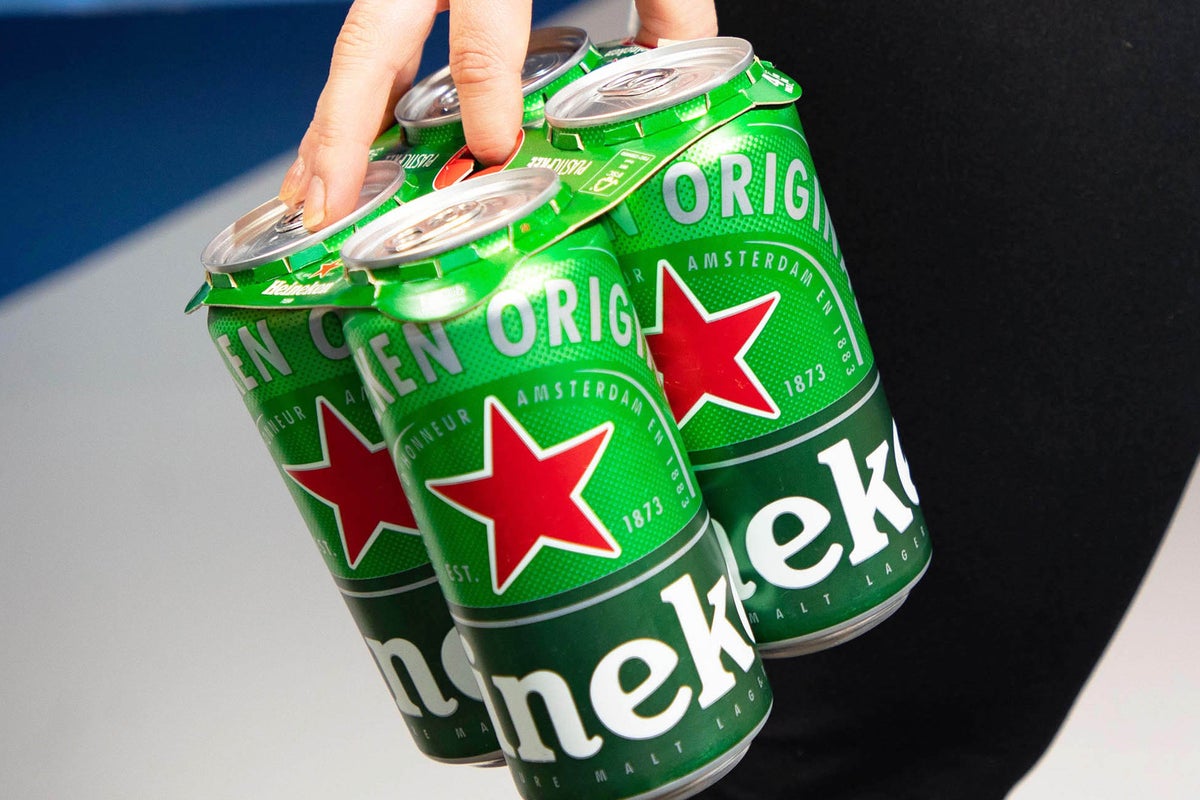
Heineken plans huge investment in hundreds of UK pubs ahead of World Cup
-

 Tech5 days ago
A new frontier: Identity stack evolves for agentic systems | Computer Weekly
-

 Tech4 days ago
‘Orbs,’ ‘Saucers,’ and ‘Flashes’ on the Moon: Pentagon Drops New UFO Files
-

 Sports5 days ago
Shaheen Afridi achieves landmark feat during opening Test against Bangladesh
-
 Business1 week ago
India among most resilient large EMs, better placed for future global shocks; policy reforms & strong buffers help: Moody’s – The Times of India
-

 Tech5 days ago
What Microsoft Executives Really Thought About OpenAI in 2018
-

 Fashion5 days ago
New orders in German manufacturing up 5% MoM in Mar 2026: Destatis