

Tech
The 11 Best Mattresses You Can Buy Online, Picked After Testing 100+

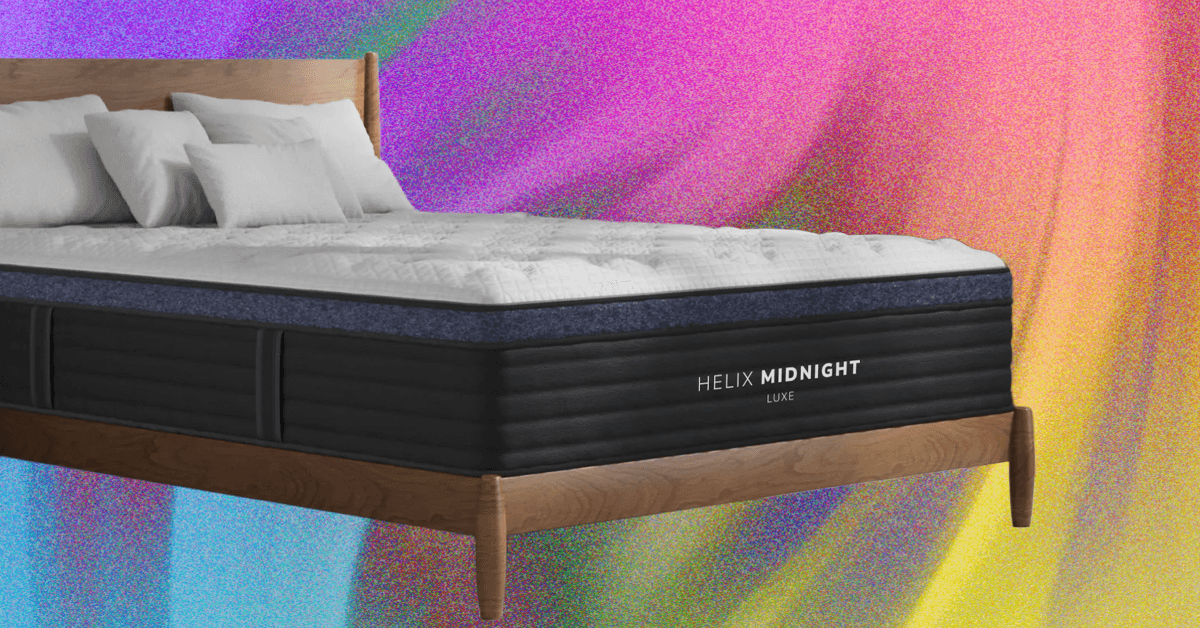
Compare Our Top Picks
Honorable Mentions
Photograph: Julia Forbes
We tested many mattresses last year and have already hit the ground running in 2026. That said, here are a few options we enjoyed and considered but ultimately didn’t make the starter team.
Sleep Number p6 Smart Bed for $3,199: This smart mattress offering from Sleep Number is designed to prioritize pressure relief in your sleep experience. If sensors detect areas that bear the brunt of your weight, “Responsive Air” chambers atop the p6 will adjust in real time to counteract it. It takes some getting used to to hear the bed inflate and deflate on its own, but it truly makes for a personalized sleep experience. Add built-in sleep tracking and 100 adjustable firmness levels, and you get a one-of-a-kind experience. However, to fully enjoy the mattress’s performance, it’s best to also get an adjustable base, which is a significant additional expense. —Julia Forbes. $3,199 to $7,998
Thuma Luxury Hybrid Mattress for $1,795: Thuma’s hybrid mattress is interesting because it blends together a smorgasbord of mattress materials: a Tencel cover, organic wool, memory foam, organic latex, and recycled-steel coils. The same rubberwood trees are used for Thuma’s popular Classic Bed frame, and for the Dunlop latex in this mattress. Of the three firmness levels offered—plush, medium, and firm—the medium was yielding some pretty strong support. The sleep trial is a bit unclear, as you only get 100 nights of coverage with your first Thuma purchase. So if you’ve already used it on a different Thuma product, like the frame, you may be out of luck here. —Julia Forbes. $1,295 to $1,995
Puffy Cloud for $949: This enhanced all-foam mattress offers profound pressure relief without feeling too soft, despite the name “Cloud” being in its name. The Puffy Cloud has a thinner profile and would most likely be too soft for bigger bodies. However, for lightweight and average builds, it really comes through to support the lower back and hug around pressure points. The thinness also didn’t compromise its motion isolation, which meant little to no shaking when my dogs jumped in and out of bed.—Julia Forbes. $449 to $1,298
The Saatva Contour5 for $2,999: The Contour5 is a newer offering from Saatva, replacing the popular Loom & Leaf in the company’s lineup. Like other Saatva mattresses, but unlike most others on this list, it is not roll-packed and comes delivered on a moving truck. The Contour5 has two firmness options and updated cooling tech that uses airflow channels in its gel foam layer, which is thinner than its predecessor, meaning it retains less heat. In my two weeks of testing, I found the Contour 5 was very good at remaining cool through summer nights, which is extra impressive given that it uses very dense 5-pound-weight memory foam. The Contour5 is soft enough for side sleeping without feeling like a saggy hammock and has excellent build quality, which is impressive for an all-foam mattress without springs. I prefer a hybrid with microcoils, but Saatva is popular for a reason, and as all-foam mattresses go, it has a true luxury feel. —Martin Cizmar. $1,899 to $3,599
The Big Fig Classic for $1,899: The Big Fig is designed for larger body frames. Being a bit overweight myself, I was eager to see how well this mattress, which is advertised as comfortably handling 550 pounds per sleeper, performed. It is a well-built mattress with an effective gel cooling layer; however, the aggressive edge support created a hammock-like feel despite the sturdy springs and three layers of high-density foam in the middle of the mattress. This was true both on my back and on my side. Others may appreciate the effect of sinking a bit into the center of the bed more than I do. —Martin Cizmar. $1,499 to $2,699
The Boring Hybrid Mattress for $799: Boring Mattress is a new company founded by two alums from Tuft & Needle. Simplicity is the company’s selling point. There is just one option: the Boring Hybrid Mattress. (You are allowed to pick a size.) This 10-inch hybrid has four layers of both foam and springs. I’m very sensitive to joint pain, and certain beds tend to make it worse, which is why pressure relief is super important for me. Having slept on a variety of different mattresses throughout the years, I was doubtful that this one would work. But I’ve slept on the hybrid mattress for months now and have yet to feel any pain at all. It strikes an excellent balance between firmness and support that my very particular self hasn’t been able to find with other options on the market. It’s worth noting, however, that its layers come equipped with an open-cell design that’s designed to move heat from your body while sleeping. I’m usually cold, so this feature isn’t that important to me. But on nights when I’ve cranked the heat up in my room and woken up sweating a bit, I can’t say it worked all that well for me. This isn’t a deal breaker, but I wouldn’t buy it solely for that. —Brenda Stolyar. $599 to $999
Casper The One for $799: Casper was a leader in the first wave of bed-in-a-box makers in 2014. The company has changed ownership and design a few times over the past decade but last year’s launch of The One finds the company keeping pace with competitors. This is an all-foam mattress that stands 11 inches tall. Because it’s all foam, it’s on the light side, with a queen weighing an easily movable 66 pounds. One of the main issues with all-foam beds is that they get too hot, but Casper’s The One uses an open-cell foam layer called Breathe Flex Foam on the top, which makes it both pleasantly squishy and breathable. Two more layers of foam add up to a medium-firm feel, with the middle layer designed to cradle your hips, and the base layer designed to provide support. —Martin Cizmar. $749 to $1,698
The Winkbed for $1,499: WIRED reviewer Julian Chokkattu slept on the luxury firm version of the WinkBed for almost two years and he was quite happy in that time. His favorite perk? The edge support is fantastic, so his partner never wakes when he slips into bed late at night. The plush pillowtop also adds a luxe, hotel-like feel to a relatively firm bed. —Martin Cizmar. $1,149 to $2,049
Silk and Snow S&S Organic for $1,000: I wouldn’t expect this to feel silky-soft, but the latex is supportive for sleep. I love how responsive (read: bouncy) this bed is, especially as someone who tosses and turns often. It’s able to move with me so I never feel unsupported, or overheated for that matter. Latex and coils are breathable, as are the organic cotton cover and wool fire barrier. —Julia Forbes. $800 to $1,300
Nest Bedding Quail for $1,299: When it comes to all-foam mattresses from classic bed-in-a-box brands, I prefer the Casper above, but the Quail by Nest is a nice option if you want an all-foam bed that’s a little firmer and you’re willing to pay a little more. My biggest issue with the Nest was that despite its claimed cooling system—the foam is infused with minerals and designed with an airflow layer—I did sleep a little hot on it during my week of testing. —Martin Cizmar. $849 to $1,499
%2520(1).png)
Courtesy of Helix
Helix Sunset Elite for $3,749: Our top pick, Helix, also has an Elite collection that consists of seven mattresses along a spectrum of softness. At 15 inches high, the Sunset Elite is “the tallest mattress on the internet,” and comes shipped in two separate boxes, each heavy enough to max out FedEx requirements. The firmness is dictated by the foam density of the upper layer, which zips into a larger support system. This makes the mattress adjustable if you end up regretting your order. The bottom section has a separate layer of microcoils. I spent a month sleeping on the softest model from the Elite line, dubbed the Sunset, and appreciated the deep cradling effect. Helix offers a 100-day trial period on all of its mattresses. —Martin Cizmar. $2,499 to $4,499
DreamCloud Hybrid for $1,698: Don’t be turned off by that price just yet. This is one mattress that my husband begged me to keep, because the support and pressure relief set the bar so high. It’s been one of the most consistently performing mattresses I’ve tested over the years. And that seemingly high price? DreamCloud runs sales often, so expect to slash that in half. —Julia Forbes. $1,148 to $2,562
Wayfair Sleep 14-Inch Plush Cooling Gel Hybrid Mattress for $410: This plush mattress has a top layer of cooling gel that conforms to your body for comfort and has classic pocket coils below for structure and support, with layers of memory foams with varying thickness surrounding the coils for extra support (the coils and memory foam mixture helps with low motion transfer, too). The top knit cover and sides help with breathability and the overall cooling effect. The mattress is also compatible with an adjustable bed base, has solid edge support, is CertiPUR-US and Oeko-Tex Certified (ensuring no harmful toxins), and has a 10-year warranty. This bed is super comfy if you like a more plush mattress. —Molly Higgins. $400 to $700
Mattresses to Avoid
Not every mattress we test can be a winner, which is why we test in the first place. Here are a few that did not make the cut according to our standards.
Birch Elite Hybrid for $3,749: This is the newest model from Birch, and frankly, you would be just fine sticking with the Birch Natural or Birch Luxe Natural instead. The Birch Elite Hybrid was incredibly top-heavy and incredibly difficult to move, given the floppiness and weight of its numerous latex and coil layers. The top layers slid around, creating a lumpy surface, and the new “CoolForce” layer was completely undetectable. —Julia Forbes. $2,499 to $4,499
Brooklyn Bedding Spartan for $1,099: This mattress is designed for “athletic recovery,” and as a former collegiate athlete, I was excited to try it. I had opted for medium firmness over the soft and firm options, but upon receiving it, I had to double-check that I hadn’t gotten the soft option by accident. The medium cratered around me, leaving me with unhappy pressure points. The lack of overall support didn’t help me recover from soreness, so I couldn’t tell you whether the Far Infrared Ray recovery tech in the cover helped at all. —Julia Forbes $1,099 to $2,399
Sleep Number Climate360 Smart Bed for $10,249: This bed can be temperature-controlled, which is amazing. The adjustable base means you can be comfortable when watching TV, reading, or sleeping. Unfortunately, the price tag has too many digits, and sleep experts recommend avoiding electronic usage before bed—advice the Sleep IQ app defies. Did we mention it costs as much as a used Buick and the weight is not far behind? —Martin Cizmar. $10,249 to $14,499
Tempur-Pedic Tempur-Adapt for $2,199: Tempur-Pedic is one of the country’s best-known and loved mattress brands, but two separate WIRED reviewers (Martin Cizmar and Nena Farrell) have both disliked different mattresses from the company over the past two years. Nena found the Tempur-Adapt totally lacking in support, and felt like she was sinking into a void when she lay on it. Her spine and muscles both ached after sleeping on it so she gave it to her sister who also hated it, describing it as like sleeping on a leaky air mattress. —Martin Cizmar. $1,699 to $3,398
Amazon Basics mattress for $170 (Twin): This one is made of cheap foam that isn’t dense enough, causing too much sinkage. —Martin Cizmar. $170 to $436
Parachute Eco Comfort Mattress for $2,650: This mattress just doesn’t live up to its extravagant price. The model we tested didn’t have enough proper padding above its coils. —Martin Cizmar. $1,550 to $2,850
Frequently Asked Questions
Our testing process is simple—we dedicate a week or so to each mattress, sleeping on it at home to understand what it’s all about. The WIRED Reviews testing team has been refining our testing methodology since 2019, when we would try out mattresses side by side in a conference room, much like a mattress store experience. But just like what can happen at a mattress store, the experiences we were documenting in these brief observations could change the more time we spent with a mattress. Hence, we went back to basics and dedicated a week or more to sleeping on each one, noting down our nightly experiences.
That being said, I have spent the last six years as a certified sleep science coach and professional mattress testing becoming a mattress sommelier of sorts. Instead of devising tests to show how much a bed can support at the edge or reduce motion transfer, it really comes down to understanding the range of materials, sleeping positions, and body types in the mattress space.
What Should You Look for When Buying a Mattress?
Mattress shopping requires a bit of self-assessment before you even get into the particulars of a mattress. Taking note of your body type, preferred sleeping position, pain points, and material preferences for things like allergies or staying chemical-free are all data points that make the search a lot easier. From there, we can help you narrow down options for different scenarios, such as if you are a couple looking for a firm mattress to help with back pain. For that, I’d point you to some of our other guides, such as the best mattresses for sex and the best mattresses for back pain, to discuss some of our favorite options we’ve tested.
What Are Mattress Certifications?
This is one of the most critical factors to look for when buying a mattress, as it’s basically a cheat code for evaluating a mattress’s material and quality claims. For mattresses that use memory foam or organic and natural components, mattress certifications help us, as consumers, gain insight into the sourcing and safety of these materials. CertiPUR-US certification is a non-negotiable for me when it comes to memory foam because it shows that harmful chemicals were not used in its production. GreenGuard Gold is another certification that ensures any off-gassing from your mattress upon unboxing won’t affect your indoor air quality—important if you have sensitive skin, a strong sense of smell, allergies, or asthma.
How Long Does a Mattress Last?
As a ballpark estimate, your mattress should last eight to 10 years. I don’t recommend going much beyond that, as the mattress materials are past their prime and aren’t providing adequate support or comfort.
Just like picking out a bed, there are several factors involved that dictate how long it’ll last. Durability of the mattress’s materials always comes into play, as beds with coils tend to remain more structurally intact than all-foam beds, which can sag around the middle and edges over time. Your build also plays into this, because if your bed starts to buckle under your weight night after night, that’s obviously an issue. If this is the case for you, I’d recommend reviewing your warranty to see if it can be replaced.
How Long of a Mattress Warranty Should I Look For?
The industry standard for a warranty is about 10 years, so that should be the minimum in most cases. Many brands will offer prorated coverage beyond that decade mark, meaning the mattress can be replaced at a significant discount, depending on how long it’s been. This is where the fine print of a warranty is especially important to review, because many mattresses offer lifetime warranties. For example, DreamCloud has a “Forever Warranty” that fully covers its mattresses the first 10 years. After that 10-year mark, you have to pay $50 each way for the mattress repair or replacement to be delivered. It’s still a good deal, but something to be aware of.
Should I Buy My Mattress In-Store or Online?
Where you purchase your mattress is another personal preference. Many people may live near a showroom that sells a mattress they’ve been eyeballing, and want to go see it in person before buying. Others may do that and wait for an online holiday sale to secure a major deal.
The nice thing about buying online is that you get much more variety than what you’d get with a mattress store. You’ll still receive the sleep trial component that most brands offer for in-store purchases when opting to do so online. You can try the bed from the comfort of your home for a set number of days, typically 90 nights to an entire year, depending on the brand. Many companies, but not all, will require a 30-day adjustment period for you to get used to the mattress before they will process a return. If you do end up returning a mattress, some brands, both online and brick-and-mortar, may ask you to donate it to a local charity or arrange for pickup as part of the warranty. By donating, mattresses are kept out of landfills and put to good use.
Should I Wait for a Mattress Sale Before I Buy?
In all honesty, it comes down to how you’re currently faring with your mattress and sleep schedule. If you’re sleep-deprived and ready for a change, there’s no time like the present. We do cover coupons and promos that come up in non-holiday periods. For example, we have a special code for the Nolah Evolution running at all times.
During the holidays, the WIRED Reviews process is unique because we meticulously track price changes and sales year-round. That way, we can deliver news about the really good sales rather than what’s dominating headlines. Major mattress sales weekends include Presidents’ Day, Memorial Day, Fourth of July, Labor Day, Black Friday, and Cyber Monday. There are plenty of ad hoc sales that pop up for various events in between, too.
How Does WIRED Acquire Mattresses for Testing?
We conduct a lot of research about what’s new in the mattress world, as well as the legacy of established brands and models. To perform hands-on testing, we will request free media samples from these brands or buy them outright on sites like Amazon or Wayfair, or from smaller vendors. Some brands will engage with us in partnerships, but that does not dictate their placement within an article, what we say about the product, or even if we cover it. Even if we receive commission, it’s essential that we publish our true account of our experiences.
What Does WIRED Do With the Mattresses After Testing Them?
Because most mattresses we test are provided as media samples, we donate them locally upon completion of testing.
Power up with unlimited access to WIRED. Get best-in-class reporting and exclusive subscriber content that’s too important to ignore. Subscribe Today.







Acer is one of the top largest PC manufacturers in the world, perhaps best known for its gaming line and budget-friendly options. If you’ve already got your eye on an Acer product like a laptop or monitor, and are shopping at the company’s online storefront, you should be using one of these Acer promo codes and coupons to save some cash on your purchase.
Save 40% on Accessories When You Build an Acer Bundle
If you’re buying from Acer, you’re most likely shopping for either a desktop PC or laptop. With this discount, you can get a really solid deal on accessories if you bundle it with a mouse, laptop bag, or headset. When you go to purchase a PC, just click “Build Bundle” and you’ll see some of the eligible options, all of which are reduced by 40%. The Nitro Mechanical Keyboard, for example, goes from $50 to just $30. That 40% is a real discount, too, as that same keyboard costs $50 on Amazon when I checked.
Beyond peripheral add-ons, you can also save 10% off Acer Care Plus extended service plans or McAfee LiveSafe antivirus subscriptions. You can bundle up to five products together to save the most money. If you’re headed off to college (or have a kid in the family), a bundle like this can get you everything you need for a gaming or studying setup on the go.
Shop Rotating Weekly Deals on Monitors and Gaming Gear
Acer’s PC gaming offerings come in either the flagship Predator brand or the budget-tier Nitro. Acer offers rotating weekly deals on everything from monitors to gaming laptops, some of which are my favorites that I’ve tested in their given category. The Acer Nitro V 16, for example, was a budget gaming laptop that I recommended quite a lot last year because of its incredible price. The one I tested was the entry-level version with an Nvidia RTX 5050 inside, but Acer has the RTX 5060 model in its own storefront. It’s $100 off right now at $1,200, which comes with 16 GB of RAM and a terabyte of storage. In fact, it’s only $30 more than the RTX 5050 model, despite offering a significant jump in gaming performance. These discounts are reflected right on the product pages, so there’s no promo code, discount code, or coupon code required.
Acer has a wide selection of monitors available, too, whether that’s a massive 49-incher or a more modest 27-inch gaming workhorse. One of my favorite discounts I saw right now was the Acer Nitro XV2, a 27-inch 1440p display with a 300 Hz refresh rate. It’s 44% off at the time of writing, bringing the price down to just $250. Because these discounts are swapped out on a weekly basis, it’s worth checking back to see if the product you’re eyeing has a new discount.
Select Customers Can Get 15% Off Their Purchase
Acer also offers a number of added discounts at checkout, including 15% off for students. Students will need to verify through Student Beans or SheerID. Because a lot of the devices Acer offers are budget-friendly, they can be attractive for students, and the extra 15% off is the icing on the cake.
We tested the Acer Swift 16 AI last year and really enjoyed the high-resolution, OLED screen and impressively quiet performance. Acer has the smaller version of this same laptop available, the Swift 14 AI, which is currently $150 off. You also might check out the Acer Chromebook Plus 514, a laptop we liked quite a bit when we reviewed it in 2024.
Acer offers this same 15% discount for active duty military, veterans, and their families. It also applies to healthcare professionals, which can be verified through its healthcare discount portal.

The world’s top AI research conference, the Conference on Neural Information Processing Systems—better known as NeurIPS—became the latest organization this week to become embroiled in a growing clash between geopolitics and global scientific collaboration. The conference’s organizers announced and then quickly reversed controversial new restrictions for international participants after Chinese AI researchers threatened to boycott the event.
“This is a potential watershed moment,” says Paul Triolo, a partner at the advisory firm DGA-Albright Stonebridge who studies US-China relations. Triolo argues that attracting Chinese researchers to NeurIPS is beneficial to US interests, but some American officials have pushed for American and Chinese scientists to decouple their work—especially in AI, which has become a particularly sensitive topic in Washington.
The incident could deepen political tensions around AI research, as well as dissuade Chinese scientists from working at US universities and tech companies in the future. “At some level now it is going to be hard to keep basic AI research out of the [political] picture,” Triolo says.
In its annual handbook for paper submissions, issued in mid-March, NeurIPS organizers announced updated restrictions for participation. The rules stated that the event could not provide services including “peer review, editing, and publishing” to any organizations subject to US sanctions, and linked to a database of sanctioned entities. It included companies and organizations on the Bureau of Industry and Security’s entity list and those on another list with alleged ties to the Chinese military.
The new rules would have affected researchers at Chinese companies like Tencent and Huawei who regularly present work at NeurIPS. The database also includes entities from other countries such as Russia and Iran. The US places limits on doing business with these organizations, but there are no rules around academic publishing or conference participation.
The NeurIPS handbook has since been updated to specify that the restrictions apply only to Specially Designated Nationals and Blocked Persons, a list used primarily for terrorist groups and criminal organizations.
“In preparing the NeurIPS 2026 handbook, we included a link to a US government sanctions tool that covers a significantly broader set of restrictions than those NeurIPS is actually required to follow,” the event’s organizers said in a statement issued Friday. “This error was due to miscommunication between the NeurIPS Foundation and our legal team.”
Before they reversed course, the conference organizers initially said that the new rule was “about legal requirements that apply to the NeurIPS Foundation, which is responsible for complying with sanctions,” adding that it was seeking legal consultation on the issue.
Immediate Backlash
The new rule drew swift backlash from AI researchers around the world, particularly in China, which produces a large quantity of cutting-edge machine learning papers and is home to a growing share of the world’s top AI talent. Several academic groups there issued statements condemning the measure and, more importantly, discouraging Chinese academics from attending NeurIPS in the future. Some urged Chinese academics to contribute instead to domestic research conferences, potentially helping increase the country’s influence in relevant science and tech fields.
The China Association of Science and Technology (CAST), an influential government-affiliated organization for scientists and engineers, said Thursday that it would stop providing funding for Chinese scholars traveling to attend NeurIPS and would use the money instead to support domestic and international conferences that “respect the rights of Chinese scholars.”
CAST also said it will no longer count publications at the 2026 NeurIPS conference as academic achievements when evaluating future research funding. It’s unclear if the organization will reverse course now that NeurIPS has walked back the new rule.

Handala’s second claim, however—that it hacked the FBI—seems, for now, to be fiction. All evidence points to Handala having breached Patel’s older, personal Gmail account. Widely believed to be a “hacktivist” front for Iran’s intelligence agency the MOIS, Handala suggested on its website that the emails contained classified information, but the messages initially reviewed by WIRED didn’t appear to be related to any government work. TechCrunch did find, however, that Patel appears to have forwarded some emails from his Justice Department email account to his Gmail account in 2014.
Handala, which cybersecurity experts have described to WIRED as an “opportunistic” hacker group whose cyberattacks and breaches are often calculated more for their propaganda value than their tactical impacts, has nonetheless made the most of Patel’s embarrassing breach. “To the whole world, we declare: the FBI is just a name, and behind this name, there is no real security,” the group wrote in its statement. “If your director can be compromised this easily, what do you expect from your lower-level employees?”
Handala Hackers Put $50 Million Bounty on Trump and Netanyahu’s Heads
For further evidence of Handala’s bombastic rhetoric, look no further than another post on its website earlier this week (we’re intentionally not linking to it) that offered a $50 million bounty to anyone who could “eliminate” US president Donald Trump and Israeli prime minister Benjamin Netanyahu. “This substantial prize will be awarded, directly and securely, to any individual or group bold enough to show true action against tyranny,” the hackers’ statement read, along with an invitation to any would-be assassins to reach out via the encrypted messaging app Session. “All our communication and payment channels utilize the latest encryption and anonymization technologies, your safety and confidentiality are fully guaranteed.”
That bounty, Handala explained, was posted in answer to a statement about Handala published on the US Department of Justice website last week that offered $10 million for information leading to the identity or location of anyone who carries out “malicious cyber activities against US critical infrastructure” on behalf of a foreign government.
“Our message is clear: If you truly have the will and the power, come and find us!” Handala wrote in its response. “We fear no challenge and are prepared to respond to every attack with even greater force.”
In yet another post on its website this week, Handala also claimed to have doxed 28 engineers at military contractor Lockheed Martin working in Israel and threatened them with personal harm if they didn’t leave the country within 48 hours. When WIRED tried calling the phone numbers included in Handala’s leaked data, however, most of them didn’t work.
Apple says no device with its Lockdown Mode security feature enabled has ever been successfully compromised by mercenary spyware in the nearly four years since its launch. Amnesty International’s security lab head, Donncha Ó Cearbhaill, also says his team has seen no evidence of a successful attack against a Lockdown Mode–enabled iPhone. And Citizen Lab, which has documented several successful spyware attacks against iPhones, says none involve a Lockdown Mode bypass, while in two cases its researchers found the feature actively blocked attacks against NSO Group’s Pegasus and Intellexa’s Predator. Google researchers, meanwhile, found one spyware strain that simply abandons infection attempts when it detects the feature is enabled.
Lockdown Mode works by disabling commonly exploited iPhone features, such as most message attachment types and features like links and link previews. Incoming FaceTime calls are blocked unless the user has previously called that person within the past 30 days. When the iPhone is locked, it blocks connections with computers and accessories. The device will not automatically join nonsecure Wi-Fi networks, and 2G and 3G support is disabled. Apple has also doubled bounties for researchers who detect any Lockdown Mode bypass, with payouts up to $2 million.


Zayn Malik shares personal video message on ‘Mind of Mine’ 10th anniversary

EU Parliament, Council reach deal on major reform of Customs Code

Tiger Woods released from jail after DUI arrest; eyes appear bloodshot in booking photo

-
 Business1 week ago
Flipkart group CFO to leave co amid IPO plans – The Times of India
-
 Business1 week ago
Video: The Effects of High Oil Prices
-

 Fashion1 week ago
China’s textile & apparel exports surge 17% to $50 bn in Jan-Feb 2026
-

 Sports1 week ago
Rating Adidas’ 2026 World Cup away shirts: Argentina, Spain, Mexico and more
-
 Fashion1 week ago
The hidden $1.62 war tax now embedded in every garment you source
-

 Sports1 week ago
American Conference Commissioner Tim Pernetti thanks Trump for Army-Navy game executive order
-
Tech1 week ago
The Corsair 4000D RS PC Case Keeps Your System Cool
-

 Tech1 week ago
‘Uncanny Valley’: Nvidia’s ‘Super Bowl of AI,’ Tesla Disappoints, and Meta’s VR Metaverse ‘Shutdown’