

Business
Stellantis CEO says automaker is stronger together as stock plummets amid $26 billion charge


Stellantis CEO Antonio Filosa speaks during an event in Turin, Italy, Nov. 25, 2025.
Daniele Mascolo | Reuters
DETROIT — Stellantis CEO Antonio Filosa on Friday said the automaker plans to move forward as one company amid speculation that it would be better off selling brands or splitting up after disappointing results.
“Stellantis is a very strong global company that is very proud to have very deep regional groups,” Filosa, an Italian native, told reporters during a media call. “It makes all of sense to stay together. We want to stay together for many years to come.”
His comments come hours after the company announced 22 billion euros ($26 billion) in charges from a business restructuring that includes pulling back on electrification plans and reintroducing V8 engines to U.S. models.
Filosa described the actions as an “important strategic reset of our business model, with the only intention to put our customer preferences back at the center of what we do globally and in each regions.” He said the “mission is to grow” after notable declines in market share in recent years.
Stellantis’ stock plunged more than 25% in trading in Milan and was down 23% on Wall Street.
Filosa on Friday did not specifically rule out the possibility of regionally refocusing or shrinking the company’s vast portfolio of 14 auto brands that includes U.S. brands Jeep, Ram and Chrysler, as well as Italian nameplates Fiat and Alfa Romeo, which have not performed well domestically.
Stellantis-listed shared in Milan and New York
“We want to really manage our brands in the sense to provide to them the products and the technology that our customers, that are now at the center of our strategic reset, will tell us that they want and they need,” he said. “This is our core mission.”
Filosa said additional information about the company’s plans moving forward will come at a May 21 investor day.
Friday’s announcement comes days after Stellantis executives met with the company’s U.S. franchised dealers at their annual National Automobile Dealers Association conference with a message that the automaker planned to grow sales across its U.S. lineup of brands, according to two dealers who attended the meeting.
$26 billion in charges
The majority of Friday’s announced charges — 14.7 billion euros — are related to realigning product plans with consumer preferences and new emission regulations in the U.S.
Other charges include 2.1 billion euros in resizing the company’s EV supply chain, 4.1 billion euros in warranty costs and 1.3 billion euros in restructuring European operations.
The automaker also canceled its dividend for 2026 and issued a 5 billion euro nonconvertible hybrid bond.
2026 Jeep Grand Wagoneer
Jeep
The charges related to EVs follow General Motors and Ford Motor announcing billions of dollars in similar expenses due to pullbacks in plans for all-electric vehicles.
Shares of Ford and GM were not as impacted as much as Stellantis, which also issued lower-than-expected guidance amid years of strategic problems with the company.
Stellantis said it anticipates a net loss for 2025. For 2026, the auto giant is targeting a mid-single-digit percentage increase in net revenue and a low-single-digit rise in its adjusted operating income margin.
“While charges were expected, the amount comes in above F ($19.5B) and GM ($7.6B). Expect shares to trade meaningfully lower today as a result. We continue to believe STLAM is a show-me-story. In the US, the company has lost substantial market share given high pricing and a perceived lack of product investment,” RBC Capital Markets analyst Tom Narayan said in a Friday investor note.
Past mistakes
Filosa on Friday called out mistakes by former company leaders more than he has since he succeeded Carlos Tavares as CEO in June.
Tavares, who was ousted in December 2024 amid disagreements with the Stellantis board, in a book last year reportedly said that the group’s French, Italian and U.S. operations might have to be split amid pressure from its main stakeholders.
It’s been just over five years since Stellantis was created through a $52 billion combination of Italian American automaker Fiat Chrysler and France-based Groupe PSA on Jan. 16, 2021.

The merger formed the fourth-largest automaker by volume, but the company has run into significant problems in recent years amid its investments in all-electric vehicles, focus on profits over market share and cost-cutting efforts to the detriment of products.
Stellantis’ global sales under Tavares fell 12.3% from 6.5 million in 2021 — the year the company was formed — to 5.7 million in 2024. That included a roughly 27% collapse in the U.S. in that period to 1.3 million vehicles sold. The automaker dropped from fourth in U.S. sales to sixth, declining from an 11.6% market share to 8% during that time frame.
Stellantis’ global market share has fallen from 8.1% in 2020 to an estimated 6.1% last year, according to S&P Global Mobility.
Correction: Global market share for Stellantis has fallen from 8.1% in 2020 to an estimated 6.1% last year, according to S&P Global Mobility. An earlier version mischaracterized the percentage.


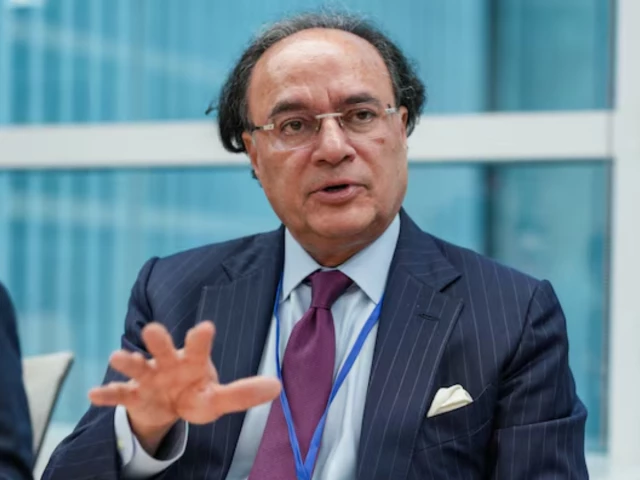




“Today’s policymaking is constrained by a more volatile external environment with more frequent and overlapping shocks, a rising public interest bill, in part reflecting market concerns with countries’ elevated debt, and the long-standing challenge of weak productivity growth,” he said.
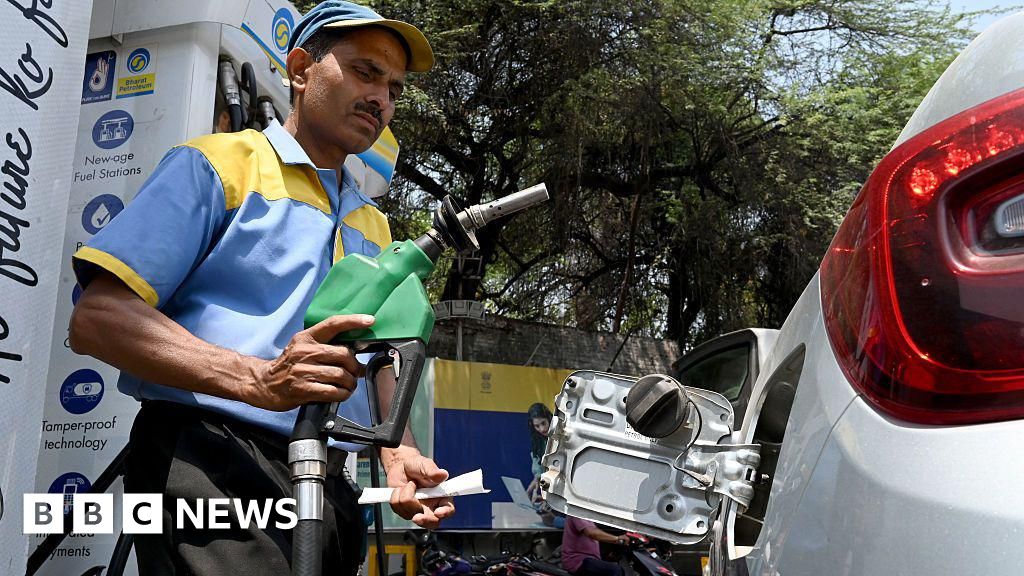
Energy markets have been on a wild ride as the key Strait of Hormuz waterway remains effectively closed.
Source link

Paddy Rodgers said the Observatory’s rich history showed the power of human knowledge and the need to avoid “dependence” on AI.
Source link

UK growth forecast upgraded by IMF but ‘risks’ remain

Cardi B nearly passes out during parenting moment: ‘I can’t handle it’

The Backward Logic of Chickenpox Parties

-

 Entertainment5 days ago
Conan O’Brien hat tricks as Oscar host
-

 Tech1 week ago
Could Contact-Tracing Apps Help With the Hantavirus? Not Really
-

 Fashion5 days ago
Italy’s Zegna Group’s Q1 growth boosted by strong organic performance
-

 Sports1 week ago
Bobby Cox, legendary Atlanta Braves manager who led 1995 World Series champions, dead at 84
-

 Entertainment1 week ago
Martin Short: Facing tragedy with joy
-
 Entertainment1 week ago
Tom Brady gets back at Kevin Hart during Netflix roast
-

 Entertainment1 week ago
Martha Stewart: How to make an omelet
-

 Tech1 week ago
Papa Johns Is Getting Into Drone Delivery—but Not for Pizza