

Business
Automakers largely sit out 2026 Super Bowl advertising amid industry uncertainty


Volkswagen is one of three automakers expected to advertise during the Super Bowl in 2026.
Courtesy VW
DETROIT — Automakers are largely sitting on the advertising sidelines during this year’s Super Bowl amid uncertainty in the U.S. automotive industry involving sales, tariffs and regulations.
Carmakers — historically major buyers of ads during the big game — have been inconsistent with advertising during the Super Bowl in recent years, with only a handful putting out spots each year.
“It’s definitely been on the decline,” said Sean Muller, CEO of ad data company iSpot. “Autos are tightening their belts, and they’re probably pulling back on their budgets, and certainly that’s reflected. I think the Super Bowl is a good barometer for all of this.”
Automakers accounted for 40% of Super Bowl ad minutes in 2012, but dropped all the way to 7% by 2025, according to iSpot. Only three automakers are expected to air ads, totaling roughly two minutes, during this year’s game.
Tim Mahoney, a longtime automotive marketing executive, said it’s a balancing act when it comes to Super Bowl advertising. He said a company has to have the right product, ad campaign, and, of course, capital to stand out and get a return on its investment.
“Super Bowl is just a massive platform, but it has gotten so expensive,” Mahoney, who worked for GM, VW, Subaru and Porsche, told CNBC. “There are sometimes interesting ways to navigate around it. … Adjacencies can be smart.”
During Mahoney’s tenure, Subaru became the presenting sponsor of Animal Planet’s Puppy Bowl and GM’s Chevrolet brand “blacked out” TV screens just ahead of the Super Bowl for an ad for its in-vehicle Wi-Fi in 2015.
Outside of the Super Bowl, automakers have increased sports advertising and embraced more streaming and regional advertising over national reach, according to iSpot.
“They’re not cutting back in live sports,” Muller said, citing iSpot data that automakers now represent roughly 60% of spend on live sports.
Autos out
Automotive executives who spoke to CNBC about not advertising during this year’s Super Bowl said they were deterred due to the cost — $8 million on average for a 30-second ad — and felt their ad dollars would be better spent elsewhere.
“We are going to really spread our efforts, so money and creativity, over a year,” said Stellantis Chief Marketing Officer Olivier Francois, who is well known for past Super Bowl ads. “There’s no need for a peak or something in February.”
Stellantis, which is in the midst of a company turnaround plan, will focus this year on the 250th anniversary of the U.S. as its major marketing push in addition to more business-oriented spending and a provocative social media campaign for Jeep featuring a singing fish it launched this week.
Nissan Motor, which last advertised during the Super Bowl in 2022, is also experimenting this year with parallel advertising.
The Japan-based automaker on Friday released a comedic, high-energy “Big Game” social media ad promoting a chips-and-dip holder for its Nissan Rogue SUV. The “Nissan Dip Seat” ad stars chef and “The Bear” actor Matty Matheson promoting the fictional product. It also promotes a sweepstakes to win one of the vehicles.
“One of the key things for us is that we wanted to kind of find a way that was more social in nature. It’s been a part of what our overall strategy has been this year,” Nissan U.S. CMO Allyson Witherspoon told CNBC.
Witherspoon declined to discuss the cost of the spot, but confirmed it was less than it would have spent to air a traditional Super Bowl ad.
Others, such as Honda Motor, will look to the Olympics as their major ad spending. Honda is sponsoring U.S. Olympic and Paralympic teams for the Winter Games in Milan this year as well as at the 2028 Summer Games in Los Angeles.
“Super Bowl is one moment in time. The Olympics has so many verticals you can dip into and tell these stories,” said Ed Beadle, who leads marketing for American Honda Motor.
The opening ceremony for the Winter Olympics took place on Friday in Milan. It also kicks off a month that Comcast’s NBCUniversal — which will be airing the Olympics, Super Bowl and NBA All-Star weekend — has coined “Legendary February.”
2026 ads
GM remains a wild card for this year’s game, as the only automaker to not prerelease its ad. The Detroit automaker is using the Super Bowl to launch its Cadillac F1 team, including revealing the look of its first livery car to a national audience.
The automaker last month showed a design prototype of the vehicle in Detroit, including at the city’s auto show, but it has not released any information about the commercial.
Toyota, the NFL’s official automotive partner, is expected to air two 30-second ads focused on family connections.
One called “Superhero Belt” shows a grandson and a grandfather switching roles over the years and telling each other to secure their seatbelts. The other features athletes including NFL wide receiver Puka Nacua meeting their younger selves.
Volkswagen’s ad resurrects the automaker’s well-known 1990s campaign for a new generation of customers, as part of a marketing drive called “The Great Invitation: Drivers Wanted.”
The new campaign, including a 30-second Super Bowl spot, features many of the automaker’s vehicles being driven around to House of Pain’s 1992 hit “Jump Around.”
— CNBC’s Lillian Rizzo contributed to this report.
Disclosure: CNBC parent Versant is carrying NBC Sports-produced Olympic coverage on its networks, including USA Network and CNBC.






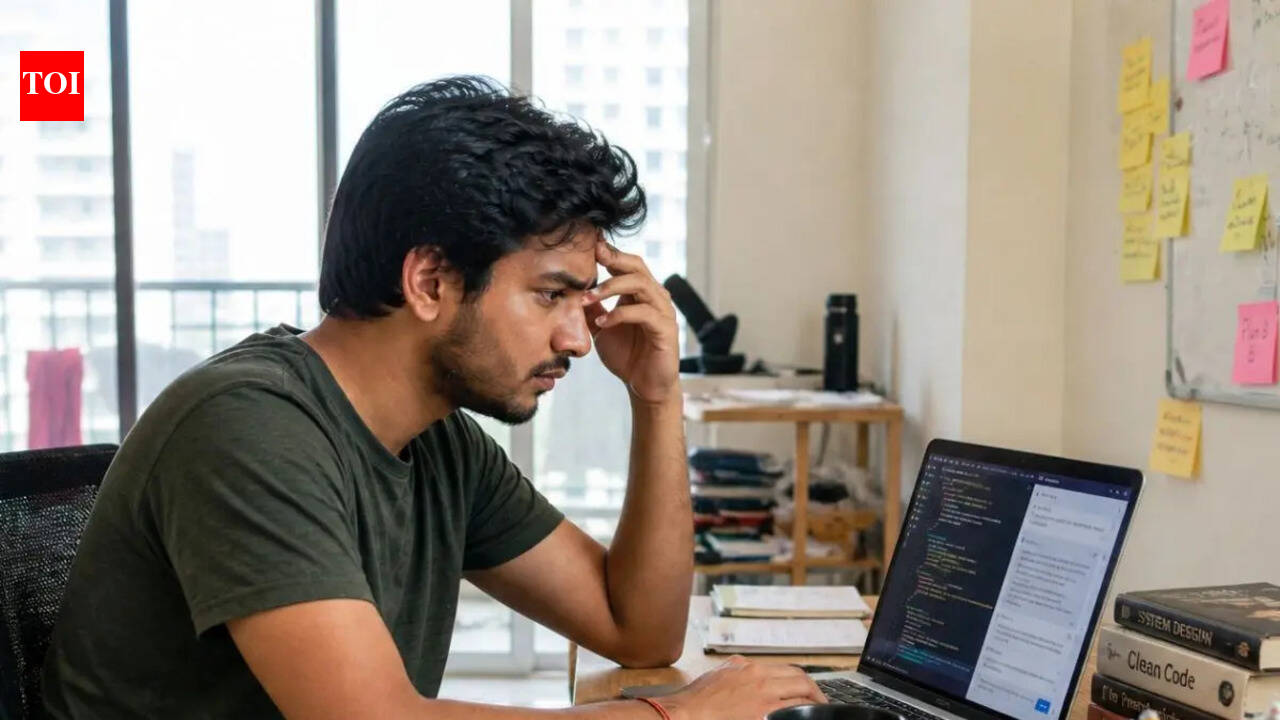
BENGALURU: India’s Gen Z workforce is embracing what experts describe as “portfolio careers” – balancing multiple professional identities and income streams simultaneously. New research from LinkedIn shows that 75% of Gen Z entrepreneurs in India now manage multiple income streams, significantly higher than the 62% among Gen X entrepreneurs. The findings point to a growing preference among younger professionals for flexibility, autonomy and diversified sources of income. “We’re also seeing the rise of the ‘portfolio era’, with more professionals creating multiple income streams and redefining what a career can look like. This shift is making entrepreneurship more accessible than ever before,” said LinkedIn India country manager Kumaresh Pattabiraman.Rather than depending on a single full-time role, many professionals are simultaneously building businesses, freelancing, consulting, creating online content and monetising specialised skills through digital platforms. The trend comes amid a broader rise in entrepreneurial activity in India. LinkedIn recorded a 104% year-on-year increase in members adding “Founder” to their profiles – the highest growth among all global markets.AI is also emerging as a major enabler of this shift. The report found that 85% of Gen Z entrepreneurs consider AI and digital tools important to their business operations.
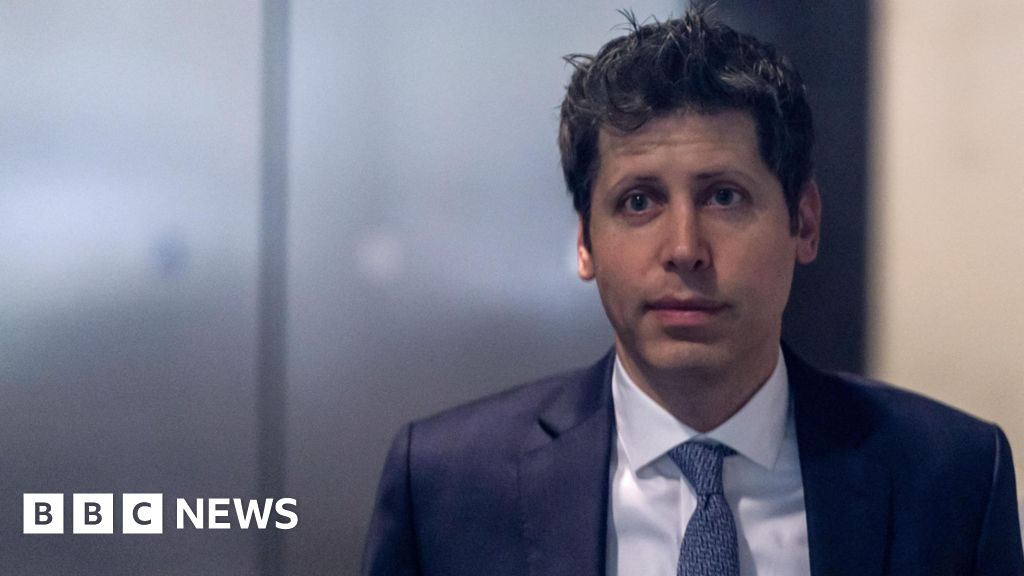
Sam Altman said Elon Musk tried many times for total control of OpenAI, which he’s now suing.
Source link

A United Airlines plane approaches the runway at Denver International Airport on March 23, 2026.
Al Drago | Getty Images
United Airlines flight attendants approved a new five-year labor contract with 31% average raises to base pay by August and other improvements, marking the last of the major carriers with unionized flight crews to reach a deal post-Covid.
The labor deal would give United’s roughly 30,000 flight attendants their first raises in close to six years. The company and the flight attendants’ union reached a preliminary deal in March. Crews had rejected a contract last year.
The union said the contract won 82% approval from the flight attendants, with close to 90% of them voting.
“The contract will immediately change the lives of United Flight Attendants, especially our thousands of new hires who have been hired since the pandemic,” said Ken Diaz, president of the United chapter of the Association of Flight Attendants.
The contract also includes boarding pay, or pay for when the aircraft’s door is open and travelers are getting on. Airlines had for years started flight attendants’ pay clock once the boarding door was closed.
The contract comes with a roughly 7% to 8% increase in compensation and $741 million in back pay, as well as quality-of-life improvements like restrictions on red-eye flights and “sit pay” during disruptions of more than 2½ hours.


South Korea reviews phased support for Strait of Hormuz security efforts

Elon Musk Had ‘Hair-Raising’ Idea of Passing OpenAI On to His Kids, Sam Altman Says

Kim Kardashian faces legal trouble by ‘innocent’ man

-

 Tech1 week ago
DHS Demanded Google Surrender Data on Canadian’s Activity, Location Over Anti-ICE Posts
-
 Business1 week ago
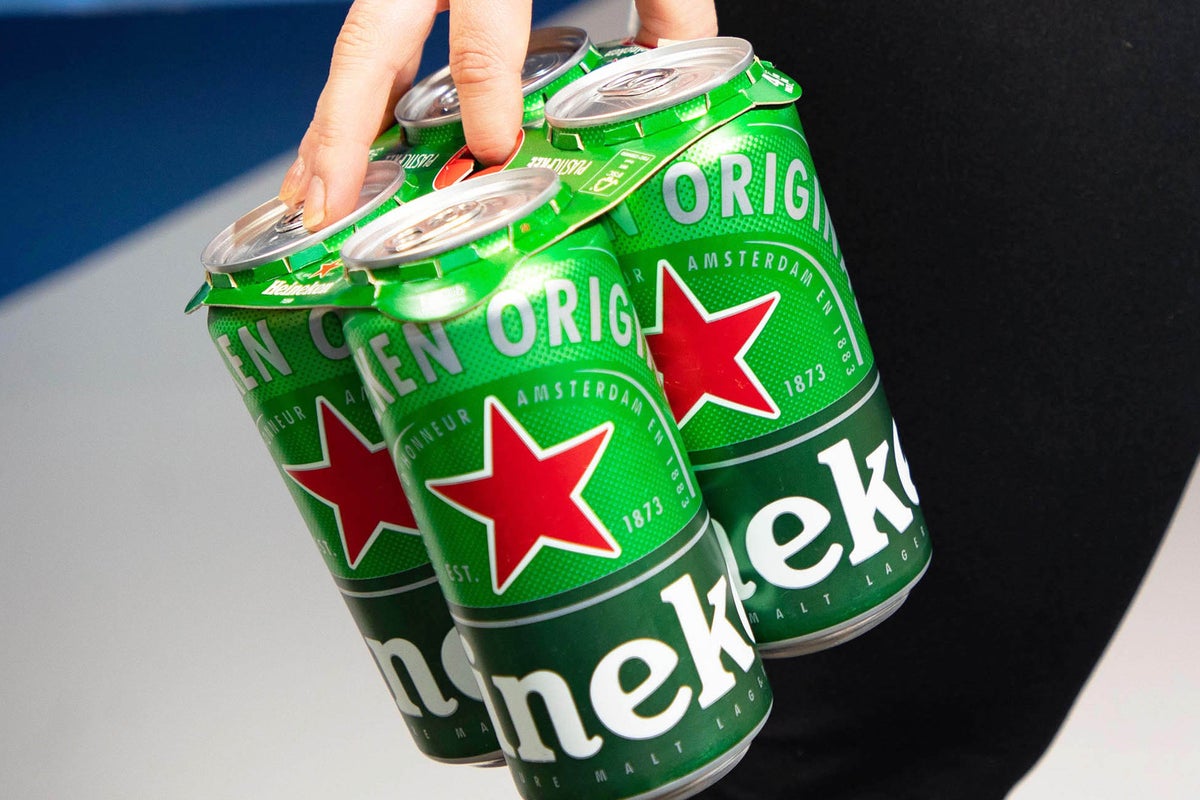
Heineken plans huge investment in hundreds of UK pubs ahead of World Cup
-

 Tech5 days ago
A new frontier: Identity stack evolves for agentic systems | Computer Weekly
-

 Tech4 days ago
‘Orbs,’ ‘Saucers,’ and ‘Flashes’ on the Moon: Pentagon Drops New UFO Files
-
 Fashion5 days ago
New orders in German manufacturing up 5% MoM in Mar 2026: Destatis
-
 Tech5 days ago
What Microsoft Executives Really Thought About OpenAI in 2018
-
 Business1 week ago
India among most resilient large EMs, better placed for future global shocks; policy reforms & strong buffers help: Moody’s – The Times of India
-
 Business1 week ago
US denies Iranian report warship was struck by missiles