

Entertainment
Woody Allen counters condemnation by Ukraine after speaking at Russian film festival

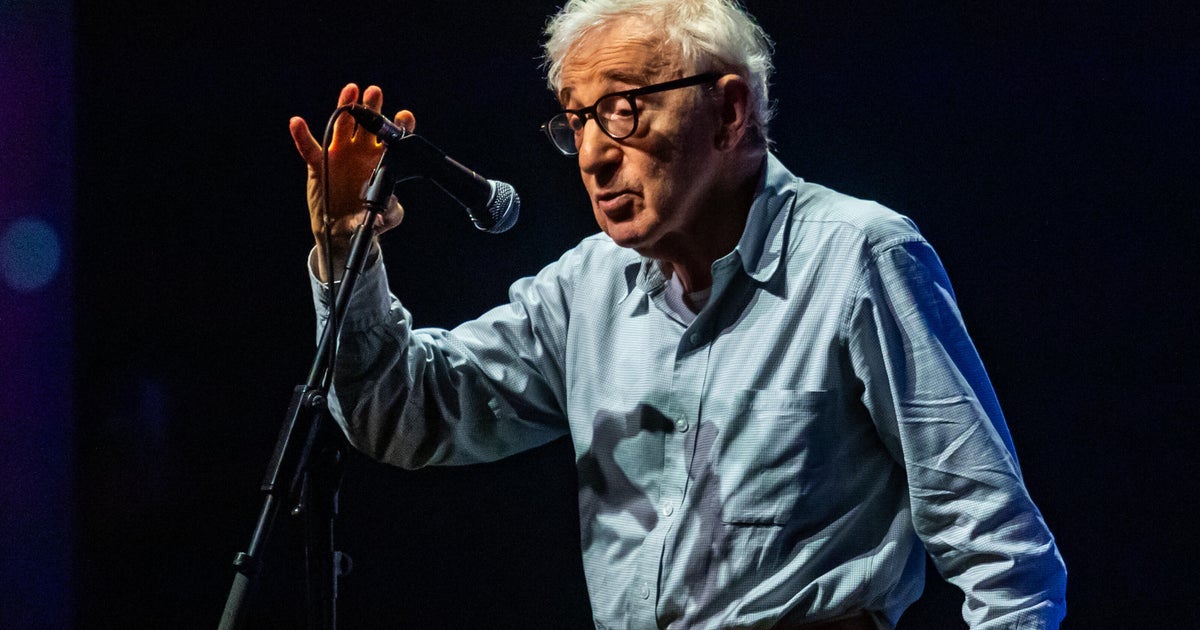
The Ukrainian Foreign Ministry on Monday condemned Woody Allen for speaking virtually at a Russian film festival over the weekend, calling his participation in the event “a disgrace and an insult” to the victims of Russia’s full-scale invasion of Ukraine.
According to Russian media, Allen spoke Sunday at the Moscow International Film Week via video conference. The appearance put him at odds with the Hollywood establishment, which has embraced Ukraine’s cause during Russia’s 3 1/2-year war, with prominent actors signing on to the United24 crowdfunding initiative and Ukraine’s President Volodymyr Zelenskyy making virtual appearances at past Golden Globes and Grammys ceremonies.
Footage aired by Russian state TV showed the filmmaker addressing a tightly packed movie theater from a massive screen, with pro-Kremlin film director Fyodor Bondarchuk moderating the session. Russian media stories quoted Allen as saying he’s always liked Russian cinema, recounting his past trips to Russia and the Soviet Union, and talking about what he would do if he were to receive a proposal to direct a movie in the country.
Kike Rincon / Europa Press via Getty Images
Ukraine’s Foreign Ministry in an online statement on Monday said it “strongly condemns” Allen’s participation in the festival, which “brings together supporters and mouthpieces of (Russian President Vladimir) Putin.”
The ministry called it “a disgrace and an insult to the victims among Ukrainian actors and filmmakers who have been killed or wounded by Russian war criminals,” adding that Allen “is deliberately turning a blind eye to the atrocities that Russia has been committing in Ukraine.”
In a statement to The Associated Press on Monday, Allen criticized Putin and denounced the invasion but called for cultural exchanges to continue.
“When it comes to the conflict in Ukraine, I believe strongly that Vladimir Putin is totally in the wrong. The war he has caused is appalling,” Allen said. “But, whatever politicians have done, I don’t feel cutting off artistic conversations is ever a good way to help.”
The website of the festival, which runs through Wednesday, billed Allen as one of its headliners, along with Serbian film director Emir Kusturica and American actor Mark Dacascos.
Moscow International Film Week is a relatively new festival, first held in the Russian capital in August 2024. It is separate from the decades-old Moscow International Film Festival, which in 2022 was stripped of its International Federation of Film Producers Associations accreditation following the invasion of Ukraine.
Kusturica has been open about his support of Putin, including after the invasion. He received an award from Putin and attended a military parade in Moscow earlier this year.
Allen has long had an affinity for Russian literature and history. His 1975 comedy “Love and Death” spoofs the fiction of Tolstoy and other 19th century Russian novelists. The title of his 1989 release “Crimes and Misdemeanors” echoes Dostoevsky’s “Crime and Punishment” and also broods over the themes of wrongdoing, justice and guilt.
In the 1972 essay, “A Brief Guide to Civil Disobedience,” Allen jokes about the Russian Revolution, writing that the serfs rebelled when they “finally realized that the Czar and the Tsar were the same person.”








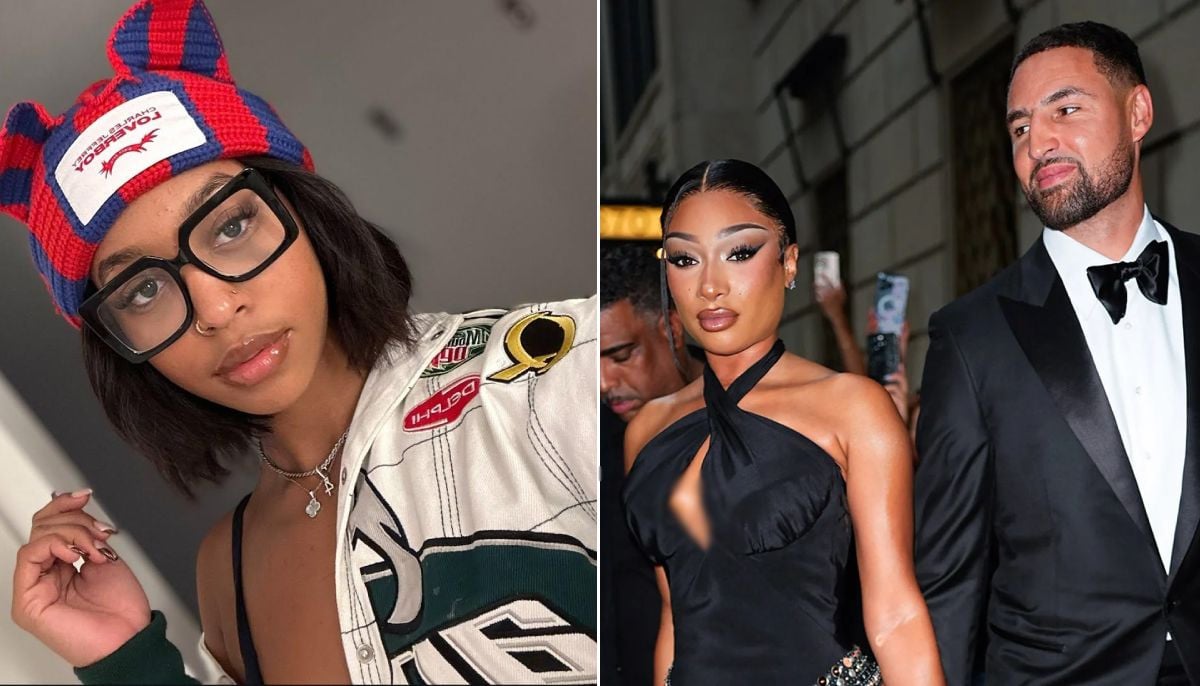
A WNBA star is setting the record straight about her rumoured involvement in Megan Thee Stallion and Klay Thompson’s breakup.
Seattle Storm Guard Lexie Brown has shut down rumours that she was the woman with whom Thompson allegedly cheated on the Grammy-winning rapper.
“I’ve seen what’s being said online, and I want to be clear, none of it is true, and I have no involvement in this situation,” Brown, 31, wrote on her Instagram Stories on Sunday, April 26.
The basketball pro added, “This week marks the start of an important and exciting new season for me, and my focus is fully on that.”
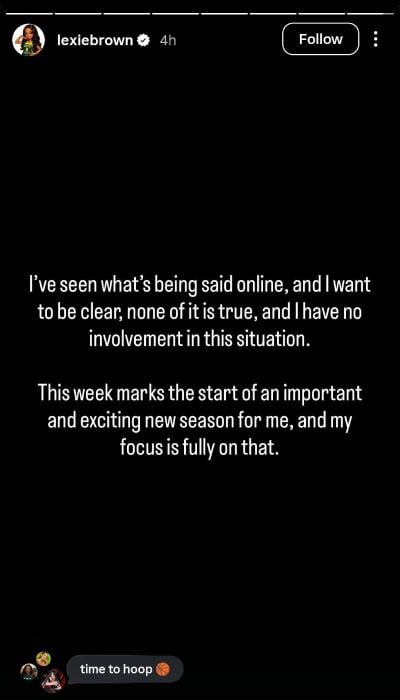
Brown’s clarification came amid a viral claim that she had a part to play in the shocking break-up, which came to light over the weekend.
On Saturday, April 25, Megan Thee Stallion — real name Megan Jovon Ruth Pete — announced that she broke up with the NBA star due to his alleged unfaithfulness and inability to commit to her despite being together for almost a year.
“Cheating, had me around your whole family playing house… got ‘cold feet,’” Megan wrote on her Instagram Stories. “Holding you down through all your HORRIBLE mood swings and treatment towards me during your basketball season now you don’t know if you can be ‘monogamous’????” added Megan.
Shortly afterwards, X user @Areyoudvmb alleged that Brown has been “posting on her close friends messages between Klay and her that Klay was telling her his and Megan’s relationship is just for social media.”
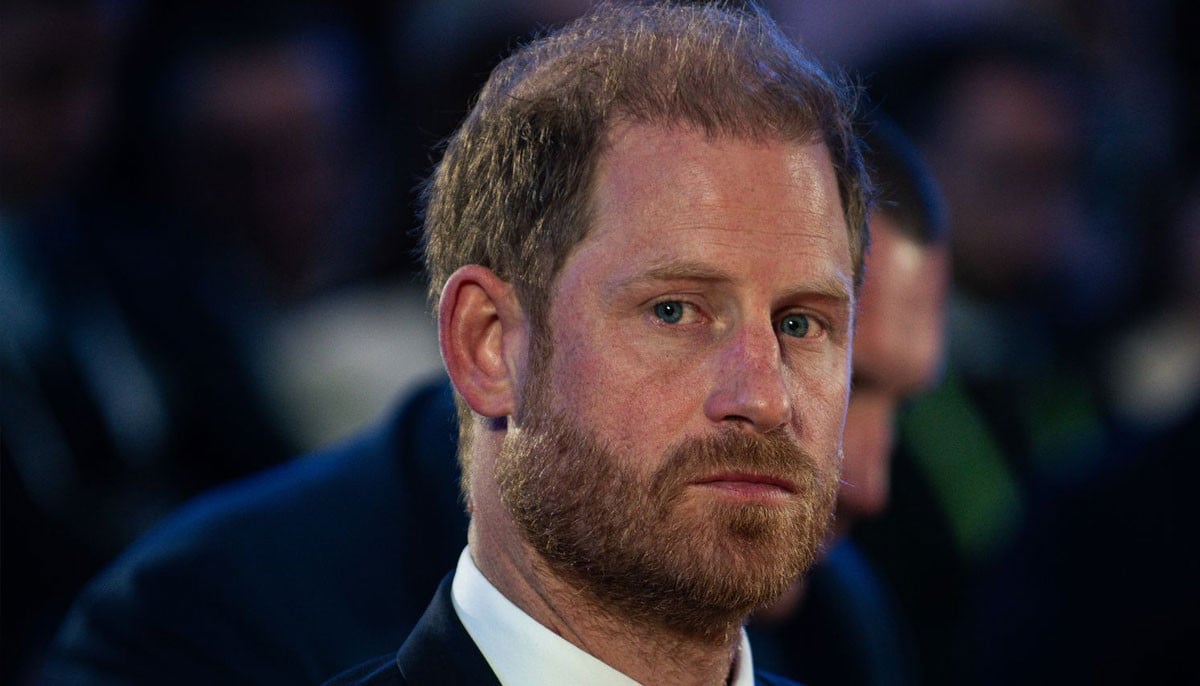
Prince Harry may have not realised the consequences of his words that could have caused some trouble for his father King Charles, who is en route to America for the much-anticipated State Visit for the UK.
It is a long-held tradition for the members of the royal families to maintain a diplomatic stance and not explicitly share their political views in public. Even though the Duke of Sussex is no longer a working member of the royal family, he remains the King’s second son, which means his words holds an impact.
Harry’s speech at the Kyiv Security Forum had sent a message to the United States to “honour its international treaty obligations” given its role in global security. Trump has dismissed the comments when they were brought up, stating that Harry “doesn’t speak for the royals”.
However, experts have urged Harry to practice prudence in sensitive matters and not insert himself in serious geopolitical matters.
“Prince Harry’s Ukraine commentary is a jaw-dropping display of a lack of self-perception that demands a reality check,” royal and foreign policy commentator Lee Cohen told Daily Express.
“Those tied to the Crown—working or otherwise—simply do not wade into partisan geopolitics. Yet here is a man who represents no government or institution, spotlighting himself amid a war, all while clinging to the royal associations that he rejected.”
The expert noted that Harry is turning into a “walking liability” for the royals and it could possibly force the Palace or Parliament to take the necessary action in order to “prevent further damage”.
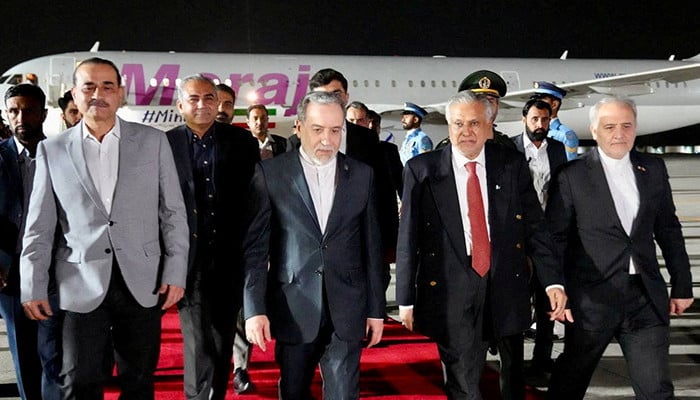
- Araghchi ‘raised plan’ to defer nuclear talks in Islamabad meetings.
- Tells mediators no consensus how to address American demands.
- Ceasefire can be extended or converted into permanent end to war: proposal.
Iran, through Pakistani mediators, has offered a new proposal on reopening the Strait of Hormuz and ending the war, with nuclear negotiations postponed for a later stage, US media outlet Axios reported, citing an American official and two sources with knowledge of the matter.
Hopes of reviving peace efforts receded on Saturday when US President Donald Trump scrapped a visit to Islamabad by his envoys Steve Witkoff and Jared Kushner.
Iranian Foreign Minister Abbas Araqchi shuttled to and from mediators Pakistan and Oman on Sunday before flying to Russia, with the two sides still seemingly far apart on issues including Iran’s nuclear ambitions and access through the crucial Strait of Hormuz.
Trump said Iran could telephone if it wants to negotiate an end to their two-month war.
“If they want to talk, they can come to us, or they can call us. You know, there is a telephone. We have nice, secure lines,” Trump told “The Sunday Briefing” on Fox News.
“They know what has to be in the agreement. It’s very simple: They cannot have a nuclear weapon; otherwise, there’s no reason to meet,” Trump said.
Iran has long demanded Washington acknowledge its right to enrich uranium, which Tehran says it only seeks for peaceful purposes, but which Western powers say is aimed at building nuclear weapons.
Although a ceasefire has paused full‑scale fighting in the conflict, which began with US-Israeli strikes on Iran on February 28, no agreement has been reached on terms to end a war that has killed thousands, driven up oil prices, fuelled inflation and darkened the outlook for global growth.
Axios, while citing two sources with knowledge, reported that the Iranian foreign minister raised the plan to bypass the nuclear issue during his meetings in Islamabad.
According to one of the sources, Araghchi made it clear to the Pakistani, Egyptian, Turkish and Qatari mediators over the weekend that there’s no consensus inside the Iranian leadership about how to address the US demands.
Under the proposal, Axios reported, the immediate focus would be on reopening the strait and lifting the blockade before moving to broader negotiations.
As part of this framework, the existing ceasefire would either be extended for a prolonged period or converted into a permanent end to the war, the sources said.
The proposal envisages that negotiations on the nuclear issue would begin only at a later stage, after maritime access is restored and blockade-related concerns are addressed.
The White House has received the proposal, though it remains unclear whether Washington is prepared to consider or pursue the framework.
“These are sensitive diplomatic discussions and the US will not negotiate through the press. As the president has said, the United States holds the cards and will only make a deal that puts the American people first, never allowing Iran to have a nuclear weapon,” White House spokesperson Olivia Wales told Axios.
With his approval ratings falling, Trump faces domestic pressure to end the unpopular war. Iran’s leaders, though weakened militarily, have found leverage in negotiations with their ability to stop shipping in the strait, which normally carries a fifth of global oil shipments.
Tehran has largely closed the strait while Washington has imposed a blockade of Iranian ports.
US and Iran’s extensive disagreements
Disagreements between the US and Iran extend beyond Tehran’s nuclear programme and control of the strait.
Trump wants to limit Iran’s support for its regional proxies, including Hezbollah in Lebanon and Hamas in Gaza, and curb its ability to strike U.S. allies with ballistic missiles. Iran wants a lifting of sanctions and an end to Israeli attacks on Hezbollah.
In Lebanon, Israeli strikes killed 14 people and wounded 37 on Sunday, the health ministry said. The Israeli military warned residents to leave seven towns beyond the “buffer zone” it occupied before a ceasefire that has failed to fully halt hostilities.


UNCTAD, Maritime and Port Authority of Singapore launch partnership

Lexie Brown denies Klay Thompson cheated on Megan Thee Stallion with her

Strait of Hormuz disruption ‘systemic shock’ threatening SE Asia: ERIA

-

 Sports1 week ago
WWE WrestleMania 42 Night 2: Live match results and analysis
-

 Sports1 week ago
NCAA men’s gymnastics championship: All-time winners list
-

 Fashion1 week ago
UK’s Sosandar returns to profitability amid robust FY26 performance
-

 Politics6 days ago
UK’s Starmer seeks to deflect blame over Mandelson appointment
-

 Entertainment7 days ago
Lee Anderson, Zarah Sultana kicked out of UK Parliament for calling PM ‘liar’
-

 Entertainment1 week ago
Ruby Rose old essay resurfaces detailing night of alleged Katy Perry assault
-

 Entertainment1 week ago
Nathalie Baye, low-key legend of French cinema, dies aged 77
-
 Business1 week ago
No fuel shortage: Govt assures 100% domestic LPG, PNG, CNG supply amid Hormuz energy crunch – The Times of India