

Business
Loan repayment cuts FX to $15.5b | The Express Tribune

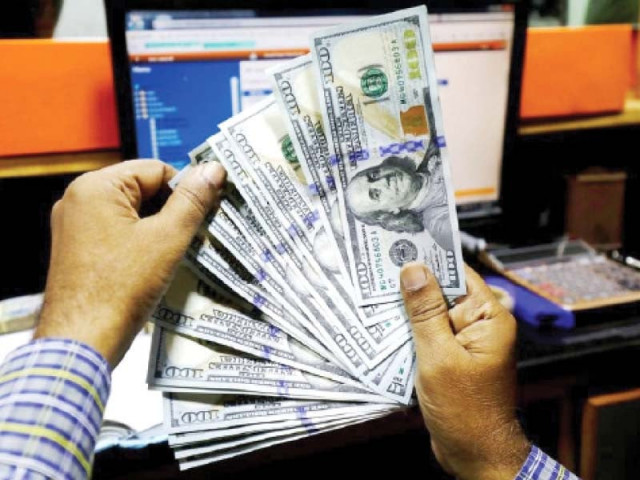
Commercial loans rose by $1.7b to $7.2b by end 2025; IMF mission to arrive on 25th
The finance ministry said that the exchange value of the rupee was maintained at an artificially high level in the past, which triggered the balance of payments crisis. PHOTO: REUTERS
ISLAMABAD:
Pakistan has repaid a $700 million Chinese commercial loan this week, temporarily reducing foreign exchange reserves to $15.5 billion, as it now faces a decision on whether to return bilateral cash deposit loans or seek their extension, a move that may limit its policy choices.
The development comes ahead of the third review talks scheduled with the International Monetary Fund (IMF).
An IMF mission will visit Pakistan from February 25 to March 11 to hold discussions for the approval of a $1 billion tranche under the Extended Fund Facility, along with over $200 million under a climate facility. The IMF team will spend three days in Karachi before beginning talks with the federal government in Islamabad from March 2. Central bank sources told The Express Tribune that Islamabad repaid the $700 million loan to the China Development Bank. China had earlier rolled over the same loan for a period of three years.
The sources said another $1 billion loan from the China Development Bank is maturing in June this year, which the government may repay ahead of schedule in the hope of securing refinancing before the close of the current financial year.
Pakistan remains heavily dependent on China, the United Arab Emirates (UAE) and Saudi Arabia, as financial support from these three countries, combined with higher foreign remittances, has so far helped the country avoid a sovereign default.
China has extended $6.6 billion in foreign commercial loans, $4 billion in cash deposits and a $4.5 billion credit swap facility. These three instruments are critical for staying afloat in the middle of shrinking exports and weak foreign direct investment. Following the repayment of the $700 million loan, gross official foreign exchange reserves held by the central bank fell to $15.5 billion as of February 10. The State Bank of Pakistan (SBP) is expected to bridge the gap through increased dollar purchases from the domestic market.
Total commercial loans rose by $1.7 billion to $7.2 billion by the end of the last fiscal year after the government also secured a costly loan backed by Asian Development Bank guarantees. Pakistan’s low sovereign credit rating continues to be a major constraint and a key factor behind the high cost of external borrowing. In its annual debt policy statement issued this month, the Ministry of Finance said external public debt increased by 6% to $91.8 billion as of June 2025, reflecting an annual rise of $5 billion. The largest increase in the external debt came from multilateral development partners, including the IMF, whose lending rose by 8.7%, or nearly $4 billion. Borrowing from commercial banks increased by $1.6 billion, largely due to a $1 billion loan secured against an ADB policy-based guarantee, the ministry added.
The ministry said it hoped to prioritise long-term concessional and commercial financing, including the planned Panda Bond issuance. However, all deadlines to raise $250 million through Panda Bonds in the Chinese market have so far lapsed.
The sources said the government was also reviewing its policy on seeking extensions of bilateral cash deposits after the UAE recently rolled over a $2 billion deposit for just one month. Pakistan had hoped the UAE would extend the deposit for two years and reduce the interest rate from 6.5% to around 3%. However, those expectations were dashed last month when the UAE approved only a one-month rollover.
Addressing a gathering of industrialists, Prime Minister Shehbaz Sharif recently said that reliance on loans was a heavy burden on national self-respect and forced the country to bow its head in shame. He said seeking external financing compromised national dignity and autonomy, making it difficult to refuse conditions imposed by lenders. A senior government official said earlier this week that discussions with the UAE were continuing for a longer-term extension of the deposit. Deputy Prime Minister Ishaq Dar resolved part of the issue with UAE authorities on Thursday, indicating that some non-economic factors were also delaying the rollover.
Finance Minister Muhammad Aurangzeb said last week that Pakistan’s external financing requirements were fully met and that there was no financing gap.
The IMF is expected to reassess Pakistan’s gross external financing needs in light of recent developments.
The sources said internal discussions were also taking place about how long Pakistan could continue with the policy of seeking annual rollovers of $12.5 billion in cash deposits from China, Saudi Arabia and the UAE. Chinese cash deposits are also approaching maturity, requiring the government to once again seek rollovers at the highest level.
The sources added that any new financing from Standard Chartered Bank and the Islamic Development Bank could provide short-term relief by helping repay some near-term obligations. So far, no country has formally asked Pakistan to return its deposits, the sources said.



Pets at Home investors will be hoping the retailer’s new boss can lay out a strategy to return it to profit growth despite a challenging consumer backdrop.
Shares in the company currently sit close to its lowest level for almost seven years following a recent downturn in the group’s retail arm.
The dip in the group’s performance contributed to the departure of previous chief executive Lyssa McGowan late last year.
In March, former Waitrose boss James Bailey took the reins in a bid to drive a turnaround in performance.
Shareholders will be hoping the new boss can show early signs of improvement and a long-term strategy to drive growth in Pets at Home’s update on Wednesday May 27.
The pet products retailer and vet chain is expected to report an underlying pre-tax profit of around £93 million for the year to March, according to analysts.
It would represent a roughly 30% fall from last year, after the company came under pressure from weak demand for discretionary products.
Analysts have said investors will be looking at early trading in the current financial year to see how consumer spending is holding up.
AJ Bell’s investment director Russ Mould said: “Pets at Home could badly do with some renewed pep.
“Under executive chair Ian Burke, who has returned to a non-executive role after leading the business on an interim basis, Pets at Home laid out a plan to fix a retail business which has been badly affected by a reduction in discretionary spend on toys and treats for Britons’ furry and feathered friends.
“The country may have a reputation for loving their animal companions but in an environment where households are having to watch their pennies, these nice-to-have items were off the list.”
The group has also seen sales of pet food and similar products face fierce pricing competition from non-specialist retailers, such as supermarkets.
It has since cut prices among around 1,000 products in order to help drive activity, with cash-strapped shoppers looking for value.
Data from the Office for National Statistics (ONS) showed that UK retail sales volumes dropped to an 11-month low in April, with a 1.3% fall for the month.
Pets at Home is predicted to report revenues of £1.47 billion for the past year, just marginally lower than £1.482 billion reported last year.
Business
India’s fuel demand growth may slow sharply in H2 2026 amid price hikes, austerity push: Report
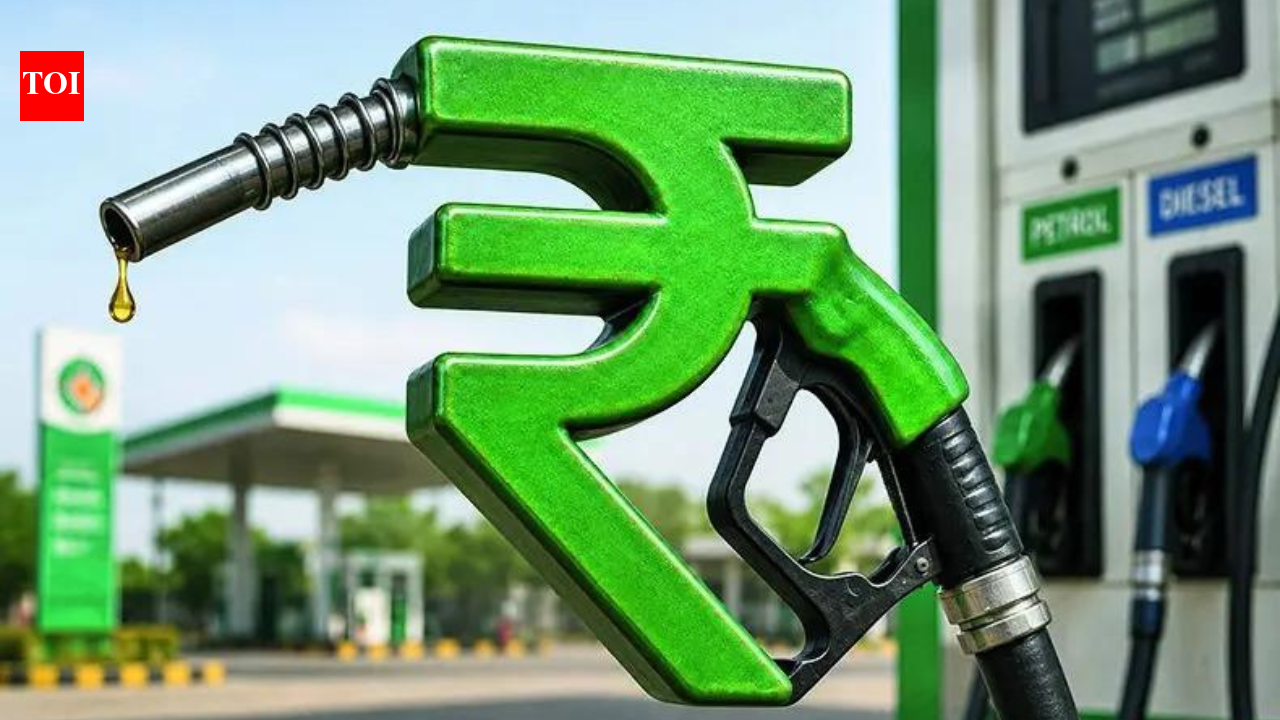
India’s transportation fuel demand growth is expected to slow sharply in the second half of 2026 as higher fuel prices, government-led conservation measures and a weakening rupee weigh on mobility and consumption trends, according to a report.The report by Kpler’s lead analyst (modelling), Elif Binici, revised down India’s 2026 refined products demand growth forecast by around 77,000 barrels per day (kbd), or 39 per cent, to nearly 78 kbd from an earlier estimate of 128 kbd.As per news agency PTI, the downgrade reflects weaker expected growth in petrol and diesel demand due to elevated fuel costs, softer mobility trends and official efforts to conserve fuel amid the ongoing West Asia crisis.Petrol and diesel prices have been increased by around Rs 5 per litre in three instalments since May 15, after oil marketing companies passed on part of the burden of soaring global crude oil prices to consumers.
Petrol demand faces steepest downside risk
The report said petrol demand is likely to see the sharpest slowdown, with projected growth revised down by 25 kbd, from 63 kbd to 38 kbd.Petrol consumption is now estimated at 1,010 kbd, compared to the earlier estimate of 1,035 kbd.According to the report, weaker commuting activity, slower discretionary travel and government fuel-saving campaigns are expected to curb fuel consumption.Annual diesel demand growth was also cut by around 20 kbd, while jet fuel demand growth was nearly halved to about 6 kbd from 11 kbd earlier due to expectations of reduced air travel and tighter spending patterns.“The revisions primarily reflect weaker expected growth in gasoline and diesel demand as higher costs, weaker mobility trends, and recent government-led fuel conservation efforts increasingly feed into domestic transportation activity,” the report said, as quoted by PTI.
Rupee weakness, crude surge add pressure
The report noted that India’s macroeconomic environment has deteriorated since the escalation of the US-Iran conflict, with rising crude import costs, refinery expenses and rupee depreciation increasing inflationary pressure.The rupee has weakened by around 6 per cent since the conflict began and nearly 10 per cent over the past year. Foreign exchange reserves have also reportedly declined by about 4.3 per cent since late February as authorities attempted to stabilise the currency and contain imported inflation.The report said the current average petrol price of around Rs 103 per litre remains well below the estimated breakeven level of nearly Rs 125 per litre.Diesel prices near Rs 94 per litre are also below the estimated breakeven range of Rs 115-120 per litre.Before the recent price revisions, state-run fuel retailers were reportedly losing nearly Rs 1,000 crore daily because rising crude procurement costs and currency weakness outpaced retail fuel prices.“The key issue is the inability of state-run retailers to pass through rising import costs quickly enough to restore profitability,” the report said.
Russian crude continues to support supply security
The report added that India’s dependence on discounted Russian crude imports, estimated at around 1.9-2 million barrels per day, continues to provide stability to the domestic fuel market amid geopolitical uncertainty in West Asia.Policymakers now appear to be prioritising macroeconomic stability, inflation management, foreign exchange preservation and fuel supply security over near-term fuel demand growth.The report warned that unless crude prices ease significantly, the rupee stabilises or additional fiscal support measures are introduced, further fuel price hikes and stricter fuel-conservation measures may become difficult to avoid.
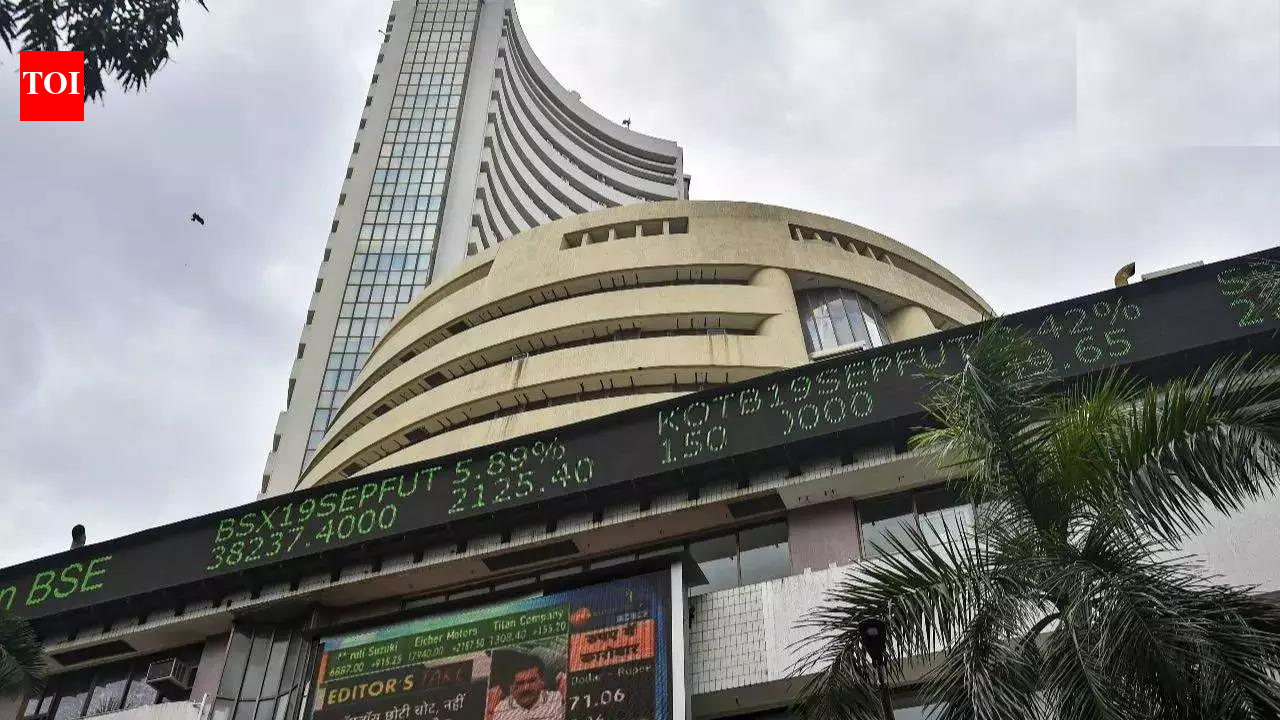
The combined market valuation of six of India’s top-10 most valued companies rose by Rs 74,111.57 crore last week, with Reliance Industries emerging as the biggest gainer. The rally came during a volatile trading week in which the BSE Sensex advanced 177.36 points, or 0.23%.According to news agency ANI, Reliance Industries added Rs 24,696.89 crore to its valuation, taking its total market capitalisation to Rs 18,33,117.70 crore.Tata Consultancy Services saw its valuation jump by Rs 19,338.68 crore to Rs 8,38,401.33 crore, while ICICI Bank added Rs 14,515.93 crore to reach a market capitalisation of Rs 9,06,901.32 crore.The valuation of Life Insurance Corporation of India climbed Rs 9,076.37 crore to Rs 5,14,443.69 crore.Meanwhile, Bajaj Finance gained Rs 3,797.83 crore, taking its valuation to Rs 5,70,515.57 crore, while Larsen & Toubro added Rs 2,685.87 crore to Rs 5,40,228.21 crore.
Airtel, HUL among laggards
On the losing side, Bharti Airtel witnessed the sharpest erosion in market value, losing Rs 20,229.67 crore to settle at Rs 11,40,295.49 crore.The market valuation of Hindustan Unilever declined by Rs 16,212.18 crore to Rs 5,17,380 crore, while State Bank of India lost Rs 12,784.4 crore in valuation to Rs 8,76,077.92 crore.HDFC Bank also saw its market capitalisation dip by Rs 2,094.35 crore to Rs 11,79,974.90 crore.Reliance Industries retained its position as India’s most valued company, followed by HDFC Bank, Bharti Airtel, ICICI Bank, State Bank of India, TCS, Bajaj Finance, Larsen & Toubro, Hindustan Unilever and LIC.
Markets end volatile week with modest gains
Ajit Mishra, SVP, research at Religare Broking Ltd, said markets ended the week with marginal gains amid a “highly volatile and range-bound trading environment”.“Benchmark indices witnessed sharp intraday swings throughout the week, driven by persistent rupee weakness, mixed global cues, sectoral rotation, and continued uncertainty around inflation and interest rates,” he said, as quoted by ANI.Benchmark indices recovered on Friday, with the Sensex closing 231.99 points higher at 75,415.35 and the NSE Nifty rising 64.60 points to settle at 23,719.30.Analysts cited optimism surrounding possible progress in US-Iran peace negotiations and easing Middle East tensions as factors supporting market sentiment.Vinod Nair, head of research at Geojit Investments, was quoted by news agency PTI as saying that domestic markets traded with a “mild positive bias” due to buying at lower levels and constructive global cues.“Globally, the AI investment theme remained the primary driver, while domestically, financial stocks led the gains,” he said.Brent crude prices climbed 2.3% to $104.7 per barrel, while foreign institutional investors (FIIs) sold equities worth Rs 1,891.21 crore in the previous session.


What we know about the proposed US-Iran deal

Prince George set to reconnect with cousin in unexpected twist

Queen Elizabeth II heartbreaking final message for Prince Philip emerges

-

 Entertainment1 week ago
Where Pete Davidson, Elsie Hewitt stand after breakup: Details revealed
-

 Politics1 week ago
Rising diesel costs from Iran war strain US school budgets
-

 Entertainment1 week ago
Drake drops highly anticipated "Iceman" album, plus two surprise albums
-

 Tech1 week ago
Greg Brockman Officially Takes Control of OpenAI’s Products in Latest Shakeup
-

 Tech1 week ago
Why Is Your Grill So Dumb? The Best Grills Set Temp Like an Oven
-

 Tech1 week ago
This Solar-Powered Smart Sprinkler Keeps My Lawn Watered Without Any Power Cables
-
 Business1 week ago
Oil price gains and Westminster worry sink stocks
-
 Fashion1 week ago
RMG trade bodies seek policy support from Bangladesh PM