

Tech
Taara unveils photonics platform for wireless comms | Computer Weekly


Looking to transcend the physical constraint of every generation of connectivity to date – copper’s speed, fibre’s time to deploy and the scarcity of radio spectrum – Taara has revealed a “breakthrough approach” to commercial communications and connectivity infrastructure in the form of the “world’s first” wireless communication platform based on optical phased arrays.
Designed for operators, enterprises and next-generation data infrastructure, Taara Beam is attributed with bringing fibre-like speeds to environments where traditional infrastructure is too slow, costly or impractical to build, marking a shift from fixed, physical networks to infrastructure that can evolve at the pace of demand.
The new developments build on existing Taara work using beams of light to extend high-speed internet to places where traditional infrastructure is difficult to deploy. Its first system Taara Lightbridge is now deployed in more than 20 countries, with operators including Airtel, Digicel, T-Mobile, SoftBank and Liquid.
Taara Beam is described as being designed for the next phase, shrinking Taara’s wireless optics technology into a form factor around the size of a shoe-box to “radically” increase network density and flexibility. It is intended to see use in enabling high-throughput, low-latency connectivity across urban environments, enterprise campuses, datacentre clusters and event venues without the delays and costs associated with building physical infrastructure.
Taara sees Beam as being deployed on rooftops, poles or existing structures within hours, forming high-bandwidth mesh networks that support applications ranging from small-cell backhaul mounted on street furniture to fronthaul networks and AI-driven, real-time systems. By operating in the unlicensed optical spectrum, it avoids congestion and recurring spectrum costs while delivering performance at the speed modern networks require.
Explaining the rationale for the launch and the fundamental technology foundations, Google’s Moonshot Factory said that by moving the core functionality of high-speed wireless optical communication into an integrated circuit that controls light electronically, comms networks that can be deployed quickly, scaled more flexibly and improved over time, without the constraints of trenching fibre or securing scarce spectrum.
The proprietary optical phased arrays were developed at X and Taara labs over the past several years. The first product built on the photonic platform will be Taara Beam, engineered to deliver up to 25 Gbps of high-speed, low latency connectivity over distances up to 10 kilometres in a compact, deployable form factor.
Traditional free-space optical systems steer beams of light using mirrors, sensors and mechanical hardware. According to Taara, this is an approach that works but is physically constrained at scale. Taara Beam is said to represent a new architecture, shifting from mechanical control to increasingly solid-state control of light.
At Taara Beam’s core is an integrated photonic module containing over a thousand miniature light emitters arranged in an optical phased array, a solid-state steering device. This phased array allows the platform to track, shape and steer light with greater precision, improving reliability and latency while significantly reducing size and mechanical complexity.
“With light transmitted through the air, those constraints begin to disappear. Taara Beam is the first commercial product built on our photonics platform, and it’s just the beginning,” said Taara founder and CEO Mahesh Krishnaswamy. “We’re not just improving networks, we’re removing the limits that have defined them. We’re…building toward a future where connectivity feels less like infrastructure and more like the air we breathe – essential, abundant and almost invisible to the people who rely on it.”
Devin Brinkley, senior vice-president of engineering at Taara, added: “Silicon photonics allows us to integrate the core functionalities of wireless optical communication into a single module. We’ve compressed most of the functionality of our previous systems into a photonic module the size of a finger. As the technology matures, it can scale across performance, cost and size – similar to the exponential pace at which semiconductor platforms evolve.”
Taara Beam will make its official industry debut at the forthcoming Mobile World Congress (MWC) Barcelona 2026. Operators, infrastructure providers and partners can now request early access to the technology.

There is a corner of Antarctica that looks like something out of a David Cronenberg movie. It’s located in the dry valleys of McMurdo, an immense frozen desert where, periodically, a jet of crimson liquid suddenly gushes from the dazzling white of the Taylor Glacier. They’re called the Blood Falls, and since their discovery in 1911 by geologist Thomas Griffith Taylor, they’ve fueled a century of scientific speculation.
Recently, a series of observations conducted since 2018 have clarified several mysteries, such as the nature of their reddish color and what keeps them liquid at almost –20 degrees Celsius. New research published this week in the journal Antarctic Science adds the final piece to the puzzle, clarifying what phenomena drive the falls to gush from underground.
The Science Behind the Blood Falls
At the time of their discovery, Taylor attributed the color to the presence of red microalgae. More than a century later, scientists have determined that the red is due to iron particles trapped in nanospheres along with other elements such as silicon, calcium, aluminum, and sodium. These were likely produced by ancient bacteria trapped underground in the area: Once in contact with air, the iron oxidizes, giving the mixture its characteristic rust color.
As for the presence of liquid water, it is actually a hypersaline brine, formed about 2 million years ago when the waters of the Antarctic Ocean receded from the valleys. The very high salinity of this brine prevents the water from freezing, thus allowing it to gush out periodically.
The New Discovery
With the temperature puzzle solved, the question remained as to what physically drove the fluid to erupt. The answer came from cross-referencing GPS data, thermal sensors, and high-resolution images collected in 2018 during an eruption. The analysis demonstrated that the Blood Falls are the result of pressure variations affecting the brine deposits beneath the glacier.
As Taylor Glacier slides downstream, the overlying ice mass compresses the subglacial channels, building up tremendous pressure. When the strain becomes unbearable, the ice gives way: Pressurized brine seeps into the crevices and is shot out in short bursts. Curiously, this release acts as a hydraulic brake, temporarily slowing the glacier’s march. With this discovery, the mysteries of the Blood Falls should finally have been solved, at least for now. The impact of global warming on this complex system in the coming decades remains unknown.
This story originally appeared on WIRED Italia and has been translated from Italian.

Laundry is a $100 billion business. It can also be a real time suck, what with all the washing, drying, and folding. Detergent company Tide has found great success with its Pods that let you pop detergent right into a washing machine without having to measure and pour liquid or powder. Now, the next evolution is an exhaustively engineered single-use detergent called Tide Evo Tiles—a dry, fibery, single-use tile that can dissolve in cold water. It looks a lot less tasty than the bright, colorful Tide Pods, so hopefully, fewer people will try to eat this one.
Tide Evo Tiles have been in product development for over a decade. After spending a year in test markets, Tide and its parent company, Procter & Gamble, announced last week that Evo Tiles are now rolling out more broadly across the US. Prices range from $5 to $20 per box, depending on the retailer, with the price roughly 50 cents per tile.
“This is really a feat of engineering,” says Marcello Puddu, senior director of research and development at Tide. “There is a lot of very complicated engineering and formulation work that has gone to create that one single sleek tile that looks relatively simple.”
The primary hope for Tide Evo is simplicity. Single-use detergent pods are lauded for being more accessible to people who may struggle with the motor skills required to pour liquid soap or powders. Evo Tiles have a small ridge around the edges that makes them easier to pull out of the box. Deploying them is easy—just plop them (one tile for regular loads, two for heavy) into the washer as close to where the water comes out as possible, then toss the fabrics on top.
After the tile breaks apart, the ingredients work together to create a very high pH level in the water that cleans the fabrics. (Because of the high pH, Tide Evo does not use lipase, an enzyme that breaks down stains and is a popular ingredient in other detergents.)
Evo Tiles look like white, diamond-shaped Uncrustables. Instead of a Tide Pod’s colorful liquid pouches, these tiles are made of dry layers of interwoven detergent fibers—about 10,000 of them, which Tide says is enough to stretch for 15 miles, if you were inclined to do such a thing. The result is a looping, webbed lattice of tiny fibers, woven together into six layers that stay in place while on the shelf but break down quickly when they get wet, allowing separate releases of stain and odor fighters, brighteners, and fresheners.
“The structure of an assembled product allows us to do that, because we can separate things that don’t like to be together,” Puddu says. “We can put an enzyme between two layers so the two don’t attack each other. You can’t really do that as easily in other matrices.”
The goal is to combine the benefits of Tide Pods and laundry sheets and make something that packs in enough detergent to sufficiently clean a load of wash while also being lightweight and able to dissolve quickly. And, as Tide is eager to point out, it also makes things more eco-friendly.
Tide Evo tiles are specifically designed to dissolve in cold water, the idea being that washing fabrics without having to heat up water helps save energy. Packaging is also part of Tide’s ecological efforts. Unlike the plastic boxes Pods tend to come in, Tide Evo tiles are packaged in a recyclable cardboard box that is certified by the Forest Stewardship Council.
Still, Tide Evo does use polyvinyl alcohol (PVA) plastics to help the fibrous structure hold together. These are the same kind of plastics used to form the casing around Tide Pods. PVA plastics have been the subject of much debate about whether the polymers used in detergent casing can create microplastics when dissolved. They likely do not, but the products are still created within the broader plastics ecosystem and can lead to clogging of waterways if not treated properly.
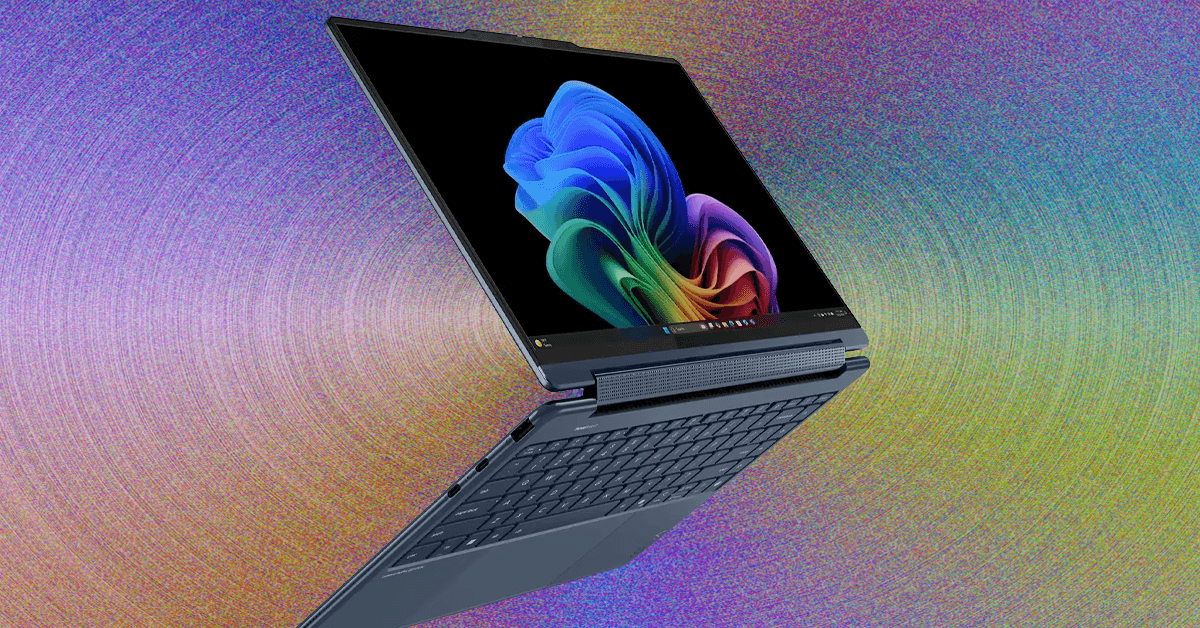
Compare Top 6 2-in-1 Laptops
Other 2-in-1 Laptops to Consider
Photograph: Luke Larsen
Framework Laptop 12 for $549: The Framework Laptop 12 (7/10, WIRED Recommends) isn’t just the smallest, cheapest, and most repairable Framework Laptop to come out. It’s also a 2-in-1. The device has a 360-degree hinge that lets you flip the screen all the way around. That’s fitting for a smaller device that’s meant to go everywhere with you. The Framework Laptop 12 is much more than that. Its accessibility is unbeatable, allowing you to upgrade and swap out virtually every component imaginable. That even includes the CPU and motherboard. The starting configuration is just $549, too.
Lenovo Chromebook Duet Gen 9 for $244: The Lenovo Chromebook Duet Gen 9 (8/10, WIRED Recommends) was one of my favorite pieces of tech when it came out for one reason: its size. This diminutive detachable laptop is only 11 inches, which sounds painful at first. But this isn’t a productivity machine. Rather, it’s better viewed as a companion you can take anywhere for light web browsing, writing, and watching videos.
Lenovo Flex 5i Chromebook Plus for $490: If you want to dip more into the budget range, we’re big fans of the Lenovo Flex 5i Chromebook Plus (8/10, WIRED Recommends). While it usually goes for $500, you’ll frequently find it on sale for under $400. That’s excellent value if all you need is solid performance, a web browser, and the occasional Android app.

Photograph: Luke Larsen
Lenovo IdeaPad 5i 2-in-1 for $650: You might think a 16-inch 2-in-1 laptop sounds silly. It’s not portable enough to use as a tablet, that’s for sure. But if you need a large touchscreen on your laptop, there’s reason to pick up something like the Lenovo IdeaPad 5i 2-in-1 (6/10, WIRED Review). The flexibility of having a 360-degree hinge is useful in all sorts of scenarios too. This 16-inch 2-in-1 balances price, portability, and performance with just enough finesse to be worth it.
Asus ProArt PZ13 for $1,300: Another detachable, the Asus ProArt PZ13 (6/10, WIRED Recommends) veers toward mimicking Microsoft’s Surface Pro playbook but at a much more affordable price. For $1,100, you get a Copilot+ PC that can go up to around 19 hours on a single charge. Unfortunately, the performance leaves much to be desired, and its three-piece design is confounding. Still, it’s a nice alternative to the Surface Pro if you’re dead set on the style.
Power up with unlimited access to WIRED. Get best-in-class reporting and exclusive subscriber content that’s too important to ignore. Subscribe Today.


Dybantsa fuels No. 23 BYU’s upset win over No. 6 Iowa State

Trump’s new global tariff comes into effect at 10%

Sweet treats being stolen in UK to order for illicit markets

-

 Entertainment1 week ago
Queen Camilla reveals her sister’s connection to Princess Diana
-

 Tech1 week ago
Rakuten Mobile proposal selected for Jaxa space strategy | Computer Weekly
-

 Politics1 week ago
Ramadan moon sighted in Saudi Arabia, other Gulf countries
-

 Entertainment1 week ago
Robert Duvall, known for his roles in "The Godfather" and "Apocalypse Now," dies at 95
-

 Politics1 week ago
Tarique Rahman Takes Oath as Bangladesh’s Prime Minister Following Decisive BNP Triumph
-
 Business1 week ago
Tax Saving FD: This Simple Investment Can Help You Earn And Save More
-

 Tech1 week ago
Businesses may be caught by government proposals to restrict VPN use | Computer Weekly
-

 Sports1 week ago
Usman Tariq backs Babar and Shaheen ahead of do-or-die Namibia clash