

Politics
Trump says he has solved many wars. Has he?

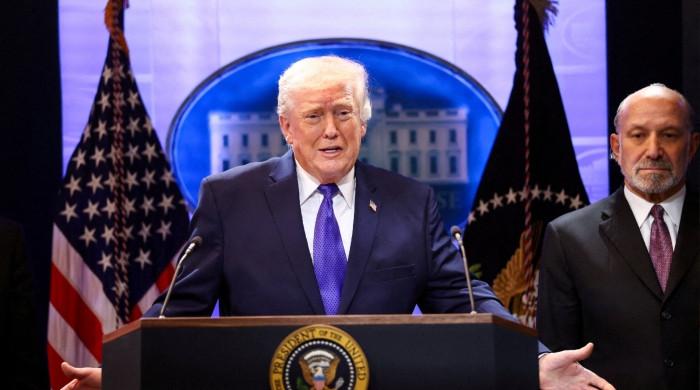
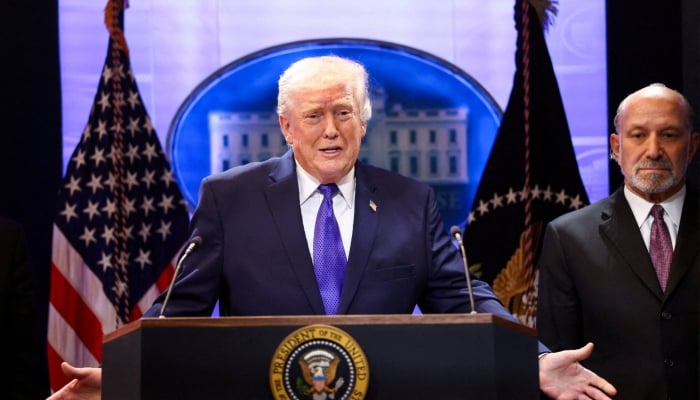
US President Donald Trump says he should get the Nobel Peace Prize after wading into eight conflicts since taking office last January. But the issues that caused many remain unresolved and conflict has flared again in some of the regions, including the Democratic Republic of Congo and along the border between Cambodia and Thailand.
Here are some of the international disputes where Trump has intervened:
Armenia and Azerbaijan
Trump brought together the leaders of Armenia and Azerbaijan on August 8 last year to sign a joint declaration pledging to seek peaceful relations between nations that have been at odds since the late 1980s.
“I got to know them through trade,” Trump said later in a radio interview. “I was dealing with them a little bit, and I said, ‘Why you guys fighting?’ Then I said, ‘I’m not going to do a trade deal if you guys are going to fight. It’s crazy.'”
The two countries had committed to a ceasefire in 2023. In March, they said they had agreed on the text of a draft peace agreement, but that deal has not been signed.
The subsequent White House-brokered declaration falls short of a formal peace treaty that would place legally binding obligations on both sides. Issues remain, including whether an agreement requires Armenia to revise its constitution.
The leaders struck economic agreements with Washington that granted the US development rights to a strategic transit corridor through southern Armenia.
The Trump administration said this would allow for more energy exports. In documents released at the time, the corridor was named after Trump. US Vice President JD Vance visited both countries in February, signing a strategic partnership with Azerbaijan and a nuclear deal with Armenia.
Cambodia and Thailand
Tensions remain between Thailand and Cambodia despite the fragile ceasefire earlier brokered in part by Trump.
The US president had helped bring Thailand to the table for talks after long-simmering tensions with Cambodia spilled over in July into a five-day military conflict, the deadliest fighting between the two in more than a decade.
Trump had reached out to then-acting Thai Prime Minister Phumtham Wechayachai two days after fighting erupted along a stretch of the border. Trump withheld trade deals with both countries until the conflict ended.
The US president oversaw the signing of a ceasefire deal between the two countries in Malaysia in October, which broke down within a matter of weeks before a new ceasefire was reached on December 27.
Israel, Iran and the Palestinian territories
Trump chaired the first meeting of his Board of Peace initiative on Thursday, as part of a bid to direct a deal aimed at ending conflict in — and redeveloping — Gaza.
Israel and Hamas agreed in October to the first phase of a Trump-brokered hostage and ceasefire deal. Hostilities have continued.
But the agreement nonetheless marked a major step forward for efforts to end a two-year war in Gaza in which more than 67,000 Palestinians have been killed. Under the deal, Hamas handed over hostages. Both, however, have repeatedly accused each other of violating the truce.
Both sides remain far apart on major issues, including Hamas’ disarmament, the governance of post-war Gaza and the composition and mandate of an international security force in the enclave.
The US president has also been working to expand the Abraham Accords, an initiative from his first term aimed at normalising diplomatic ties between Israel and Arab nations.
The Republican initially pursued talks with Iran over its nuclear programme. Israel launched an aerial war on Iran on June 13 and pressed Trump to join in. He did on June 22, bombing Iranian nuclear sites. He then pressed Israel and Iran to join a ceasefire that Qatar mediated.
Trump said at the time that Iran’s key nuclear sites were obliterated and disputed reports that the programme had merely been set back.
But in recent weeks, Trump has threatened Iran over nuclear programme. He has ordered a huge buildup of forces in the Middle East and preparations for a potential multi-week air attack on the country.
Rwada and Democratic Republic of the Cango
The Rwanda-backed rebel group M23 staged a lightning offensive this year and now holds more territory than ever in the eastern Democratic Republic of Congo. Its recent advances have stirred fears of further regional spillover of fighting.
Under pressure from Trump, Rwanda and Congo signed a US-brokered peace agreement on June 27. It hasn’t been implemented.
Trump brought the leaders of Congo and Rwanda to a Washington event on December 4 at a peace institute that his administration unofficially renamed in honour of the US president. There, they signed more documents affirming their commitment to Trump’s peace plan.
But the fighting has continued. Congolese President Felix Tshisekedi has said that Rwanda is violating its commitments, as has US Secretary of State Marco Rubio. Rwanda has long denied backing M23, but UN experts and Congolese leaders disagree. Qatar has brokered separate talks between Congo and M23.
Meanwhile, the leader of a Congolese rebel coalition that includes the M23 group has said a deal on critical minerals signed in December between Congo and Washington was unconstitutional, raising doubts about its implementation.
The insurgency is the latest episode in a decades-old conflict with roots in the 1994 Rwandan genocide.
Trump has warned of “very severe penalties, financial and otherwise” if the agreement is violated. The US is seeking access to Congo’s vast array of critical minerals as it competes with China for control of natural resources.
Pakistan and India
US officials worried conflict could spiral out of control when nuclear-armed India and Pakistan clashed in May following an attack in India that Delhi blamed on Islamabad without providing any concrete evidence.
Consulting with Trump, Rubio and Vance pushed Indian and Pakistani officials to de-escalate the situation.
A ceasefire was announced on May 10 after four days of fighting. But it addressed few of the issues that have divided India and Pakistan, which have fought three major wars since their independence from the United Kingdom in 1947.
Days after the ceasefire, Trump said he used the threat of cutting trade with the countries to secure the deal. India disputed that US pressure led to the truce and that trade was a factor.
Egypt and Ethiopia
Egypt and Ethiopia have a long dispute over the Grand Ethiopian Renaissance Dam, which Cairo regards as a national security issue and fears will threaten its Nile River water supplies.
“We’re working on that one problem, but it’s going to get solved,” Trump said in July.
White House spokeswoman Karoline Leavitt later included Egypt and Ethiopia in a list of conflicts that “the president has now ended.”
It is unclear what Trump is doing on the issue, though he has said he wants to bring the parties together for talks. In public comments, Trump has largely echoed Cairo’s concerns.
Ethiopia’s Prime Minister Abiy Ahmed opened the dam in September despite objections from both Sudan and Egypt. Egypt’s president, Abdel Fattah al-Sisi, has vowed to protect his own country’s interests.
Serbia and Kosovo
Kosovo and Serbia maintain tense relations five years after agreements Trump brokered with both during his first term to improve their economic ties.
Without providing evidence, Trump said in June he “stopped” war between the countries during his first term and that “I will fix it, again,” in his second.
Kosovo declared independence in 2008, almost a decade after Nato bombed Serb forces during a 1998-1999 counter-insurgency war.
But Serbia still regards Kosovo as an integral part of its territory. The countries have signed no peace deal.
Kosovo’s prime minister, Albin Kurti, has sought to extend government control over the north, where about 50,000 ethnic Serbs live, many of whom refuse to recognise Kosovo’s independence.
Kosovo’s president, Vjosa Osmani, said in July that over “the last few weeks,” Trump had prevented further escalation in the region. She did not elaborate, and Serbian President Aleksandar Vucic denied that any escalation had been looming.
Russia and Ukraine
Trump, who said during the 2024 presidential campaign that he could solve the war in Ukraine in one day, has so far been unable to end the nearly four-year-old conflict that analysts say has left more than 1 million people dead or wounded.
“I thought this was going to be one of the easier ones,” Trump said on August 18. “It’s actually one of the most difficult.”
Trump’s views on how to best bring peace have swung from calling for a ceasefire to saying a deal could still be worked out while fierce fighting continued. He imposed sanctions on Russia’s two biggest oil companies in October.
More recently, Trump has attempted to press Ukrainian President Volodymyr Zelenskiy into accepting a deal to end the war that European leaders worry would favour Moscow and destabilise the continent. Talks in recent days have produced few signs of progress.
South Korea and North Korea
Trump has said he wants to meet North Korean leader Kim Jong Un and make another push towards peace.
“We’ll come back, and we’ll, at some point in the not-too-distant future, meet with North Korea,” Trump told reporters in October on a trip to South Korea.
Trump and Kim held three summits during Trump’s 2017-2021 first term. They also exchanged several letters that Trump called “beautiful” before the unprecedented diplomatic effort broke down over US demands that Kim give up his nuclear weapons.
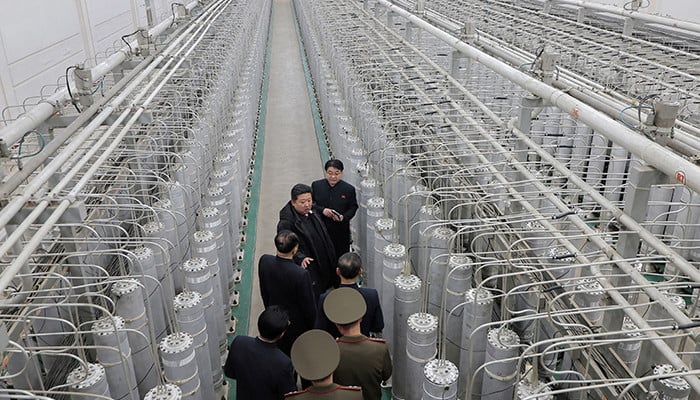
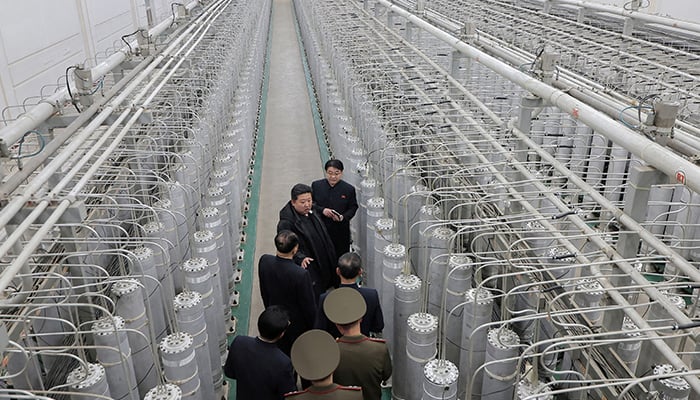
North Korea has surged ahead with more and bigger ballistic missiles, expanded its nuclear weapons facilities, and gained new support from its neighbours in the years since. In his second term, Trump has acknowledged that North Korea is a “nuclear power.”
Kim said in September that there was no reason to avoid talks with Washington if it dropped its demands that his country give up nuclear weapons. Trump agreed to support Seoul’s pursuit of a nuclear-powered submarine for its own defence.
- North boosts military capabilities amid Iran war, say experts.
- Ballistic missiles flew 140 km in 4th launch this month.
- Trump visiting Asia in May, interested in meeting Kim Jong Un.
North Korea fired ballistic missiles into the sea on Sunday, accelerating its missile launches amid Iran war tensions and talk of possible meetings with the US and South Korea.
Pyongyang’s intense missile activity — this was the fourth such launch this month and the seventh of the year — is meant to display its self-defence capabilities while gaining international leverage, some experts said.
“The missile launches may be a way of showing that — unlike Iran — we have self-defence capabilities,” said South Korean former presidential security adviser Kim Ki-jung.
“The North also appears to be exerting pressure preemptively and make a show of force before engaging in dialogue with the United States and South Korea,” he said.
Iran war, Trump visit loom over launches
The seven-week-old US-Israeli war against Iran, which has as one aim the curbing of Tehran’s nuclear programme, could reinforce Pyongyang’s nuclear ambitions, experts and former South Korean officials say.
US President Donald Trump, preparing for a summit in China next month, and South Korean President Lee Jae Myung have repeatedly expressed interest in holding talks with North Korean leader Kim Jong Un. There are no publicly known plans for any meetings.
Lee recently conveyed regret to the North for drone incursions from the South, receiving rare praise from Pyongyang.
Sunday’s missiles were fired from near the city of Sinpo on North Korea’s east coast toward the sea around 6:10am local time and flew about 140 km (90 miles), South Korea’s military said in a statement.
Japan’s government posted on social media that the missiles were believed to have fallen near the east coast of the Korean Peninsula, and no incursion into Japan’s exclusive economic zone had been confirmed.
South Korea’s presidential Blue House convened an emergency security meeting, calling the launches a provocation that violated UN Security Council resolutions, according to media reports. It urged Pyongyang to “stop the provocative acts”.
It was not clear what kind of ballistic missiles were fired, but Sinpo has submarines and equipment for test-firing submarine-launched ballistic missiles. The North last fired a ballistic missile from a submarine in May 2022, and it flew as far as 600 km (370 miles).
North Korea has made “very serious” advances in its ability to turn out nuclear weapons, with the probable addition of a new uranium enrichment facility, International Atomic Energy Agency chief Rafael Grossi said on Wednesday.
In late March, North Korean leader Kim said Pyongyang’s status as a nuclear-armed state was irreversible and expanding a “self-defensive nuclear deterrent” was essential to national security.
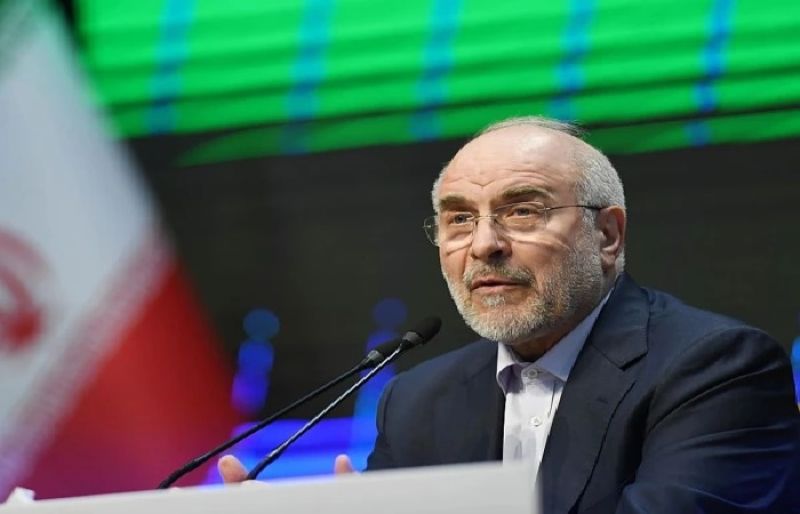
Qalibaf made the remarks in a television interview aired on Saturday night.
“We fought an asymmetric war in such a way that we pushed back the enemy,” he said.
According to the top lawmaker and lead negotiator, the enemy’s shortcomings were not in resources but in strategy.
“The enemy had money and resources, but they did not act correctly in terms of design,” Qalibaf stated. “They make strategic errors. They miscalculate regarding our people, just as they miscalculate in their own military design.”
Qalibaf said the US possesses superior military power, experience, and resources, but the Islamic Republic of Iran emerged as the victor in the recent war by fighting an asymmetric war and pushing back the enemy through meticulous planning and preparation.
“We are not stronger than the United States in military power,” he said. “It is clear that they have more money, equipment, and resources, and because they have committed so much aggression around the world, their experience is also greater than ours.”
He, however, emphasized that material advantages do not guarantee victory.
“Certainly, equipment, resources, and money are effective in war and victory, but it is not always the case,” Qalibaf noted.
He attributed Iran’s success to strategic ingenuity. “We fought an asymmetric war in such a way that we pushed back the enemy through our own planning and preparation,” he said.
“The enemy had money and resources, but they did not act correctly in terms of design.”
He also slammed the Trump administration for putting ‘Israel First’ before ‘America First’.
“The US government claims that ‘America First’ matters to it, but in practice, it has shown that Israel comes first for it, because it makes decisions based on Israel’s false information.”
He asserted that Iran accepted the ceasefire because the US accepted its demands.
“Consolidating the rights of the nation must be our main goal. And rest assured, there will be no capitulation in the field of diplomacy,” Qalibaf said.
He said that when the enemy could not impose its demands on the Iranian nation through military power, could not influence us with its ultimatums, and saw that the Iranian armed forces were standing firm on the battlefield, it sent messages through various countries.
“Of course, today we are standing even firmer than the day before the ceasefire was established,” Qalibaf said.
Ready to respond to any aggression
Qalibaf said Iran remains firmly positioned on the battlefield and stands ready to respond the moment the enemy makes any mistake, emphasizing that the armed forces are fully prepared even as diplomatic negotiations continue.
He outlined Iran’s dual-track approach of military readiness and diplomatic engagement.
“As long as we pursued matters on the battlefield and militarily, we stood firm, and today we stand firm as well,” he said. “The moment the enemy makes a mistake, we are ready.”
The parliament speaker and lead negotiator stressed that Tehran has no trust in its adversaries, warning that Iran’s response will be swift to any act of enemy aggression.
“Because we have no trust in the enemy,” Qalibaf stated. “Even at this very moment, as we sit here, war could break out. The armed forces are fully prepared on the ground.”
He dismissed any suggestion that ongoing negotiations might lead to complacency regarding the matters of national defense.
“It is not the case that we think just because we are negotiating, the armed forces are not ready,” he said. “Rather, just as the people are in the streets, our armed forces are also ready.”
Qalibaf emphasized that for him, there is no difference between the battlefield and the negotiation table, and he is ready to give his life “to secure the rights of the people.”
Warning over Strait of Hormuz escalation
Iran’s parliament speaker, Mohammad Baqer Qalibaf, in remarks on Saturday, said he personally warned a US delegation in Islamabad against escalation in the Strait of Hormuz.
In a television interview, Qalibaf said he warned the US delegation that had come to the Pakistani capital for ceasefire talks that Iranian forces would open fire at minesweepers if they moved “an inch” from their position in the strategic waterway.
The top Iranian lawmaker and lead negotiator laid out a detailed account of the confrontation between the Iranian naval forces and the US military in the Strait of Hormuz, asserting that the Islamic Republic has full control over the vital waterway and has already pushed the United States into a retreat.
“I told the American delegation that if their minesweeper moved even a fraction from its position, we would definitely fire at it,” he said, adding that the US delegation asked for 15 minutes to relay the order to turn back.
Qalibaf added that the Islamic Revolution Guards Corps (IRGC) Navy decisively foiled an attempt to conduct minesweeping operations, which violated the ceasefire.
“We advanced to the point of confrontation, but the enemy retreated,” he noted.
Iran’s parliament speaker, who led the Iranian delegation for talks with the US delegation in Islamabad last week, said the Strait of Hormuz is under the control of the Islamic Republic.
He also dismissed the Trump administration’s recent move of a “naval blockade” in the Strait of Hormuz as “a clumsy decision born of ignorance.”
Qalibaf issued a warning regarding global energy transit through the strait, a chokepoint through which about 20% of the world’s oil passes.
“It is impossible for others to pass through the Strait of Hormuz but not us. If the US does not abandon the blockade, traffic in the Strait of Hormuz will certainly be restricted,” he said.
“If any traffic is taking place in the strait today, control of the strait is in our hands.”
A Press TV investigation on April 12 had revealed that the US military’s attempt to sail two destroyers through the Strait of Hormuz ended as a failed propaganda stunt timed to coincide with the talks in Islamabad.
Based on information provided by military-security sources, the report revealed that the US Navy destroyers came within minutes of complete destruction after attempting a high-risk passage through the Strait of Hormuz – a failed propaganda operation that was aimed at influencing the Iran-US talks in the Pakistani capital.
Both Arleigh Burke-class destroyers had attempted to transit the strategic waterway but were intercepted and forced to retreat by Iranian naval forces.
Press TV’s investigation found the American attempt to be an extremely high-risk move that could have easily turned into a disaster for the United States and its military.
The destroyers were only minutes away from complete destruction after Iranian cruise missiles locked onto the vessels and attack drones were deployed.
The investigation further revealed that by spoofing their identity, the destroyers sought to present themselves as commercial vessels belonging to Oman, purportedly engaged in coastal transit in the southern part of the Sea of Oman.
However, the IRGC naval forces, while patrolling around Fujairah, had already detected the deception and taken swift action.
Leadership proves its strength, resilience
In other remarks, Qalibaf said the country’s political and military structure proved its strength and resilience following the martyrdom of the Leader of the Islamic Revolution and top-ranking commanders, noting that the Iranian people themselves rose to fill the void.
He also spoke about American duplicity during negotiations twice in the past year, referring to the war in June of last year and the conflict in late February of this year.
Qalibaf contrasted Iran’s response time between the earlier war and the most recent one.
“In the first war, we had a delay of 14 to 15 hours in responding and attacking. But in this war, despite the martyrdom of the commander-in-chief, the chief of general staff, and the IRGC commander, which could have caused disruption, we saw that the reaction took place in the shortest possible time,” he said, attributing the speed to the “strong structure.”
Invoking the legacy of Imam Khomeini, the founder of the Islamic Republic, and Ayatollah Seyyed Ali Khamenei, the martyred Leader of the Islamic Revolution, Qalibaf said they believed the revolution does not rely on individuals but on institutions.
Air defenses at their peak
Qalibaf said Iranian air defense forces successfully struck approximately 180 drones in the recent war—a capability that did not exist during the previous conflict—and asserted that the strike on a US F-35 fighter jet sent a clear message to the enemy.
The Parliament Speaker highlighted significant technical advances in Iran’s air defense systems, especially following the 12-day war in June of last year.
He addressed a specific incident involving a US F-35 fighter jet, framing it as evidence of Iran’s growing technical sophistication. “Hitting an F-35 is not a coincidence; it is an operation involving various technical and design dimensions,” he said.
According to the speaker, the proximity of the missile explosion to the aircraft served as a deterrent signal. “The missile that exploded near the F-35 made the enemy understand what capabilities we possess and in which direction we are moving,” Qalibaf added.
He also commended the people for taking to the streets daily in a show of solidarity with the country’s armed forces.
“Today, our people are more steadfast than in the previous war. They have now been on the streets every day for nearly 50 nights,” he said, referring to the nightly gatherings.
“We achieved good success on the battlefield, and people in the streets were partners in that. For the consolidation of this success, people present in the streets are also very effective.”
- Trump says ‘very good’ discussions held with Iran but warns against “blackmail”.
- Iran warns Strait of Hormuz may be limited if blockade stays.
- Pakistan, Egypt, optimistic ceasefire deal could come soon.
The crucial Strait of Hormuz will not reopen until the United States lifts its naval blockade on Iranian ports, Tehran said, as a top official warned that a final peace deal remained “far” off.
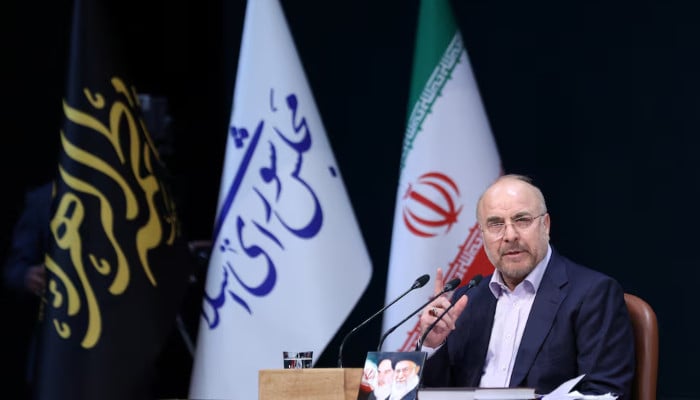
Mohammad Bagher Ghalibaf, speaker of the Iranian parliament, said in a televised address that there has been “progress” in talks with Washington “but there are many gaps and some fundamental points remain.”
“We are still far from the final discussion,” said Ghalibaf, one of Tehran’s negotiators in the talks aimed at ending the war launched by Israel and the United States against the Islamic Republic.
A two-week ceasefire is set to end on Wednesday unless it is renewed.
US President Donald Trump said meanwhile that “very good conversations” were going on with Iran but warned Tehran against trying to “blackmail” the United States.
On Friday, Tehran had declared the Strait of Hormuz, which usually carries a fifth of the world’s oil and liquefied natural gas, open after a ceasefire was agreed in Israel’s war with Iran’s ally Hezbollah in Lebanon.
This prompted elation in global markets and sent oil prices plunging, but with Trump insisting the blockade of Iranian ports would continue until a deal is struck to end the wider war, Tehran said it was shuttering the strait once more.
“If America does not lift the blockade, traffic in the Strait of Hormuz will definitely be limited,” Ghalibaf said.
Iran’s supreme leader, Mojtaba Khamenei, who has yet to be seen since taking power, said meanwhile in a written message that Iran’s navy “stands ready” to defeat the United States.
Trump, speaking to reporters at a White House event, accused Iran of getting “a little cute” with its recent moves and warned Tehran not to try to “blackmail” Washington with its flip-flopping on the Strait of Hormuz.
“We have very good conversations going on,” the president said, adding that the United States was “taking a tough stand.”
‘Targeted’
Iran’s Revolutionary Guards warned that any attempt to pass through the strait without permission “will be considered cooperation with the enemy, and the offending vessel will be targeted.”
A handful of oil and gas tankers crossed the strait early on Saturday during the brief reopening, tracking data showed, but others retreated and tracking platforms showed hardly any vessels crossing the waterway by the late afternoon.
A UK maritime security agency said the Revolutionary Guards fired at one tanker, while security intelligence firm Vanguard Tech reported the force had threatened to “destroy” an empty cruise ship that was fleeing the Gulf.
In a third incident, the UK agency said it received a report of a vessel “being hit by an unknown projectile which caused damage” to shipping containers but no fire.
The Indian foreign ministry said it had summoned the Iranian ambassador in New Delhi to lodge a protest over a “shooting incident” involving two Indian-flagged ships in the strait.
French UN peacekeeper killed
On the diplomatic front, Egypt, which has been involved in mediation efforts along with Pakistan, appeared optimistic on Saturday with Foreign Minister Badr Abdelatty saying Cairo and Islamabad hoped to secure a final agreement “in the coming days.”
Two major sticking points in the talks have been Iran’s stockpile of near-weapons-grade enriched uranium and the future of the Strait of Hormuz.
Trump declared Friday that Iran had agreed to hand over its 440 or so kilograms of enriched uranium. “We’re going to get it by going in with Iran, with lots of excavators,” he said.
Iran’s foreign ministry has said the stockpile, thought to be buried deep under rubble from US bombing in last June’s 12-day war, was “not going to be transferred anywhere” and surrendering it “to the US has never been raised in negotiations.”
The Middle East war began on February 28 with a massive wave of US-Israeli surprise attacks on Iran, despite Washington and Tehran being engaged in negotiations at the time.
The conflict rapidly spread across the region, with Iran targeting neighbouring Gulf countries and Hezbollah dragging Lebanon into the conflict by launching rockets at Israel.
A French soldier was killed and three others wounded in an ambush on Saturday on UN peacekeepers in Lebanon that French President Emmanuel Macron blamed on Hezbollah, an accusation the group denied.
UN Secretary-General Antonio Guterres condemned the attack in a statement and said an initial assessment by the United Nations Interim Force in Lebanon (UNIFIL) found it was carried out by Hezbollah.


Rs 20,000 crore gold, silver rush: What will people buy this Akshaya Tritiya? – The Times of India

Prince Harry corrects blunder before peace with King Charles suffers again

The cost of rising rents: Working four jobs and pushed on to benefits

-

 Entertainment6 days ago
Palace left in shock as Prince William cancels grand ceremony
-

 Sports6 days ago
The case for Man United’s Fernandes as Premier League’s best
-
 Politics1 week ago
Chinese, Taiwanese will unite, Xi tells Taiwan opposition leader
-

 Entertainment1 week ago
Dua Lipa hits major career high ahead of wedding with Callum Turner
-
 Business1 week ago
100% road tax waiver for electric cars, new rules for 2, 3 and 4 wheelers – what Delhi govt’s draft EV policy says – The Times of India
-
 Business6 days ago
UK could adopt EU single market rules under new legislation
-
 Business1 week ago
The FAA wants gamers to apply for air traffic control jobs
-

 Fashion6 days ago
Energy emerges as biggest cost driver in textile margins