

Tech
This Is the Group That’s Been Swatting US Universities


A self-proclaimed leader of an online group linked to the violent extremist network The Com tells WIRED he is responsible for the flurry of hoax active-shooter alerts at universities across the US in recent days as students return to school.
Known online as Gores, the person says he coleads a group called Purgatory, which is offering its followers a menu of services, including hoax threats against schools—known as swatting—for just $20, while faked threats against hospitals, businesses, and airports can cost up to $50. The group also offered “slashings” and “brickings” for as little as $10, according to a review of the group’s Telegram channel by WIRED, apparently referencing real-world violence.
In recent days, however, as the incidents were reported in the media, the prices have skyrocketed, with a school swatting now costing $95 and brickings costing $35.
The group has been linked to 764, a nihilistic subgroup of The Com that conducts targeted campaigns against children using extortion, doxing, swatting, and harassment. Members of 764 have been accused of everything from robbery to sexual abuse of minors, kidnapping, and murder.
Since the swatting spree kicked off on August 21, around a dozen different universities have been targeted with 911 emergency calls, some having to issue alerts on multiple occasions after receiving multiple hoax calls. Gores tells WIRED that the group had earned around $100,000 since the swatting spree began. WIRED has not independently confirmed that figure.
As well as the confirmation from Gores, two researchers who spoke to WIRED confirmed that they had both listened to the group conducting swatting calls on audio livestreams as they happened in recent days. In at least one case, a researcher was able to intercede and call the targeted institution to inform them that the call was a hoax.
WIRED reviewed recordings of the swatting calls provided by the researchers and has been reviewing the Telegram channel run by Purgatory, where members of the group have been celebrating media coverage of their calls in recent days, including the swatting attempt on the University of Colorado Boulder on Monday afternoon.
Nicole Mueksch, a spokesperson for the University of Colorado Boulder, tells WIRED that the incident remains under investigation, adding that university police are working with “state and federal partners, including the FBI, to explore any potential leads or patterns that may be connected to other recent swatting cases across the country.”
The FBI told The Washington Post that it’s investigating and, in a statement to The New York Times, said it is “seeing an increase in swatting events across the country, and we take potential hoax threats very seriously because it puts innocent people at risk.” The agency did not immediately respond to WIRED’s request for comment.
“Knowingly providing false information to emergency service agencies about a possible threat to life drains law enforcement resources, costs thousands of dollars and, most importantly, puts innocent people at risk,” the FBI added.
The recent swatting spree began on August 21, the same day the current Purgatory Telegram channel was launched. At around 12:30 pm local time that day, the University of Tennessee at Chattanooga received a call claiming an active shooter was on campus. The school was locked down for over an hour before campus police issued an all-clear at 1:51 pm after no threat was found. Hours later, at Villanova University in Pennsylvania, a hoax call forced the school into lockdown as students and faculty took part in the university’s orientation mass to welcome new students.











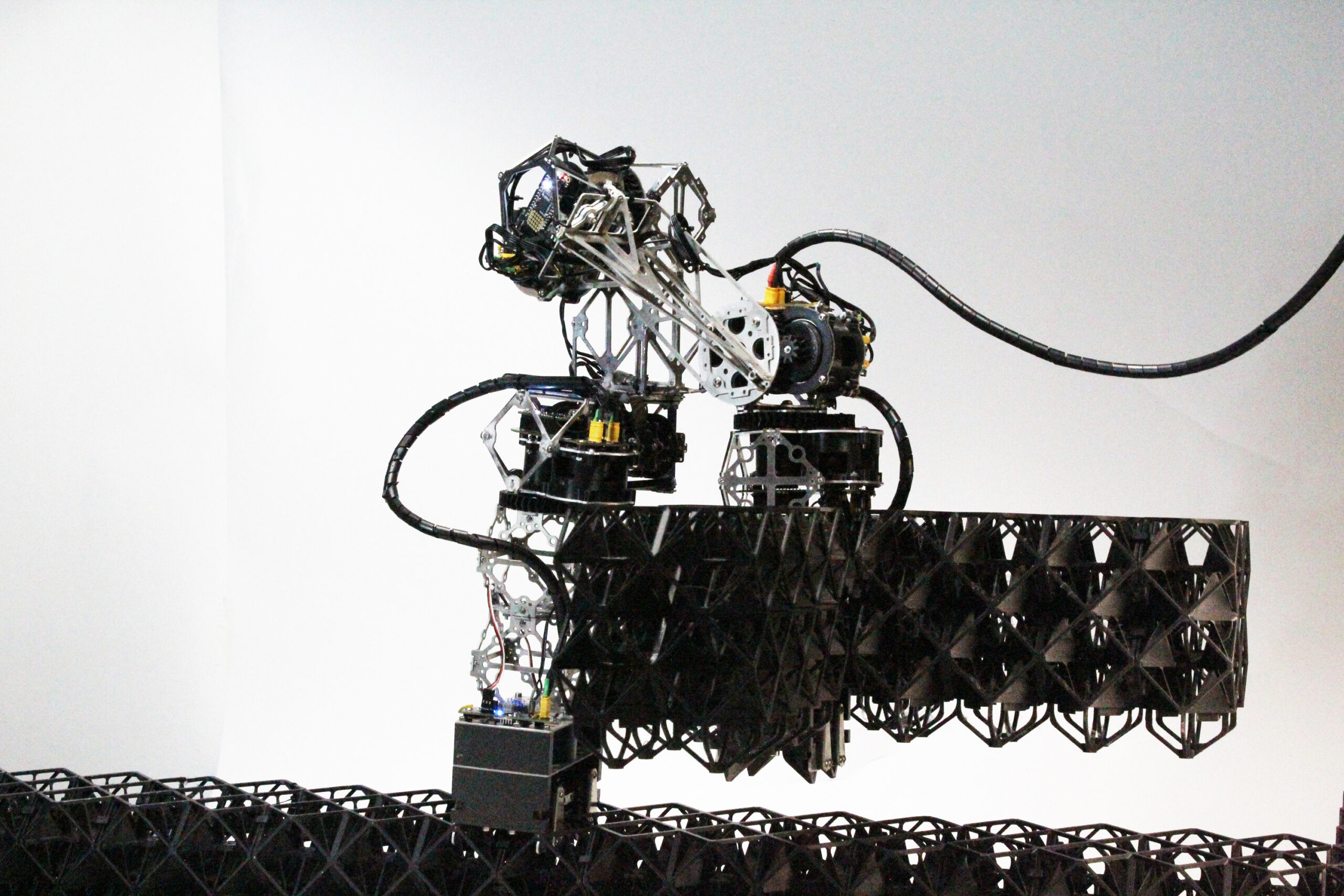
Robotically assembled building blocks could be a more environmentally friendly method for erecting large-scale structures than some existing construction techniques, according to a new study by MIT researchers.
The team conducted a feasibility study to evaluate the efficiency of constructing a simple building using “voxels,” which are modular 3D subunits that assemble into complex, durable structures.
After studying the performance of multiple voxels, the researchers developed three new designs intended to streamline building construction. They also produced a robotic assembler and a user-friendly interface for generating voxel-based building layouts and feeding instructions to the robots.
Their results indicate this voxel-based robotic assembly system could reduce embodied carbon — all of the carbon emitted during the lifecycle of building materials — by as much as 82 percent, compared with popular techniques like 3D concrete printing, precast modular concrete, and steel framing. The system would also be competitive in terms of cost and construction time. However, the choice of materials used to manufacture the voxels does play a major role in their carbon footprint and cost.
While scalability, durability, long-term robustness, and important considerations like fire resistance remain to be explored before such a system could be widely deployed, the researchers say these initial results highlight the potential of this approach for automated, on-site construction.
“I’m particularly excited about how the robotic assembly of discrete lattices can enable a practical way to apply digital fabrication to the built environment in a way that can let us build much more efficiently and sustainably,” says Miana Smith, a graduate student in the Center for Bits and Atoms (CBA) at MIT and lead author the study.
She is joined on the paper by Paul Richard, a graduate student at École Polytechnique Fédérale de Lausanne in Switzerland and former visiting researcher at MIT; Alfonso Parra Rubio, a CBA graduate student; and senior author Neil Gershenfeld, an MIT professor and the director of the CBA. The research appears in Automation in Construction.
Designing better building blocks
Over the past several years, researchers in the Center for Bits and Atoms have been developing voxels, which are lattice-structured building blocks that can be assembled into objects with high strength and stiffness, like airplane wings, wind turbine blades, and space structures.
“Here, we are taking aerospace principles and applying them to buildings. Why don’t we make buildings as efficiently as we make airplanes?” Gershenfeld says, based on prior work his lab has done on voxel assembly with NASA, Airbus, and Boeing.
To explore the feasibility of voxel-based assembly strategies for buildings, the researchers first evaluated the mechanical performance and sustainability of eight existing voxel designs, including a cuboctahedron made from glass-reinforced nylon and a Kelvin lattice made from steel.
Based on those evaluations, they developed a set of three voxels using a new geometry that could be more easily assembled robotically into a larger structure. The new design, based on a high-strength and high-stiffness octet lattice, mechanically self-aligns into rigid structures.
“The interlocking nature of these voxels means we can get nice mechanical properties without needing to have a lot of connectors in the system, so the construction process can run a lot faster,” Smith says.
To accelerate construction, they designed a robotic assembly system based on inchworm-like robots that crawl across a voxel structure by anchoring and extending their bodies. These Modular Inchworm Lattice Assembler robots, or MILAbots, use grippers on each end to place voxel building blocks and engage the snap-fit connections.
“The robots can assemble the voxels by dropping them into place and then stepping on them to have the pieces interlock. We can do precise maneuvers based on the mechanical relationship between the robots and the voxels,” Smith explains.
The team studied the embodied carbon needed to fabricate their new voxel designs using three materials: plastic, plywood, and steel. Then they evaluated the throughput and cost of using the robotic assembly system to build a simple, one-story building. The researchers compared these estimates with the performance of other construction methods.
Potential environmental benefits
They found that most existing voxels, and especially those made from plastics, performed poorly compared to existing methods in terms of sustainability, but the steel and wood voxels they designed offered significant environmental benefits.
For instance, utilizing their steel voxels would generate only 36 percent of the embodied carbon required for 3D concrete printing and 52 percent of the embodied carbon of precast concrete. The plywood voxels had the lowest carbon footprint, requiring about 17 percent and 24 percent of the embodied carbon needed, respectively.
“There is still a potential viable option for a plastics-based voxel approach, we just have to be a bit more strategic about which types of plastics, infills, and geometries we use,” Smith says.
In addition, projected on-site assembly time for the steel and wood voxel approaches averaged 99 hours, whereas existing construction methods averaged 155 hours.
These speed benefits rely on the distributed nature of voxel-based assembly. While one MILAbot working alone is far slower than existing techniques, with a team of 20 robots working in parallel, the system catches up to or surpasses existing automation methods at a lower cost.
“One benefit of this method is how incremental it is. You can start building, and if it turns out you need a new room, you can just add onto the structure. It is also reversible, so if your use changes, you can dissemble the voxels and change the structure,” Gershenfeld says.
The researchers also developed an interface that enables users to input or hand-design a voxelized structure. The automatic system determines the paths the MILAbots should follow for construction and sends commands to the assemblers.
The next step in this project will be a larger testbed in Bhutan, using the “super fab lab” that CBA helped set up there to replicate the robots to test construction for a planned sustainable city, Gershenfeld says.
Additional areas of future work include studying the stability of voxel structures under lateral loads, improving the design tool to account for the physics of the system, enhancing the MILAbots, and evaluating voxels that have integrated sheeting, insulation, or electrical and plumbing routing.
“Our work helps support why doing this type of distributed robot assembly might be a practical way to bring digital fabrication into building construction,” Smith says.
This work was funded, in part, by the MIT Center for Bits and Atoms Consortia.

A jury was selected on Monday during the first day of trial for Musk v. Altman in a federal court in Oakland, California. Some of the jurors that were ultimately selected voiced concerns over Musk himself, as well as the AI technology at the core of the case, but assured the court they would put these concerns aside for the trial. The kick off also catalyzed an array of shenanigans outside the courtroom.
OpenAI CEO Sam Altman and president Greg Brockman were spotted in the security line inside the courthouse this morning, but Elon Musk was nowhere to be found. A few dozen journalists crammed into an overflow room to listen to an audio stream of the proceedings.
The goal today was to select nine jurors who could be fair and impartial in this case—an especially difficult challenge considering the main characters are some of the most high-profile tech executives in the world. Several potential jurors said they had negative opinions about Musk when questioned by Judge Yvonne Gonzalez Rogers and attorneys. But that didn’t necessarily disqualify them; only one juror was ultimately excused on the basis of their strong negative opinions regarding Musk.
“The reality is that many people don’t like him,” Gonzalez Rogers told the courtroom. She added that she believed Americans with negative feelings about Musk could still have integrity for the judicial process and decide the case fairly. The jury will help establish the core facts regarding whether Sam Altman and other defendants improperly steered OpenAI’s nonprofit venture away from its original mission, potentially violating the law in the process. But their verdict will be advisory—Gonzalez Rogers will have the final call.
The nine jurors that were ultimately selected represent quite a diverse group, including a painter, a former Lockheed Martin employee, and a psychiatrist. Some of them said they had negative opinions about artificial intelligence technology more broadly. In the end, however, all of the people selected assured the court that their outside opinions about Musk and AI shouldn’t interfere with their ability to determine the facts of the case.
OpenAI’s attorney William Savitt said at a press briefing afterward that he was satisfied with the jury the court settled on.
“Mr. Altman, Mr. Brockman, and OpenAI are looking forward to presenting their case to that jury. They’re confident in their position and are looking forward to the facts being known,” Savitt told reporters. “The hurdle we think we need to get over is just to present the truth here. We’ve got a story about what happened that is consistent with the facts, it’s consistent with the documents, and we just want the jury to see that.”
Musk is already trying to win his case in the court of public opinion. On Monday morning, the billionaire used his social media platform X to boost a recent New Yorker investigation into Altman’s alleged deceptive business conduct. The story is weeks old, and the fact that Musk promoted it on the first day of the trial is no coincidence. Earlier this morning, OpenAI’s official newsroom account published a post on X calling Musk’s lawsuit an “attempt to undermine our work to ensure that artificial general intelligence benefits all of humanity.” Meanwhile, demonstrators were outside the court protesting the AI race altogether and calling for a pause on further development.
On Tuesday, lawyers for OpenAI and Elon Musk will deliver opening statements, and the first witness in the case will be called to the stand.
This is an edition of Maxwell Zeff’s Model Behavior newsletter. Read previous newsletters here.

In a time when almost everything is getting more expensive, this deal on the M5 MacBook Air has me hopeful about how laptop pricing will play out the rest of the year. The M5 MacBook Air has dropped back down to $949, which is $150 off its retail price. It’s only been at this price one other time since the product launched in early March and has more consistently sold for $1,049. As someone who’s reviewed every available MacBook and their strongest competitors, I can unequivocally say that this MacBook Air is one of the very best laptop deals right now.
Take the Surface Laptop 7th Edition, for example, which has been one of my favorite alternatives to the MacBook Air through all of 2025. It had been at competitive prices with the M4 MacBook Air all along, with both laptops sometimes dropping to as low as $799 during sales events like Prime Day throughout the year. But now, the Surface Laptop has gotten an official price hike due to the RAM shortage and is currently sitting at $1,200. It’s still a laptop I like quite a lot, but at $350 more than a similarly configured M5 MacBook Air, it’s very difficult to recommend.
Or consider the MacBook Neo, Apple’s new budget laptop that also launched in March. While it’s much cheaper overall, it’s only ever been sold for $10 off its full price. At this reduced price for the M5 MacBook Air of $949, that leaves only a dangerously small $260 gap between the Neo and the Air. It’s almost embarrassing how much better the Air is by comparison—in every way imaginable. If you’re curious how these two laptops stack up, I’ve done a comprehensive comparison between them that’s worth checking out. But to put it simply, despite all the excitement (and controversy) around the much cheaper MacBook Neo, the MacBook Air still has the most price flexibility in terms of deals.


Match officials announced for HBL PSL 11 qualifier – SUCH TV

BP profits more than double as oil trading booms amid Iran war

Buckingham Palace issues ‘disappointing’ update on King Charles amid threat

-

 Sports1 week ago
NCAA men’s gymnastics championship: All-time winners list
-

 Sports1 week ago
WWE WrestleMania 42 Night 2: Live match results and analysis
-

 Fashion1 week ago
UK’s Sosandar returns to profitability amid robust FY26 performance
-

 Politics7 days ago
UK’s Starmer seeks to deflect blame over Mandelson appointment
-
 Business1 week ago
No fuel shortage: Govt assures 100% domestic LPG, PNG, CNG supply amid Hormuz energy crunch – The Times of India
-

 Entertainment1 week ago
Lee Anderson, Zarah Sultana kicked out of UK Parliament for calling PM ‘liar’
-

 Sports1 week ago
Quetta Gladiators opt to bowl after winning toss against Peshawar Zalmi in PSL 11 clash
-
 Business1 week ago
How Trump’s psychedelics executive order could unlock stalled cannabis reform