

Politics
Key takeaways from Trump’s State of the Union address to Congress

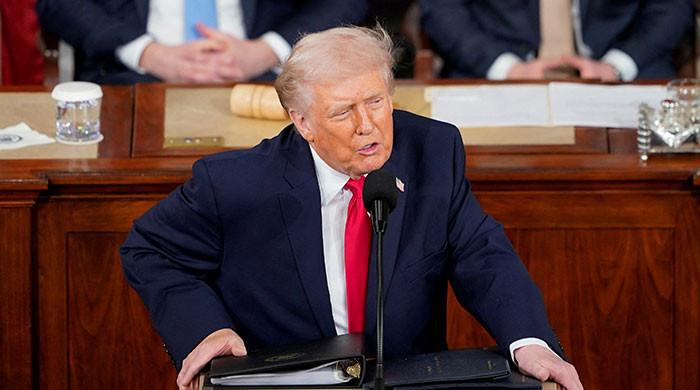
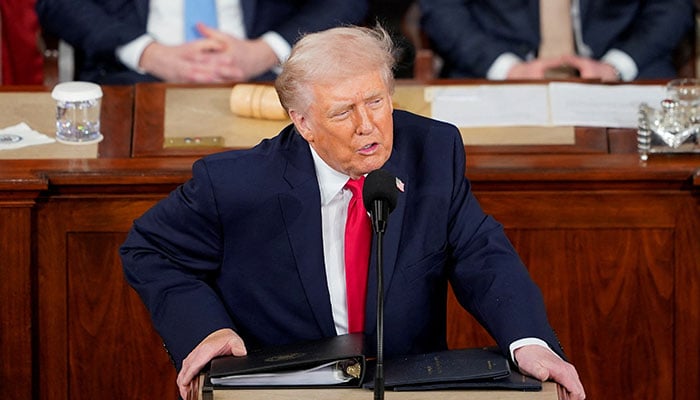
WASHINGTON President Donald Trump delivered his State of the Union address to a joint session of Congress on Wednesday, a potentially pivotal moment as the White House seeks to firm up support among Republican voters ahead of November’s midterm election.
Trump spoke against a backdrop of rising tensions with Iran and voter frustration with the high cost of living.
Here are some takeaways from Trump’s address:
Economy
Trump put dollars and cents at the heart of his speech, suggesting his aides, who have been pushing him for weeks to speak more about the economy, have prevailed for now.
He offered a broad-based sweep of kitchen-table economic issues — housing, healthcare, utility bills, crime, retirement — but he again stopped short of acknowledging that many Americans are still struggling with the high cost of living, including food and house prices.
Trump promised that his healthcare proposals to reduce drug prices and make federal payments directly to people would be cost-saving. He insisted that the tariffs struck down by the Supreme Court were generating revenue and were being restored under different legal authority.
Some party strategists have warned that without a more emphatic message on inflation, Trump’s Republican Party is at risk of losing control of Congress in the November midterm election.
In Trump’s telling, inflation, mortgage rates and gas prices are falling, while the stock market, oil production and foreign direct investment are booming along with construction and factory jobs.
But government data shows inflation ticked up last year, while the economy lost factory jobs and overall job creation was anemic. And while prices of some items — like eggs — have dropped since Trump’s return to the White House, food and other prices more broadly have increased.
Voters tell pollsters they are anxious about the economy and are dissatisfied with Trump’s handling of the issue. Some 56% disapprove of his handling of the economy, Reuters/Ipsos polling shows, while 36% approve.
Politics
Despite an uncharacteristically disciplined performance, Trump peppered his State of the Union address with made-for-TV flourishes designed to illustrate his case to voters. He doled out medals, introduced surprise guests and clashed with Democrats.
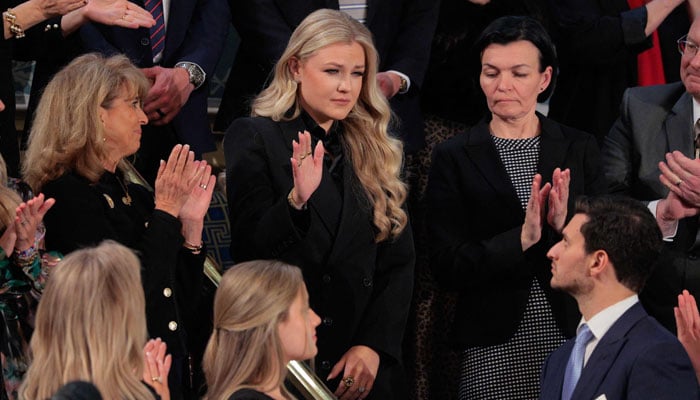
Awards for Korean War Navy pilot E. Royce Williams and Team US hockey goaltender Connor Hellebuyck — and the public name-checking of invited guests, including slain conservative activist Charlie Kirk’s widow Erika — punctuated the speech.
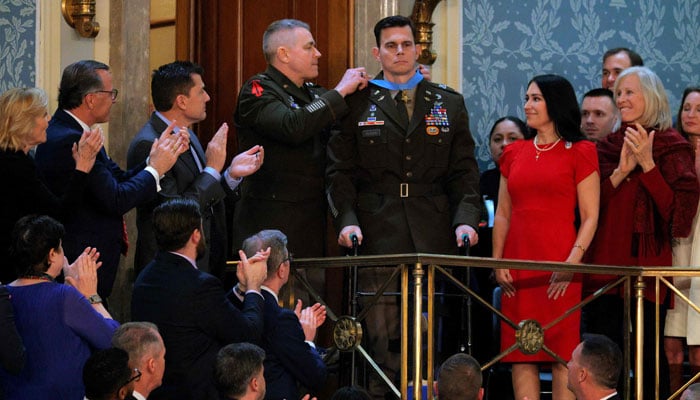
Trump gave Army Chief Warrant Officer Eric Slover, a helicopter pilot injured during the operation to capture then-Venezuelan President Nicolas Maduro, a Medal of Honour.
Each gesture underscored how the addresses have become political theatre over the years, as much about the optics as about the policies.
Trump, ever the showman, has used flashy displays of patriotism to advance his political goals. He staged a military parade on his 79th birthday and has regularly delivered sharply partisan speeches to active-duty service members.
On Tuesday, Trump’s efforts to reinforce narratives he wants voters to internalise were unmistakable. Members of the US men’s ice hockey team, fresh off an Olympic gold medal, were presented as proof that America is “winning” again under Trump’s leadership.
Other guests were introduced as cautionary tales: Dalilah Coleman, a seven‑year‑old injured in a car accident, was cited as evidence of the dangers Trump associates with immigration, while Liberty University student Sage Blair was held up as an example in his critique of schools and transgender policies.
Iran war
One of the most-asked questions going into Trump’s speech was whether he would finally make a detailed case for war against Iran, elaborating on the reason for the major US military buildup in the Middle East.
But the president did not mention Iran until well over an hour into his speech. And when he did, he fell back on his standard talking points, saying it was imperative to keep a bomb out of Tehran’s hands. He accused Iran of sowing terror via regional proxy groups and again said the leadership in Tehran had killed tens of thousands of people during recent protests.
He did not articulate why military action was urgent now, nor did he say precisely what he hoped to achieve. He gave little hint about which way he was leaning on using the military — a preoccupation at home and abroad.
During the first 75 minutes, he made only a glancing reference to Venezuela, while Russia and Ukraine were barely mentioned at all. His fixation on acquiring Greenland — a dispute that has strained transatlantic relations — did not come up.
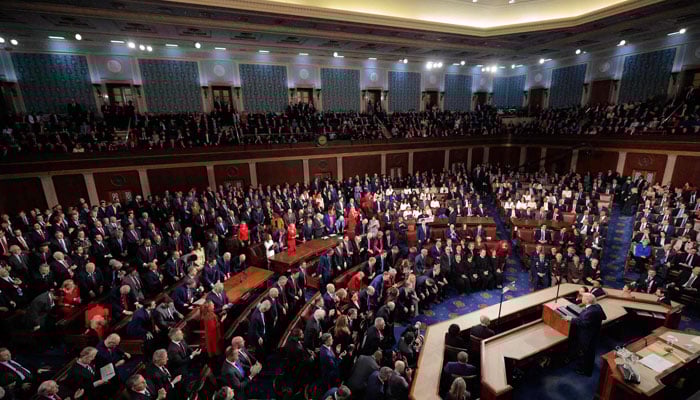
While he spent a good chunk of time later discussing conflicts that his administration has been trying to resolve, the lack of national security and foreign policy talk up front was conspicuous, given how much time and political capital he has been spending on diplomacy.
He has in recent weeks dispatched his closest aides to far-flung capitals to try to settle the war in Ukraine and negotiate with Iran. Last month, his administration deposed the leader of Venezuela, and much of the administration’s time and energy has been focused on managing relations with the South American country.
Immigration
Trump used the speech to try to reclaim the narrative on immigration. While that issue was once a key political strength, it has morphed into a weakness in recent months amid a backlash against the high-profile killings of two US citizens by immigration agents and a mass deportation drive that has proven more popular in theory than in practice.
He never mentioned the work of the Border Patrol and US Immigration and Customs Enforcement — agencies whose masked agents have been the public face of his crackdown in American cities.
He did, however, highlight crimes carried out by immigrants in graphic terms. And he argued that Democrats could not be trusted to secure the country’s borders and keep Americans safe.
In a sense, it was a return to form for Trump. The president dedicated much of his time on the campaign trail in 2024 to describing the dangers posed by immigrants, a message that resonated with voters. Stripped from his speech was any mention of his own administration’s enforcement tactics.
Overall, Trump sought to steer attention away from the most controversial elements of his immigration enforcement push while highlighting the elements of his message that have resonated in the past.
Shift in priorities
Trump’s speech offered a window into his administration’s changing priorities from almost a year ago, the last time he spoke to a joint session of Congress.
What’s gone: A host of foreign policy subjects treated in depth. These include plans to reclaim the Panama Canal and annex Greenland. China, which merited six mentions last year, received none this year. Trump has relaxed policy toward China ahead of his planned state visit in five weeks, and he has backed off for now on his Greenland threats.
Also cut from this year’s remarks was praise for Elon Musk and his Department of Government Efficiency. Trump’s affection for both projects has dimmed. Trump did say he would launch a program focused on fraud and chaired by Vice President JD Vance.
What’s in: In addition to a bucket of deliverables on the economy, Trump added a fresh push for election law changes ahead of the November midterms, including voter ID and limits on mail ballots.
Jibe at Democrats
Trump argued that Republicans deserved two more years of control of Congress because of their handling of the economy, immigration and public safety. But beyond those policy issues, he made a far more visceral appeal to voters to back Republicans.
“These people are crazy,” he said of Democratic lawmakers in the chamber who have voted against most of his legislative proposals and who view his presidency as one that has weakened democratic institutions. “Democrats are destroying this country, but we’ve stopped it just in the nick of time,” he said.
On a number of occasions, Trump took aim at Democrats as anti-American and acting against the best interests of the country, highlighting the increasingly partisan tone of the annual speech.
Democrats stayed in their seats, visibly irritating Trump, while Republicans leapt to their feet to applaud the president on issues ranging from gender politics to illegal migration and crime.
Some, like Representatives Al Green, Ilhan Omar and Rashida Tlaib, shouted at Trump. For those Democrats, Trump’s views on those issues are divisive and problematic — and upset large parts of their base.
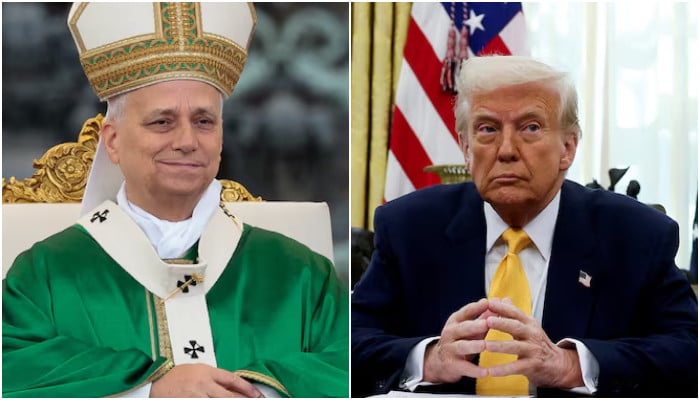
US President Donald Trump, whose war and immigration policies have been condemned by Pope Leo, reiterated his criticism of the religious leader on Tuesday night.
In a post on Truth Social, Trump urged that “someone please tell Pope Leo” about the killings of protesters by Iran and that “for Iran to have a Nuclear Bomb is absolutely unacceptable.”
The US and Israel attacked Iran on February 28. Iran responded with its own strikes on Israel and Gulf states with US bases.
US-Israeli strikes on Iran and Israeli attacks in Lebanon have killed thousands and displaced millions.
Iran does not have nuclear weapons while the US does. Israel is widely believed to be the only Middle Eastern country with nuclear weapons.
While Western countries have long believed that Iran wants a nuclear bomb — or at least the ability to make one very quickly — Tehran has always denied that, citing its membership of the Nuclear Non-Proliferation Treaty.
Trump’s comments come after Pope Leo warned earlier in the day of the risk of democracies sliding into “majoritarian tyranny”.
The first US pope, Leo wrote in a letter issued by the Vatican about the use of power in democratic societies, and said democracies remained healthy only when they were rooted in moral values.
The pope has criticised Trump’s decision to launch the war against Iran, saying God rejects the prayers of those who launch wars and have “hands full of blood”.
The pope termed Trump’s threat this month to destroy the Iranian civilisation as unacceptable and previously declined to join the US president’s so-called “Board of Peace” initiative for Gaza.
The religious leader has also urged a “deep reflection” on the way migrants are treated in the US while Trump has pursued a hardline immigration policy.
On Sunday, Trump called the pope “weak” and “terrible” on crime and foreign policy issues.
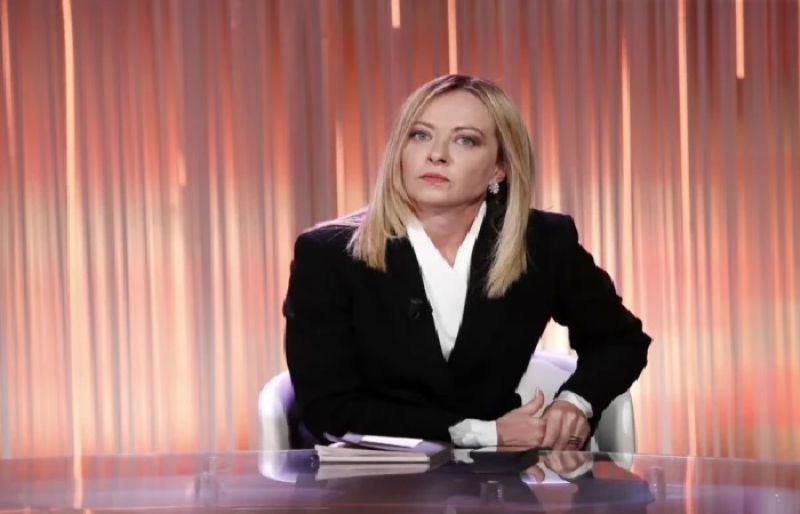
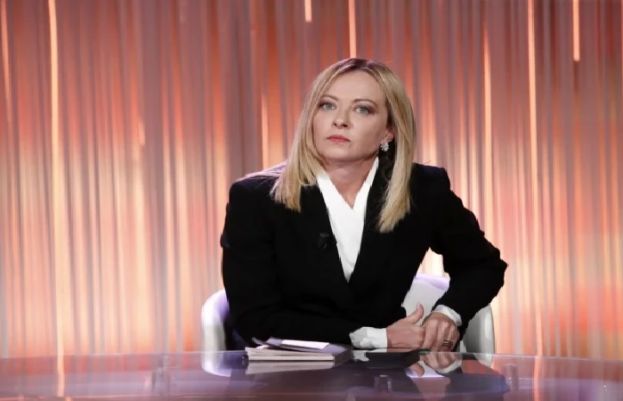
Italy’s Prime Minister Giorgia Meloni said on Tuesday her government had suspended a defence cooperation deal with Israel, reflecting frayed ties between previously close allies as the conflicts in the Middle East continue.
Meloni’s right-wing government has been one of Israel’s closest friends in Europe, but in recent weeks it has criticised its attacks on Lebanon, which have killed hundreds and injured thousands.
Israel also fired warning shots last week at Italian troops serving in Lebanon under a UN mandate, causing damage to a vehicle.
“In light of the current situation, the government has decided to suspend the automatic renewal of the defence agreement with Israel,” Meloni said during a visit to Verona, northern Italy.
A source close to the matter, who requested anonymity, said Meloni took the decision on Monday with her foreign and defence ministers, Antonio Tajani and Guido Crosetto, as well as Deputy Prime Minister Matteo Salvini.
A spokesperson for Israel’s foreign ministry declined to comment.
Opposition had called for the suspension
Meloni’s announcement was a surprise in that it marked a shift from a previously cautious stance on Israel. The opposition had asked the government to suspend the agreement.
“We had been calling for this for some time, along with other progressive forces,” the leader of the centre-left Democratic Party, Elly Schlein, said, adding Italy should also support the suspension of the EU-Israel Association Agreement.
Italy’s memorandum with Israel, signed in 2003 by the government of then Prime Minister Silvio Berlusconi, entered into force in 2006 and is subject to automatic renewals every five years unless one of the parties withdraws.
It foresees Israeli-Italian cooperation to “increase their respective defence capabilities” and spans fields including procurement, training and the “import, export and transit of defence and military equipment”.
As diplomatic tensions have risen, Rome last week summoned the Israeli ambassador to protest over the incident involving Italian troops in Lebanon, then on Monday, the government of Prime Minister Benjamin Netanyahu summoned the Italian ambassador “to discuss the situation in Lebanon”.
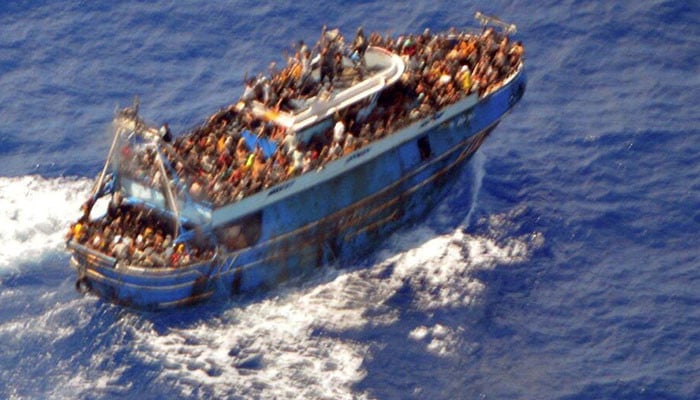
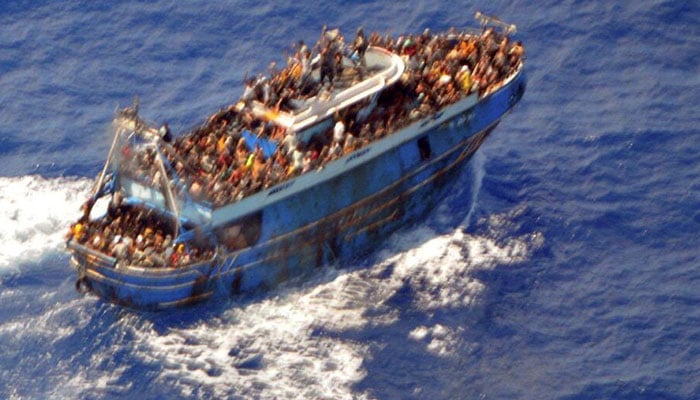
Around 250 people were missing after a boat carrying Rohingya refugees and Bangladeshi nationals capsized in the Andaman Sea, the United Nations’ refugee and migration agencies said in a joint statement on Tuesday.
The UN agencies said the trawler carrying around 250 men, women and children reportedly sank due to heavy winds, rough seas and overcrowding. It had departed from Teknaf in southern Bangladesh and was bound for Malaysia.
“This tragedy highlights the devastating human cost of protracted displacement and the continued absence of durable solutions for the Rohingya,” said the United Nations High Commissioner for Refugees, and the International Organisation for Migration.
For years, many of Myanmar’s Rohingya Muslim minority have embarked on rickety wooden boats to try to reach neighbouring countries, including Malaysia, Indonesia and Thailand, in a bid to flee persecution in Myanmar or overcrowded refugee camps in Bangladesh.
The agencies called on the international community to step up and sustain funding for lifesaving assistance for Rohingya refugees in Bangladesh as well as support for Bangladeshi host communities.
In 2017, Myanmar’s armed forces launched an offensive that forced at least 730,000 Rohingya from their homes and into neighbouring Bangladesh, where they recounted killings, mass rape and arson. A UN fact-finding mission concluded the 2017 military offensive had included “genocidal acts”.
Buddhist-majority Myanmar has denied genocide, and says the UN fact-finding mission was not objective or reliable.


Australian business confidence plunges in March amid uncertainty: NAB

Transfer rumors, news: Bayern eye move for Newcastle’s Gordon
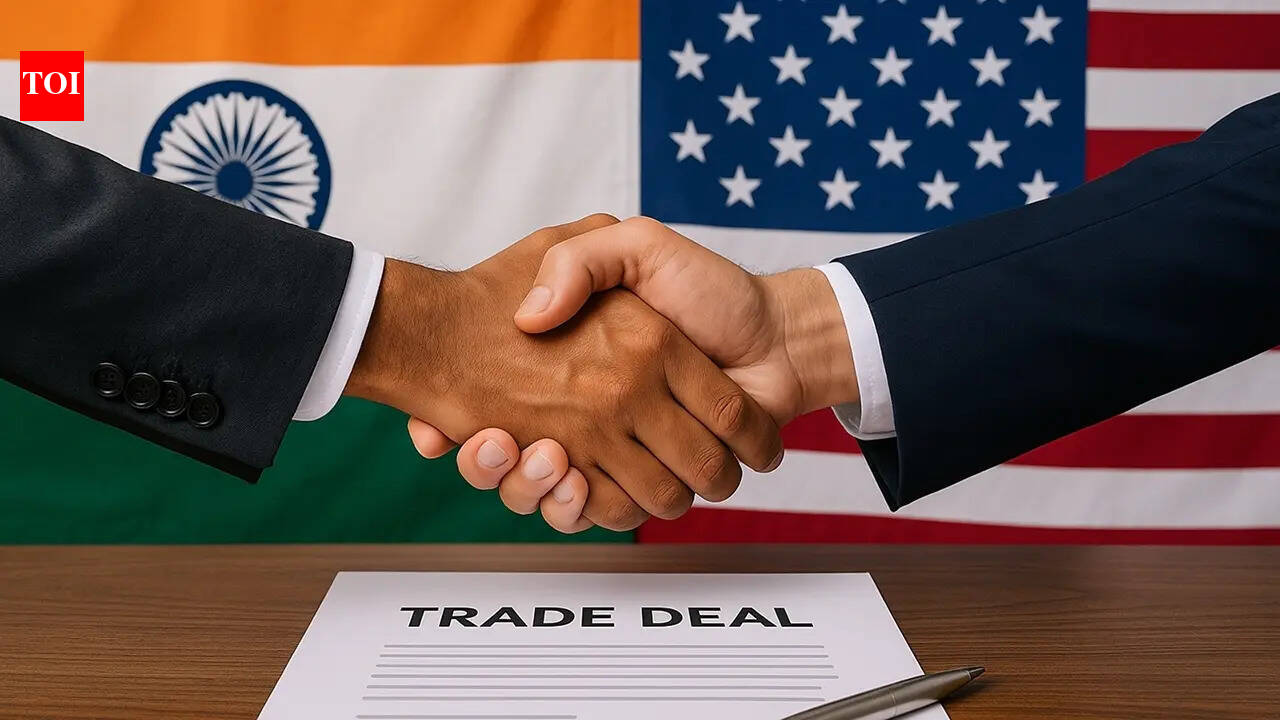
India-US trade deal back in focus: Indian delegation to visit Washington next week for talks – The Times of India

-

 Fashion1 week ago
India’s exports face reset as EU links trade to carbon metrics: EY
-

 Entertainment1 week ago
Queen Elizabeth II emotional message for Archie, Lilibet sparks speculation
-

 Entertainment1 week ago
Lamar Odom shocking response to Khloé Kardashian account of his overdose
-

 Tech7 days ago
As the Strait of Hormuz Reopens, Global Shipping Will Take Months to Recover
-

 Tech7 days ago
Azure customers up in arms over ‘full’ UK South region | Computer Weekly
-

 Fashion1 week ago
CII submits 20-pt agenda to Indian govt to back firms hit by Iran war
-

 Tech6 days ago
This AI Button Wearable From Ex-Apple Engineers Looks Like an iPod Shuffle
-

 Tech1 week ago
A Single Strike Won’t Shut Off the Gulf’s Desalination System