

Politics
Key takeaways from Trump’s State of the Union address to Congress

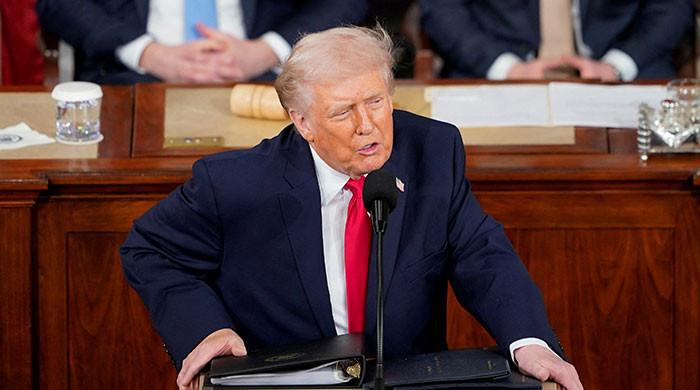
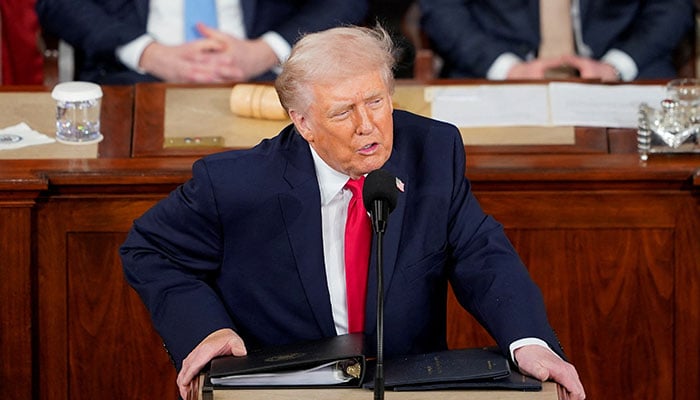
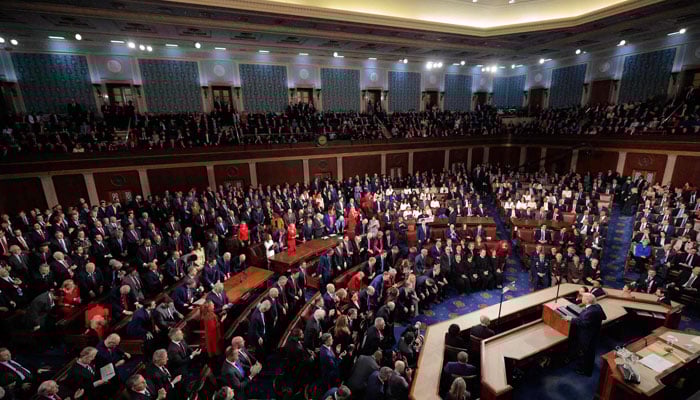
WASHINGTON President Donald Trump delivered his State of the Union address to a joint session of Congress on Wednesday, a potentially pivotal moment as the White House seeks to firm up support among Republican voters ahead of November’s midterm election.
Trump spoke against a backdrop of rising tensions with Iran and voter frustration with the high cost of living.
Here are some takeaways from Trump’s address:
Economy
Trump put dollars and cents at the heart of his speech, suggesting his aides, who have been pushing him for weeks to speak more about the economy, have prevailed for now.
He offered a broad-based sweep of kitchen-table economic issues — housing, healthcare, utility bills, crime, retirement — but he again stopped short of acknowledging that many Americans are still struggling with the high cost of living, including food and house prices.
Trump promised that his healthcare proposals to reduce drug prices and make federal payments directly to people would be cost-saving. He insisted that the tariffs struck down by the Supreme Court were generating revenue and were being restored under different legal authority.
Some party strategists have warned that without a more emphatic message on inflation, Trump’s Republican Party is at risk of losing control of Congress in the November midterm election.
In Trump’s telling, inflation, mortgage rates and gas prices are falling, while the stock market, oil production and foreign direct investment are booming along with construction and factory jobs.
But government data shows inflation ticked up last year, while the economy lost factory jobs and overall job creation was anemic. And while prices of some items — like eggs — have dropped since Trump’s return to the White House, food and other prices more broadly have increased.
Voters tell pollsters they are anxious about the economy and are dissatisfied with Trump’s handling of the issue. Some 56% disapprove of his handling of the economy, Reuters/Ipsos polling shows, while 36% approve.
Politics
Despite an uncharacteristically disciplined performance, Trump peppered his State of the Union address with made-for-TV flourishes designed to illustrate his case to voters. He doled out medals, introduced surprise guests and clashed with Democrats.
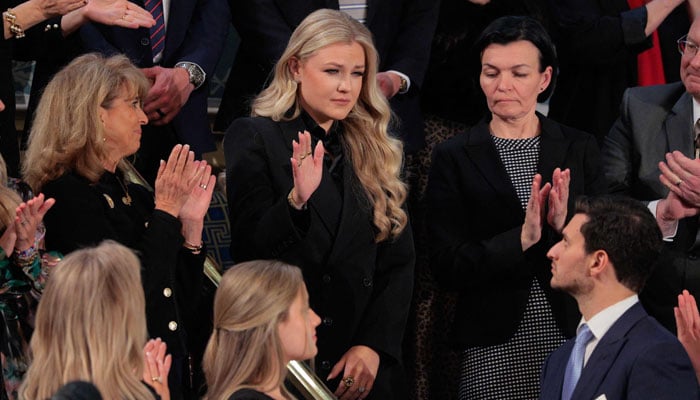
Awards for Korean War Navy pilot E. Royce Williams and Team US hockey goaltender Connor Hellebuyck — and the public name-checking of invited guests, including slain conservative activist Charlie Kirk’s widow Erika — punctuated the speech.
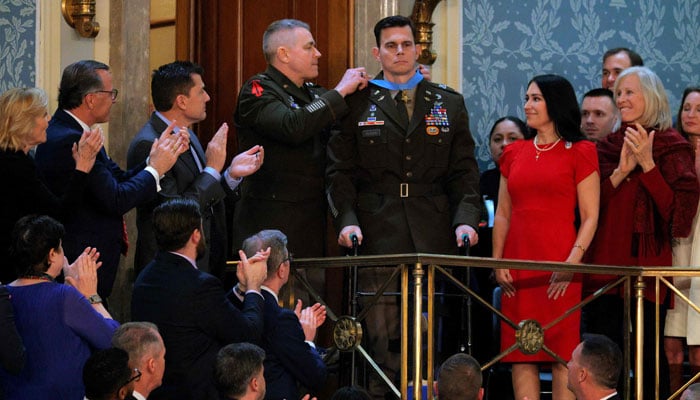
Trump gave Army Chief Warrant Officer Eric Slover, a helicopter pilot injured during the operation to capture then-Venezuelan President Nicolas Maduro, a Medal of Honour.
Each gesture underscored how the addresses have become political theatre over the years, as much about the optics as about the policies.
Trump, ever the showman, has used flashy displays of patriotism to advance his political goals. He staged a military parade on his 79th birthday and has regularly delivered sharply partisan speeches to active-duty service members.
On Tuesday, Trump’s efforts to reinforce narratives he wants voters to internalise were unmistakable. Members of the US men’s ice hockey team, fresh off an Olympic gold medal, were presented as proof that America is “winning” again under Trump’s leadership.
Other guests were introduced as cautionary tales: Dalilah Coleman, a seven‑year‑old injured in a car accident, was cited as evidence of the dangers Trump associates with immigration, while Liberty University student Sage Blair was held up as an example in his critique of schools and transgender policies.
Iran war
One of the most-asked questions going into Trump’s speech was whether he would finally make a detailed case for war against Iran, elaborating on the reason for the major US military buildup in the Middle East.
But the president did not mention Iran until well over an hour into his speech. And when he did, he fell back on his standard talking points, saying it was imperative to keep a bomb out of Tehran’s hands. He accused Iran of sowing terror via regional proxy groups and again said the leadership in Tehran had killed tens of thousands of people during recent protests.
He did not articulate why military action was urgent now, nor did he say precisely what he hoped to achieve. He gave little hint about which way he was leaning on using the military — a preoccupation at home and abroad.
During the first 75 minutes, he made only a glancing reference to Venezuela, while Russia and Ukraine were barely mentioned at all. His fixation on acquiring Greenland — a dispute that has strained transatlantic relations — did not come up.
While he spent a good chunk of time later discussing conflicts that his administration has been trying to resolve, the lack of national security and foreign policy talk up front was conspicuous, given how much time and political capital he has been spending on diplomacy.
He has in recent weeks dispatched his closest aides to far-flung capitals to try to settle the war in Ukraine and negotiate with Iran. Last month, his administration deposed the leader of Venezuela, and much of the administration’s time and energy has been focused on managing relations with the South American country.
Immigration
Trump used the speech to try to reclaim the narrative on immigration. While that issue was once a key political strength, it has morphed into a weakness in recent months amid a backlash against the high-profile killings of two US citizens by immigration agents and a mass deportation drive that has proven more popular in theory than in practice.
He never mentioned the work of the Border Patrol and US Immigration and Customs Enforcement — agencies whose masked agents have been the public face of his crackdown in American cities.
He did, however, highlight crimes carried out by immigrants in graphic terms. And he argued that Democrats could not be trusted to secure the country’s borders and keep Americans safe.
In a sense, it was a return to form for Trump. The president dedicated much of his time on the campaign trail in 2024 to describing the dangers posed by immigrants, a message that resonated with voters. Stripped from his speech was any mention of his own administration’s enforcement tactics.
Overall, Trump sought to steer attention away from the most controversial elements of his immigration enforcement push while highlighting the elements of his message that have resonated in the past.
Shift in priorities
Trump’s speech offered a window into his administration’s changing priorities from almost a year ago, the last time he spoke to a joint session of Congress.
What’s gone: A host of foreign policy subjects treated in depth. These include plans to reclaim the Panama Canal and annex Greenland. China, which merited six mentions last year, received none this year. Trump has relaxed policy toward China ahead of his planned state visit in five weeks, and he has backed off for now on his Greenland threats.
Also cut from this year’s remarks was praise for Elon Musk and his Department of Government Efficiency. Trump’s affection for both projects has dimmed. Trump did say he would launch a program focused on fraud and chaired by Vice President JD Vance.
What’s in: In addition to a bucket of deliverables on the economy, Trump added a fresh push for election law changes ahead of the November midterms, including voter ID and limits on mail ballots.
Jibe at Democrats
Trump argued that Republicans deserved two more years of control of Congress because of their handling of the economy, immigration and public safety. But beyond those policy issues, he made a far more visceral appeal to voters to back Republicans.
“These people are crazy,” he said of Democratic lawmakers in the chamber who have voted against most of his legislative proposals and who view his presidency as one that has weakened democratic institutions. “Democrats are destroying this country, but we’ve stopped it just in the nick of time,” he said.
On a number of occasions, Trump took aim at Democrats as anti-American and acting against the best interests of the country, highlighting the increasingly partisan tone of the annual speech.
Democrats stayed in their seats, visibly irritating Trump, while Republicans leapt to their feet to applaud the president on issues ranging from gender politics to illegal migration and crime.
Some, like Representatives Al Green, Ilhan Omar and Rashida Tlaib, shouted at Trump. For those Democrats, Trump’s views on those issues are divisive and problematic — and upset large parts of their base.
- Vote puts end to conservative Orban’s 16-year rule.
- Election outcome significant for EU, US, Russia, Ukraine.
- Election officials estimate turnout at 79% or more, a record.
Hungary’s veteran nationalist leader Viktor Orban lost power to the upstart centre-right Tisza party in Sunday’s national election after 16 years in office, marking a setback for his allies in Russia and US President Donald Trump’s White House.
Orban, 62, was celebrated by conservatives across Europe and the United States as the mastermind of the “illiberal” model of democracy, but lost favour at home with voters who grew weary of economic stagnation, international isolation and oligarchs amassing wealth.
His landslide defeat handed Tisza’s Peter Magyar, 45, a comfortable majority in Hungary’s 199-seat legislature, opening the door for meaningful reforms of a system critics in the European Union said subverted democratic norms.
With nearly all ballots counted, Tisza was set to win 138 seats, more than the two-thirds majority Magyar would need to undo Orban’s constitutional overhaul and combat corruption.
Record turnout on Sunday underscored how many Hungarians saw the election as a watershed moment for their country.
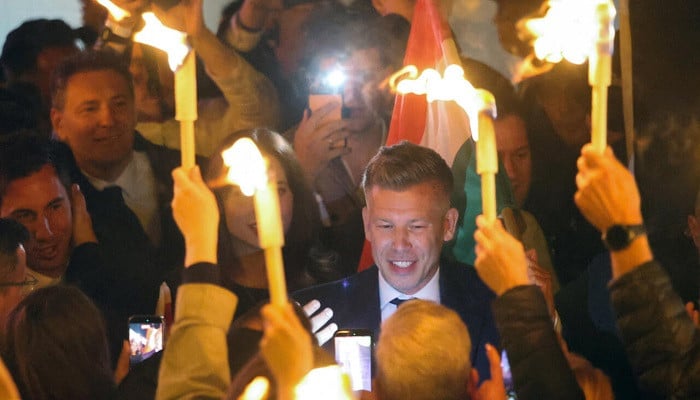
“We have done it. Tisza and Hungary have won this election,” Magyar told tens of thousands of supporters who danced and cheered alongside the elegant Danube River embankment in central Budapest.
Many held candles while loudspeakers blasted Frank Sinatra’s “My Way” as Magyar walked towards the stage. “Together, we have replaced Orban’s system, and together we liberated Hungary, we have reclaimed our country,” he said.
Magyar had cast the election as a choice between “East and West”, warning voters that Orban and his confrontational stance towards Brussels would take the country further away from the European mainstream. Orban countered that Tisza would drag Hungary into an unwanted war with Russia, a charge Magyar denied.
“The election result is painful for us, but clear,” Orban said at the Fidesz campaign offices. Some of his supporters who had gathered outside cried while watching his speech on TV screens.
Shockwaves for EU and beyond
The end of Orban’s 16-year rule will have significant implications not only for Hungary, but for the European Union, Ukraine and beyond.
Many European leaders are hoping for an end to Hungary’s adversarial role inside the EU, possibly opening the way for a 90 billion euro ($105 billion) loan to war-battered Ukraine that was blocked by Orban.
Mujtaba Rahman, a managing director at Eurasia Group, said Magyar will be able to deliver on his promises to clean out corruption and remove Fidesz loyalists from key positions.
“Regarding Ukraine, Magyar will agree to pave the way for 90 billion euros to flow to Ukraine. He was extremely cautious pre-election, but without the need now to try to appease Fidesz voters, we think Hungary will cautiously move more into the European mainstream on most subjects.”
Some diplomats in Brussels cautioned that issues such as migration may remain thorny. “Hungary will continue to be a challenging partner, but a partner with whom the other member states can work,” one said.
Ukrainian President Volodymyr Zelenskiy congratulated Magyar on Sunday and pledged to work with him to strengthen Europe and uphold peace and security. “It is important when a constructive approach is victorious,” Zelenskiy wrote on Telegram.
Defeat for Orban could also mean the eventual release of EU funds to Hungary, suspended over reforms that Brussels said undermined democratic standards, something closely watched by financial markets.
“Hungary has chosen Europe. Europe has always chosen Hungary,” European Commission President Ursula von der Leyen, the top EU executive, said after partial results were released.
Orban’s exit would also deprive Russian President Vladimir Putin of his main ally in the EU and send shockwaves through the West’s right-wing circles, including the White House.
Orban had won public endorsements from the Trump administration, culminating in a visit to Budapest by Vice President JD Vance last week, as well as from the Kremlin and far-right leaders in Europe.
But his campaign was shaken by media reports alleging his government colluded with Moscow on diplomatic and political matters.
Orban, who denied any wrongdoing, said his goal was to protect Hungary’s national identity and traditional Christian values within the EU and its security in a dangerous world.
“It’s incredibly exciting,” said 24-year-old Dorina Nyul, who attended the Tisza election night event. “It feels like this is our first and last chance in a really long time to actually change the system. And it’s, I can’t even describe the feeling.”
- Trump announces naval blockade of Strait of Hormuz.
- Democratic senator questions US president’s strategy.
- Trump’s approval rating slump since war on Iran began.
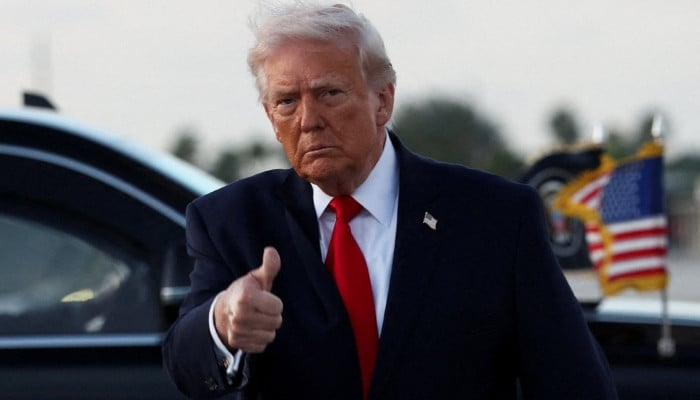
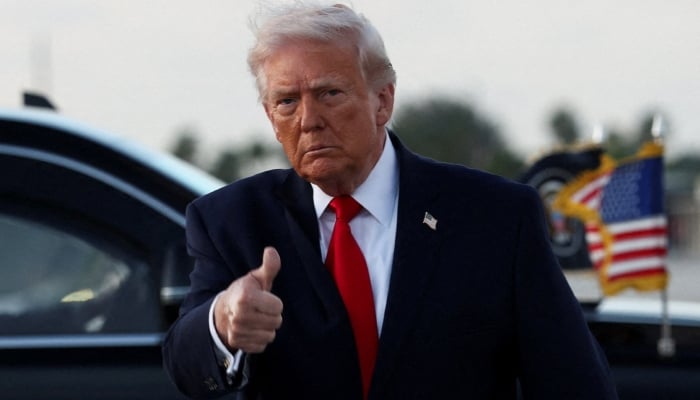
US President Donald Trump on Sunday said that the price of oil and gasoline may remain high through November’s midterm elections, a rare acknowledgement of the potential political fallout from his decision to attack Iran six weeks ago.
“It could be, or the same, or maybe a little bit higher, but it should be around the same,” Trump, who is in Miami for the weekend, told Fox News‘ “Sunday Morning Futures With Maria Bartiromo” when asked whether the cost of oil and gas would be lower by the fall.
The average price for regular gas at US service stations has exceeded $4 per gallon for most of April, according to data from GasBuddy. Trump’s comments on Sunday came after weeks of asserting that the spike in prices is a short-term phenomenon, though his top advisers are cognisant of the war’s economic impacts, officials have said.
Earlier on Sunday, Trump announced on social media that the US Navy would blockade the Strait of Hormuz and intercept any ship that paid a crossing fee to Iran, after marathon talks between the US and Iran in Pakistan over the weekend did not yield a peace deal.
“No one who pays an illegal toll will have safe passage on the high seas,” he wrote on Truth Social.
Any US blockade is likely to add more uncertainty to the eventual resolution of the conflict, which is currently subject to a tenuous two-week ceasefire. The new tactic is in response to Iran’s own closure of the strait’s critical shipping lanes, which has caused global oil prices to skyrocket about 50%.
Unpopular war hits Trump’s approval
The war began on February 28, when the US launched a joint bombing campaign with Israel against Iran. The scope quickly expanded as Iran and its allies attacked nearby countries, while Israel targeted Hezbollah with massive strikes in Lebanon.
The war has buffeted global financial markets and caused thousands of civilian deaths, mostly in Iran and Lebanon.
Trump’s political standing at home has suffered, with polls showing the war is unpopular among most Americans, who are frustrated by rising gasoline prices.
The president’s approval rating has hit the lowest levels of his second term in office, raising concern among Republicans that his party is poised to lose control of Congress in the midterm elections. A Democratic majority in either chamber could launch investigations into the Trump administration while blocking much of his legislative agenda.
US Senator Mark Warner of Virginia, the ranking Democrat on the Senate Intelligence Committee, questioned the strategy behind Trump’s planned blockade.
“I don’t understand how blockading the strait is going to somehow push the Iranians into opening it,” he told CNN’s “State of the Union” on Sunday.
In a separate appearance on CBS’s “Face the Nation,” Warner said the blockade would not undermine Iranian control of the waterway.
“The Iranians have hundreds of speedboats where they can still mine the strait or put bombs against tankers in closing the strait,” he said. “How is that going to ever bring down gas prices?”
Although Trump has repeatedly said that the war would be over soon, Republican US Senator Ron Johnson of Wisconsin told ABC News‘ “This Week” on Sunday that achieving US aims in Iran “could take a long time.”
“It’s going to be a long-term project,” said Johnson, who was not asked about Trump’s proposed blockade. “I never thought this would be easy.”
- Iran, US fail to reach deal in Islamabad peace talks.
- JD Vance says US makes “final and best offer” to Iran.
- Dispute over Hormuz control stalls US-Iran agreement.
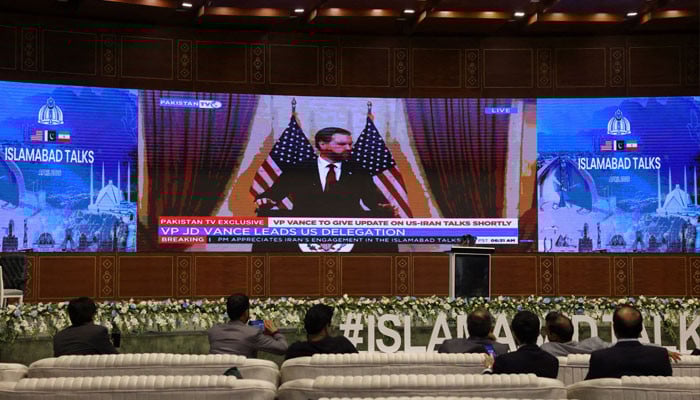
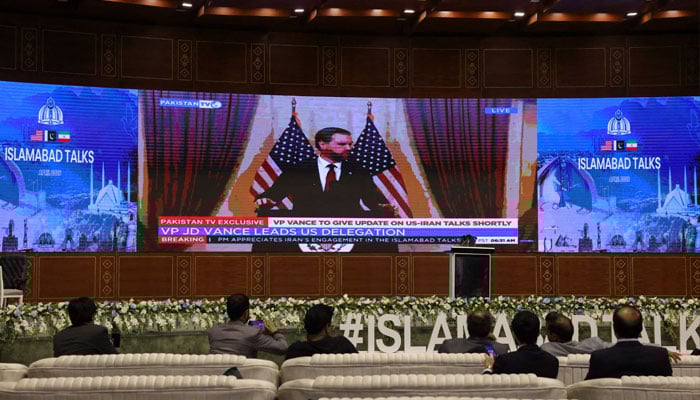
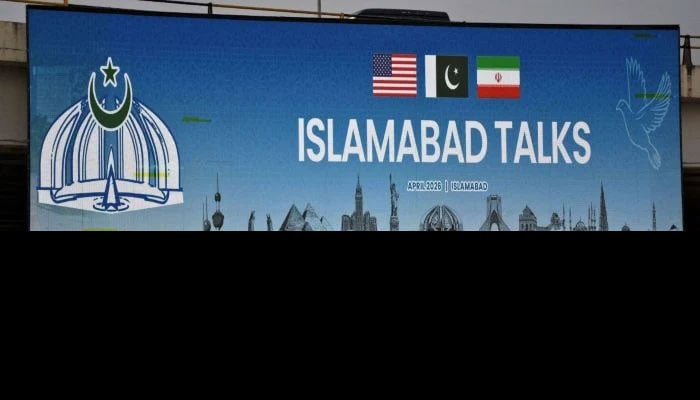
Iran and the United States failed to strike a deal Sunday to end the war in the Middle East, but there was no immediate return to hostilities, and world leaders quickly urged both sides to pursue the diplomatic route to peace.
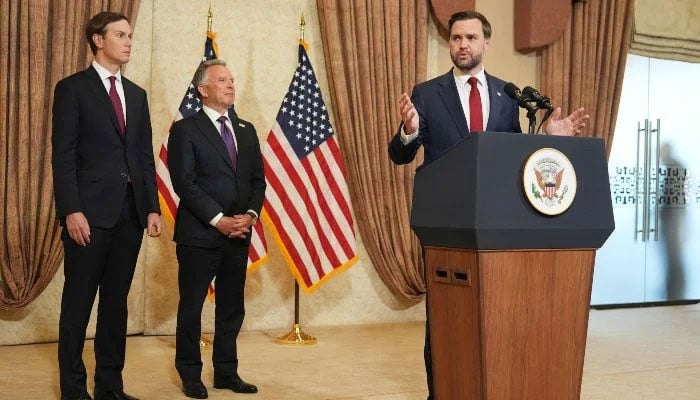
US Vice President JD Vance left Pakistan after the talks — the highest-level meeting between the two sides since 1979 — and warned that Washington had made Tehran its “final and best offer” for a deal.
“We leave here with a very simple proposal,” he said. “We’ll see if the Iranians accept it.”
Iran’s parliamentary speaker, Mohammad Bagher Ghalibaf, said his negotiating team had “put forward constructive initiatives but ultimately the other side was unable to gain the trust of the Iranian delegation in this round of negotiations”.
Iranian and US reports said the two sides were unable to agree on who would control the Strait of Hormuz skipping lane, nor whether Tehran would have the right to enrich uranium under any deal.
As talks ended without a deal in Islamabad, world figures urged the United States and Iran to keep negotiating to end the war in the Middle East.
Pakistan’s Foreign Minister Ishaq Dar, whose government hosted the talks and acted as a mediator, said that it is imperative that the parties continue to uphold their commitment to the ceasefire.
“Pakistan has been and will continue to play its role to facilitate engagement and dialogue between the Islamic Republic of Iran and the United States of America in the days to come,” he said in a brief statement broadcast by state media.
Diplomacy is “essential” to resolve the war in the Middle East, a European Union spokesman said.
Noting failed US-Iranian talks hosted by Pakistan, EU foreign affairs spokesman Anouar El Anouni said “we salute Pakistan for its mediation efforts” and added Brussels would contribute to further efforts to reach a settlement in coordination with its partners.
Russian President Vladimir Putin told his Iranian counterpart Masoud Pezeshkian that he was ready to help mediate efforts to achieve peace in the Middle East, the Kremlin said.
“Vladimir Putin emphasised his readiness to further facilitate the search for a political and diplomatic settlement to the conflict, and to mediate efforts to achieve a just and lasting peace in the Middle East,” the Kremlin said in its readout of the call.
UK health minister Wes Streeting said: “It’s obviously disappointing that we haven’t yet seen a breakthrough in negotiations and an end to this war in Iran that is a sustainable one.”
“As ever in diplomacy, you´re failing until you succeed. So while these talks may not have ended in success, [it] doesn’t mean there isn´t merit in continuing to try,” he added.
Australian Foreign Minister Penny Wong said that the “priority now must be to continue the ceasefire and return to negotiations,” adding it was “disappointing that the Islamabad talks between the United States and Iran have ended without agreement”.


Sources: Doc Rivers out after three years as Bucks coach

How Justin Baldoni lawsuit has ‘ruined’ Blake Lively?

Magyar ends Trump-backed Orban’s 16-year rule in major Hungary election upset

-

 Fashion6 days ago
India’s exports face reset as EU links trade to carbon metrics: EY
-

 Politics1 week ago
Trump confirms rescue of airman whose F-15 was downed in Iran
-

 Entertainment5 days ago
Queen Elizabeth II emotional message for Archie, Lilibet sparks speculation
-

 Tech6 days ago
A Single Strike Won’t Shut Off the Gulf’s Desalination System
-

 Tech4 days ago
This AI Button Wearable From Ex-Apple Engineers Looks Like an iPod Shuffle
-

 Fashion6 days ago
ICE cotton hits 11-month high on drought concerns, demand boost
-

 Sports1 week ago
Transfer rumors, news: Arsenal eye Bayer Leverkusen forward
-

 Tech4 days ago
As the Strait of Hormuz Reopens, Global Shipping Will Take Months to Recover