

Fashion
Asia Pacific logistics slows in Feb as post-holiday demand hits rates


Ocean freight conditions softened across major trade lanes as muted cargo demand and expanding fleet capacity pushed spot rates downward. Transpacific routes from Asia to the US experienced notable declines, with some carriers reportedly offering prices near or below breakeven levels. Rates on Asia–Europe corridors, including the Shanghai–Rotterdam route, also trended lower, reinforcing the cooling market environment.
Shipping lines intensified capacity management strategies to counter the downturn, increasing the frequency of blank sailings. Meanwhile, operational challenges persisted, with congestion reported at key transhipment hubs such as Singapore, Shanghai, and Ningbo, resulting in delays of two to four days. Structural changes within global carrier alliances continued to reshape service networks, including the Gemini Cooperation between Maersk and Hapag-Lloyd and the reconfigured Premier Alliance comprising ONE, Yang Ming, and HMM.
Asia Pacific logistics softened in February 2026 amid a post-Lunar New Year slowdown, with intra-Asia container rates down 3 per cent and ocean freight weakening across major lanes.
Air cargo eased but stayed resilient.
Meanwhile, road disruptions, policy initiatives, and sustained investment in logistics infrastructure underscored ongoing regional supply chain transformation.
Industry developments during the month included Hapag-Lloyd’s agreement to acquire ZIM Integrated Shipping Services for $4.2 billion, signalling consolidation momentum within container shipping. The Red Sea security situation continued to influence routing decisions, with some carriers cautiously evaluating partial returns to the Suez Canal while many services remained diverted around the Cape of Good Hope. In India, the government reviewed progress on Chennai Port projects and advanced the Bharat Container Line initiative to enhance domestic shipping capacity.
Air cargo markets displayed a parallel seasonal moderation after a pre-holiday surge in volumes. Spot rates eased but remained above year-earlier levels, reflecting persistent structural capacity tightness. Shipment volumes from Asia Pacific to the US edged up slightly, while flows to Europe remained broadly stable. Notably, chargeable weight from Vietnam to Europe increased 10 per cent week on week in week six, driven by resilient high-tech and e-commerce demand.
Regional pricing trends varied, with Shanghai outbound rates softening yet maintaining year-on-year gains, while Hong Kong remained comparatively firm. Southeast Asian origins such as Vietnam and Thailand recorded rate improvements on Europe routes, highlighting ongoing supply chain diversification under the China+1 strategy. Airlines continued reallocating freighter capacity towards Asia–Europe lanes, which have experienced sustained growth.
Long-term supply constraints persisted due to aircraft delivery backlogs extending into the next decade, although global capacity rose around 4–5 per cent in early 2026 through expanded passenger bellyhold availability. Infrastructure developments supported specialised cargo handling, including Shanghai Pudong’s attainment of multi-category IATA CEIV certification. Network connectivity also expanded through new interline agreements and freighter route launches linking Europe and Asia.
Road freight and intermodal transport reflected a complex mix of seasonal disruption and structural expansion. Trucking availability in China dropped sharply during the holiday week beginning February 17, with inland logistics expected to take several weeks to normalise. Policy initiatives such as China’s expanded Transports Internationaux Routiers (TIR) transit coverage for bonded and e-commerce goods enabled new cross-border routes from Kashgar to Uzbekistan and Pakistan, reducing transit times and costs.
Multimodal momentum continued as the Alataw Pass hub dispatched its 1,000th China–Europe freight train of the year ahead of the previous schedule, underscoring strengthening Eurasian rail connectivity. Holiday-related congestion affected trucking corridors in Vietnam, while Malaysia imposed temporary heavy-vehicle restrictions to manage traffic flows. Border facilitation measures, including China’s fast-track lane for foreign truck drivers at the Vietnam frontier, aimed to improve cross-border efficiency.
Across Asia, governments and industry players advanced logistics infrastructure and policy frameworks. India announced plans for a new East-West Dedicated Freight Corridor linking Dankuni and Surat, while South Korea reinstated the Safe Rates system to stabilise trucking conditions. Japan progressed collaborative relay transport models, expanded foreign workforce recruitment to address driver shortages, and continued autonomous truck testing on the Shin-Tomei Expressway.
Warehousing and logistics real estate investment remained robust throughout the region. Transactions included Nippon Express acquiring a stake in Pakistan’s TCS Logistics, institutional investment in Yokohama’s Sachiura Distribution Centre, and Cabot Properties’ entry into the Japanese logistics market. Additional projects spanned Australia and Japan, while China witnessed ongoing logistics Real Estate Investment Trust (REIT) activity led by CapitaLand Investment and Prologis.
India’s logistics sector also attracted significant investment and policy support, including Bertelsmann’s majority acquisition of Lets Transport, Logistics Plus’ purchase of EVO Supply Chain Solutions, new warehouse development approvals in Nagpur, and Kuehne+Nagel’s container freight station near JNPA. South Korea reported strong logistics property investment momentum driven by foreign capital inflows.
Fibre2Fashion News Desk (SG)











Switzerland’s apparel imports rose 11.7 per cent year on year (YoY) to $1.523 billion in January–February 2026, signalling steady demand.
Growth builds on 2025 momentum, led by knitwear and comfort-led segments.
China, Bangladesh and Italy remain key suppliers.
Strong purchasing power and stable retail trends continue to support consistent sourcing activity.
Source link
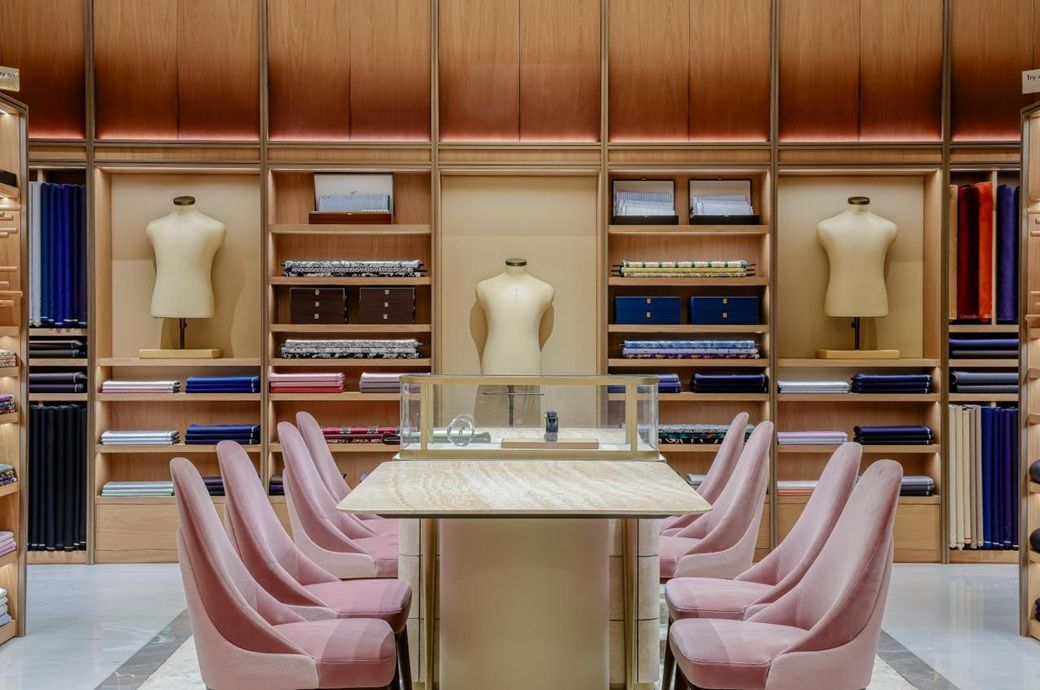
Chairman’s Collection reflects Raymond’s seamless transition from a heritage textile pioneer to a modern luxury menswear destination, now stepping into a more rarefied, couture-led space. One of the most ambitious expressions of luxury menswear retail, this new retail store is a sartorial experience for globally aware Indian consumers. Drawing from Renaissance and Baroque influences, layered with a contemporary European sensibility, the space is rooted in Indian craftsmanship while reflecting a distinctly global identity of the new-age India.
Raymond has unveiled its Chairman’s collection flagship in Bandra, marking its evolution into luxury menswear.
The 11,000 sq ft, two-level space offers couture fashion, fine jewellery, fragrances, and bespoke services.
Blending Indian craftsmanship with global design, it delivers an immersive, appointment-led experience with curated art, collectibles, and personalised styling.
THE COLLECTION: THREE DISTINCT WORLDS
Modern Opulence – Casual Couture
Elevated casualwear, reimagined through the grandeur of Renaissance motifs and the ornate richness of Baroque detailing on printed silk shirts, embroidered denim, and statement separates, offers a refreshing take on couture sensibility in the art of dressing.
Power Dressing – Contemporary Heirlooms
Power Dressing, elevated to an art form. Each suit is crafted in exquisite fabrics from across the world, offering impeccable fit and finished with the artisanal depth that is uniquely and unmistakably Indian.
Embellished jackets. Indo-Western silhouettes. Velvets, silks, and jewel tones that speak before you do. Every piece in the Chairman’s Collection reflects power dressing and is an act of self-expression, conceptualized for moments that demand presence, individuality, and the kind of authority that needs no introduction.
Art, Heritage & Experimentation – Indian Renaissance
A deeply artisanal expression combining Renaissance-inspired prints with traditional Indian techniques such as zardozi and hand embroidery, creating garments that transcend fashion to become collectible pieces.
BEYOND FASHION: A COMPLETE LUXURY EXPERIENCE
The Chairman’s Collection extends gracefully beyond apparel, embracing a far more holistic vision of modern luxury. Fine jewellery for men, lab-grown diamond pieces of exceptional provenance, and a curated edit of the world’s most coveted fragrance and watch brands – each chosen with the same discernment that defines every corner of this space.
A natural evolution of Raymond’s legacy, this launch marks a thoughtful foray into new luxury categories where style meets substance, and each coveted offering is a reflection of a life lived with intention. The store operates on an appointment-led model, ensuring a personalised experience from concept to execution. Be it bespoke tailoring or personalised styling, each element is designed to offer exclusivity.
A SPATIAL EXPERIENCE DESIGNED LIKE A JOURNEY
Spanning across two levels, the store unfolds through carefully designed environments:
- A lounge-inspired setting with leather armchairs and bespoke trunks, evoking exclusivity
- Gallery-style displays, where apparel and finest fabrics are presented as collectible pieces
- A refined tailoring zone, celebrating Raymond’s legacy in craftsmanship
- Curated display zones, where collectibles and design products add depth and narrative
Every detail of the space reflects a shift in luxury retail from transactional to experiential, immersive, and deeply personal.
WHERE FASHION MEETS ART & COLLECTIBLES
Woven seamlessly into the store are museum-worthy displays of rare collectibles, from Formula 1-inspired models to precision-crafted masterpieces that are a true reflection of the Chairman’s lifelong devotion to the art of the automobile, both vintage and contemporary. Impossible to overlook, the curated Art Deco-inspired pieces and handpicked artworks that grace the space have each been chosen with extraordinary intentionality, with every element in coherence with the store’s design language.
This layered, considered approach transforms the Chairman’s Collection into something far greater than a fashion destination, unraveling a world unto itself. Every corner, every curation, every carefully chosen object speaks to a man’s taste, his sensibility, and the life he has chosen to lead. The effect is singular and unmistakable – a space that does not merely dress a man, but defines him. Not just a philosophy of style, but a complete philosophy of living.
A NEW CHAPTER FOR RAYMOND
Speaking on the occasion, Satyaki Ghosh, CEO, Raymond Lifestyle Limited, said; “Chairman’s Collection reflects the pride of creating international-quality luxury, made in India, for the modern Indian man. Raymond being the pioneers in menswear, this is a logical brand evolution towards launching a first of its kind couture experience in India. Consumer centricity is at the core of Raymond and this latest endeavour is an affirmative step in the same direction.”
With Chairman’s Collection, moves forward not as a heritage brand resting on its century-old legacy, but as India’s homegrown brand paying homage to luxury that understands the new Indian identity, which is making its formidable presence being felt in the world.
Note: The headline, insights, and image of this press release may have been refined by the Fibre2Fashion staff; the rest of the content remains unchanged.
Fibre2Fashion News Desk (RM)
ASEAN+3 comprises the members of the Association of Southeast Asian Nations (ASEAN), China, South Korea and Japan.
Macroeconomic stabilisation in the ASEAN+3 nations has progressed while navigating the new energy shock triggered by the Middle East conflict.
Structural adjustments continue, according to the latest ASEAN+3 Regional Economic Outlook.
While vulnerabilities remain, the pace and direction of policy adjustment have improved significantly in the region.
In Singapore and Malaysia, strong institutional credibility, financial stability and well-developed investment frameworks support relatively stable economic management.
In Vietnam and Cambodia, manufacturing and services continue to underpin economic activity despite external headwinds.
Adjustment is also visible in economies that have faced more acute macroeconomic pressures, where policy measures to stabilise exchange rates, recalibrate fiscal policy and strengthen debt management have contributed to a marked improvement in macroeconomic conditions compared with earlier periods of stress, the report released by the ASEAN+3 Macroeconomic Research Office (AMRO) said.
While vulnerabilities remain, the pace and direction of policy adjustment have improved significantly, it noted.
Taken together, these experiences suggest that economic management in the region has evolved around a pragmatic combination of policy approaches rather than a single doctrinal model, the report remarked.
Regional economies are placing greater emphasis on strengthening flexibility and resilience in trade, foreign direct investment and financial flows.
At the same time, many economies across the region are investing in digitalisation, advanced manufacturing and emerging technologies.
Rather than narrow sectoral targeting, industrial strategies often emphasise foundational capabilities—human capital development, digital infrastructure and technological capacity. These efforts support adaptation to shifting global conditions while maintaining long-term competitiveness, it added.
Fibre2Fashion News Desk (DS)

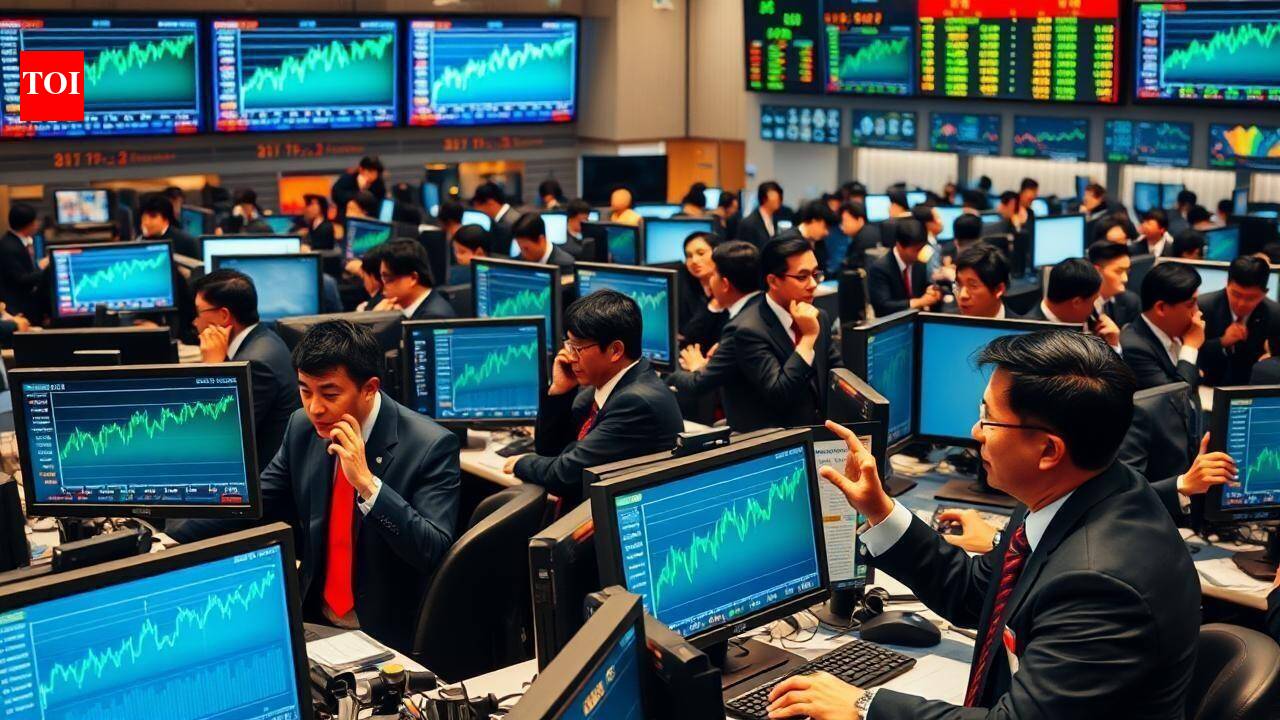
Asian stocks today: Markets inch higher on US-Iran peace hopes; Nikkei jumps 2%, HSI adds 360 points – The Times of India

Switzerland’s apparel imports grow double-digit in Jan–Feb 2026

No vote after NCAA urges further study of age eligibility changes to college sports

-

 Fashion1 week ago
India’s exports face reset as EU links trade to carbon metrics: EY
-

 Entertainment1 week ago
Lamar Odom shocking response to Khloé Kardashian account of his overdose
-

 Entertainment1 week ago
Queen Elizabeth II emotional message for Archie, Lilibet sparks speculation
-

 Tech1 week ago
Azure customers up in arms over ‘full’ UK South region | Computer Weekly
-

 Tech1 week ago
As the Strait of Hormuz Reopens, Global Shipping Will Take Months to Recover
-

 Fashion1 week ago
CII submits 20-pt agenda to Indian govt to back firms hit by Iran war
-

 Tech7 days ago
This AI Button Wearable From Ex-Apple Engineers Looks Like an iPod Shuffle
-

 Politics6 days ago
Indian airlines hit hardest after Dubai limits foreign flights until May 31