

Entertainment
Burden of proximity

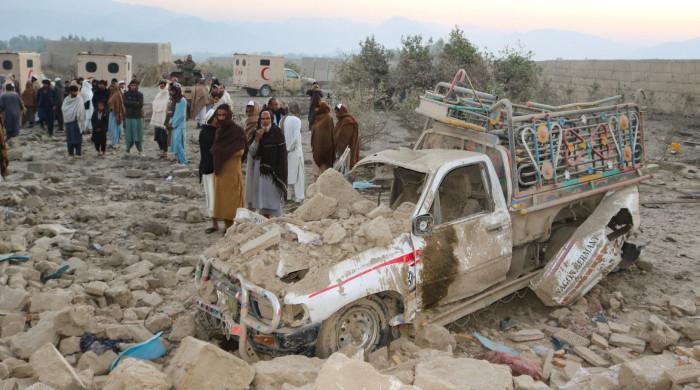
The latest round of cross-border strikes between Pakistan and Afghanistan has been quickly absorbed into a familiar vocabulary of sovereignty violations and regional instability.
Such descriptions are incomplete and inaccurate. For Pakistan, militancy emanating from Afghanistan is not a distant geopolitical abstraction. It is an immediate security exposure shaped by geography, history, and a border that remains porous despite decades of militarisation.
Over the past several years, Islamabad has repeatedly stated that anti-Pakistan groups, most prominently the TTP, have found space to regroup across the border. Afghan authorities have rejected the characterisation.
No state can indefinitely absorb violence that originates beyond its formal jurisdiction while relying solely on diplomatic assurances. Pakistan’s security establishment operates under domestic pressure. Civilian casualties from militant attacks do not register as abstract policy debates but as institutional demands for response. In such an environment, cross-border strikes become a tool of signaling as much as of disruption, showing that tolerance thresholds have been reached.
This does not imply that air power alone can neutralise sanctuary dynamics. Militant networks that straddle borders are sustained by terrain, local alliances and ideological overlap. The Afghan authorities, for their part, face internal constraints. Dismantling groups with shared histories or intertwined loyalties risks fragmentation within a political order that is still consolidating itself after decades of war.
Yet Pakistan’s calculus is shaped less by Kabul’s internal difficulties than by the immediacy of its own exposure. The Durand Line has long been more than a demarcation; it is a corridor through which commerce, kinship and militancy have flowed in equal measure. Expecting strategic patience in the face of repeated attacks misunderstands how states prioritise internal order.
International commentary often frames such strikes as escalatory by default, as though restraint were a neutral baseline. That assumption overlooks the asymmetry of cost. Afghanistan does not experience the same volume of attacks originating from Pakistani soil. The burden of spillover has, in recent years, fallen disproportionately on Pakistan. In that context, Islamabad’s calibrated use of force is an assertion that territorial lines cannot serve as shields for non-state actors.
Critics frequently invoke international law in isolation, detached from the persistent failure to neutralise armed groups operating in ungoverned or under-governed spaces. Legal principles cannot substitute for effective territorial control.
There are risks embedded in this approach. Repetition without resolution can normalise cross-border action as a routine policy instrument. Each episode narrows diplomatic space and deepens mistrust. It also reinforces a cycle in which militant actors benefit from the absence of sustained coordination between the two governments.
A durable solution would require intelligence sharing, verifiable commitments and a political understanding that militant groups targeting one state cannot be compartmentalised as peripheral concerns by the other.
Such coordination remains elusive, in part because the broader diplomatic relationship is unsettled. Questions of recognition, sanctions and international legitimacy continue to shape Kabul’s external posture. Pakistan’s engagement has oscillated between cautious accommodation and visible frustration.
The resulting ambiguity has limited the development of institutional mechanisms to manage cross-border threats more effectively.
Pakistan cannot relocate itself away from Afghanistan, nor can it insulate its western provinces from developments across the frontier. In security terms, adjacency compresses reaction time and magnifies perceived threat. When militant attacks accumulate, strategic restraint is weighed against domestic expectations of response, and the balance shifts accordingly.
Whether the current cycle stabilises or intensifies will depend less on rhetorical condemnation and more on demonstrable action against groups operating in border regions. Without credible steps to address sanctuary concerns, episodic military measures are likely to recur. They are imperfect instruments, but they reflect a state confronting a security environment in which passivity carries its own risks.
For Pakistan, the issue is practical containment. The sustainability of any alternative approach will rest on evidence that cross-border militancy is being curtailed in measurable ways. Until such evidence materialises, Islamabad’s actions will continue to be shaped by the logic of proximity and the imperative of internal security rather than by external preference for restraint.
The writer is a non-resident fellow at the Consortium for Asia Pacific & Eurasian Studies. He tweets/posts @umarwrites
Disclaimer: The viewpoints expressed in this piece are the writer’s own and don’t necessarily reflect Geo.tv’s editorial policy.
Originally published in The News

Hailee Steinfeld and Rashida Jones are joining forces for Disney’s next big animated feature, Hexed, which is set to hit cinemas this autumn on 25 November.
The news was shared during Disney’s presentation at CinemaCon on Thursday, where the studio revealed that the original film will follow the story of a teenage oddball and her “Type A” mother.
The plot centres on the pair discovering that the daughter’s traits are actually a form of hidden magic, a revelation that eventually transports them both to a fantastical world where magic is allowed to run free.
Steinfeld, an Oscar nominee known for her roles in True Grit and the Spider-Man: Into the Spider-Verse series, will star alongside Jones, a fan favourite from Parks and Recreation and On the Rocks.
Beyond the reveal of Hexed, Disney used its time in Las Vegas to showcase a packed slate of upcoming projects to theatre owners.
Exhibitors were treated to exclusive footage from several highly anticipated titles, including the live-action remake of Moana, The Devil Wears Prada 2, and Toy Story 5.
The studio also teased its next major superhero entry, Avengers: Doomsday, making it clear that while original stories like Hexed are a priority, the company is still leaning heavily into its biggest cinematic universes to keep audiences coming back to the big screen.
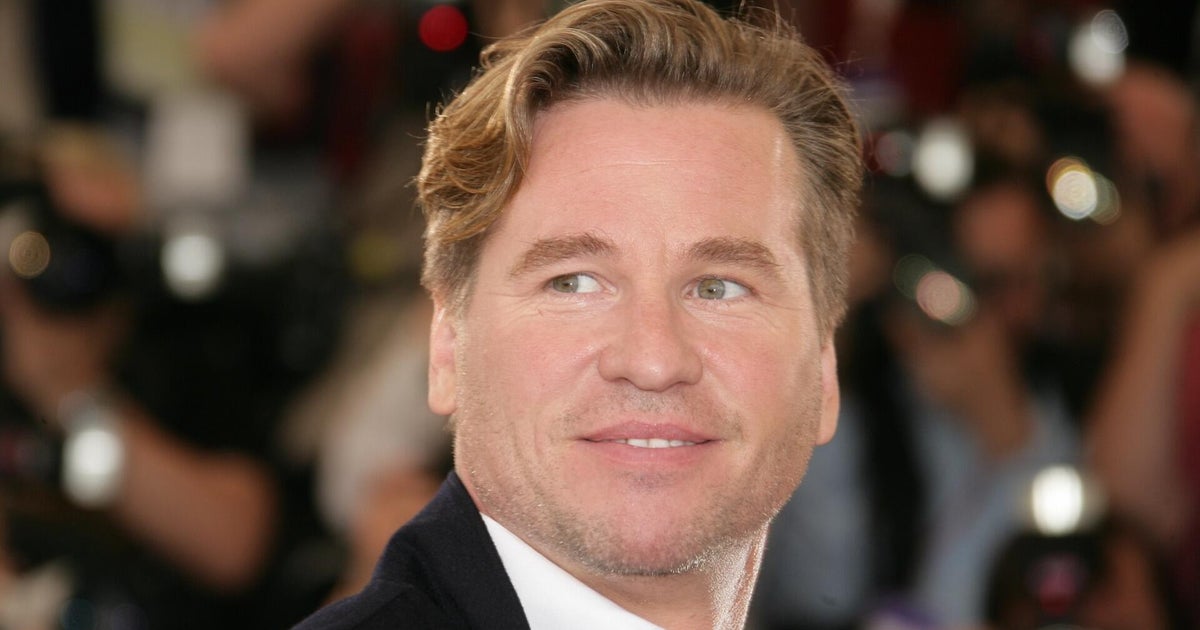
Actor Val Kilmer died last April, and yet he is starring in a new movie, made after his death. Jo Ling Kent reports on how filmmakers resurrected his voice and image by using artificial intelligence.
Source link
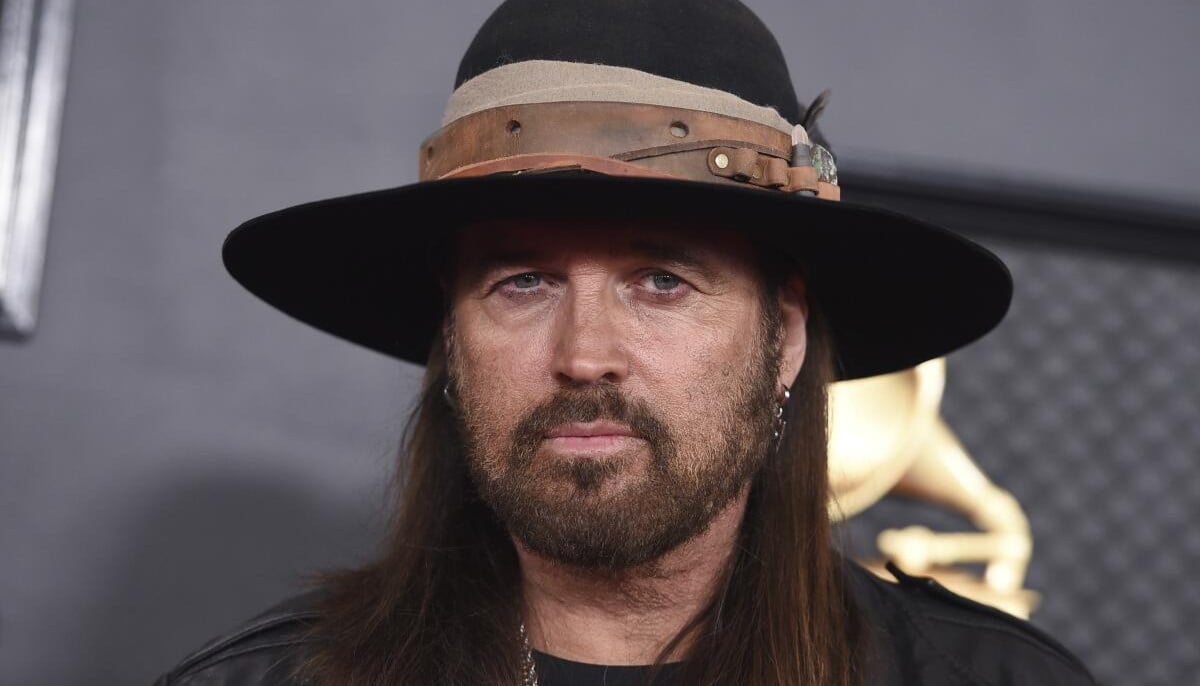
Billy Ray Cyrus has revealed that his decision to perform for presidents of both political parties is rooted in a childhood lesson from his father about respecting the office.
Speaking with Sky News on Tuesday, 14 April, the 64-year-old singer explained that despite his father being a lifelong Democrat who served in the Kentucky legislature, he always taught his son that when a president asks for your help, you answer the call.
Cyrus noted that this upbringing has led him to work with a long list of leaders from both sides of the aisle, including Bill Clinton, Barack Obama, both George H.W. and George W. Bush, and most recently, Donald Trump.
The country star, who famously performed at the Liberty Ball in January 2025 to celebrate Trump’s second inauguration, emphasised that his participation in such events comes from a place of prayer for the country and the world rather than party loyalty.
He described being the president as a “tough job” and shared that his goal is to find things that bring people together.
While his performance last year made headlines for the wrong reasons due to major technical difficulties, Cyrus defended his appearance at the time, stating that he wouldn’t have missed the honour of playing the event regardless of whether his equipment worked or not.
During that 2025 set, Cyrus faced a series of “epic” malfunctions where his microphone and guitar frequently cut out, eventually forcing him to finish with an acoustic, a cappella version of his signature hit, Achy Breaky Heart.
He famously challenged the crowd during the broadcast, asking if anyone was still awake and whether they wanted him to keep singing or just “get the hell off the stage.”
Despite the “trainwreck” reception on social media, he remained defiant, telling fans that in life you have to keep going, or as the president would say, “you gotta fight.”
Cyrus was part of a star-studded line-up for the inauguration festivities that included the likes of Carrie Underwood, Jason Aldean, and Kid Rock.
He noted that even seasoned pros like Underwood faced their own technical hurdles during the ceremony, but he believes that “rock n roll” is about entertaining the people even when the equipment goes to hell.
For Cyrus, performing at such a high-profile event was a simple matter of following his father’s old advice: when the commander-in-chief invites you to the stage, you go and do your job for the people.


Wings stifle questions about Azzi Fudd-Paige Bueckers relationship

China’s industrial output grows 6.1% in Q1 2026

Italy’s apparel export-import plunge after positive trend in 2025

-

 Entertainment1 week ago
Queen Elizabeth II emotional message for Archie, Lilibet sparks speculation
-

 Tech1 week ago
Azure customers up in arms over ‘full’ UK South region | Computer Weekly
-

 Tech1 week ago
As the Strait of Hormuz Reopens, Global Shipping Will Take Months to Recover
-

 Fashion1 week ago
CII submits 20-pt agenda to Indian govt to back firms hit by Iran war
-

 Tech1 week ago
This AI Button Wearable From Ex-Apple Engineers Looks Like an iPod Shuffle
-

 Politics7 days ago
Indian airlines hit hardest after Dubai limits foreign flights until May 31
-
Uncategorized1 week ago
[CinePlex360] Please moderate: “Trump considers
-

 Entertainment4 days ago
Palace left in shock as Prince William cancels grand ceremony