

Tech
The Newest Google Pixel Phone Comes With a $100 Gift Card (for Now)


The Google Pixel 10a comes out on March 5, and right now, Amazon and Best Buy are both offering free $100 gift cards when you preorder. The phone’s price is $499, but the gift card sweetens the deal. It’ll be automatically added to your cart.
Amazon’s gift card is a physical one that ships with the phone; Best Buy’s is a digital gift card that will be sent to your email after your preorder is fulfilled. At Amazon, instead of the gift card, you also have the option of choosing a free pair of Pixel Buds 2a when you preorder. They are our favorite earbuds, but you probably don’t need them if you already have decent headphones.
-
Photograph: Julian Chokkattu
-
Photograph: Julian Chokkattu

The Google Pixel 10a isn’t super impressive compared to previous A-series smartphones. In fact, the Pixel 9a is still our favorite Android phone. The two phones are largely similar, even rocking the same chipset. The Pixel 10a does come in some new colors, though, like Fog and Lavender, and the phone is slightly thinner, with a less noticeable camera bump. The screen is a little brighter and a little more scratch-resistant, and the device is made with more recycled materials.
However, there are some software changes in the 10a compared to the 9a. The Pixel 10a is getting some of the same AI features as you’d find in the Pixel 10, plus support for AirDrop as well. The battery lasts up to 30 hours on a single charge, and the phone will have seven years of software and security updates. We can help you decide which Google Pixel to order, and if you decide on the 10a, these gift card deals are definitely worth it (especially if you were already planning on spending money at Amazon or Best Buy anyway).












Chet Kittleson, 38, is the cofounder of Tin Can and a father of three kids, 10, 8, and 5. I suspect he wouldn’t much like my description of the product’s function as “spying” (keeping watch over one’s kids is part of a parent’s job) or the product itself as a “toy.” He thinks of it, instead, as a utility: a way for kids to talk to Grandma or make plans with friends and to be “part of the same world that grown-ups are a part of.” When he was a kid, he says, the landline was “arguably the most successful social network of all time.” Every house had one. Then came cell phones and smartphones. Direct lines to the internet. “And somewhere along the way we decided the landline was obsolete,” Kittleson says. “In doing that, we overlooked a group that was a major beneficiary of it: kids.”
I’m talking to him over Zoom one afternoon from my home in Los Angeles and his office in Seattle. When I tell him that Amos and Clara had called me more than two dozen times, he doesn’t seem particularly surprised. At first there’s a burst of activity, he says, and then over the course of a few weeks, the kids mature. “They’re like, oh, OK, I see that I can actually do things with this that are important,” he says.
Kittleson, who guesses that most Tin Can users are between the ages of 5 and 13, says he wants to help create a “better childhood” or, as he puts it, “giving kids back a sense of independence and confidence.” (Mike Duboe, a partner at Greylock Ventures, which led a round that invested $12 million in the company in October, says something similar.) One parent, describing their kid’s Tin Can use on X, wrote that it “felt like the old days.”
Amos and Clara weren’t the only ones who, over the holidays, got the gift of gab. In late December, frustrated parents flooded the company’s feedback forms and posted on Reddit that their Tin Cans weren’t working. Though the Tin Can engineers had anticipated a surge in usage around the holidays, the hundredfold increase in call volume took them by surprise.
When I ask Kittleson about the holiday meltdown, he winces. “It was a stressful Christmas,” he concedes. (A message on the Tin Can homepage said, “We’re investigating an issue impacting the network.”) He says that future shipments of the product will be staggered.
And the product’s far from perfect: There can be echoes, unstable sound quality, and long pauses. The buttons on the device are hard to press, which can be challenging to little fingers like Amos’. His mother, Rebecca, sometimes has to help him make calls. “It takes a little bit out of the independence of it,” she says.
My first phone, like that of other kids in my generation, was my family’s, a mustard yellow piece of hard plastic that sat on the mottled brown linoleum counter adjacent to the kitchen. It held a special place in my imagination—an object full of potential—but like most phones back then it was shared within a family and maybe even overheard or monitored. It was also tethered to a wall, making it difficult to multitask or move around while on a call. Kittleson, in fact, says that one inspiration for Tin Can was his frustration when he called his mother on her cell phone. She was, he says, “the worst”: the sort of person who ran around the house while on the call, doing laundry or whatnot. Difficult to hear. Easily distracted.

Wildix has launched a capability in its Mobility Cloud offering that it says will bring business mobile calls directly into enterprise workflows and eliminate a long-standing blind spot in customer communications.
Introducing Wildix eSIM, the artificial intelligence (AI)-powered unified communications as a service provider noted that conversations often sit outside enterprise systems, fragmented across devices and locations. As a result, it was reconnecting mobile calls to the business, ensuring continuity and control as work happens in real time.
Part of the Wildix Mobility Cloud portfolio, the Wildix eSIM extends enterprise identity and intelligence directly to mobile calling. Employees place and receive business calls using their phone’s native dialler, while firms retain routing, presence and policy controls. Each interaction enters the enterprise system of record in real time, where it can be captured, transcribed, summarised and connected to CRM and sales intelligence workflows.
Designed for mobile-first teams, the Wildix eSIM is targeted at business professionals who rely on mobile communication as their primary work tool, including sales teams, field services, healthcare workers, real estate professionals, legal advisors and executives. It is attributed with allowing employees to work naturally on mobile devices while preventing business conversations from being isolated on personal phones.
Mobile calls routed through the Wildix eSIM follow what are described as “enterprise-grade logic” typically reserved for contact centre environments. Availability, escalation and routing rules apply consistently, enabling service continuity even when interactions originate outside traditional agent settings.
The Wildix eSIM can be powered by voice AI to enrich mobile conversations with real-time transcription, summaries, sentiment analysis and structured outcomes. These insights feed directly into Wildix’s sales intelligence layer, to translate conversations into actionable follow-ups, handoffs and workflow updates.
Looking at the product’s core capabilities, Wildix says that unlike app-based mobility services that rely on interface switching or parallel identities, its eSIM anchors mobility at the identity level. A single business identity is maintained across SIM, mobile, browser and desk endpoints, keeping presence, routing and availability synchronised as users move between devices.
Features of the Wildix Mobility Cloud also include a unified business identity across endpoints, persistent context across calls and channels, unified presence, walk-away call continuity, RCS-enabled business messaging and AI-powered insight generation.
“Work is fluid, and conversations move with it,” said Dimitri Osler, co-founder and CIO of Wildix. “Mobility Cloud ensures that context moves, too. We built it so conversations do not reset every time someone changes device, location or role, but instead continue with the business, intact and actionable.”
The Wildix eSIM is available now through the company’s global partner ecosystem, and is already in use across early deployments. The company claims that early implementations show improved visibility into mobile interactions and stronger continuity across customer engagement workflows.
The eSIM launch follows the company specialising in USaaS business solutions. In May 2025, Wildix launched what it claimed was the industry’s first fully embedded agentic AI layer for UCaaS, after spending years building AI features designed for real business use cases, from live call summaries and multilingual support to headset-triggered in-store alerts and sales coaching. The release was attributed with consolidating those innovations into a single automation layer that can scale without disrupting daily operations or introducing third-party complexity.
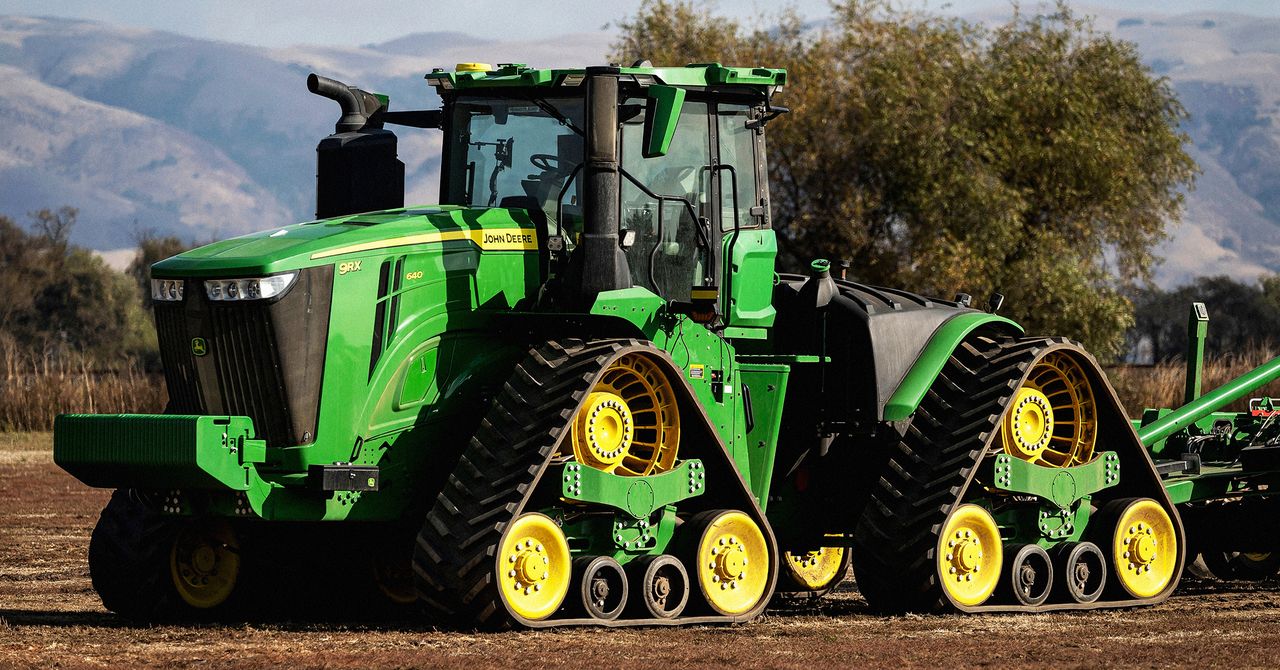
Iowa lawmakers voted to advance state House bill 751 last week, legislation that would ensure farmers in the state can freely repair their own agricultural equipment, like tractors. This Tuesday, the bill was renamed to House File 2709, and it will be voted on again. Should the political winds align, it will go through the Iowa House and Senate before the Iowa Legislature adjourns on April 21.
The bill is the first of nearly 57 state bills supported by repair advocates across the country in 2026. Many of them focus on farm equipment in states like Oklahoma, Wyoming, Delaware, and West Virginia. Repair advocates hope a win in Iowa—the second-highest-grossing state in the US for agricultural products, behind California—will help further legislative and broader efforts to make phones, cars, and other devices more repairable.
“This isn’t just a blue state thing; this isn’t just a Colorado activist thing,” says Elizabeth Chamberlain, director of sustainability for the right-to-repair advocate arm of iFixit. “Its real. Farmers have trouble repairing their equipment and want change.”
Farmers and their tractors have long been a focal point of the right-to-repair movement, the ever-growing global effort to let product owners fix their own devices and equipment without manufacturer approval. Farmers who use tractors to plant, cultivate, and harvest crops often need to repair their equipment while they work. Waiting for manufacturer approval to get something fixed, or taking the time to bring the equipment to an approved dealership, can cause delays, frustration, and missed opportunities to harvest crops.
The Iowa bill defines which agricultural equipment it covers, including tractors, trailers, combines, sprayers, balers, and other equipment used to cultivate and harvest crops. It excludes aircraft and irrigation equipment, along with jet skis and snowmobiles.
Manufacturers would also be required to provide owners with data—documentation, like manuals, and access to embedded operating software—on their tractors, including future patches and fixes, all without charging for it or requiring authorization for internet access. The bill also limits the use of digital locks—software restrictions that prevent accessing features without manufacturer approval.
Oh Deere
The most prominent opposition to the Iowa bill is tractor manufacturer John Deere, which has a long history of opposing repair efforts and frustrating farmers who want to take more control of their equipment. The company is still fighting a lawsuit the US Federal Trade Commission levied against John Deere in January 2025 for “unlawful” repairability policies. The company has lobbied against the Iowa bill and outright opposes its passing.
“John Deere is steadfast in supporting farmers’ ability to repair their equipment,” wrote a John Deere representative in a statement responding to WIRED’s inquiry. “And we back that up by offering industry-leading self-repair tools and resources to both equipment owners and alternative service providers.”
John Deere points to its online repair hub that catalogs ways its product owners can repair their products. Chamberlain says it is true that John Deere offers self-repair options, but they are not always in line with the reality of what farmers need to make fixes in the moment.
“Ultimately, it doesn’t matter if the vast majority of repairs are possible if there’s a repair that takes your equipment down and that means loss of harvest or having to wait weeks for a dealer representative to come out,” Chamberlain says.
John Deere has said it supports third-party and self-repair of its equipment before. In 2023, John Deere and the American Farm Bureau agreed to a memorandum of understanding about how the company would allow access to repairs on its products in response to repair laws passing in states like Colorado. But repair advocates criticized the move, saying the memorandum did little to make John Deere adhere to new regulations.


Italy’s Moncler FY25 revenue reaches $3.69 bn with resilient margins

India’s GDP grows at 7.8% in Q3 FY 2025-26: Top highlights from first data under new series – The Times of India

Tin Can Is a Dumb Phone for Kids. Can Someone Teach Them How to Use It?

-

 Tech1 week ago
A $10K Bounty Awaits Anyone Who Can Hack Ring Cameras to Stop Sharing Data With Amazon
-
 Business7 days ago
US Top Court Blocks Trump’s Tariff Orders: Does It Mean Zero Duties For Indian Goods?
-

 Fashion7 days ago
ICE cotton ticks higher on crude oil rally
-

 Tech1 week ago
Donald Trump Jr.’s Private DC Club Has Mysterious Ties to an Ex-Cop With a Controversial Past
-
 Business6 days ago
Eye-popping rise in one year: Betting on just gold and silver for long-term wealth creation? Think again! – The Times of India
-

 Fashion1 week ago
India’s $28 bn reset: How 5 trade deals will reprice its T&A exports
-

 Sports7 days ago
Brett Favre blasts NFL for no longer appealing to ‘true’ fans: ‘There’s been a slight shift’
-

 Entertainment7 days ago
The White Lotus” creator Mike White reflects on his time on “Survivor