

Business
PSX sheds 5,108 points on war concerns | The Express Tribune

KARACHI:
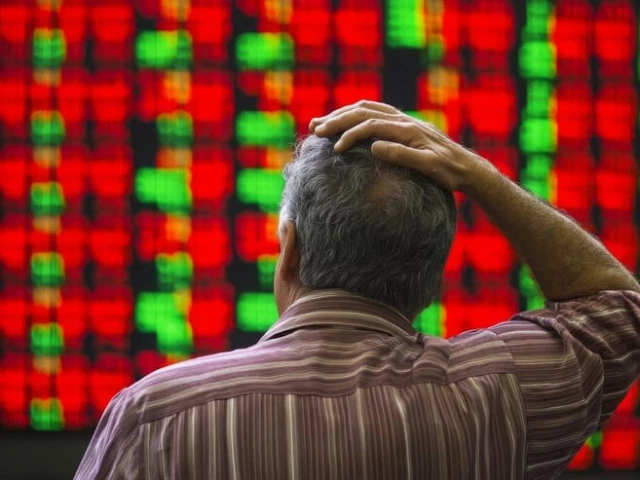
The Pakistan Stock Exchange (PSX) came under sustained pressure during the outgoing week, shedding 2.9%, or nearly 5,110 points, to close at 168,062 amid geopolitical tensions, cross-border security concerns and cautious investor sentiment.
The decline coincided with the arrival of an International Monetary Fund (IMF) mission for the third review of Pakistan’s $7 billion Extended Fund Facility and the Resilience and Sustainability Facility assessment, keeping market participants focused on external financing prospects and macro-stability signals.
On a day-on-day basis, the PSX commenced the week on a distinctly negative note, with the benchmark KSE-100 index closing at 167,691, down 5,479 points (-3.16%), marking the fourth-largest single-day decline in history.
On Tuesday, the bourse witnessed another highly volatile session as the index extended its corrective phase, reflecting persistent fragility in investor sentiment. The benchmark plunged to the intra-day low of 163,908 amid continued selling pressure before selective buying emerged, lifting the index to 166,259 at close, down 1,433 points (-0.85%).
The market experienced another volatile session on Wednesday as bearish pressure ultimately outweighed intermittent buying interest. The KSE-100 closed at 164,626, lower by 1,632 points (-0.98%). The PSX witnessed a strong recovery on Thursday, with the benchmark index gaining 4,267 points (+2.59%) to close at 168,893.90. The market ended the week with a range-bound, yet volatile session and the index settled at 168,062, down 831 points (-0.49%).
Arif Habib Limited (AHL) noted that the KSE-100 faced a sharp sell-off during the week, closing at 168,062 points, down 2.9% week-on-week (5,108 points), amid persistent selling pressure, heightened geopolitical concerns and cross-border tensions.
An IMF delegation has arrived to conduct the third review under the $7 billion Extended Fund Facility (EFF) and the second review under the Resilience and Sustainability Facility (RSF).
During the week up to February 26, 69 companies, representing 83% of the KSE-100’s market capitalisation, announced their 2025 results, where their combined profit amounted to Rs1.6 trillion, reflecting a 5.9% year-on-year growth. Major contributors to the profitability were sectors such as investment banking, auto assemblers, miscellaneous and textiles, boasting a YoY growth of 50%, 44%, 36% and 31%, respectively, AHL said.
Gas production was down 4.4% WoW to 2,688 million cubic feet per day (mmcfd), whereas oil production was down 3% WoW to 60,888 barrels per day (bpd). The State Bank’s liquid foreign exchange reserves stood at $16.2 billion, reflecting an increase of $16 million. Meanwhile, the Pakistani rupee remained largely stable against the US dollar, marginally strengthening to close at Rs279.47/$, AHL added.
Wadee Zaman of JS Global said that the KSE-100 declined again during the outgoing week amid rising geopolitical tensions and domestic security concerns, falling 5,108 points (2.9%) WoW, bringing the cumulative decline since its Jan’26 peak to 11.2% from 189,167 points. The index staged a partial recovery towards the weekend on reports of constructive progress in Iran-US negotiations, with further talks scheduled in Vienna next week.
On the macro front, the IMF mission has arrived for the third review of the EFF, under which discussions are set to commence next week. The fund acknowledged Pakistan’s policy stabilisation efforts but reportedly flagged risks around securing the one-year rollover of $2 billion UAE deposits. The finance minister expressed confidence, citing an existing short-term arrangement and ongoing talks for a longer-term extension, Zaman said.
Separately, Pakistan’s planned $250 million Panda bond issuance has been delayed due to its weak credit profile, limiting direct access to Chinese debt markets. The SBP’s latest data showed that profit repatriation increased by 26% to $1.7 billion while foreign direct investment declined 41% in 7MFY26. In another major development, according to the power minister, Pakistan expects to complete its first 200-megawatt electricity transaction under a competitive wheeling auction by June 2026, Zaman added.




Intellia Therapeutics, building exterior and company sign, Cambridge, Massachusetts, USA.
Spencer Grant | Universal Images Group | Getty Images
Intellia Therapeutics said its Crispr-based treatment for a rare swelling condition met its goals in a late-stage trial, marking a milestone for the field of gene editing and putting the company on track to seek approval from the U.S. Food and Drug Administration.
The company’s treatment uses Nobel Prize-winning technology Crispr to edit DNA and turn off the gene that controls production of a peptide that’s overactive in people with hereditary angioedema, causing them to experience potentially life-threatening swelling attacks. Intellia’s treatment is administered once through an hourslong infusion, making the edits directly in the liver.
Intellia said the one-time treatment reduced attacks by 87% compared with a placebo, meeting the study’s main goal. Six months after treatment, 62% of patients were free from attacks and weren’t using other therapies, Intellia said.
The company described the safety and tolerability of the treatment as “favorable,” reporting the most common side effects were infusion-related reactions, headaches and fatigue. Analysts were closely watching safety in the trial since a patient in a separate trial of a different treatment from Intellia died. That patient developed a liver injury and ultimately died from septic shock following an ulcer, according to the company.
“When you think about where we started with Crispr, just 12 years ago with some of the fundamental insights, I think there was a lot of talk about what might be possible, and we’ve had reports along the way in terms of milestones, but this is the first Phase 3 data in any indication with in vivo Crispr where you’re actually changing a gene that causes disease,” said Intellia CEO John Leonard.
The only FDA-approved Crispr-based medicine comes from Vertex Pharmaceuticals. Called Casgevy, the gene editing is done outside the body, or ex vivo. The process requires collecting a person’s blood cells, making the edits outside the body, then reinfusing them back into a patient. Intellia’s treatment, meanwhile, makes the edits inside the body, or in vivo.
Intellia said it has started a rolling application with the FDA and plans to complete the filing in the second half of this year. The company expects to launch the treatment in the U.S. in the first half of next year, if it’s approved.
If approved, Intellia’s treatment, lonvoguran ziclumeran, will compete with about a dozen other chronic drugs for HAE. Despite the allure of a one-time treatment, genetic medicines haven’t always been a commercial successes. BioMarin withdrew its gene therapy for Hemophilia A because of weak sales, for example.
Leonard said there are important differences between the two, like the fact that BioMarin’s therapy faced questions about how long the effects would last. In contrast, he said Intellia hasn’t seen a single case in almost six years where the effects diminished over time.
Despite the results, he’s reluctant to call Intellia’s treatment a functional cure.
“I think this is a tipping point for the disease and tipping point for Crispr-based in vivo therapy where you can make a change [and] it’s permanent,” Leonard said. “And, as far as we can tell, we don’t have a single patient in this program or other program where there’s been any waning of the effect of what we did to the gene or the effect of what we’ve seen with the clinical aspects of the disease itself. So it’s pretty exciting.”
Clarification: This story has been updated to clarify that a patient in a separate trial of a different treatment from Intellia developed acute liver injury and ultimately died from septic shock following an ulcer.
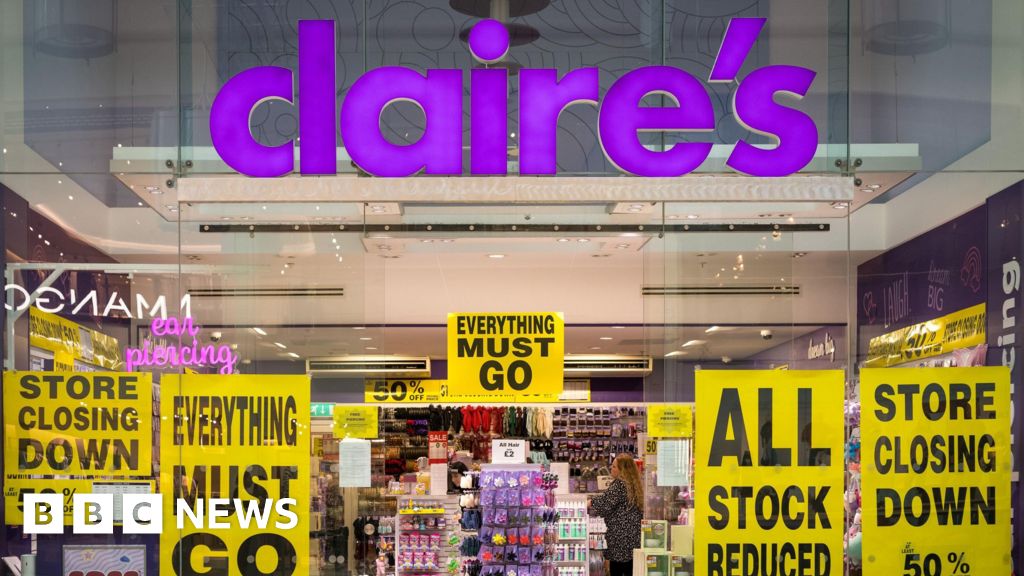
All of the chain’s standalone stores have stopped trading in the UK and Ireland.
Source link

A pedestrian walks by a Domino’s Pizza on Dec. 9, 2025 in San Francisco, California.
Justin Sullivan | Getty Images
Domino’s Pizza stock fell 10% in morning trading on Monday after it reported weaker-than-expected U.S. same-store sales growth.
The chain’s domestic same-store sales rose just 0.9%, lower than the 2.3% bump expected by Wall Street analysts, based on StreetAccount estimates.
“We’re not happy with it,” CEO Russell Weiner told CNBC.
The pizza chain also lowered its full-year U.S. same-store sales forecast to low-single digit growth, down from its prior projection that U.S. same-store sales will increase 3%.
Weiner said he expects more fast-food chains to report similar headwinds from winter weather and weak consumer sentiment, which took a dive in March due to spiking fuel prices caused by the U.S.-Israeli war with Iran.
“One of the bad things about reporting first is you don’t get to hear about anybody else,” Weiner said.
Domino’s kicked off the earnings season for restaurant chains. Starbucks is on deck after the bell on Tuesday, and Chipotle Mexican Grill and Pizza Hut owner Yum Brands are expected to share their results on Wednesday. Rival Papa John’s will report its earnings next Thursday.
During the quarter, Domino’s also faced stiffer competition from rival pizza chains. Papa John’s and Pizza Hut both matched Domino’s $9.99 “Best Deal Ever” with promotions at the same price point. And Little Caesars undercut Domino’s $6.99 Mix & Match deal with a $5.99 version.
“People are seeing what we’re doing, and they’re sick of losing share, and they’re coming at it,” Weiner said, adding that he still expects Papa John’s and Pizza Hut to report same-store sales declines for the quarter despite the new promotions.
Looking ahead, Weiner expressed confidence that Domino’s will prove itself in the long run.
“Domino’s has got a bigger advertising budget than our second two competitors combined,” he said. “And those competitors are both going up for sale, so we know things aren’t good there right now.”
Yum announced in November that it was exploring strategic options for Pizza Hut, which could include a sale. And Papa John’s is reportedly in talks with Qatari-backed Irth Capital to go private. Both chains have also announced plans to close hundreds of restaurants this year, which could further boost Domino’s dominant position in the pizza category.
And if either Pizza Hut or Papa John’s goes private, Weiner said he expects that a new owner would shutter even more locations — a win for Domino’s.
Shares of Domino’s have lost nearly a third of their value over the last year. The company’s market cap has fallen to roughly $11.2 billion.


Trump calls for Jimmy Kimmel to be fired over jokes made before White House Correspondents’ Dinner shooting
Intellia Therapeutics says its Crispr-based treatment succeeds in pivotal trial

PCB shares ticket pricing details for PSL 11 Qualifier in Karachi – SUCH TV

-

 Sports1 week ago
NCAA men’s gymnastics championship: All-time winners list
-

 Sports1 week ago
WWE WrestleMania 42 Night 2: Live match results and analysis
-

 Politics6 days ago
UK’s Starmer seeks to deflect blame over Mandelson appointment
-

 Fashion1 week ago
UK’s Sosandar returns to profitability amid robust FY26 performance
-
 Business7 days ago
How Trump’s psychedelics executive order could unlock stalled cannabis reform
-
 Business1 week ago
No fuel shortage: Govt assures 100% domestic LPG, PNG, CNG supply amid Hormuz energy crunch – The Times of India
-

 Entertainment7 days ago
Lee Anderson, Zarah Sultana kicked out of UK Parliament for calling PM ‘liar’
-

 Sports1 week ago
Quetta Gladiators opt to bowl after winning toss against Peshawar Zalmi in PSL 11 clash