

Politics
IRGC Claims Missile Strikes on US Aircraft Carrier Amid Escalation

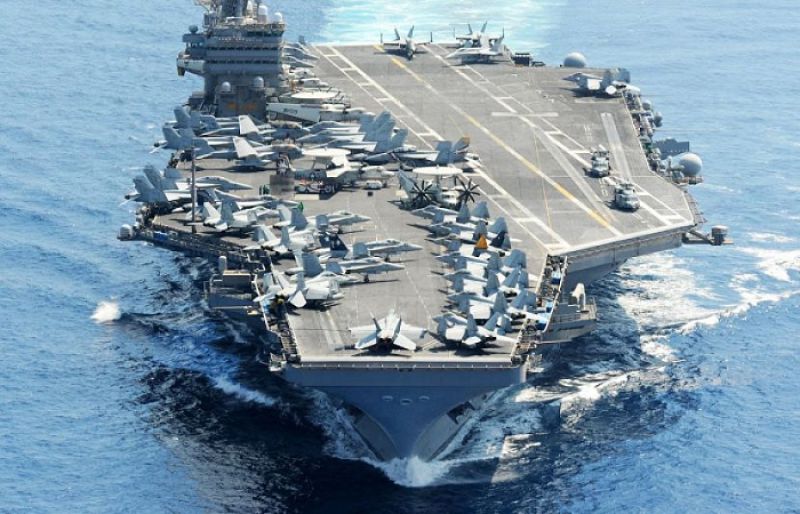
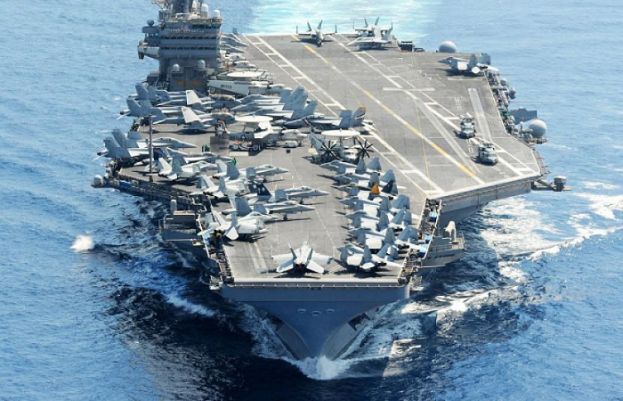
Iran’s Islamic Revolutionary Guard Corps (IRGC) on Sunday claimed it had launched ballistic missile strikes targeting a US aircraft carrier, identifying the vessel as the USS Abraham Lincoln, as part of what it called “Operation True Promise 4.”
In a statement, the IRGC’s public relations office said four ballistic missiles were fired at the carrier, adding that Iran’s military campaign had entered a “new phase.” The group warned that both land and sea would become the “burial place” for what it described as aggressors.
Multiple Waves of Strikes Announced
Earlier, the IRGC said it had launched the seventh and eighth waves of strikes under the same operation, in response to what it termed ongoing aggression by the United States and Israel.
Iran claimed it had carried out precision strikes on military targets in Israeli territory, including areas near Tel Aviv and Haifa. It also alleged that Israeli officials had taken shelter due to heightened security concerns.
Targets Across the Gulf
The IRGC further stated that it had targeted US-operated facilities in West Asia, including the US Fifth Fleet base in Bahrain, as well as installations in Qatar and the United Arab Emirates.
There has been no immediate confirmation from US or Israeli officials regarding the reported missile strikes or the extent of any damage.
Rising Regional Tensions
The developments mark a sharp escalation in regional tensions following reported military exchanges between Iran, Israel and US forces over the weekend.
Independent verification of the claims remains pending, and international observers have urged restraint amid fears of a broader conflict across the Middle East.
- PM Modi extends condolence over incident.
- Incident occurs at licensed factory in Tamil Nadu.
- Tamil Nadu CM expresses “immense sorrow”.
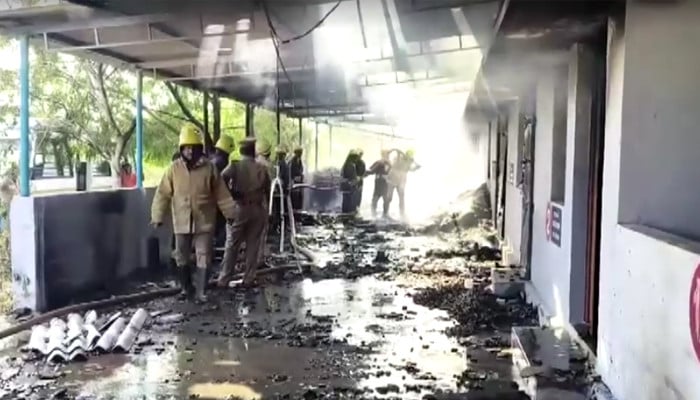
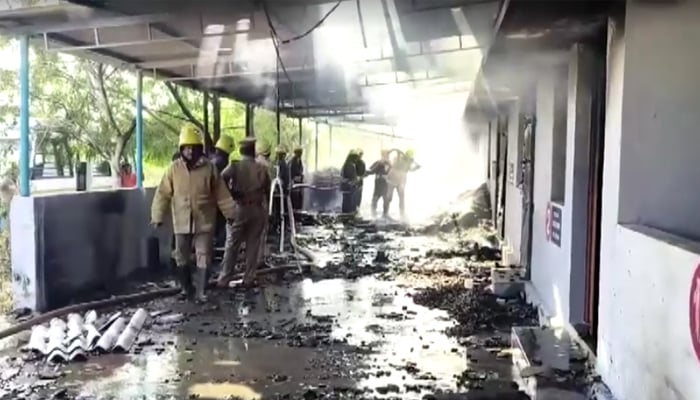
A blaze broke out at a firecracker factory in southern India on Sunday, killing at least 20 people and injuring six others, police said.
Local police chief N Shreenatha told AFP that “20 people are confirmed dead” after the incident at a licensed factory in Tamil Nadu state’s Virudhunagar district.
Rescuers were still operating at the site, he said, adding that the cause of the blaze was unknown.
Industrial accidents are common in India, often due to poor adherence to safety regulations and weak enforcement.
Prime Minister Narendra Modi, in a social media post, extended his “condolences to those who have lost their loved ones” in the “deeply distressing” incident.
Tamil Nadu Chief Minister M.K. Stalin said the deaths were “tragic”, expressing his “immense sorrow” in a post on X.
An explosion at a power plant in central India this week killed more than 20 people.
Last month, another fire at a fireworks factory in western India killed 17 people.
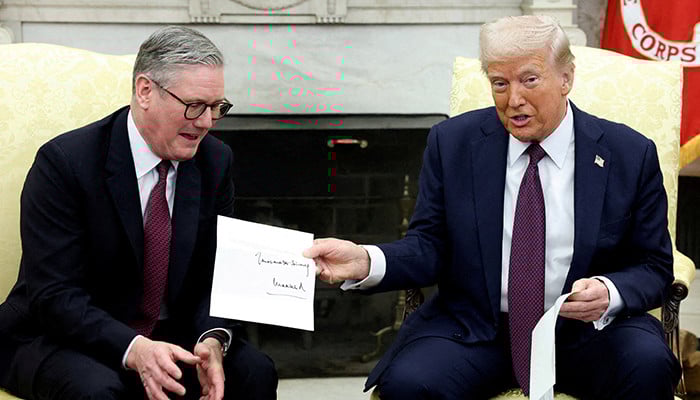
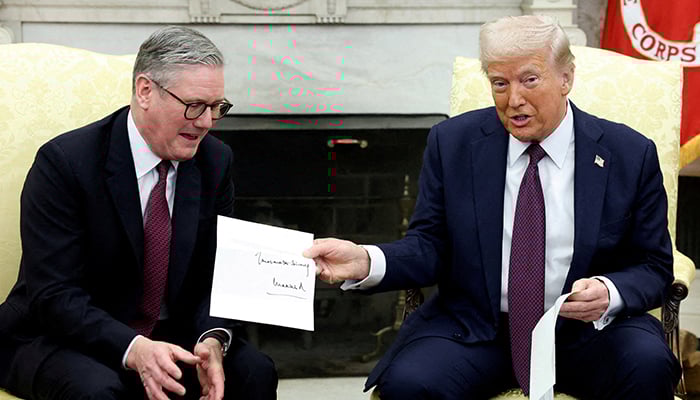
Britain’s government is set to announce legislation next month to move the country closer to the European Union, as the Iran war sours the UK’s so-called special relationship with the United States.
President Donald Trump’s unpredictability and stream of insults towards America’s historic ally is adding impetus to Prime Minister Keir Starmer’s bid to deepen ties with the 27-nation bloc, a decade after Britons narrowly voted to leave the EU.
“We have a government that is already eager to move closer towards the EU, and the events in Iran provide an opportunity to speed up that process,” Evie Aspinall, director of the British Foreign Policy Group think-tank, told AFP.
Starmer’s administration is preparing an EU “reset” bill that will give ministers powers to align UK standards with EU single market rules as they evolve — something called “dynamic alignment”.
King Charles III will announce the legislation on May 13 when he reads out Starmer’s legislative plans for the coming months, a government official told AFP on condition of anonymity.
Starmer has repeatedly called for a deeper economic and security relationship with Europe since his Labour party won the 2024 general election, ousting the Conservatives, who had implemented the 2016 Brexit referendum.
He has upped those calls in recent days, telling Dutch leader Rob Jetten on Tuesday that “he believed the partnership between the UK and the bloc needed to be fit for the challenges we were facing today”.
The EU is Britain’s biggest trading partner, while the International Monetary Fund warned this week that the UK will be the advanced economy hardest hit by the Iran conflict.
“Certainly Iran has made it [the reset] more prescient,” said the UK official.
“We need to build economic resilience across the continent,” they added.
Starmer refused to involve Britain in the US and Israel’s initial strikes on February 28, angering Trump, although he has since allowed American forces to use UK bases for a “limited defensive purpose”.
Under pressure at home for his disastrous decision to appoint former Jeffrey Epstein associate Peter Mandelson as ambassador to Washington, Starmer has received plaudits for standing up to Trump in the face of repeated taunts from the US president.
Days ago, Trump threatened in a phone interview with Sky News to scrap a US-UK trade deal that limited the impact on Britain of his tariffs blitz.
“There’s no doubt that there is now momentum in the UK-EU relationship partly as a result of Trump’s unreliable behaviour,” David Henig, an expert on UK’s post-Brexit trade policy, told AFP.
“Independent UK trade policy looks much harder, the prospects of working with the EU much brighter.”
Brexit regret
Starmer’s administration hopes to table the EU legislation in the next few months, meaning it could come around the time of the 10th anniversary of the Brexit referendum, held in June 2016.
MPs will get to approve whether to provide the government with a mechanism to adopt EU rules — sometimes without a full parliamentary vote — in areas where it has already signed deals with the bloc.
They include a trade agreement designed to ease red tape on food and plant exports and plans for an electricity deal that would integrate the UK into the EU’s internal electricity market.
Britain and the EU are also aiming to finalise negotiations on a youth mobility scheme in time for a joint summit in Brussels expected in late June or early July.
Starmer has ruled out rejoining the single market or returning to free movement.
The Liberal Democrats, Britain´s traditional third party, wants him to cross one of his other red lines by negotiating a customs union with the EU.
“We need to be doubling down on relations with reliable partners who share our interests and values,” the Liberal Democrats foreign affairs spokesman Calum Miller told AFP.
But Brexit remains a toxic issue and the hard-right Reform UK party, leading opinion polls and headed by Eurosceptic firebrand Nigel Farage, have branded the legislation “a betrayal” of the referendum’s narrow result.
Surveys regularly now show, however, that most Britons regret the vote to leave the EU, something Starmer hopes to capitalise on.
Rising cost-of-living pressures on family households, which UK finance minister Rachel Reeves has blamed on Trump for starting the war “without a clear exit plan”, could also influence minds.
“When the relationship with the United States is fracturing, it means there’s reduced opposition to a closer relationship with the EU among the public,” said Aspinall.
- North boosts military capabilities amid Iran war, say experts.
- Ballistic missiles flew 140 km in 4th launch this month.
- Trump visiting Asia in May, interested in meeting Kim Jong Un.
North Korea fired ballistic missiles into the sea on Sunday, accelerating its missile launches amid Iran war tensions and talk of possible meetings with the US and South Korea.
Pyongyang’s intense missile activity — this was the fourth such launch this month and the seventh of the year — is meant to display its self-defence capabilities while gaining international leverage, some experts said.
“The missile launches may be a way of showing that — unlike Iran — we have self-defence capabilities,” said South Korean former presidential security adviser Kim Ki-jung.
“The North also appears to be exerting pressure preemptively and make a show of force before engaging in dialogue with the United States and South Korea,” he said.
Iran war, Trump visit loom over launches
The seven-week-old US-Israeli war against Iran, which has as one aim the curbing of Tehran’s nuclear programme, could reinforce Pyongyang’s nuclear ambitions, experts and former South Korean officials say.
US President Donald Trump, preparing for a summit in China next month, and South Korean President Lee Jae Myung have repeatedly expressed interest in holding talks with North Korean leader Kim Jong Un. There are no publicly known plans for any meetings.
Lee recently conveyed regret to the North for drone incursions from the South, receiving rare praise from Pyongyang.
Sunday’s missiles were fired from near the city of Sinpo on North Korea’s east coast toward the sea around 6:10am local time and flew about 140 km (90 miles), South Korea’s military said in a statement.
Japan’s government posted on social media that the missiles were believed to have fallen near the east coast of the Korean Peninsula, and no incursion into Japan’s exclusive economic zone had been confirmed.
South Korea’s presidential Blue House convened an emergency security meeting, calling the launches a provocation that violated UN Security Council resolutions, according to media reports. It urged Pyongyang to “stop the provocative acts”.
It was not clear what kind of ballistic missiles were fired, but Sinpo has submarines and equipment for test-firing submarine-launched ballistic missiles. The North last fired a ballistic missile from a submarine in May 2022, and it flew as far as 600 km (370 miles).
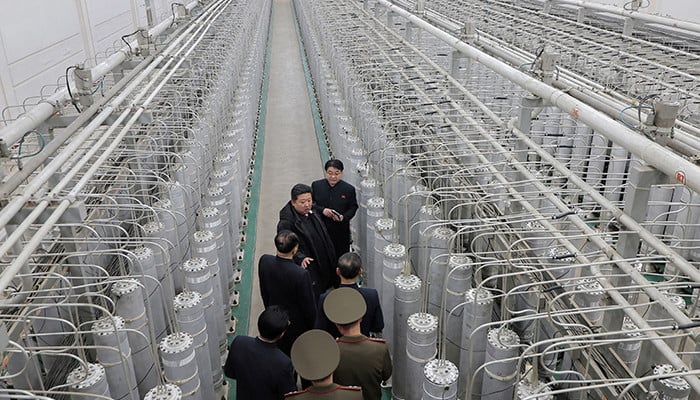
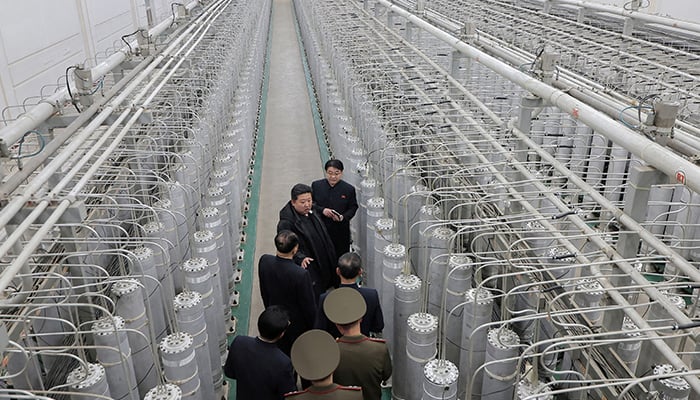
North Korea has made “very serious” advances in its ability to turn out nuclear weapons, with the probable addition of a new uranium enrichment facility, International Atomic Energy Agency chief Rafael Grossi said on Wednesday.
In late March, North Korean leader Kim said Pyongyang’s status as a nuclear-armed state was irreversible and expanding a “self-defensive nuclear deterrent” was essential to national security.


Managing traffic in space
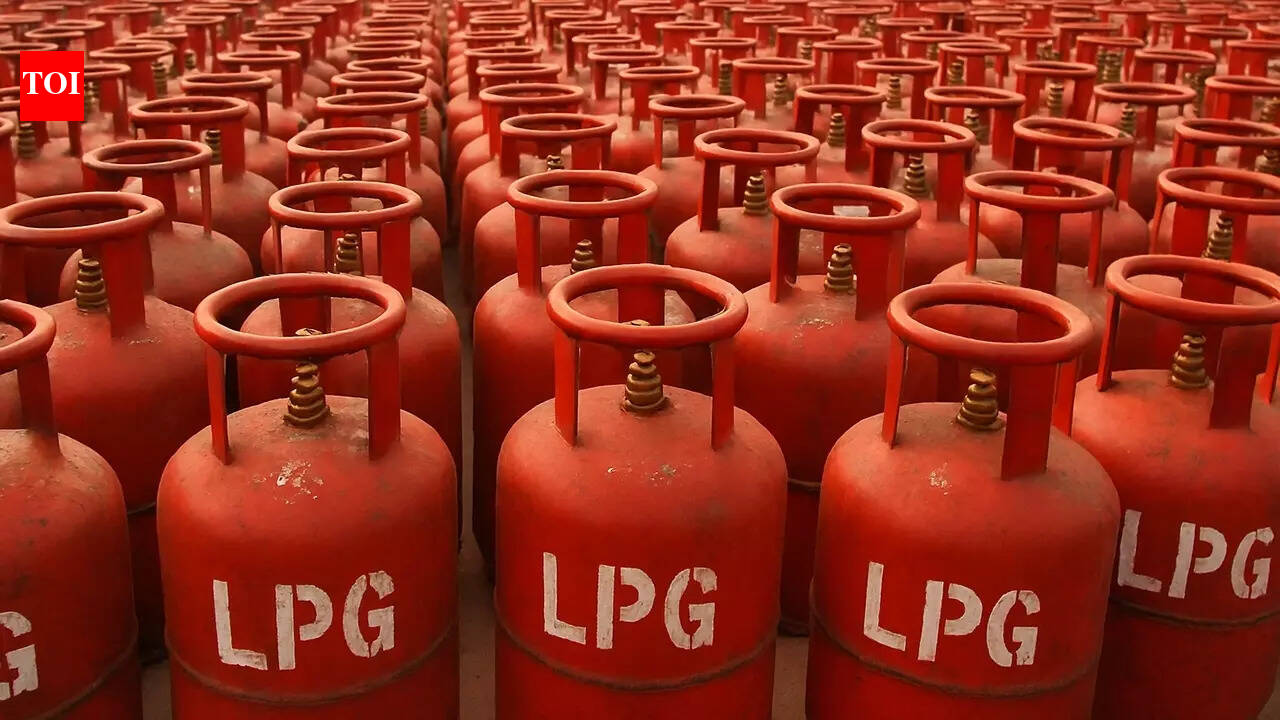
No fuel shortage: Govt assures 100% domestic LPG, PNG, CNG supply amid Hormuz energy crunch – The Times of India

Quetta Gladiators opt to bowl after winning toss against Peshawar Zalmi in PSL 11 clash

The case for Man United’s Fernandes as Premier League’s best

Palace left in shock as Prince William cancels grand ceremony
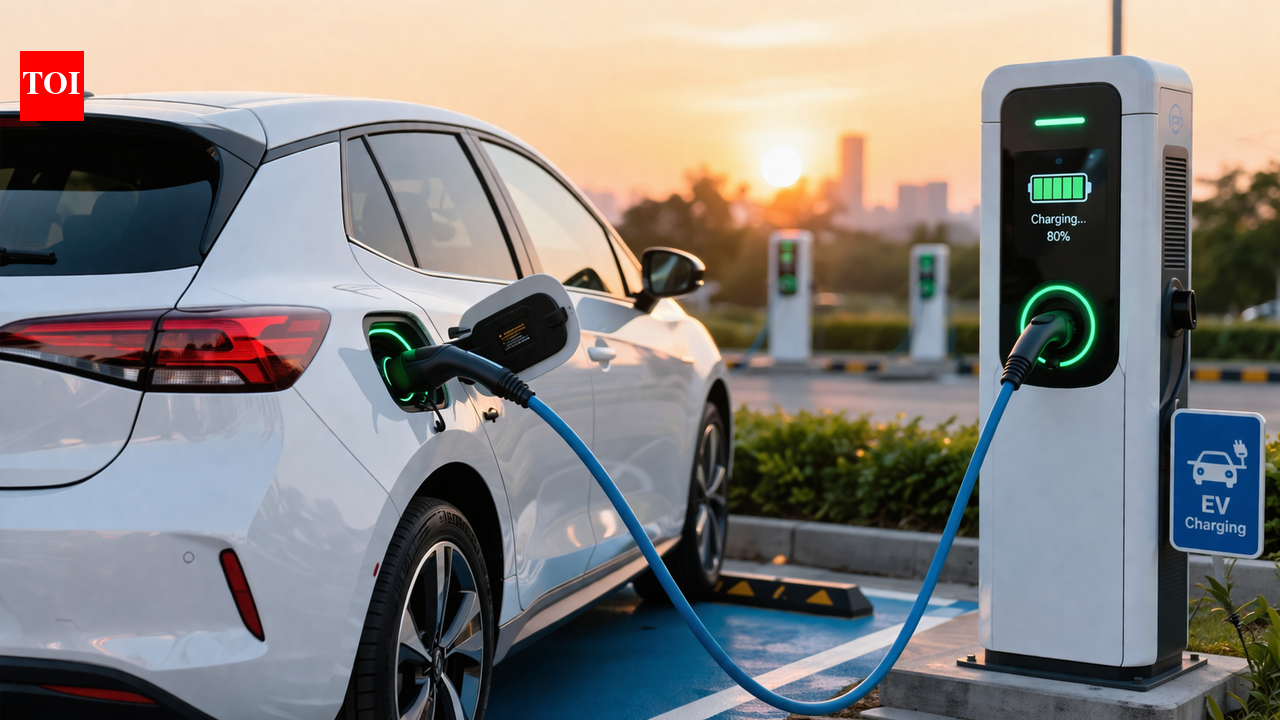
100% road tax waiver for electric cars, new rules for 2, 3 and 4 wheelers – what Delhi govt’s draft EV policy says – The Times of India

-
 Entertainment6 days ago
Palace left in shock as Prince William cancels grand ceremony
-
 Sports6 days ago
The case for Man United’s Fernandes as Premier League’s best
-
Business1 week ago
100% road tax waiver for electric cars, new rules for 2, 3 and 4 wheelers – what Delhi govt’s draft EV policy says – The Times of India
-

 Entertainment1 week ago
Dua Lipa hits major career high ahead of wedding with Callum Turner
-
 Business6 days ago
UK could adopt EU single market rules under new legislation
-
 Business1 week ago
The FAA wants gamers to apply for air traffic control jobs
-

 Sports1 week ago
Lamar Jackson hits back at critics with faithful message on social media
-

 Fashion6 days ago
Energy emerges as biggest cost driver in textile margins