

Business
SIFC, ECC clear refinery dues to unlock $6b investment | The Express Tribune

ISLAMABAD:
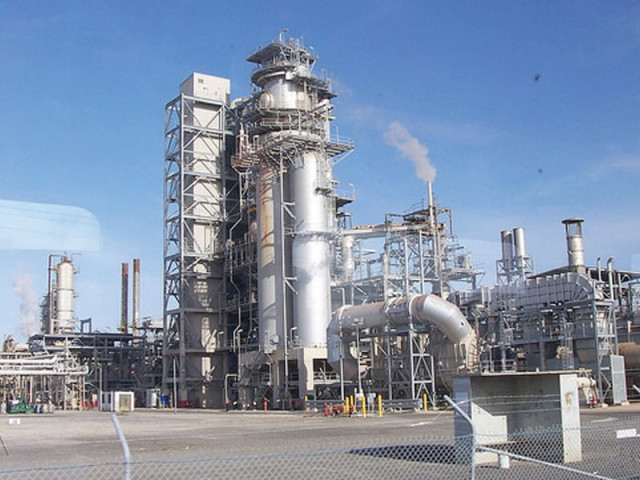
The Special Investment Facilitation Council (SIFC) and the Economic Coordination Committee (ECC) have jointly achieved a long-awaited breakthrough for Pakistan’s refining sector. Acting on SIFC’s directions, the ECC on Tuesday approved the settlement framework for outstanding petroleum levy dues of M/s Cnergyico PK Limited (CPL), the country’s largest refinery.
The framework, prepared in line with SIFC Apex/EC/IC decisions, allows recovery of the principal amount of petroleum levy duty. It also authorises the Petroleum Division to sign the settlement deed with CPL.
CPL’s receivables from government entities also remain unresolved. However, officials say SIFC’s proactive role and the Petroleum Division’s commitment raise hopes that these pending matters will soon be addressed. Industry insiders call the move a game-changer for refinery upgradation. The decision enables CPL to proceed with the execution of its agreement with OGRA under the Brownfield Refining Policy. The policy aims to incentivise investment in modernising existing refineries, ensuring Euro-V fuel standards, and reducing reliance on costly imports.
Last week, all refineries jointly urged the government and SIFC to resolve the outstanding sales tax issue by exempting project-related expenditures from sales tax and customs duties. They noted such exemptions were already available under the Greenfield Refining Policy. Industry leaders argued this step would immediately clear bottlenecks hindering the Brownfield policy’s execution and unlock nearly $6 billion in refinery upgrades.
Refineries are hopeful that, after this milestone, the ECC will also approve the tax exemption proposal, which will pave the way for multibillion-dollar projects.







Business
IMF says ‘too early’ to gauge West Asia conflict impact as energy prices, markets turn volatile – The Times of India
With tensions escalating in West Asia, the International Monetary Fund on Tuesday said it is closely tracking the situation but cautioned that it is “too early to assess the economic impact on the region and the global economy,” as disruptions to trade and energy markets intensify.In a statement, the IMF said it has “observed disruptions to trade and economic activity, surges in energy prices, and volatility in financial markets.”“The situation remains highly fluid and adds to an already uncertain global economic environment,” it said, reported ANI.“It is too early to assess the economic impact on the region and the global economy. That impact will depend on the extent and duration of the conflict,” the IMF added.The remarks come as governments evaluate the fallout of the widening hostilities in the region, particularly on oil supplies and global financial stability.In India, Petroleum and Natural Gas Minister Hardeep Singh Puri earlier said the country is “fully prepared amid evolving situation in the Middle East and energy supplies are robust.”He stated that “the country is well stocked with crude oil and inventories of key petroleum products including petrol, diesel and ATF to deal with short-term disruptions arising from the Middle East.”According to the minister, Indian energy companies have access to supplies that are not routed through the Strait of Hormuz, and such cargoes will remain available to mitigate any temporary disruptions affecting shipments passing through the strait.The Petroleum ministry has also set up a 24×7 Control Room to continuously monitor supply and stock positions of petroleum products across the country.The government is “reasonably comfortable in terms of stocks,” the minister said, adding that safeguarding the interests of Indian consumers remains the highest priority. Based on continuous monitoring, the government is cautiously optimistic that phased measures can be taken, if required, to further mitigate the situation.Government sources said India currently holds about eight weeks of crude oil and petroleum product inventories, including strategic reserves. They added that only about 40 per cent of India’s crude oil imports transit through the Strait of Hormuz, limiting exposure to regional disruptions.Sources maintained that the country remains in a comfortable position on energy security and is closely monitoring developments, while being prepared to manage potential supply-side challenges through adequate inventory levels and diversified sourcing.

The forecasts were made before the conflict in the Middle East broke out which could have a “very significant” impact, the OBR said.
Source link

There are measures, announced ahead of the chancellor’s Spring Statement, yet to take effect.
Source link


A Possible US Government iPhone-Hacking Toolkit Is Now in the Hands of Foreign Spies and Criminals

College softball rankings: 2026 NCAA Week 4 Top 25 poll

Polyester filament prices jump in India as crude spikes

-

 Politics5 days ago
What are Iran’s ballistic missile capabilities?
-
 Politics6 days ago
US arrests ex-Air Force pilot for ‘training’ Chinese military
-
 Business7 days ago
Households set for lower energy bills amid price cap shake-up
-

 Sports1 week ago
Top 50 USMNT players of 2026, ranked by club form: USMNT Player Performance Index returns
-

 Sports6 days ago
Sri Lanka’s Shanaka says constant criticism has affected players’ mental health
-
 Business7 days ago
Lucid widely misses earnings expectations, forecasts continued EV growth in 2026
-

 Fashion7 days ago
New Zealand’s apparel imports steady at $1.2 bn in 2025
-

 Fashion5 days ago
Policy easing drives Argentina’s garment import surge in 2025