

Business
Travel stocks fall after thousands of flights grounded following Iran strikes


A display board shows canceled flights to Dubai and Doha amid regional airspace closures at Noi Bai International Airport, amid the U.S.-Israel conflict with Iran, in Hanoi, Vietnam, March 2, 2026. Picture taken with a mobile phone.
Thinh Nguyen | Reuters
Airline and travel stocks slipped Monday after airspace closures throughout the Middle East forced carriers to cancel thousands of flights, disrupting trips as far as Brazil and the Philippines.
Cruise lines stocks also fell sharply, with Royal Caribbean Cruises dropping 3% and Carnival Corp. losing more than 7%.
Norwegian Cruise Line Holdings‘ stock fell 10% after its earnings call disappointed investors. Elliott Investment Management said last month that it had built a more than 10% stake in the company and that it’s seeking changes. New CEO John Chidsey told analysts that “our strategy is sound, our execution and coordination have not been, and a culture of accountability is essential and necessary going forward.”
Oil prices also rose, potentially driving up airlines’ biggest cost after labor. Flights through the Middle East were grounded, including to destinations like Tel Aviv and Dubai.
United Airlines, which has the most international exposure of the U.S. carriers, fell nearly 3%. Service to Tel Aviv, Israel, one of the airline’s most profitable routes, was halted, but airlines were also was forced to pause flights to Dubai, in the United Arab Emirates, one of the busiest airport hubs in the world. Dubai is also a home base for the airline Emirates.
Shares of American Airlines lost 4% while Delta Air Lines fell 2%.
More than 11,000 Middle East flights have been canceled since the U.S.-Israeli strikes this weekend, according to aviation-data firm Cirium.
International travel has been a bright spot in the travel sector. In January, international air travel demand jumped 5.9% from a year ago while domestic flight demand was nearly flat, the International Air Transport Association, an airline industry group, said in a report Monday.
— CNBC’s Contessa Brewer contributed to this report.





MUMBAI: Vijay Singh, a former Indian defence secretary whose eligibility as a trustee has come under legal challenge, absented himself from the board meeting of the Bai Hirabai Jamsetji Tata Navsari Charitable Institution on Friday, the latest sign of an intensifying governance dispute within India’s most powerful philanthropic network.The challenge was brought by Mehli Mistry, a former trustee, before the Maharashtra charity commissioner, questioning the appointments of Singh and Venu Srinivasan as trustees of Bai Hirabai. Mistry cited clauses in the 1923 trust deed requiring all trustees to be Zoroastrians and permanent residents of Mumbai, and argued that neither of them met those conditions.Srinivasan, chairman emeritus of TVS Motors, stepped down citing other commitments, but later acknowledged he had done so at the request of Tata Trusts management. Singh declined a similar request. Those present at the Friday meeting included chairman Noel Tata, trustees Darius Khambata and Jehangir HC Jehangir, the last of whom joined by video conference from Europe. Jimmy Tata, Noel’s older half-brother and a fellow trustee, was again absent. Singh confirmed he did not attend the meeting. A person familiar with the proceedings said the board discussed, among other matters, Mistry’s objections and next steps.The dispute has exposed a deeper legal tension. Both Srinivasan and Singh alleged that Tata Trusts had withheld from them a legal opinion by former chief justice of India MH Kania, who held that the restrictive eligibility clauses in Bai Hirabai’s trust deed were “bad in law.” That interpretation had previously allowed former Tata Group director RK Krishnakumar to be inducted onto the board. Tata Trusts said irrespective of that opinion and past precedent, appointments of non-Zoroastrians remained open to challenge under the deed’s provisions, adding that a legal opinion did not substitute for a judicial pronouncement. The commissioner has yet to order a formal inquiry. Bai Hirabai was endowed by Sir Ratan Tata, younger son of Tata Group founder Jamsetji Tata, who bequeathed properties in Mumbai and Navsari to the institution, the provenance that gives its century-old deed its continuing legal force.

The UK’s biggest mobile providers have been outperformed by smaller rivals in an annual customer service survey by watchdog Which?
Three, O2 and Lycamobile were the lowest performing networks in the survey of more than 5,000 mobile users, receiving customer scores of 65%, 67% and 68% respectively.
Three received a two-star rating in every category including network reliability and technical support, the consumer group found.
O2 received just two stars for value for money and customer service, shortly after it increased its annual price rises from £1.80 to £2.50 a month for all customers.
Lycamobile received four stars for value for money but two stars in every other category.
EE and Vodafone achieved scores of 74% and 72% respectively, although Which? described them as “stuck in the middle to lower reaches of the table”.
Talkmobile topped the rankings with a customer score of 83% followed by Tesco Mobile on 81%, with both impressing customers with their network reliability, customer service and value for money.
Other top-rated networks included Giffgaff and Smarty, which both received a score of 79%, driven by their flexibility and affordable Sim-only deals.
Lebara and 1pMobile both achieved a score of 78%, with customers praising 1pMobile’s network reliability and value for money and Lebara earning five stars for value for money.
According to the survey, respondents using one of the ‘big four’ – EE, O2, Three and Vodafone – paid an average of £16 for a Sim-only contract, compared with just £9 on smaller networks.
For contracts including a phone, users paid an average £40 with the ‘big four’ compared with £28 with smaller providers.
Many smaller firms use the infrastructure of the ‘big four’, meaning customers often receive the same signal and coverage.
Which? head of home products and services, Natalie Hitchins, said: “Our latest research shows that smaller providers are consistently outshining the industry’s largest mobile firms by offering better customer service and far cheaper deals.
“Many top-rated challengers avoid mid-contract price hikes, offering households struggling with the cost of living much-needed certainty.
“Any customers nearing the end of their contract who are unhappy with their service, or simply looking to save money, should not hesitate to vote with their feet and move to a provider that actually delivers on value.”
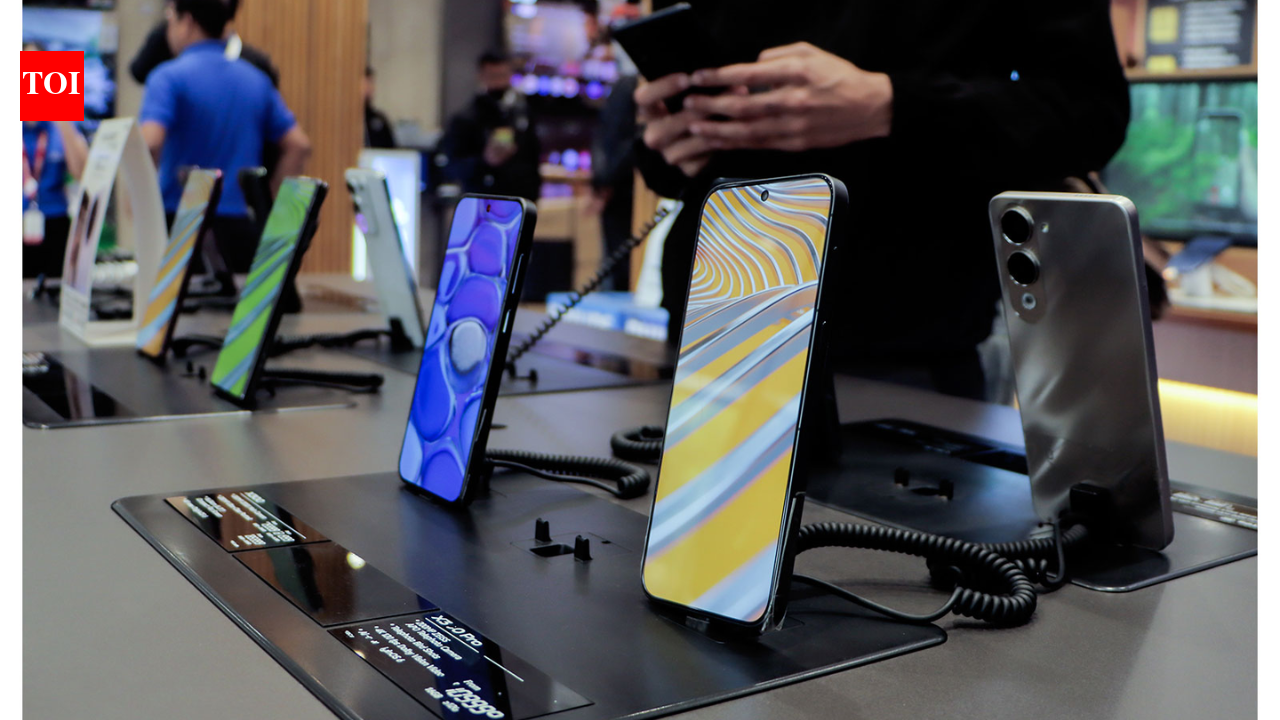
India is rapidly strengthening its position in global electronics trade, now supplying about 40 per cent of the smartphones imported by the United States that were previously sourced from China.According to a recent report by McKinsey & Company, cited by ANI, the United States has been actively diversifying its import sources and has replaced about two-thirds of the goods it previously sourced from China, valued at more than $80 billion. India and ASEAN economies have played a significant role in this shift.“India, for example, increased smartphone exports to the United States to levels equal to roughly 40 per cent of what China had supplied,” the report stated.India’s rise in smartphone exports has been particularly notable, with shipments to the US increasing sharply despite the long geographical distance of around 13,000 kilometers. This reflects the country’s growing role in global electronics manufacturing and supply chains.The report also highlighted that ASEAN economies replaced about two-thirds of US laptop imports that had earlier come from China, pointing to a broader shift in manufacturing bases across Asia.It noted that global trade remained resilient in 2025 despite concerns of a slowdown. Both US imports and Chinese exports reached new highs during the year, while overall global trade grew faster than the global economy.Among emerging economies, India stood out for expanding trade across regions. However, while overall exports remained largely unchanged, smartphones were a key exception and drove export growth.The report said the shift in trade patterns is being driven by domestic priorities and geopolitical realignments. Advanced economies and China are increasingly reorienting trade away from geopolitically distant partners, while emerging economies like India continue to expand trade across markets.It also pointed to changes in other regions. ASEAN strengthened its position as a manufacturing hub by importing more inputs from China and exporting finished goods to the United States. Brazil increased commodity exports to China, replacing goods that China had earlier sourced from the US.


Angel Reese opens up on Chicago Sky departure: ‘I wanted more’

Inside the fallout of the Dianna Russini and Mike Vrabel photos
Amid disputes, Singh skips Tata trust meeting – The Times of India

-

 Politics1 week ago
Indian airlines hit hardest after Dubai limits foreign flights until May 31
-

 Tech1 week ago
This AI Button Wearable From Ex-Apple Engineers Looks Like an iPod Shuffle
-

 Politics1 week ago
Chinese, Taiwanese will unite, Xi tells Taiwan opposition leader
-

 Entertainment5 days ago
Palace left in shock as Prince William cancels grand ceremony
-

 Sports5 days ago
The case for Man United’s Fernandes as Premier League’s best
-

 Entertainment7 days ago
Dua Lipa hits major career high ahead of wedding with Callum Turner
-
 Business5 days ago
UK could adopt EU single market rules under new legislation
-
 Business1 week ago
He paid $248 in illegal tariffs for this coat. Will he ever get it back?